| Conflict | Second World War |
| Nursing Service | Australian Army Nursing Service |
| Units | 2/7th, 2/6th, 115th & 102nd AGHs & 1st Australian Orthopaedic Hospital |
| Overseas Service | Egypt & Palestine |
| Final Service No. | VX45572 |
| Final Rank | Captain |
FAMILY BACKGROUND
Celia Pearlman was born on 24 February 1906 in Ballarat East in Victoria’s central goldfields. Her parents were Rose Jacobs (1875–1956) and Baron Baruch Pearlman (1875–1930).
Celia’s mother, Rose Jacobs, was born on 1 May 1875 at 2 Samuel Street, south of Commercial Road in London’s Spitalfields district. Her parents, Annie Kurtz (1850–1928) and Solomon Jacobs (1849–1911), had moved to London in the 1860s from Kovno in Russia (today Kaunas in Lithuania).
By 1881 the Jacobses were living at 5 Fashion Court in Spitalfields and Solomon was working as a boot finisher. As time passed, Solomon decided to move the family to Australia. He first ventured out himself, arriving in Melbourne aboard the Winifred on 15 February 1887. On 29 September 1888 Annie arrived at Port Melbourne aboard the German steamship Hohenstaufen with Rose, then 13, and her siblings, Samuel (18), Millie (10), Leah (nine), Morris (seven) and Celia (one).
After settling into a house at 45 Mackenzie Street in central Melbourne, the Jacobses began attending the East Melbourne Synagogue on Albert Street. Solomon continued to make boots and in the 1890s went into business with his son Samuel as Jacobs & Son. For a time Rose worked as a machinist for her father.
Celia’s father, Baron Pearlman, was born in Minsk, then part of Russia, now the capital of Belarus. With his younger sister, Dora, he arrived in Melbourne from Bremen aboard the Gera on 1 May 1895. His parents, Hannah (also known as Anna) Zivin (1846–1913) and Chaim (Hyman) Pearlman (1845–1924), and siblings Jacob (aged nine) and Blume (two) had arrived in Melbourne from Hamburg aboard the Sommerfeld in October 1891. Another sibling, Ruby, is said to have been aboard the Sommerfeld but does not appear to be listed on the ship’s manifest. An older married sibling, Elizabeth, remained in Russia until the late 1890s.
Sometime after his arrival, Baron travelled to Sydney and in October or November 1896 was arrested for aiding and abetting a certain Nahum Rapkin in the commission of theft by pretence. He was later discharged. He subsequently moved back to Melbourne and may have worked for his father, who by January 1897 was trading in second-hand goods on Lonsdale Street, not far from Mackenzie Street.
It was perhaps while selling from door to door that Baron met Rose. Or perhaps they met at the East Melbourne Synagogue. Regardless, on 13 June 1900 they were married at the synagogue in a ceremony conducted by Rabbi Jacob Lenzer. Afterwards a reception was held at the Oddfellows Hall on the corner of Victoria and Russell Streets in Melbourne.
BALLARAT
Initially the newlyweds lived with Rose’s parents at 45 Mackenzie Street, but by 3 January 1901, the day Baron became a naturalised citizen, they had moved to Ballarat East and were living at 109 Main Street (often referred to as Main Road) with Baron’s parents, who had moved to Ballarat too. Rose and Baron remained in Ballarat East for the next 30 years.
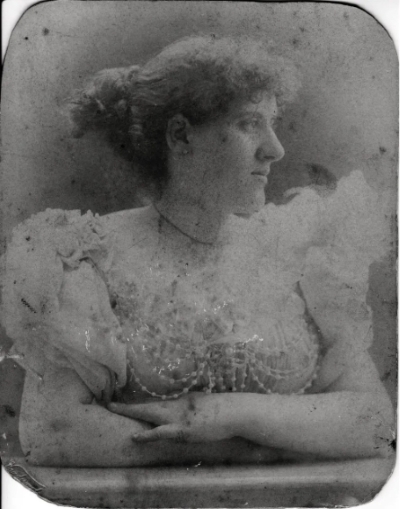
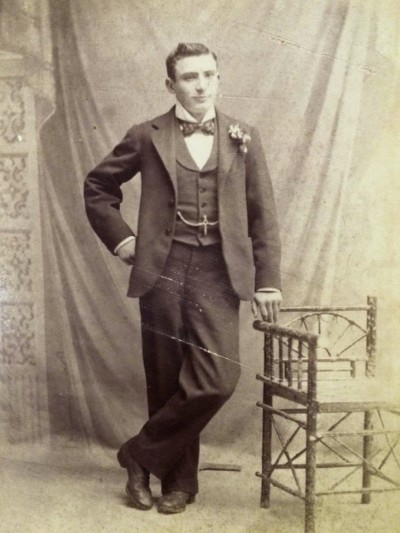
The couple’s first child, Asher Jacob, known as Jack, was born in August 1901. Amelia Millicent, known as Millie, was born next, in June 1903, by which time the Pearlmans had moved to 107 Main Street, next door to Hyman and Hannah Pearlman. In February 1906 Celia was born, either at the Main Street house or at 5 Eureka Street, where the family moved next. She was named after her mother’s youngest sister.
Baron Pearlman was working as a miner at the time of Celia’s birth, and it remained his work in 1908 when his next child, Leslie, was born. By 18 August 1909 Baron was working as a traveller (a travelling salesman), and the family had moved to 11 O’Brien Street in Ballarat. On that date he appeared before the Supreme Court of Ballarat charged with having received a stolen watch and chain on 25 May that year. He denied the charge, stating that he did not know that the watch was stolen, and was acquitted.
The family’s fifth child was Koppel Solomon, known as Sidney, who was born in January 1911 at 14 Channel Street, around the corner from the O’Brien Street house. In the same month the children’s maternal grandfather, Solomon Jacobs, died at home on Mackenzie Street in Melbourne. He was buried at the new Fawkner Cemetery in Melbourne’s northern suburbs.
At the time of his father-in-law’s death, Baron was working as a bookmaker and still having brushes with the law. On 8 February 1911 he appeared at the South Melbourne Police Court charged with stealing £360, money that was meant to have been used to purchase 11 tons of copper and brass for a certain Mr. Nathan Bear, who claimed that he had not received the metal. After it was ascertained that £20 had been returned to Bear, and that Baron had given him promissory notes against the balance, the case was dismissed.
128 MAIN STREET, BALLARAT
The year 1913 was an eventful one for the Pearlmans, with moments of joy but also of trial and great sadness.
The family had moved to 128 Main Street and were within easy walking distance of the Ballarat Synagogue on Barkly Street, where Hyman Pearlman was a shammash (assistant). They were also close to the Humffray Street State School (State School No. 34) and the Eureka Street State School (State School No. 1071). Among their neighbours on Main Street were the Mongs, who ran the Red Lion Hotel at no. 131, and the Tierneys at no. 126. The Pearlmans remained at 128 Main Street for the next 13 or so years. Curiously, around this time Baron appears to have adopted an alias, Robert Pearlman, under which name he is listed in Sands & McDougall’s Victorian directory for the years 1915, 1920 and 1925.
In March 1913 Baron’s mother, Hannah Pearlman, died. Following her death, Hyman Pearlman moved in with Rose and Baron, as Hannah had wished.
On 30 April Baron returned to court, after Nathan Bear brought an action against him for the recovery of the £340. He was granted leave to defend himself and reappeared in court in August, but the outcome is unknown.
On 9 May Rose’s and Baron’s sixth child, Harold, was born. Around two months later, two-and-a-half-year-old Sidney fell off a log and broke his leg. He was taken to Ballarat District Hospital and while recovering in the surgical ward contracted diphtheria. He was moved to the infectious diseases ward and died there on 11 September, succumbing to the dread disease. He was buried at the Old Ballarat Cemetery. Celia was only seven at the time but always remembered her little brother’s death.
In the following years, three more children were born to Rose and Baron – Cyril Solomon in August 1915, Lloyd Samuel in February 1919, and Valda Raphael, known as Faye, in January 1923.
Eighteen months after Faye’s birth, Baron lost his father. Hyman Pearlman died in August 1924 at the age of 79. He was buried beside little Sidney at the Old Ballarat Cemetery.
SCHOOL
Some of the Pearlman children attended the Eureka Street State School, while others went to the Humffray Street State School.
We do not know which of the state schools Celia attended, but Millie for one went to Eureka Street. Towards the end of 1915, while a pupil there, she gained her Victorian Education Department cookery certificate after completing a course at the Ballarat East Cookery Centre in the theory and practice of elementary cookery. The cookery course was part of a government program to broaden the educational experience of children at Victorian state schools beyond basic literacy. Leslie and Lloyd both attended Humffray Street. On 12 December 1917 Leslie won the junior ‘Siamese’ race with W. Philpot at the school’s annual sports day, and in 1930 Lloyd was dux of the school.
The children also went to the Ballarat Hebrew School, which was held at the synagogue on Barkly Street. On 26 June 1910 seven-year-old Millie was awarded the reading prize in Class B, while Jack, going on nine, came first in reading and second in translation. Eight years later, on 29 September 1918 Celia and Leslie were among several children awarded prizes during a day of entertainment held at the school to mark Simchat Torah, which falls at the end of Sukkot.
After finishing primary school, Celia presumably went to high school, at least for a few years, but we do not know where. Nor do we know what she did immediately upon finishing school.
By 1927 the family had moved from 128 Main Street to 35 Humffray Street. Six children were still at home, and Baron was unwell. In 1928 Rose opened a lolly shop in the Humffray Street house in an effort to generate some income for the family. Competition for children’s pennies was tough, however, and the shop did not last long. By 1930 it had closed and the family had moved to a smaller house at 12 Humffray Street.
On 7 October 1930 Baron died at home, aged just 55. Following his death, Rose and the children moved to 5 Humffray Street. In 1932 she returned to Melbourne, moving to a house at 36 Lambeth Place in St. Kilda. By then Celia had become a nurse.
NURSING AND ENLISTMENT
Around 1929 Celia was taken on as a probationer at the Ballarat District Hospital. She sat her final examination in mid-1932 and graduated in September that year. She moved to Melbourne, initially staying with her sister Millie, who had married a Mr. Samuel Josephs in 1927 and was living on Inkerman Street in St. Kilda. Celia did not gain her general nursing registration until 26 April 1935, at which time her stated address was 36 Lambeth Place – her mother’s house in St. Kilda.
At some point Celia was appointed to a position at Hamilton Russell House, which had opened in May 1933 as a 50-bed annexe of the Alfred Hospital in South Yarra. Intermediate public patients were accommodated in 39 beds, while 11 were set aside for private patients. It would appear that Celia worked with the private patients.
In September 1939 Australia went to war. Across the country, thousands of women and men applied to join the services. Among them were four of the Pearlman siblings.
On 25 June 1940 Celia, still at Hamilton Russell House, went to the Australian Army Medical Corps depot on William Street in Melbourne and enlisted in the 2nd Australian Imperial Force (AIF). On 15 July she was appointed as a staff nurse to the Australian Army Nursing Service (AANS) and awaited her call up.
Meanwhile, Celia’s brother Cyril, a school teacher (who had been head teacher at Lake Condah State School prior to his enlistment), was already in Palestine with the Intelligence Service of the 2/6th Battalion, 6th Division, 2nd AIF. After enlisting in November 1939 he had embarked for the Middle East in April 1940. In January 1941, during the Western Desert campaign in North Africa, the 2/6th Battalion fought at Bardia and Tobruk in Cyrenaica (eastern Libya) against the Italian 10th Army, which had invaded Egypt’s Western Desert from Cyrenaica in September 1940 before being pushed back by British forces. As a result of his conspicuous service, in March 1941 Cyril was awarded the Military Medal. In 1945 he served in Borneo and, following the Japanese surrender, in Singapore.
Leslie Pearlman enlisted in the 2nd AIF in June 1940 (two weeks before Celia) and in March 1941 sailed to Rabaul on New Britain in the Territory of New Guinea with the 2/22nd Battalion, 8th Division. On 4 February 1942 Leslie and around 160 of his comrades died in tragic circumstances following the Japanese invasion of New Britain.
Lloyd Pearlman enlisted in the Citizen Military Forces in December 1938 and was attached to the 15th Field Ambulance. In 1941 he commenced full-time duty with the 4th Field Ambulance at Bonegilla army camp, near Wodonga in northern Victoria, but was discharged from the army on hardship grounds. In 1943 he joined the RAAF as a technical trainee and then a flight rigger and in 1945 served briefly at Jacquinot Bay, New Britain.
THE AQUITANIA
By September 1940 Celia had received her call up. On 18 October she was taken on strength of the AANS and detached to the 2/7th Australian General Hospital (AGH), which had been raised in August for service with the 2nd AIF in the Middle East at Seymour army camp, where it staffed the camp hospital. Soon the unit was also staffing camp hospitals at Darley camp (outside Bacchus Marsh near Melbourne), Bonegilla camp, and Balcombe camp (at Mount Martha on the Mornington Peninsula). Celia was simultaneously granted leave without pay, during which time she organised her affairs, concluded her employment, purchased her uniforms, etc., and did not join her 2/7th AGH colleagues until 30 December, when she was attached to the dressing station at Bonegilla. In just over a month she would be sailing to the Middle East.

In late January 1941 Celia – or ‘Pearlie,’ as she came to be known in the army – and the other Victorian 2/7th AGH nurses and physiotherapists (known at the time as masseuses) proceeded to Victoria Barracks on St. Kilda Road in Melbourne. After being joined by South Australian and Tasmanian counterparts, they entrained for Sydney, presumably with male members of the unit. On 3 February the staff from the southern states boarded the four-funnelled Aquitania at Woolloomooloo on Sydney Harbour and met their 2/7th AGH colleagues from New South Wales and Queensland. There were now around 80 nurses and physiotherapists under Matron Elizabeth Frances Johns.
The Aquitania departed the following day with 3,345 2nd AIF personnel bound for the Middle East. The ship sailed with the Queen Mary, which was carrying 5,718 8th Division personnel to Singapore. Among the units on board the Queen Mary were the 2/10th AGH and the 2/4th Casualty Clearing Station (CCS). As the two mighty vessels passed through the Heads, thousands of onlookers arrayed around the Harbour cheered and waved. Outside the Heads the Aquitania and Queen Mary were joined by the Nieuw Amsterdam, which had sailed from Wellington, New Zealand with 3,842 New Zealand personnel. Escorted by HMAS Hobart, the three giant liners sailed south as Convoy US 9.
South of Tasmania the convoy headed west and sailed into the Bight, where it rendezvoused early on 8 February with the Mauretania. The Mauretania had departed Melbourne on 6 February with 3,927 personnel, including the 2/9th AGH, whose nursing contingent was under the charge of Matron Nell Marshall.
On 10 February the convoy arrived at Fremantle, where small contingents of Western Australian nurses joined the 2/7th AGH and the 2/9th AGH respectively. After two nights at anchor, the ships departed again on 12 February, now under the escort of HMAS Canberra.
On 16 February the Queen Mary left the convoy and under the escort of HMS Durban headed for Singapore. Now escorted by HMS Leander, the other ships continued to Bombay and arrived on 22 February.
FROM BOMBAY TO EGYPT
In Bombay the thousands of troops disembarked and transhipped to five or six smaller vessels, which departed on 26 February as Convoy US 9A and arrived at Port Tewfik, the port of Suez, on 13 March. The troops disembarked, entrained for Kantara on the Suez Canal, and went into camp.
Meanwhile, the staffs of the 2/7th AGH and the 2/9th AGH (apart from a number of 2/9th AGH nurses who had accompanied the troops on the Westernland) remained in Bombay for three weeks. The nurses and physiotherapists were billetted very comfortably at the Taj Mahal Hotel and the Majestic Hotel, 500 metres apart in the Bombay district of Colaba. The 2/7th AGH’s non-commissioned officers and other ranks were marched four kilometres to the Colaba Barracks, while those of the 2/9th AGH entrained 150 kilometres northeast to Deolali (Devlali) Camp.

The nurses and physiotherapists had a marvellous time in Bombay during their layover, as Celia’s 2/7th AGH colleague Anne Metzke recalled when she was interviewed in 2004:
We had a wonderful time, Bombay took us to its heart. In those days, it was the days of the Raj, and of course the Brits were top dog in Bombay, oh we had a wonderful time. We were … made honorary members of all the clubs, the sports club, the swimming club…. We stayed in a very nice … hotel. I shared a room with one of the girls, and we were very happy. Lots of outings and lots to see. My one regret was we weren’t allowed to go north to see the Taj Mahal…. The people in Bombay were extremely nice and very courteous and really looked after us. We went to the races and had some very, very nice outings really. Their hospitality was wonderful. [We] went to the Maharajah’s Palace [and] it was fun just sightseeing and going shopping and that sort of thing, and the three weeks went fairly quickly really.
After two weeks Celia sent her mother a telegram. It is quoted in the book Yizkor for Rose: A Life Lost and Found by Erica Cervini, Rose Pearlman’s great-granddaughter (and Celia’s grandniece): “Arrived safely. Happy Birthday Mother in advance. Love all. Celia Pearlman. 6 March 1941.” She was in plenty of time. Rose Pearlman’s birthday was not until 1 May.
Eventually it was time for Celia and her colleagues and peers to continue their journey. On 11 March the 2/7th AGH boarded the Windsor Castle and the 2/9th AGH boarded the Indrapoera. The following day the ships departed for Port Tewfik as part of Convoy US 9/2, which also included the Johann de Witt and the Nieuw Zeeland.
The convoy arrived at Port Tewfik on 23 March and the nurses and physiotherapists of the AGHs disembarked and entrained for Kantara. Those of the 2/9th AGH remained at Kantara, where they staged with the 2/2nd AGH (which had arrived in the Middle East in May 1940), while Celia and her 2/7th AGH colleagues entrained for Palestine to stage with the 2/1st AGH. The 2/1st AGH was the first AGH to deploy to the Middle East, having arrived in February 1940 with the 6th Division. The unit’s hospital was adjacent to Kilo 89, a staging camp for the troops of the 2nd AIF on Gaza Ridge located around five kilometres from the town of Gaza (and 89 kilometres from Jerusalem) and near the town of Beit Hanoun.
Meanwhile, from Port Tewfik the male staff of the 2/7th and 2/9th AGHs had headed northwest to Ikingi Maryut, a staging camp near Amiriya on the western outskirts of Alexandria. Both units had been earmarked for service in Greece.
GREECE
In February 1941, with Italian forces routed in Cyrenaica, the Allies raised a force to bolster Greek defences in anticipation of a German invasion. The so-called Lustre Force, approximately 58,000 strong, comprised an Australian contingent, at the core of which was the 6th Division – fresh from the Western Desert campaign – as well as New Zealand and British troops. Medical support for the Australian troops would be provided by, among other units, the 2/5th AGH, based at Kafr Balu, near Rehovot in Palestine, around 20 kilometres south of Tel Aviv; the 2/6th AGH, at Kilo 89; and the 2/3rd CCS, at Hill 60 in Palestine. Depending on prevailing circumstances, further medical units would be deployed – including, as we have seen, the 2/7th and 2/9th AGHs.
The 2/6th AGH and 2/3rd CCS (without their nurses and physiotherapists) received their movement orders and on 8 March arrived with the first elements of Lustre Force at Piraeus, the port of Athens. The 2/6th AGH established its hospital at Volos, about halfway between Athens and Thessaloniki, and the 2/3rd CCS at Elassona, further north. On 3 April the units’ nurses and physiotherapists arrived at Piraeus and were billeted in Athens.
The German invasion began on 6 April, when mountain troops entered northern Greece from Bulgaria. More German units crossed into Greece from Yugoslavia, and soon Lustre Force became hopelessly outnumbered and outgunned.
Nevertheless, the deployment of Australian medical units continued. On 10 April the 2/5th AGH, women and men, embarked from Alexandria and after arriving at Piraeus on 12 April established a hospital at Ekali, just outside Athens.
Meanwhile, on 7 April the 2/7th AGH had received orders to be ready at 48 hours’ notice for deployment to Greece, where a site had been chosen near Mt. Olympus. The men were still at the staging camp near Alexandria, and on 16 April the nurses and physiotherapists entrained in Gaza for Kantara, preparatory to embarkation. Before leaving Gaza, Celia had been granted leave to see her brother Cyril, who had recently been a patient at the 2/1st AGH and had then been discharged to the intelligence section of the 2/17th Battalion.
Celia and her colleagues arrived at Kantara excited at the prospect of serving in Greece. However, by then Lustre Force was in retreat, and on 18 April General Archibald Wavell, Commander-in-Chief, Middle East, decided that no further purpose would be served by the Allies remaining in Greece. The embarkation of the 2/7th AGH was cancelled, as was that of the 2/9th AGH, which had moved to nearby Abd El Kadr after leaving the staging camp at Ikingi Maryut.
By 26 April the nurses and physiotherapists of the 2/5th and 2/6th AGHs and the 2/3rd CCS had been evacuated to Crete and by the end of April had embarked for Alexandria. They were leaving behind the 27,000 men of Lustre Force who had also made it to Crete. After German forces invaded the island on 20 May, 15,000 of the men were evacuated. Most of the remaining 12,000 became prisoners of war, including around 3,000 6th Division troops.
REHOVOT
Some days after their embarkation was cancelled, Celia and the other women of the 2/7th AGH returned to the 2/1st AGH on Gaza Ridge. The men of the unit, meanwhile, travelled from Alexandria to Rehovot, whose railway station was picturesquely situated in the middle of orange groves. From the station they were driven around four kilometres to the site at Kafr Balu recently occupied by the 2/5th AGH and by 4 May had erected the 2/7th AGH’s very own 1,200-bed tented hospital – just in time for the first patients. On 3 May, a contingent of 2/7th AGH nurses had arrived from Gaza Ridge, and on 5 May Celia and the remaining nurses arrived.
The 1,200 beds were arrayed in 40 wards of 30 beds each, set in pairs on either side of a central hut, which housed an office for the sister in charge; latrines and showers (with only a limited supply of hot water); a dispensary; and other facilities. Although the hospital was mainly under canvas, there were a number of buildings aside from the central huts. The combined physiotherapy department and plaster room, for instance, was situated within a building that housed the operating theatre. The hospital was spread over a large area. According to Anne Metzke, the journey from the nurses’ quarters to the farthest ward constituted “quite a route march.”

On 29 May 1941 the Australian Jewish Herald published excerpts of a letter that Celia had written to her mother soon after her arrival at Kafr Balu. “It is really marvellous,” she wrote, “how many people one meets and knows over here. I went to Shool [synagogue] yesterday and saw Mark Cowan and Les Goldsmith. They both look very well. I have also met Dr. Jona and have had a long chat with him.”
We shifted camp the other day and are now nicely settled. I went in to Gaza recently and saw them making pottery. It is a fascinating sight. The old man I was watching used the same methods employed thousands of years ago. He worked in a rocky underground cave and all his work was executed by hand. Decorations were done with his fingernail and the final product was finished with water run from the Mediterranean. Large numbers of dusty children came goggling in at the entrance to the cave singing out ‘Saida Walla,’ which is ‘hello’ in Arabic.
Our new camp seems a decent spot right in front of an orange grove. It is amazing how quickly the time runs round, and it seems hard to believe that we have already been here several months.
Sections of other letters written by Celia to her mother are quoted in Cervini. She wrote for instance about the terrors of the Kafr Balu night:
It is very weird here at night. It’s different to Australian weather, where it gets dark gradually, but here without any warning from daylight it suddenly becomes night and is pitch black. There are lots of jackals around and they set up a most blood-curdling yell.
She wrote about the hot weather (and more about the local wildlife):
We are having terribly hot weather. It seems funny to be hot in May. I guess you are wearing winter woollies now. Great excitement yesterday. A snake, a green skinny one was caught in one of the girls’ tents. You can imagine the yells.
Celia described an outing to Tel Aviv, 20 kilometres north of Rehovot as the crow flies, that she and two AANS colleagues undertook in May. After setting out from Kafr Balu, the three nurses were given a lift to Rishon, partway to Tel Aviv, by an English sergeant. “There’s very little transport and it’s not like Australia where one can get on a tram,” Celia told her mother. From Rishon, they caught a bus to Tel Aviv and went to the Soldiers’ Club – “a most delightful place” – where they met the sergeant again.
They later dined at the Rishon Cellar:
It’s supposed to look like a wine cellar and is run by Hungarian people. The ceiling is all raftered and a man plays the piano. I had for my meal a dish called Goulash, pronounced ‘Goolash.’ It was bits of meat cooked in hot tomato sauce with new potatoes and pickled cucumbers. I had apple strudel to follow and a big pot of beer. We left and went to a cabaret where they play the most divine music. We had a few dances and then went home. The people are very modern and continental in Tel Aviv. Nobody stays home for meals. They all go out and the footpaths are filled with tables and they sit outside by the hour drinking coffee and generally make themselves comfortable.
The sergeant took the nurses to visit a certain Mr. and Mrs. Pintov. Mr Pintov had studied at an American university and was now in the business of exporting citrus products.
Celia told her mother that the following week she hoped to go to Jaffa, an ancient port city lying just to the south of Tel Aviv. It was, according to her, an “oriental place where you eat with your fingers.”


SYRIA–LEBANON CAMPAIGN
For the first month of their service in Palestine, Celia and the other nurses treated mainly medical cases – men suffering such complaints as diarrhoea, dysentery, influenza, pneumonia and various skin conditions. However, in June and July 1941 major fighting took place in Syria and Lebanon, at that time under Vichy French control, and for five weeks the staff of the 2/7th AGH were extremely busy taking care of wounded men of the 7th Division, 2nd AIF. It was the first time that Celia had encountered battle casualties.
On 8 June 1941 Allied forces – primarily Australian, British, Indian and French troops – launched an invasion of Syria and Lebanon aimed at preventing Germany from using the territories to stage attacks on Egypt. Early that morning troops of the 21st Brigade, 7th Division entered southern Lebanon from northern Palestine and began to advance towards Beirut, the Lebanese capital, via the coast road. They crossed the Litani River and by 15 June had captured Sidon.
At the same time, troops of the 25th Brigade, 7th Division were advancing northwards further inland in Lebanon. They captured Merdjayoun on 11 June and Jezzine three days later. On 15 June Vichy forces recaptured Merdjayoun in a major counterattack, but after heavy fighting around Merdjayoun and Jezzine, the Australians retook the town on 24 June. Elsewhere, on 21 June the 2/3rd Machine Gun Battalion entered Damascus, the Syrian capital, at the head of French, British and Indian troops.
On 10 July, with the 21st Brigade about to enter Beirut, the French sought an armistice. At one minute past midnight on 12 July a ceasefire came into effect and ended the campaign.
During the campaign, some 300 men of the 7th Division had been killed, around 800 wounded and 90 captured. The wounded men were transported nightly to Palestine and admitted alternately to the 2/7th AGH and to the 2/1st AGH. When the fighting was at its worst, during the battle for Merdjayoun, scores of men were admitted at a time, and the 2/7th AGH’s bed count reached 1,500. Celia and her colleagues were rushed off their feet night after night.
Following the armistice, which was signed on 14 July, the 7th Division remained in Syria on garrison duty. At Kafr Balu, meanwhile, the 2/7th AGH was quieter once again, treating mainly medical cases.
The year passed by, and the weather began to turn cold. On 20 November Celia wrote again to her mother, who had by now moved from 36 Lambeth Place to 121 Argyle Street, a short distance away.
“At the present moment we are getting into winter,” Celia wrote.
For a little while it was freezing cold at night but the rains have commenced and it isn’t at all cold now. You just ought to see me going to work. I wear singlet, bloomers, a sleeveless sweater under my uniform and a cardigan on top of my red cape. On top of that I wear a raincoat and carry my umbrella and take a string bag with all my little twiddly bits I need on duty.
That winter happened to be one of the coldest on record in Palestine, with snow falling in thick layers on the elevated parts of the land.
In the same letter Celia told her mother that she might be moving. “We will be needing lots of reinforcements soon as they are getting a hospital together in Syria and half the girls attached to our hospital are going up that way.”

Presumably Celia is here referring to the proposed relocation of the 2/7th AGH to Syria, where it would be closer to the 7th Division. In the event, by the time the 2/7th AGH opened its hospital at Sidon in July 1942, the 7th Division had been relieved by the 9th Division, and the 9th Division itself was moving southwards again. General Erwin Rommel was approaching El Alamein, only 130 kilometres west of Alexandria, and the 9th Division was returning to the Western Desert to stop him.
EL ALAMEIN
Between August and October 1941 the bulk of the 9th Division had been withdrawn from Tobruk, besieged by Rommel since April 1941, to be rested and reorganised in Palestine. In January 1942, with Rommel fallen back to El Agheila in Cyrenaica, the 9th Division was sent to Syria to relieve the 7th Division. The 7th and 6th Divisions were returning to Australia following the Japanese invasion of Southeast Asia and the Southwest Pacific. In January and February the divisions embarked from the Middle East in a movement known as ‘Stepsister.’ With them were the 2/1st and 2/2nd CCSs and the 2/1st, 2/2nd, 2/4th, 2/5th, 2/9th and 2/11th AGHs, leaving the 2/3rd CCS in Beirut, the 2/6th AGH at Kilo 89 on Gaza Ridge and the 2/7th AGH at Kafr Balu.
In March 1942, after a site for the 2/7th AGH was found at Sidon, the process of relocation began, and the women of the unit were farmed out to other hospitals. Some of the nurses, such as Rosa Hasluck, were detached to the 2/3rd CCS. The rest of the nurses, along with the physiotherapists and the Voluntary Aids (VAs), a large group of whom had arrived at the 2/7th AGH in January that year, were detached to the 2/6th AGH, which had recently returned to Gaza Ridge following a brief stint at the Kaiser’s Palace on Mount Scopus in Jerusalem. Celia was detached to the 2/6th AGH on 29 April, the day that the 2/7th AGH was ordered to cease admissions. Her colleagues Constance Mereweather and Isabel Plante left that day too. Anne Metzke and Winifred Ride followed on 13 May, and Nellie Duncanson, Ruby Milsom and Eleanor Wylie on 23 May. On 25 May all remaining nurses, physiotherapists and VAs were sent to the 2/6th AGH. Meanwhile, the men of the unit were sent nearby to the camp at Kilo 89, with a rear party left at Kafr Balu to pack up.
On 17 June an advance party of the 2/7th AGH moved northwards to Sidon and began to establish a 600-bed hospital. When the main body of (male) staff travelled northwards on 4 July, they encountered units of the 9th Division travelling south to Egypt. By 5 July the men of the 9th had reached Amiriya near Alexandria and by 8 July had arrived at El Alamein, where Auchinleck’s Eighth Army had established a last-ditch defensive position. They would soon join the fighting in the First Battle of El Alamein.
Despite the fact that the 9th Division was now in Egypt, the 2/7th AGH continued to set up at Sidon and began admitting patients on 5 July. The following day the nurses, physiotherapists and VAs began to arrive from the 2/6th AGH and the 2/3rd CCS. However, some of the nurses, including Celia, Constance Mereweather and Isabel Plante, remained attached to the 2/6th AGH.
On 10 July the 9th Division troops engaged German and Italian forces and immediately began sustaining casualties. The wounded men were transported by Australian field ambulance units to the main dressing station at Tel el Shammama, several kilometres behind the front. From there they were sent by motor ambulance convoy to the 14th British CCS at El Hammam, 40 kilometres west of El Alamein, and then to Celia and her colleagues at the 2/6th AGH – sometimes by hospital ship to Haifa and then train to Gaza.
As July progressed, it became clear that an AGH was needed closer to the front, and on 28 July the 2/7th AGH was ordered to move south from Sidon. Three days later the unit arrived at Buseili near Rosetta in the delta area in Egypt and was soon accepting patients.
By then the First Battle of El Alamein had reached a stalemate. The Allies paused to prepare for a renewed offensive under Montgomery, who replaced Auchinleck on 13 August. During this period of consolidation, both AGHs were expanded. By 27 August, the 2/7th AGH at Buseili had equipped 729 beds, of which 422 were occupied, and in early September the hospital began to expand to 1,000 beds. On Gaza Ridge, the 2/6th AGH was expanding to 1,500 beds.
The lull in operations continued until the night of 23 October, when Montgomery launched the Second Battle of El Alamein. Within days scores of Australian casualties were arriving at the 2/6th AGH via the chain of evacuation: from regimental aid post to advanced dressing station, then to main dressing station, 2/3rd CCS and 2/7th AGH, where they were placed aboard a hospital train and sent to Gaza. Along the way they were bandaged and given blood and painkillers.
By 8 November the Allies had broken through the German defences and were pursuing the retreating Afrika Korps units. By the end of the November, with its task complete, the 9th Division began to move back to Palestine.
RETURN TO AUSTRALIA
In October 1942 Prime Minister Curtain requested the return of the 9th Division to Australia. The previous month Japanese troops had advanced to within 40 kilometres of Port Moresby, and even though they had then begun to withdraw northwards, they remained an existential threat to Australia. Following discussions with Churchill and Roosevelt, in late December preparations began to return the division to Australia in a movement codenamed ‘Liddington.’ In mid-January 1943 the men of the 9th Division began to move to Suez and by the end of the month had boarded the converted liners Queen Mary, Aquitania, Nieuw Amsterdam and Ile de France and the armed merchant cruiser Queen of Bermuda. Together the five ships accommodated nearly 35,000 men.
The 2/6th and 2/7th AGHs, the 2/3rd CCS, three field ambulances, a convalescent depot and a field hygiene section were returning to Australia with the men. After staging at the ‘Birdcage,’ a camp established specifically for service women at Suez – surrounded by a high barbed-wire fence with a single guarded gate – Celia and the other 2/6th AGH nurses, physiotherapists and VAs (who would soon become members of the Australian Army Medical Women’s Service, the AAMWS) boarded the Aquitania at Port Tewfik on 27 January. It was of course Celia’s second time aboard the venerable vessel. The staff of the 2/7th AGH boarded the Nieuw Amsterdam on 31 January, while those of the 2/3rd CCS boarded the Ile de France on 29 January.
By then the Queen Mary, with nearly 10,000 troops, had already departed Port Tewfik and was lying at anchor off the coast of Eritrea at Massawa awaiting the other ships of the convoy. First the Aquitania arrived, then the Ile de France. On 3 February the three ships continued and rendezvoused with the Nieuw Amsterdam and Queen of Bermuda off Perim Island at the entrance to the Gulf of Aden. Crossing the Indian Ocean under heavy escort, on 9 February the ships reached a secret British naval base at Addu Atoll at the southern end of the Maldives, where they took on fuel and water. The convoy departed the following day and on 18 February arrived at Fremantle. After two years Celia had returned to Australia.
Now without the Queen of Bermuda, which had disembarked its troops – mainly Western Australians – and was preparing to head to Durban, the convoy departed Fremantle on 20 February. The four ships, still under heavy escort, steamed south in zigzag fashion to avoid potential raiders. After passing under Tasmania, the convoy travelled north again and the Nieuw Amsterdam peeled off for Melbourne. The other three ships continued to Sydney and arrived on 27 February.
In his 1961 book Commodore (p. 391), the captain of the Queen Mary, Sir James Bisset, described the Australians’ homecoming in evocative terms:
As we steamed through Sydney Heads and up the harbour on that fine sunny Saturday afternoon, 27th February, 1943, the troops lined the rails and cheered, ferry-steamers and tugs tooted ‘cock-a-doodle-do,’ and crowds on the headlands waved hats, handkerchiefs and flags, blew whistles and sent ‘Coo-ee’ calls across the water. Despite ‘security’ precautions, the word had gone round that the ‘boys’ of the Second Australian Imperial Force had come home.
The ‘girls’ had come home too. Disembarkation began immediately, and the nurses, physiotherapists and AAMWS personnel of the 2/6th AGH left the Aquitania and entrained for their home states. Together with the other Victorians, Celia travelled to Melbourne and on 28 February was formally marched in from the New South Wales Lines of Communication Area to the AANS and granted 21 days’ leave from 1 March.
HOME SERVICE
For the remainder of the war Celia served at home. On 23 March 1943, her well-earned leave concluded, she was allotted for duty at the 50th Camp Hospital at Balcombe and marched in from the AANS. This was the day that all AANS nurses received official commissions as army officers. Hitherto, they had been treated as de facto officers. Celia and all other AANS nurses holding the rank of sister (groups 1 and 2) became lieutenants; senior sisters became captains; matrons became majors; principal matrons become lieutenant colonels; and the matron-in-chief (at the time Annie Moriah Sage) became a colonel.
Celia did not remain long at Balcombe. On 6 April she was marched out to the 115th AGH at Heidelberg in northern Melbourne. After developing a sore throat, Celia was admitted to her own hospital on 17 April and 10 days later transferred to the Lady Dugan Nurses’ Home in South Yarra with tonsilitis. She was discharged on 4 May and arrived back at Heidelberg the following day.
Celia remained at Heidelberg for the next 18 months. In August 1943 she suffered a recurrence of tonsilitis and was also diagnosed with laryngitis, and spent several weeks hospitalised at the 115th AGH and in convalescence at the Lady Dugan Home. On 18 October, while at Lady Dugan, she was promoted to the rank of captain.
On 24 October 1944 Celia was posted to the 1st Australian Orthopaedic Hospital (AOH), based at Toowoomba in southeast Queensland. However, she remained temporarily attached to the 115th Heidelberg Military Hospital (as the 115th AGH had become known) until 5 December and then departed for Toowoomba. She was marched in to the 1st AOH two days later.
1ST AUSTRALIAN ORTHOPAEDIC HOSPITAL
The 1st AOH was established in Melbourne as the Frankston Orthopaedic Hospital in May 1942 after the Australian Army took over the buildings of the Children’s Orthopaedic Hospital in Mount Eliza, near Frankston on the Mornington Peninsula. Many of the hospital’s staff – surgeons, physiotherapists, nurses, social workers, and education and rehabilitation officers – were drawn from the 2/2nd AGH, which had returned from the Middle East in March 1942 with the 6th and 7th Divisions. One of the surgeons, Lieutenant Colonel John Colquhoun, had been the first medical superintendent of the Children’s Orthopaedic Hospital when it opened in March 1930. In May 1943 Lieutenant Colonel Colquhoun was appointed the commanding officer of the 1st AOH, as the hospital had by then become known.
By September 1943 the 1st AOH had relocated to Toowoomba, where it took over several buildings of the Glennie Preparatory School, an Anglican girls’ school. The other buildings of the school were occupied by the surgical division of the 117th AGH, which had opened there in January 1942. Since the 117th AGH’s medical wing was located some kilometres away at Downlands College, a Catholic boys’ school, the unit’s senior personnel were obliged to commute between the two campuses – much to their annoyance.
Among Celia’s patients at the 1st AOH were Australian troops with broken limbs, missing limbs, broken hips and other bone and cartilage injuries. Some had been invalided home from the ongoing fighting in the South West Pacific; others had injured themselves accidently while in camp in Australia.
102ND AUSTRALIAN GENERAL HOSPITAL, HOLLAND PARK
Following the disbandment of the 1st AOH, on 9 October 1945 Celia was reallotted for duty to the 102nd AGH in Brisbane. She was attached to the hospital on 11 October and marched in on the same day.


The hospital’s site in the suburb of Holland Park had originally been home to the US Army’s enormous 3,000-bed 42nd General Hospital. Known locally as the Holland Park Military Hospital, the 42nd General Hospital had been established in early 1943 on the Glindemann family property. Following the departure of the Americans at the end of the war the hospital came under the control of Australian authorities and was taken over by the 102nd AGH, which had previously been based in the nearby suburb of Ekibin and prior to that in Tamworth in New South Wales.
The 102nd AGH specialised in treating soldiers with psychiatric conditions ranging from anxiety to psychosis, some of whom required constant care and attention. The hospital’s matron, Lieutenant Colonel Monica McMahon, together with the senior nurses, among whom was Celia, had to train the more inexperienced nursing staff in dealing with patients exhibiting disturbing behaviours. Treatments included psychotherapy, occupational therapy, and a rehabilitation program that included three hours of physical training each day, woodwork in the carpenter’s shop, and gardening. Some patients received electroconvulsive therapy and insulin coma therapy.
On 3 November, just three weeks after Celia’s arrival, Smith’s Weekly in Sydney called for an immediate investigation into the treatment of the patients at the hospital. The newspaper reported that “some of the worst cases [were] herded together in a wire cage without any serious attempt being made to provide them with psychiatric treatment.” It also reported that some patients had allegedly been required to do work that should have been performed by orderlies; assaulted, abused and stood over by guards; denied time for relaxation and entertainment; denied facilities for occupational therapy; and refused pay in certain circumstances. Unfortunately, the newspaper further reported on 24 November that representatives of returned servicemen’s organisations had been refused permission to inspect the hospital.
In any case, Celia did not for too long remain at the 102nd AGH. On 13 February 1946 she was marched out and returned to Victoria. She was leaving the army. Her final day of full-time duty was 19 February, when she completed her demobilisation paperwork at Royal Park in Melbourne. The following day Celia was transferred to the Reserve of Officers.
LIFE AFTER WAR
After the war Celia joined the Victorian Association of Jewish Ex-Servicemen and Women (VAJEX), which came into being on 17 October 1945, and whose purpose, according to the Australian Jewish News on 12 October 1945, was “to create an authoritative body to cater for the welfare of past and present members of the Armed Forces, who are not already provided for by existing Jewish Ex-Servicemen’s organisations.” Celia remained a member of the organisation for many years.
On 1 August 1947 the newspapers announced Celia’s engagement to Gerald Mark Leon. Jerry, as he was known, lived on Chapel Street in the inner Melbourne suburb of Prahran and was a tailor. He was born in London in 1906 and in early 1932 married Nancy Felecia Hedda Pollak. Later that year Nancy gave birth to a daughter, Elizabeth, and in 1936 the Leons migrated to Australia, arriving in Melbourne aboard the Ormonde in September. In September 1946 Nancy was granted a decree nisi.
Celia and Jerry were married at the Melbourne Synagogue on 10 November 1947. A little more than two years later, on 25 November 1949, Celia gave birth to a son, Derek Leslie, at the Margaret Coles Maternity Wing of the Alfred Hospital.
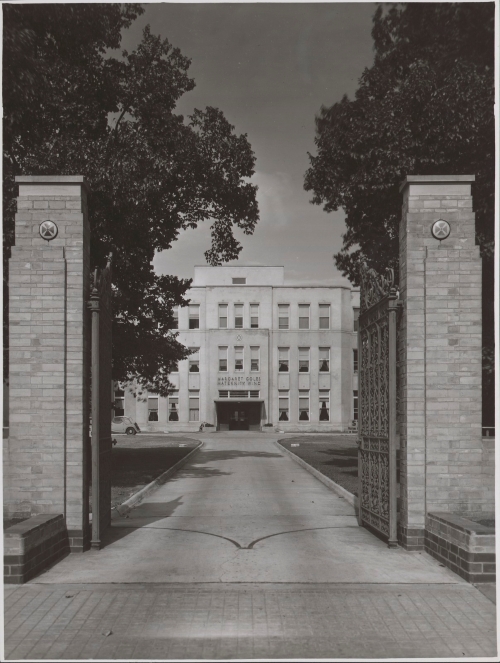
On 2 January 1956 Celia lost her mother. Rose Pearlman was 80 years old.
By the 1960s Celia and Jerry were living at 32 Adelaide Street in Armadale, in Melbourne’s leafy eastern suburbs. Celia was no longer working as a nurse – if indeed she had continued to do so after her marriage. However, she had most certainly not stopped working. She had maintained her membership of VAJEX and for many years had made monthly visits on behalf of the association to Ward 2 of the Heidelberg Repatriation General Hospital (formerly the 115th Heidelberg Military Hospital), which had been adopted by VAJEX. She would take afternoon tea, and the patients always looked forward to her visits. After spending time in Ward 2, Celia would visit every Jewish patient in the hospital. In March 1967, in recognition of her service, she was appointed a life member of VAJEX – the first woman to be thus honoured.
Celia was also a member of the women’s section of the Caulfield RSL and was at one time vice president.
Jerry died on 14 April 1991 in Armadale. He was 84 years old. Sometime after Jerry’s death, Celia moved to Sale in Victoria’s Gippsland region, where Derek lived. She died on 9 February 2002, 15 days before her 96th birthday, and was buried at the Sale Public Cemetery.
In memory of ‘Pearlie.’
SOURCES
- Ancestry.
- Auckland Museum, Middle East Troopship Convoys, 2 NZEF 1939–1945 (Michael Ward Design, 1 Nov 2020).
- Australian War Memorial, ‘2/22nd Australian Infantry Battalion.’
- Australian War Memorial, ‘2/6th Australian Infantry Battalion.’
- Australian War Memorial, ‘El Alamein Battles.’
- Australian War Memorial, ‘Greek Campaign, 1941.’
- Australian War Nurses, ‘Vera Hamilton.’
- BirtwistleWiki, ‘2/6th Australian General Hospital.’
- BirtwistleWiki, ‘2/7th Australian General Hospital.’
- Bisset, J. (1961), Commodore: War, Peace and Big Ships, Angus & Robertson Publishers.
- Cervini, E. (c. 2018), Yizkor for Rose: A Life Lost and Found, Kindle Edition.
- Convoyweb (Arnold Hague database).
- Crouch, J. (1986), A Special Kind of service: The Story of the 2/9 Australian General Hospital 1940–46, Alternative Publishing Co-operative Ltd.
- Egan, V. (revised edition, 2007), Proudly We Served: A History of the 2/5 Australian General Hospital 1940–1945, Australian Military History Publications.
- The Glennie School, ‘Glennie Archives: The History of the Glennie Preparatory School.’
- McMahon, J. P. (2016), Monica’s War: An Australian Army Matron in Australia, New Guinea and Japan, Boolarong Press.
- National Archives of Australia.
- Plowman, P. (2003), Across the Sea to War, Rosenberg Publishing.
- Public Record Office Victoria, Inward Overseas Passenger Lists (Sept–Dec 1888), VPRS 947/P0000.
- Public Record Office Victoria, Unassisted passenger lists (1852-1923), VPRS 947 (Oct–Dec 1891).
- Public Record Office Victoria, Unassisted passenger lists (1852-1923), VPRS 947 (May–Aug 1895).
- Sands & McDougall’s Directory of Victoria (editions of 1915, 1920 and 1925), State Library Victoria.
- State Library Queensland, John Oxley Library, ‘Holland Park, Brisbane – Second World War Military Hospital.’
- Sutton, D. (2021) ‘Operation Exporter,’ Wartime (issue 95, winter 2021), Australian War Memorial.
- University of NSW Canberra, Australians at War Film Archive, Alice (Bobby) Penman, interviewed 27 May 2003, archive no. 346.
- University of NSW Canberra, Australians at War Film Archive, Anne Leach (née Metzke), interviewed 7 July 2004, archive no. 2083.
- University of NSW Canberra, Australians at War Film Archive, Edward (Max) Beaumont, interviewed 28 May 2003, archive no. 209.
- University of NSW Canberra, Australians at War Film Archive, Jean (Elsie) Parry, interviewed 6 May 2003, archive no. 77.
- University of NSW Canberra, Australians at War Film Archive, John Wilson, interviewed 8 May 2003, archive no. 69.
- Walker, A. S. (1962), Australia in the War of 1939–1945, Series 5 – Medical, Vol. II – Middle East and Far East, Part I, Chap. 12 – Greece (pp. 230–272), Australian War Memorial.
- Walker, A. S. (1962), Australia in the War of 1939–1945, Series 5 – Medical, Vol. II – Middle East and Far East, Part I, Chap. 16 – Occupation of Syria (pp. 347–364), Australian War Memorial.
- Walker, A. S. (1962), Australia in the War of 1939–1945, Series 5 – Medical, Vol. II – Middle East and Far East, Part I, Chap. 17 – El Alamein (pp. 365–391), Australian War Memorial.
- Walker, A. S. (1961), Australia in the War of 1939–1945, Series 5 – Medical, Vol. IV – Medical Services of the Royal Australian Navy and Royal Australian Air Force with a Section on Women in the Army Medical Services, Part III – Women in the Army Medical Services, Chap. 36 – The Australian Army Nursing Service (pp. 428–76), Australian War Memorial.
- Wigmore, L. (1957), Australia in the War of 1939–1945, Series 1 – Army, Vol. IV – The Japanese Thrust, Part I – The Road to War, Chap. 4 – To Malaya (pp. 44–61), Australian War Memorial.
- Wikipedia, ‘Operation Pamphlet.’
- Wilson, H. C. (1995), Physiotherapists in War: The Story of South Australian Physiotherapists during World Wars I and II, Japan-Korea and Vietnam.
- Wikipedia, ‘Operation Pamphlet.’
- Wikipedia, ‘Syria–Lebanon Campaign.’
SOURCES: NEWSPAPERS AND GAZETTES
- The Age (Melbourne, 8 Aug 1932, p. 9), ‘Nurses’ Examination.’
- The Age (Melbourne, 12 Sept 1946, p. 4), ‘Law Courts.’
- The Argus (Melbourne, 1 Oct 1888, p. 11), ‘The N.D.L. S.S. Hohenstaufen.’
- The Australian Jewish Herald (Melbourne, 16 Feb 1928, p. 5), ‘Ballarat.’
- The Australian Jewish Herald (Melbourne, 18 Jul 1940, p. 3), ‘Jewish Nurse Joins A.IF.’
- The Australian Jewish Herald (Melbourne, 5 Sept 1940, p. 8), ‘Personal Pars.’
- The Australian Jewish Herald (Melbourne, 3 Apr 1941, p. 1), ‘Military Medal Award to Victorian.’
- The Australian Jewish Herald (Melbourne, 29 May 1941, p. 2), ‘Jewish Nurse Writes Home.’
- The Australian Jewish Herald (Melbourne, 1 Aug 1947, p. 8), ‘World of Women.’
- The Australian Jewish Herald (Melbourne, 8 Aug 1947, p.12), ‘Returned Soldiers’ Circle.’
- The Australian Jewish Herald (Melbourne, 31 Oct 1947, p. 13), ‘Social Notes.’
- The Australian Jewish Herald (Melbourne, 17 Mar 1967, p. 16), ‘Rare Tribute to a Woman.’
- The Australian Jewish News (Melbourne, 12 Oct 1945, p. 7), ‘Advertising.’
- The Ballarat Courier (Vic., 13 Dec 1917, p. 6), ‘Humffray Street School.’
- The Ballarat Star (Vic., 7 Aug 1909, p. 3), ‘Police Courts.’
- The Ballarat Star (Vic., 9 Feb 1911, p. 4), ‘Brass or Gold.’
- The Ballarat Star (Vic., 19 Mar 1913, p. 2), ‘Obituary.’
- The Ballarat Star (Vic., 1 May 1913, p. 4), ‘Bear v. Pearlman.’
- The Ballarat Star (Vic., 20 May 1914, p. 7), ‘Licensing Offences.’
- The Evening Echo (Ballarat, Vic., 11 Dec 1915, p. 2), ‘Events of The Day.’
- The Hebrew Standard of Australasia (Sydney, 11 Oct 1918, p. 11), ‘Ballarat.’
- The Herald (Melbourne, 5 Jan 1897, p. 1), ‘Sacrilege Punished.’
- The Herald (Melbourne, 18 Aug 1909, p. 6), ‘Which Testament?’
- The Herald (Melbourne, 8 Aug 1940, p. 8), ‘150 Nurses for A.I.F.: Additional Lists from All States.’
- Jewish Herald (Vic., 8 Jul 1910, p. 4), ‘Ballarat.’
- Jewish Herald (Vic., 5 Aug 1910, p. 5), ‘Ballarat.’
- Jewish Herald (Vic., 26 Sept 1913, p. 6), ‘Ballarat.’
- New South Wales Police Gazette and Weekly Record of Crime (Sydney, 11 Nov 1896 [Issue No.46], p. 404), ‘Apprehensions, &c.’
- Smith’s Weekly (Sydney, 3 Nov 1945, p. 3), ‘How Army Treats Its Mental Patients.’
- Smith’s Weekly (Sydney, 24 Nov 1945, p. 4), ‘Treatment of Army Mental Patients.’
- The Telegraph (Brisbane, 15 Oct 1945, p. 2), ‘Ex-Pow Want to See Old Mates.’
- Victorian Government Gazette (No. 151, 13 Aug 1936), ‘Register of Nurses.’

