| Conflict | First World War |
| Nursing Service | Australian Army Nursing Service |
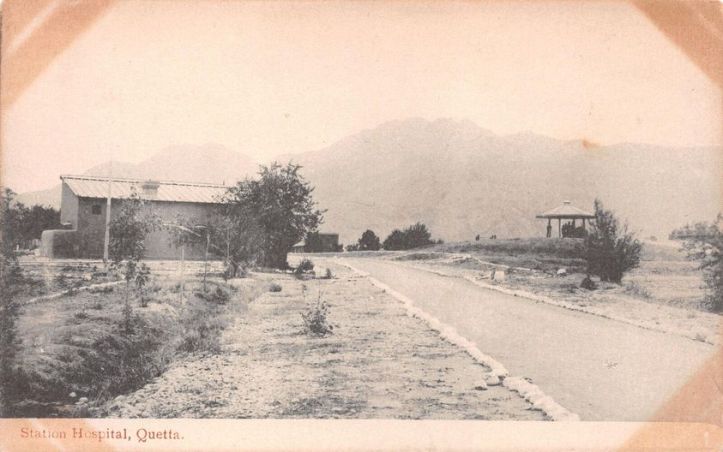
| Units | No. 2 Australian General Hospital (Cairo), No. 4 Australian Auxiliary Hospital (Abbassia), Station Hospital Quetta |
| Overseas Service | Egypt, India |
| Final Service No. | |
| Final Rank | Staff Nurse |
FAMILY BACKGROUND
Lettitia Gladwys Moreton (more commonly spelled Letitia Gladys) was born in 1891 in Brim, a small town north of Warracknabeal in Victoria’s southern Mallee district. Gladys, as she was known, was the elder of two daughters born to Letitia Dexter Milledge (1866–1953) and Samuel Henry Moreton (1857–1936).
Samuel Moreton, known as Henry, was born at Purnim, near Warrnambool in southwest Victoria, and later moved with his family to a property on Lake Bolac, where his father grew oats and wheat, farmed sheep and bred horses. As a young man in the early 1880s Henry followed the pioneer trail to the wheat and sheep country around Warracknabeal and proceeded to buy and sell Crown land leases secured under the Mallee Pastoral Leases Act. He was soon joined in the district by other members of the Moreton family, notably his brother John Knight Moreton, who became a major landowner, and his father, Samuel, one of the pioneers of the township of Sheep Hills.
In time Henry met Letitia Milledge. Letitia had grown up in Kyneton, a town 80 kilometres north of Melbourne, and was one of 15 children. Her father had spent time on the Victorian Goldfields before becoming a successful ironmonger.
Letitia and Henry married on 6 November 1889 at St. Paul’s Church in Kyneton and went to the Gippsland Lakes in eastern Victoria for their honeymoon. After returning, they settled in Brim, where Henry farmed, and soon Gladys was born. In 1893 her sister, Doris, was born.
In November 1897 Henry was declared insolvent, due to the depreciation of his property, the low price of farm produce and stock, and pressure from creditors. This was the time of the Federation Drought, which held eastern Australia in its grip for five years and devasted many Mallee farmers. In May 1898 Henry applied through the Horsham Court of Insolvency for a certificate of discharge and for dispensation from the requirements of the Insolvency Act of 1890, but the outcome is unknown.
Henry sold the farm in Brim and the family moved to Drummond Street in Ballarat, where Letitia Moreton supplemented the household income through nursing. (She became registered with the Royal Victorian Trained Nurses’ Association in July 1902.) In late July 1906 Henry was able to purchase the farm of Mr. W. Calway of Leigh Creek, Bungaree, near Ballarat. The property later became known as ‘St. Albans.’
NURSING
In March 1909, at the age of 17 or 18, Gladys moved to Melbourne to begin nurses’ training at the Salvation Army’s Bethesda Hospital, which opened in 1906 on Erin Street in Richmond. It is possible that her paternal aunt Mercy (or Mercie) Moreton, a brigadier in the Salvation Army and later matron of Bethesda, helped her to secure the position. Mercy’s sisters, Mary Ann and Emily, were also Salvation Army officers.
Among Gladys’s fellow trainees at Bethesda was a nurse four years her senior from New South Wales by the name of Jane Gant, with whom Gladys became good friends. Unlike Gladys, Jane had trained as a Salvation Army officer at the Salvation Army Training Home in Melbourne before beginning her nurses’ training.
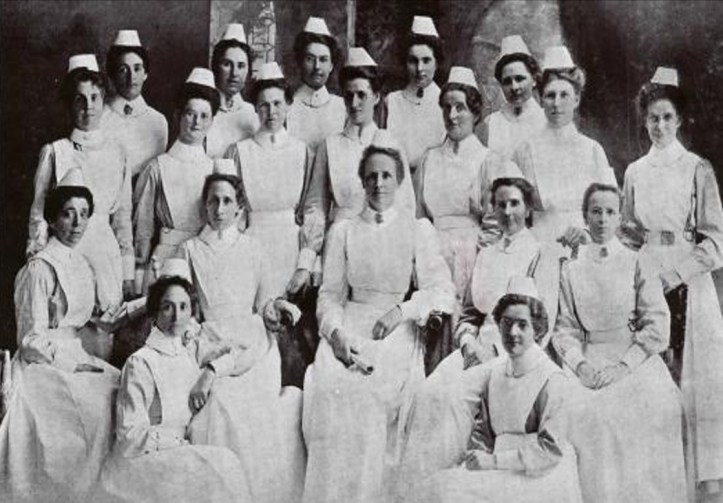
Gladys finished her nurses’ training in April 1914. She received her certificate from the Royal Victorian Trained Nurses’ Association and stayed on at Bethesda as a staff nurse. During her time at Bethesda she had worked as a ward charge nurse and a charge night nurse and had gained a great deal of experience in surgical work – as had Jane Gant.
THE GREAT WAR
On 5 August that year Australia went to war. Three months later, when the 20,000-strong first contingent of the Australian Imperial Force (AIF) sailed to Egypt, 25 nurses of the Australian Army Nursing Service (AANS), led by Principal Matron Nellie Gould, accompanied it. Around 180 additional nurses departed in December, and over the following months hundreds more would volunteer to serve.
Gladys was one of them. Her application was accepted, and in July 1915 she was attached to No. 2 Australian General Hospital (AGH) as a reinforcement staff nurse. Knowing that she was soon to embark for overseas, she spent the weekend of 3 and 4 July at Leigh Creek with her parents.
On 16 or 17 July Gladys boarded HMAT Orsova at Port Melbourne with a contingent of 184 AANS nurses attached to various medical units. The ship, which had left Sydney on 14 July, was sailing with the 9th convoy of the AIF, and apart from the nurses and other medical staff was carrying around 2,300 reinforcement troops to Egypt.
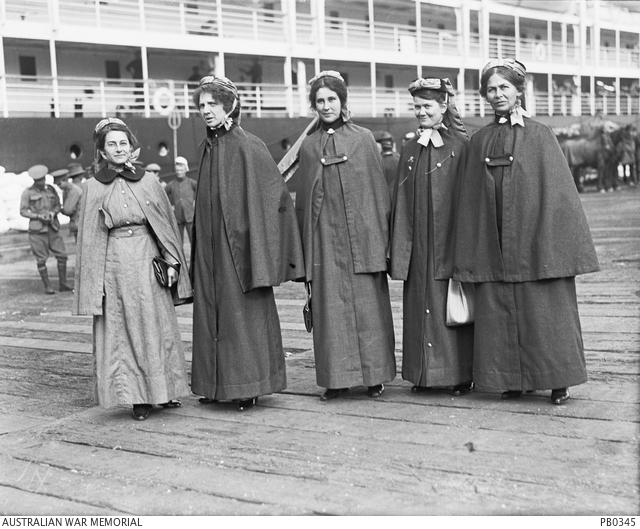
The Orsova departed Melbourne on 19 July and sailed via Fremantle and Aden to Port Suez, arriving on 11 August. Here Gladys and 49 other nurses of No. 2 AGH disembarked and caught the 5.20 pm train to Cairo. After a 10-hour journey they were met by Lieutenant Colonel Thomas Morgan Martin, the commanding officer of No. 2 AGH, and taken to the Ghezireh Palace Hotel on Ghezireh Island, immediately to the west of Cairo, where the unit was based.
EGYPT: No. 2 Australian General Hospital
No. 2 AGH had arrived in Egypt in January 1915 on HMAT Kyarra and had taken over Mena House, a luxury hotel situated close to the Pyramids, where Principal Matron Gould and other nurses of the original contingent had established themselves. Faced with a rush of casualties following the opening of the Gallipoli campaign on 25 April 1915, the unit had moved into the Ghezireh Palace Hotel, which had a 1,000-bed capacity, and maintained the 500-bed Mena House as an overflow hospital.
By mid-1915 the fighting on the Gallipoli Peninsula had ground to a stalemate, and Mena House was mothballed. It reopened again as a convalescent depot at the beginning of August in anticipation of a series of Allied operations aimed at breaking the Gallipoli deadlock. The August Offensive led to thousands of Allied dead and wounded for no strategic gain.
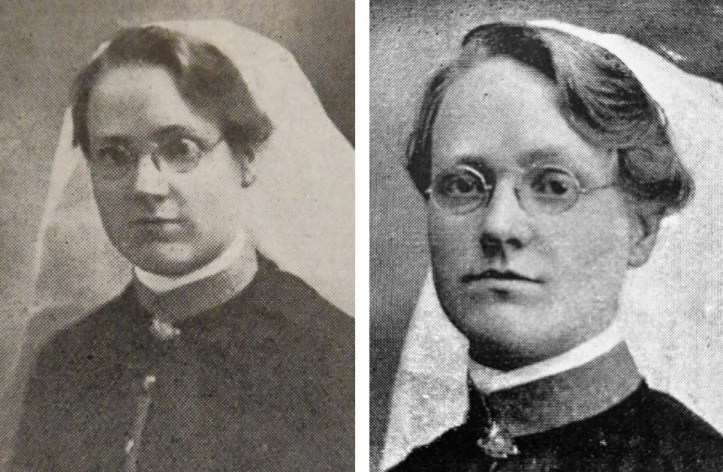
Gladys and her colleagues arrived at Ghezireh on the morning of 12 August, six days after the commencement of the offensive, and were placed four to a room, with mattresses on the floor for beds. After a few hours’ rest, they reported to their wards, where many hundreds of Australian casualties from the renewed fighting on the peninsula had arrived that morning. Though cheerful, the men were in a very poor way. In a narrative submitted to A. G. Butler in 1919, Gladys’s colleague Blodwyn Williams wrote that she would never forget her first experience of the sick and wounded soldiers:
It was simply dreadful to see the poor boys, absolute wrecks, nothing but skin and bone, and the heat and flies were a great trial at times.
Gladys was similarly touched. In a letter dated 27 August 1915 (quoted in Goodman, p. 28), she wrote:
I like to work and the patients are my first thought. Military nursing is quite different from other nursing and it takes quite a while to get used to it. You should see the pieces of bullets and shrapnel and bomb that they extract from the limbs and the various parts of the boys’ bodies. To see them coming in, one ambulance after another from the trains, some are so thin, run down and tired, and after they have had their wounds dressed and a good feed, they sleep like little boys.
By the end of August the number of casualties was tailing off. The offensive had failed. Nevertheless, there was not much respite for Gladys and the other nurses at No. 2 AGH, for as summer gave way to autumn, disease and illness proliferated, and September saw the highest rate of non-combat admissions in the entire war. At the beginning of October No. 2 AGH and its sister hospital, the 1st AGH, based at the Heliopolis Palace Hotel on the eastern outskirts of Cairo, were packed with cases of typhoid, dysentery and influenza.
Towards the end of the year Gladys was detached to the Maadi Hospital, in Maadi, an attractive garden suburb on Cairo’s southern outskirts, where Light Horse units had encamped at the beginning of 1915. She celebrated her first wartime Christmas at Maadi and described it in a letter home (quoted in Campbell):
We gave our patients out at Ma’adi Hospital a very nice little Xmas. A very nice dinner, roast turkey, chicken, ham, plenty vegetables, plum pudding, claret cup, beer, soft drinks, sweets, etc. They did enjoy it, poor things. The Drs helped us with it too, one carved the turkey and ham while the other gave out the drinks. The place was rather nicely decorated and everyone enjoyed the day.
Gladys returned to No. 2 AGH at Ghezireh on 7 January 1916, but within two days came down with influenza and was sent to Alexandria to recuperate at the Red Cross Nurses’ Rest Home in Ramleh. After recovering she returned to Ghezireh.
EGYPT: No. 4 Australian Auxiliary Hospital
In December 1915 Australian and New Zealand troops were evacuated from the Gallipoli Peninsula and subsequently reorganised as I Anzac Corps and II Anzac Corps. While the latter remained for the time being in Egypt, I Anzac Corps under Lt. Gen. Sir William Birdwood was transferred to France in March and April 1916. Nos. 1 and 2 AGHs travelled with the corps. However, many nurses remained in Egypt – among them Gladys, who was transferred to No. 4 Australian Auxiliary Hospital (AAH), an infectious diseases hospital based at Abbassia on the outskirts of Cairo, around 5 kilometres east of Ghezireh.
No. 4 AAH had been established in August 1915 when No. 1 AGH, in preparation for the August Offensive, occupied part of the Egyptian Army Barracks. In October 1915 the hospital had begun to operate independently of No. 1 AGH and came to specialise in respiratory tract infections, which included measles, mumps, scarlet fever, scabies, meningitis, diphtheria etc.
Under the guidance of the matron of No. 4 AAH, Pauline Pierre-Humbert, Gladys treated a rich variety of diseases. In a letter dated 29 April 1916 (quoted in Harris, p. 170), she writes that
we are not very busy just now. I have 8 dips. [diphtheria cases], one whooping cough, eight scarlet fevers, and twenty-five skins [skin disease cases], two chicken pox and two under observation so you like the variety? I do.
In the same letter (this time quoted in Barker, p. 58), Gladys describes the events of 25 April 1916. The Gallipoli landings had occurred just 12 months prior but the day was already known as Anzac Day.
We celebrated Anzac Day with a concert and supper in the morning, the matron and night sister went to the service at the Anzac Hostel. There was a brass band, a French orchestra and some very sad hearts there. After the service all the bugle calls were sounded and then the boys went to the cemetery and placed flowers on the graves. Back at No. 4 BAH [sic] the shed was crudely decorated with greens and flowers and coloured lights for the Anzac supper after the concert. While the concert was on, one of the boys put a little donkey in one of the beds and went for me. He told me that there was a new patient. Off I went and when I saw this little thing lying there, blinking his eyes, I did laugh. I never dreamed a little animal would lie there like that. I left it till the boys came back from the concert. You should have seen them laughing and running for me to see the fun, so I did not let on that I had left it there. It was 2am before anyone settled down to sleep.
The cemetery was the Cairo War Memorial Cemetery in Al Kafour, where, among other Australians, Staff Nurses Louisa Bicknell and Norma Mowbray of No. 1 AGH were buried. They had each died of illness.
By now summer was on the way, and the days were heating up, as Gladys noted in a letter written on 14 May 1916 (quoted in Barker, p. 58):
It is atrociously hot. You have no idea what it was like.… We went to church at 11am today, and I took some of my patients. The dear old kids, it is Mother’s Day and each one wore a white flower in his coat. Some of them had a chokey feeling and told me that they had been drinking heavily since they left Australia and had never touched it before. I feel so sorry for them and do all I can to make them feel a little happier.
INDIA
In May 1916, AIF Headquarters in Cairo received a cable requesting that 50 Australian nurses, ideally fully trained, be sent to Bombay to work in British military hospitals for, where they would (ostensibly) look after sick and wounded men from the Mesopotamian theatre. Upon receipt of the cable, AIF Headquarters in Cairo cabled army authorities in Melbourne for permission to despatch the nurses. The authorities in Melbourne then made a formal offer of the 50 nurses to the Indian Government, which the latter gratefully accepted.
At first, volunteers were called for, but as few nurses came forward – Staff Nurse Evelyn Davies from Victoria was one who did – the majority was chosen. Gladys either volunteered or was chosen, as was a nurse that she knew from Bethesda, her friend Jane Gant. Jane and fellow Bethesda trainees Georgina Collins, Eva Eggleston and Alice Toft had joined the AANS a few months after Gladys had. They had been attached to No. 1 AGH and in November 1915 had sailed from Melbourne to Egypt on the Orsova, arriving in December. Another of the nurses selected for the 50 was Staff Nurse Amy O’Grady from Victoria. In charge of the contingent was Sister Emily Hoadley, a veteran of the South African War.
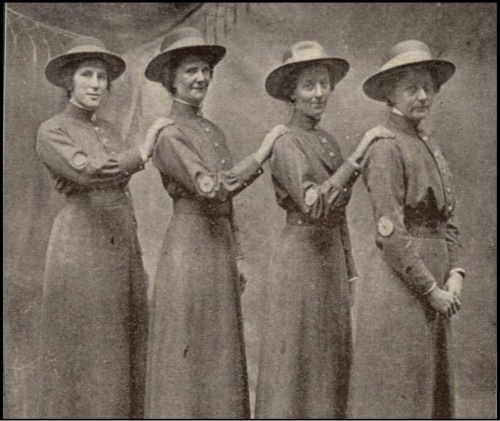
On 12 July 1916 the 50 nurses departed Cairo on the 8.00 pm hospital train for Suez. They arrived in the port city the next day at around 1.00 pm to find their ship, the Neuralia, lying at anchor opposite the railway terminus. After having tea on the train the nurses boarded the vessel and at 7.30 am on 14 July embarked for India.
In a letter written aboard the Neuralia (and quoted in Barker, p. 72), Gladys expressed uncertainty over the assignment that lay before the 50 nurses. “We are in the Arabian Sea,” she wrote.
Not sure where we are going, only that it will be somewhere in India. However, we must be wanted or we would not have been asked for.
BOMBAY
After an uncomfortable passage the nurses arrived in Bombay on Sunday 23 July 1916 and were billeted at the luxurious Taj Mahal Hotel. Part of the hotel had been converted into a 600-bed military hospital, and another section into nurses’ accommodation.
While some of the nurses were temporarily detailed for duty at the Freeman Thomas Hospital, 500 metres north of the Taj Mahal Hotel, others, such as Evelyn Davies, took the opportunity to go sightseeing. They visited Victoria Gardens and the Zoo, the Bazaar, the Museum and the Cathedral. They drove to the Hanging Gardens on Malabar Hill, passing the Parsi Tower of Silence en route, and to Bandra Point, around 30 kilometres north of Bombay.
Gladys was one of those posted to the Freeman Thomas Hospital (or perhaps she was posted to another hospital in Bombay). Regardless, in a letter dated 28 July (quoted in Barker, p. 72 and Harris, p. 150), evidently finding the work challenging, she wrote that
It is very heavy work […] We do not have any orderlies, only dark boys and they do not understand us, so consequently we do everything ourselves. The wards are very pretty but have to be kept just so. The poor boys that come in off the ships almost every day … would break your heart. We thought we had sick boys in Egypt, but these are worse.
On Monday 31 July the 50 nurses were issued with orders to proceed in groups of two or three and even singly to different base and station hospitals around India. “They split us up ruthlessly all over India,” wrote Evelyn Davies to her mother on 6 August 1916 from the Station Hospital at Peshawar. “It came as a nasty blow, as we quite expected to be kept as a unit.”
Gladys was assigned to the 220-bed station hospital at Quetta, the capital of the Chief Commissioner’s Province of British Baluchistan. In a letter dated 31 July (quoted in Barker, p. 79), she wrote that
I hear I may have to go to Quetta by myself. It will be a four day train journey. One of the sisters comes with me for the first day, then branches off. They tell me I am going to one of the best places in India.
Quetta had been established as a strategically important outpost of the British Raj in 1876 and was home to the Indian Army Staff College, which had become a cadet training school at the outset of the war.
Days later the nurses dispersed. On 2 August a group of 11 assigned to hospitals in northwestern India departed Bombay on the 5.00 pm train. They travelled fairly comfortably four to a compartment with sleeping berths. Among the group was Evelyn Davies. Staff Nurse Evelyn Nobbs, who was being sent to Lahore, may have been another of them.
QUETTA
Gladys set out for Quetta at around the same time. On 2 August she wrote “unfortunately I happened to be chosen for Quetta and had to leave my mate” (quoted in Rae, p. 230). Could she have been referring to leaving Jane Gant behind in Bombay? Or perhaps leaving a travelling companion on the train on which they had both departed Bombay?
Four days after leaving Bombay Gladys arrived at Quetta alone. In another letter dated 8 August (quoted in Barker, p. 79 and alluded to in Rae, p. 231), she described her journey and her impressions of the hospital:
The train journey was extremely long. I was alone in the train, and although I had a first-class carriage, only the electric fans kept me alive. Quetta is a station hospital, but I am informed I am not on active service, which I do not quite like. There are five English regular nurses and they are very nice … perfectly charming women. It is quite like living privately again. There is a nice little bungalow for the sisters, and our means and servants are all that one could desire. After 3pm we may wear what we like.
In this letter Gladys refers to the fact that although the 50 nurses had understood they would be looking after surgical and medical cases from Mesopotamia, Gladys was far more likely to have been nursing the troops of the 4th Division of the British Indian Army, which was headquartered in Quetta and did not leave India during the First World War. She was not alone; many of the 50 nurses, and many of those subsequently posted to India, complained of being treated as though they were on home service.
Despite the presence of the nice English nurses, Gladys must surely have missed her Australian comrades. We can imagine then her delight at hearing the news that she was soon to be joined by another AANS nurse.
ILLNESS
Gladys’s excitement was tempered by a creeping sickness that came upon her around mid-October 1916. By 20 October she was suffering from a fever and was considered seriously ill. It was at this time that her AANS companion arrived. According to the diary of Eva Egglestone, Gladys’s Bethesda colleague, it was none other than Gladys’s friend Jane Gant.
Jane nursed her friend during the final weeks of her life. By 28 October Gladys was haemorrhaging and was considered dangerously ill with enteric fever (typhoid fever), which is typically brought on by exposure to Salmonella bacteria in food or water contaminated with faecal matter. As the days passed Gladys’s condition worsened. By 11 November she had developed profound toxaemia and her condition was causing the gravest anxiety. She died that day. Jane must have been devastated.
Gladys was buried in the Quetta Government Cemetery, on Baleli Road, Quetta. Sadly there is no longer any trace of her grave.
News of Gladys’s fate was duly cabled home to her parents, and soon the local newspapers were reporting her death. On 24 November 1916 The Ballarat Star stated that Gladys, “having been of an extremely amiable and engaging disposition … leaves a large circle of friends to mourn her death.” In a short obituary printed on 1 December 1916 the same newspaper noted that “Miss Gladys Moreton … was well advanced in her profession, was in all respects quite adapted for the calling [and] was of a gentle and kindly disposition.”
Jane Gant returned to Australia on 3 May 1919. On 11 November that year the following notice appeared in the Melbourne Argus:
MORETON. — In loving memory of my dear friend,
Sister L. Gladwys Moreton, A.A.N.S., who died of illness at Quetta, India, whilst on active service, November 11, 1916.
‘Some day we’ll understand.’
— (Inserted by her loving pal, J. Gant.)
In memory of Gladys.
SOURCES
- Australian War Memorial, ‘Australian Imperial Force unit war diaries, 1914–18 – War Medical, Dental & Nursing. Item number: 26/97/1 Part 1. Title: Australian Army Nursing Service in Egypt.’
- Australian War Memorial, AWM2017.6.224, Letters from Evelyn Davies to Her Family (1916).
- Australian War Memorial, Butler Collection, AWM41 962 (Nurses’ Narratives) Sister R. Derrer.
- Australian War Memorial, Butler Collection, AWM41 1018 (Nurses’ Narratives) Sister E. J. Nobbs.
- Australian War Memorial, Butler Collection, AWM41 1057 (Nurses’ Narratives) Sister B. E. Williams.
- Barker, M. (1989), Nightingales in the Mud: The Digger Sisters of the Great War 1914–1918, Allen & Unwin.
- Bassett, J. (1992), Guns and Brooches: Australian Army Nursing from the Boer War to the Gulf War, Oxford.
- Bentley, A., Ballarat and District in the Great War (Facebook post, 24 July 2017).
- Bond, Lieut. Col. (1919), The Army that Went with the Boys, Salvation Army National Headquarters.
- Burke, E. K. (ed., 1927), With Horse and Morse in Mesopotamia, Arthur McQuitty & Co.
- Butler, A. G. (1938), Official History of the Australian Army Medical Services, 1914–1918, Vol. I – Gallipoli, Palestine and New Guinea, Part I – The Gallipoli Campaign, Chap. XVIII Egypt: August to December (pp. 399–427), Australian War Memorial.
- Butler, A. G. (1943), Official History of the Australian Army Medical Services, 1914–1918, Vol. III – Special Problems and Services, Section III – The Technical Specialties, Chap. XI – The Australian Army Nursing Service (pp. 527–89), Australian War Memorial.
- Campbell, E. (20 December 2012), ‘At War for Christmas,’ Australian War Memorial.
- Goodman, R. (1988), Our War Nurses: The History of the Royal Australian Army Nursing Corps 1902–1988, Boolarong Publications.
- Harris, K. (2011), More than Bombs and Bandages: Australian Army Nurses at Work in World War I, Big Sky Publishing.
- National Archives of Australia, ‘Gladys Moreton Lettitia,’ NAA B2455.
- National Archives of Australia, ‘Orsova July–August 1915,’ NAA MT1384/1.
- Public Record Office Victoria, Royal Victorian Trained Nurses’ Association Nurses Register (No. 1, 1–712, 18 Jul 1901–28 Jul 1903), VPRS 16407/P0001.
- Rae, R. (2009), Veiled Lives: Threading Australian Nursing History into the Fabric of the First World War, Kindle Edition.
Sources: Newspapers
- The Argus (Melbourne, 30 Jul 1883, p. 6), ‘Commercial Intelligence.’
- The Argus (Melbourne, 11 Nov 1919, p. 1), ‘Family Notices.’
- The Ballarat Star (7 Jul 1915, p. 6), ‘Leigh Creek.’
- The Bendigo Independent (Vic., 28 Mar 1916, p. 3), ‘Chaplain’s Work.’
- The Horsham Times (10 Feb 1882, p. 3), ‘Horsham Land Board.’
- The Horsham Times (5 Feb 1884, p. 3), ‘Mallee Special Land Board.’
- The Horsham Times (31 Oct 1884, p. 3), ‘Advertising.’
- The Horsham Times (19 Mar 1889, p. 3), ‘Advertising.’
- The Kyneton Observer (7 Nov 1889, p. 2).
- Leader (Melbourne, 28 Jul 1906, p. 14), ‘Property Transactions.’
- Portland Guardian (22 Sep 1941, p. 2), ‘Mr. John Knight Moreton.’

