| Conflict | Second World War |
| Nursing Service | Australian Army Nursing Service |
| Units | 2/2nd CCS, 2/14th AGH & 113th AGH |
| Overseas Service | Egypt, Palestine, Libya, New Guinea & Singapore |
| Final Service No. | NX70326 |
| Final Rank | Captain |
Family Background
Vera Frances Hamilton was born on 18 January 1910 at Wallabadah, 15 kilometres east of Quirindi in New South Wales. She was the daughter of Sarah Francis Swain (1876–1956) and Alfred Herbert Brewer Hamilton (1870–1941). Sarah was born in Tamworth, around 50 kilometres north of Quirindi. Alfred, who was a farmer, was born at Castle Mountain, just outside Quirindi.
Sarah and Alfred married in Quirindi in 1897. Prior to her marriage, Sarah had lived at Nundle, 60 kilometres east of Quirindi. Afterwards she moved to Alfred’s property, ‘Notlemah’ (a variant of ‘Hamilton’ spelt backwards), on Gaspard Road in Wallabadah.
Over the next 22 years Sarah gave birth to nine children, all born in Quirindi district: Elfreda Wales (Elvie) in 1898, Melba Beryl (Mel) in 1900, Connie Meryl in 1901, Alfred Clarence McFeat – the only boy – in 1903, Patience Ella in 1905, Isla Agnes in 1907, Vera in 1910, Marjorie (Marj) in 1912, and finally Joyce Alison in 1920.
Around 1910, after Alfred sold Notlemah, the family moved to ‘Myola’ in Quirindi district.
NURSING
When Vera grew up, she decided to become a nurse and in 1933 or 1934 began as a trainee at the Scott Memorial Hospital in Scone, 60 kilometres south of Quirindi. In June 1934 she attended the annual Ambulance Ball in Scone, held at the Olympia Theatre in aid of the Upper Hunter St. John Ambulance Association.
Vera’s sisters Mel and Ella were already nurses. In the early 1920s Mel had trained in midwifery at the South Sydney Women’s Hospital and had become registered in 1929. She also trained in general nursing at the Coast Hospital, in Little Bay, Sydney, gaining her registration in 1930. Ella too trained in midwifery at the South Sydney Women’s Hospital and became registered in 1933.
In the 1930s Mel and Ella ran Shirley Private Hospital on Dalley Street in Quirindi, and for a period of time their sister Connie worked there in some capacity. Mel later became a bush nurse at Delungra, 250 kilometres north of Quirindi.
Isla was the fourth Hamilton sister to become a nurse. She trained at Inverell Hospital and passed her Australasian Trained Nurses’ Association (ATNA) examination in 1939.
After three (or four) years’ training, Vera passed her Nurses’ Registration Board final examination in May 1937 and gained her registration in general nursing on 12 May 1938. By then, her parents had left ‘Myola’ after 26 years and had moved to a property in Quirindi known as ‘Hill Crest.’
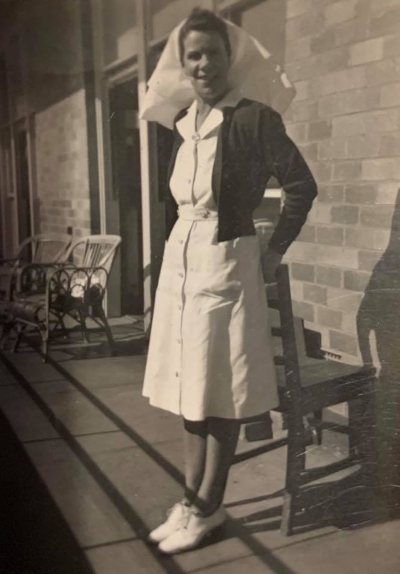
After completing her training, Vera remained on staff at the Scott Memorial Hospital as a theatre nurse. When not working, she was engaged with the social side of hospital life and in September 1937 attended the hospital’s annual ball, held at the Olympia Theatre. She attended again in 1938 and once again in 1939, this time with her younger sisters, Marjorie and Joyce.
WAR
In May 1940 Vera was appointed senior sister at Scott Memorial Hospital following the resignation of Sister F. Jones. By then Australia had entered the Second World War, and thousands of Australian nurses had joined the Australian Army Nursing Service (AANS) and volunteered for service abroad with the Second Australian Imperial Force (2nd AIF). According to Matron Elizabeth Kearey, the principal matron of the AANS in New South Wales, 950 nurses had responded within two days of the call up in her state alone.
Vera was among those nurses who volunteered immediately and by the end of her army career had served in the Middle East and North Africa, in the Netherlands East Indies, and in New Guinea. Some years later she wrote about her wartime experiences and shared her recollections with the Scone Reunion Committee. Eventually her story was sent to the Department of Veterans’ Affairs, which published sections of it on the Anzac Portal website. Her story was also included in Dorothy Durrant’s book Quirindi 1939–1950: Courage and Commitment.
Vera begins her story by recounting her call up and embarkation:
I enlisted when war was declared and about 12 months later was advised to attend for an interview with the Principal Matron (Army) at Victoria Barracks [in Sydney] to be fitted for uniforms etc. but was told not to resign my position at Scott Memorial Hospital as it could be months before my services were required.
When I presented myself at the office on Tuesday [24 September 1940] at 0900 hours, I was told I would probably be sailing at the weekend. Needless to say I was in quite ‘a tizz.’ Being fitted for uniforms, coats etc. was quite something in those days. About three fittings for each. Also visits to Showground for passport photos, x-rays and injections and me a little country lass. Thanks to my sister, who knew the city better than I did, we managed, and when I was laid low with reaction from injections etc., she did my messages, even my packing.
Caught the train to Scone Thursday night, packed my seven years’ accumulation of goods and home to Quirindi Friday night, again catching a train back to Sydney Saturday night to be ready to sail Monday afternoon.
Monday, 30 September 1940 was one of the wettest days Sydney has ever known when, with three of my sisters plus a large cabin trunk, kit bag and hold-all (might say it did just that, it held my stretcher, mattress, sleeping bag and rug, plus anything else I couldn’t fit in elsewhere) we piled into a taxi and were taken to No 1 Wharf [at Pyrmont], from which we were to embark. The guard on the gate later received a tongue lashing from the Commanding Officer because he allowed all four of us to go onto the jetty. The guard did ask if we were all sisters, though of course he meant of the serving member kind.
THE JOHAN DE WITT
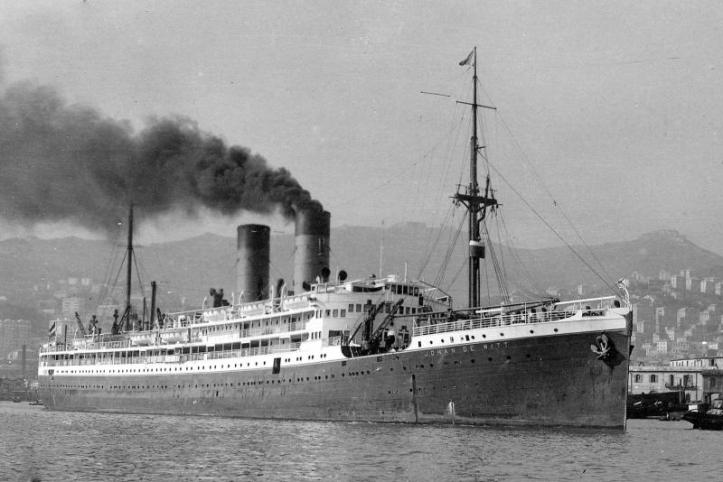
Vera had been detailed for transport duty aboard a Dutch ship, the Johan de Witt, with three other AANS nurses – Sister Mabel Skerman from Queensland and Staff Nurses Sue Malcolm and Gwendoline Tidd from New South Wales. Sister Skerman was in charge, and Vera herself held the rank of staff nurse. The Johan de Witt had escaped the Netherlands on 13 May 1940, three days after the German invasion, and had sailed via the Cape of Good Hope to Tanjung Priok, the port of Batavia in Java.
Vera continues:
Our ship, the Johan de Witt, looking no larger than a Manly ferry but was to hold over 1,000 men of 2/1 Pioneer Battalion plus four sisters – three were members of 2/5 Australian General Hospital (AGH) and little me – detailed for transport duty. We pulled away from the wharf in late afternoon and anchored in harbour until 2.00 am when we were ‘on our way.’ Might I mention I was seasick all of the following day, as were all four of us and many of the troops.
Our ship had previously been a passenger class one sailing the northern seas and was not equipped for the heat of the tropics etc. It was one of 12 ships to leave Amsterdam when the Germans invaded Holland, only five of the 12 making it to England. It was sailed from Amsterdam by a makeshift volunteer crew, the captain being a first mate until then.
Out of Melbourne we were joined by the Nieuw Zeeland, a sistership of the Dutch line [which carried more than 900 troops]. As many of the troops like myself had only just joined the Army and had not had our full quota of injections, the RAP [Regimental Aid Post] was kept busy completing injections as well as attending the sick. I might say here that two of the four sisters were seasick until we arrived at Perth, leaving only two of us to ‘hold the fort.’
We arrived at Colombo where we had four days’ wonderful leave. I was feeling poorly most of the voyage because of the reaction from the many injections I had prior to leaving Sydney, and which were deemed necessary to remain healthy whatever country we happened to be in. I left my smallpox scab in the swimming pool of the Galle Face Hotel. Enjoyed a rickshaw ride and race through city streets and rode in trams strictly for native population only.
The Principal Matron [Grace Wilson] and four sisters from Victoria were on the Nieuw Zeeland and we were kept somewhat subdued by our charge sister saying she would report us to the Principal Matron.
Grace Wilson, a highly decorated Great War nurse, had been appointed matron-in-chief of the AANS on 1 October 1939. She was called up for full-time duty in May 1940 and attached to the Mediterranean Directorate at Army Headquarters in Melbourne. On 17 September she was appointed to the 2nd AIF and was now sailing to the Middle East to take up her duties. Two of the four Victorian nurses on the Nieuw Zeeland were Sister Jean Headberry and Sister Patricia Chumley, both of whom had been appointed as Matron Wilson’s assistants.
MANDATORY PALESTINE AND EGYPT
From Colombo the Johan de Witt and the Nieuw Zeeland sailed to Port Tewfik, the port of Suez in Egypt. They then entered the Suez Canal and stopped at Kantara, an important Allied medical, logistical and transit hub straddling both sides of the canal.
On 1 November 1940 we arrived at El Kantara where we disembarked and, saying farewell to the Pioneers, we journeyed by train to Gaza [in Mandatory Palestine] where we were met by Miss Fall, a previous matron of Quirindi Hospital and now matron of 2/1 AGH, and Miss Sage, who was to be the area matron.
Miss Fall was Matron Constance Fall, who on 9 January 1940 had embarked for the Middle East on the Empress of Japan in charge of the nurses of the 2/1st AGH, the first contingent of AANS nurses to travel abroad in the Second World War. The 2/1st AGH had established its hospital at Gaza Ridge and was tasked with looking after the troops of the 6th Division, 2nd AIF, who were encamped around the nearby town of Julis. Miss Sage –Matron Annie Sage – had embarked for the Middle East on 15 April 1940 with the second contingent of AANS nurses, those of the 2/2nd AGH, who were farmed out to the 2/1st AGH and to various (British) Royal Army Medical Corps hospitals until their own hospital was established at Kantara in December 1940.
[I] was separated from my cabin mate Sue [Malcolm] and Sisters Skerman and Tidd and [am] tenting with Sisters Headberry and Chumley (ex-Victorians off our sister ship the Nieuw Zeeland). We were now attached to 2/1 AGH and quickly found ourselves on duty. We later had disembarkation leave in Jerusalem, visiting many of the Biblical places such as The Mount of Olives, Church of Ascension, Garden of Gethsemane, Rock of the Skull, Old Roman Road (to me lacking any repairs since Biblical days), Dead Sea where we tried to swim – no chance of drowning – and so many of well-known ancient names.
Visited Tiberius and the Sea of Galilee, a really most beautiful place, so peaceful and serene – well, it was then. On to Nazareth and its many famous places. Visited the Old City of Jerusalem, the Temple area and the Wailing Wall. Walked the 14 Stations of the Cross. One could not come away without being affected by it all.
When leaving for overseas I was told I was detailed for transport duty between Middle East and Australia but on arrival back at Gaza Ridge I was told I was to be attached to 2/6 AGH. But the day they arrived [1 February 1941] I left to join the 2/2 Casualty Clearing Station (CCS).
Whilst working with the 2/1 AGH I received news of the death of my father – the news arrived on my birthday making me feel very much alone. On 1 February 1941 I say farewell to my friends and journey by train from Gaza to El Kantara on the first leg of my journey to join my new unit, the 2/2 CCS. It was a British troop train with little me the one and only Australian and female. The soldiers, with a sergeant in charge, were crowded into carriages like cattle trucks whilst I rode in splendour in a 1st class carriage of some magnificence. I had received letters from home as I was leaving on my journey and had not had time to read them. One of them was from home telling me of my father’s illness and death.
It was a seven-hour journey, and with only the guard for company, I wept profusely. The poor guard (no speaka de English) tried to comfort me. That was when I really felt alone. I solved the problem by managing to see the sergeant and suggesting that he and some of his boys join me.
At El Kantara I am again the one lone female with no one to see me on my journey as I say farewell to my English friends but not before the sergeant had fed his troops (I minded the baggage) and he saw me safely across the canal with my three large pieces of luggage plus camels, donkeys etc. on a barge for all and onto a civilian train bound for Ben Har [a junction town near Zagazig]. This train was overcrowded and again I was the only foreigner and female as far as I could see. It was supposed to be a 1st class carriage but very crowded with members of the local population – Arabic, with no speaka de English once again. When one opened the door [one] was met with urine and its smell flowing along the corridor. Might say at this stage all I could think of was the Pioneer theme song: ‘Passengers must please refrain from passing water whilst the train is at the station for a while. If you must pass water to call a porter who will place a vessel in the corridor,’ sung to the tune of ‘Humoresque.’ In this instance I would say there was no porter and no vessel.
At Ben Har and in the middle of the night I again changed trains, this time having to get my own baggage from one railway station to the opposite side for a train to Alexandria – don’t ask me how I managed that particular exercise as I had said farewell to the British sergeant and his troops at El Kantara. It was certainly with a great sigh of relief me and my three large pieces of luggage were once again on our way, this time the train was ‘very sweet, very clean’ in comparison to the previous one.
Again no one to meet me at Alexandria at 2.00 am, nor had anyone ever heard the name of one NX70326 Sister Vera Hamilton, a member of His Majesty’s Medical Services 2nd AIF. Fortunately there was a British Army truck at the station which took me to the 5th British Hospital where I was given Matron’s lounge to sleep on for what was left of the night.
[It was] 2 February and 7.15 am and I just couldn’t believe so much had taken place in the last 24 hours. After much telephoning and one of the sisters remembering she had spoken to some Australian sisters who were staying at Windsor Palace Hotel, I finally joined up with my new unit, the 2/2 CCS.
THE 2/2ND CASUALTY CLEARING STATION
The 2/2nd CCS had been raised in May 1940 at Redbank, Queensland under the charge of Lieutenant Colonel Kenneth Joseph G. Wilson. The unit moved to the Brisbane Exhibition Grounds in September and established an 80-bed hospital in the basement of the Ernest Baynes Stand. In October 1940 eight AANS nurses were attached – like the male staff of the unit, all Queenslanders: Sister Vida Paterson (known as Vi) and Sister Marcia Thorpe, and Staff Nurses Edna Finlay, Rhoda Golden, Margaret Marshall, Phyllis Pym, Mary Wallace and Heather Wilson. They were billeted nearby at the Brisbane Children’s Hospital.
On 9 November the eight 2/2nd CCS nurses were sent to the southern states for pre-embarkation training, four to Sydney and four to Melbourne. They were farewelled at South Brisbane Station by Colonel George Macartney, Deputy Director Medical Services for Northern Command, and Matron Eunice Paten, Principal Matron for Northern Command. Sister Paterson and Staff Nurses Golden, Marshall and Pym alighted in Sydney, while Sister Thorpe and Staff Nurses Finlay, Wallace and Wilson continued to Melbourne.
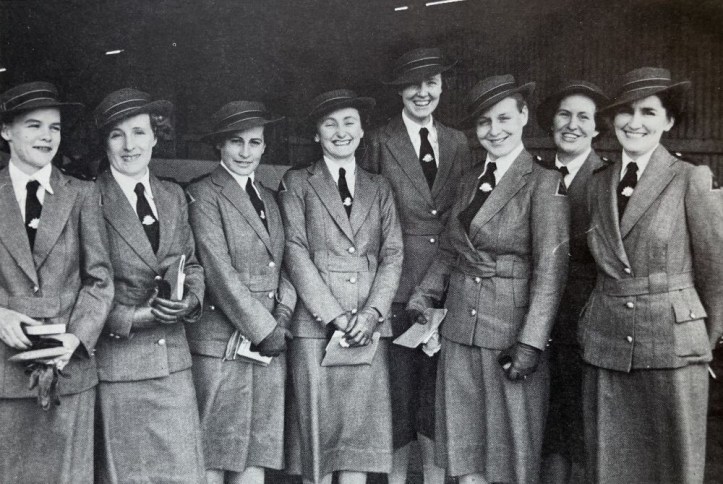
On 13 November the Melbourne four travelled to Port Melbourne and embarked on HMT Stratheden – most likely on transport duty. On 14 November their four colleagues in Sydney embarked on HMT Orion with the male staff of the 2/2nd CCS, who had arrived that day after entraining overnight from Brisbane.
The Orion and the Stratheden rendezvoused somewhere south of Tasmania or in the Bight – Bass Strait had been mined by a German raider – and together with HMT Strathmore and HMT Batory and a number of escort vessels, sailed as Convoy US.7. The convoy, which carried around 10,000 Australian and New Zealand troops, travelled via Fremantle and Colombo and on the evening of 15 December reached Port Tewfik. At daylight on 16 December the Stratheden and the Orion (and perhaps the other ships) entered the Suez Canal, and that afternoon the Stratheden arrived at Kantara. The following day the four 2/2nd CCS nurses disembarked and entrained east for the town of Dimra (today the Israeli town of Erez) in Gaza, presumably with 2nd AIF troops headed for camp.
The Orion continued into the Mediterranean and early on the morning of 17 December arrived at Haifa on the northern coast of Mandatory Palestine. Vi Paterson, Rhoda Golden, Marshall and Pym and the 2/2nd CCS personnel disembarked the following day and entrained south for Dimra.
After spending Christmas and New Year at Dimra, late at night on 4 January 1941 the eight nurses and the male staff of the 2/2nd CCS boarded a train at Gaza station, 10 kilometres from Dimra, and at around 1.00 am on 5 January set off for Egypt. Arriving at Kantara at around 7.30 am, they had breakfast, then entrained for Alexandria via Ismailia and Zagazig. By the evening of 5 January they had arrived at Amiriya, in the desert 30 kilometres southwest of central Alexandria, where the unit was to stage pending events in the Western Desert campaign.
THE WESTERN DESERT CAMPAIGN
In September 1940 the Italian 10th Army invaded Egypt from Bardia, a port town in Cyrenaica (eastern Libya) around 25 kilometres west of the Egyptian frontier, forcing the small British force at Salum, on the Egyptian side of the frontier, to withdraw to Mersa Matruh, the principal British base in the Western Desert. The Italians advanced as far as Sidi Barrani, 100 kilometres east of Bardia, and dug in.
In response to the Italian offensive, General Archibald Wavell, Commander-in-Chief Middle East, planned a counteroffensive, Operation Compass, to dislodge them. The men of the 6th Division, 2nd AIF were to be part of the offensive and by November had relocated from Julis in Mandatory Palestine to Amiriya.
Operation Compass was launched on 9 December by British and Indian forces and by the end of December the Italian 10th Army had been forced back to Bardia. By then, too, the 6th Division brigades had moved forward from their camps around Amiriya to relieve the Indian troops south of Bardia, and on 3 January 1941 the first major Australian action of the Second World War took place. With the support of British artillery and armour, the Australians attacked Bardia and on 5 January captured the town. The Italian 10th Army retreated westwards, and thousands of prisoners were taken.
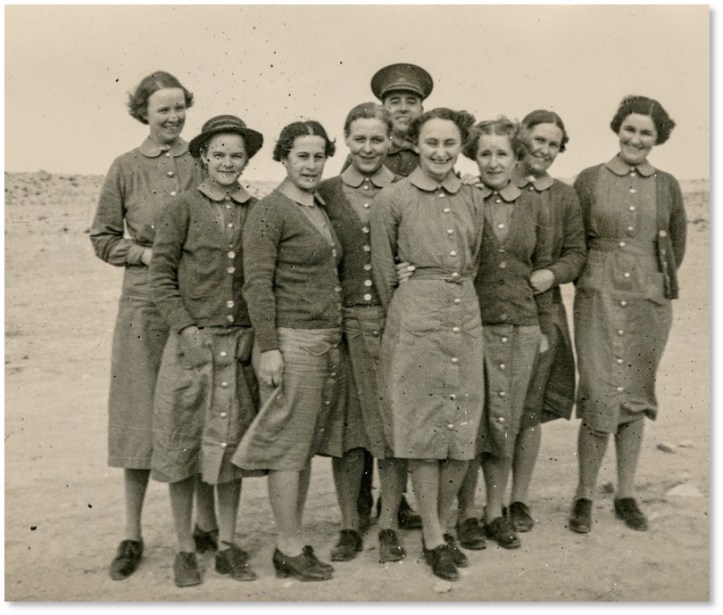
Shortly after 8 January the 2/2nd CCS nurses were joined at Amiriya by the eight nurses of their sister hospital, the 2/1st CCS, which had been based at Mersa Matruh since late December. After the capture of Bardia, Australian casualties began to be evacuated directly to Alexandria. The workload of the 2/1st CCS slackened, and the decision was taken to send the nurses back to Amiriya.
With the Italians in full flight, the Australians continued to Tobruk, 100 kilometres west of Bardia, taking it by 22 January. Two days later, the 2/2nd CCS now having received movement orders to proceed to Tobruk, the 2/2nd CCS nurses and their 2/1st CCS peers were taken into Alexandria and billetted at the Windsor Palace Hotel, where they were to stay pending further orders. On 26 January an advance party of the 2/2nd CCS left Amiriya for Tobruk, while the main body arrived on the Maid of Malta on 29 January after a fairly hellish voyage.
ARRIVAL AT ALEXANDRIA AND RETURN TO KANTARA
As we have seen already, on 2 February 1941 Vera arrived at the Windsor Palace Hotel and joined her new colleagues. She replaced Staff Nurse Rhoda Golden, who was attached to the 2/1st AGH that same day, having been reallotted to the 2/6th AGH – the unit Vera was meant to have joined, which had only just arrived at Gaza Ridge.
Vera now picks up her story:
The unit comprised little me and seven other sisters, and was I glad to see them, or was I? The menfolk belonging to our unit were in the desert with the frontline troops and it was deemed unsafe for the womenfolk to join them. They were receiving patients direct from the combat area [at that time around El Agheila, 500 kilometres west of Tobruk].
Met up with many old friends from the Johan de Witt who were attached to head office and who were staying at the same hotel, so really had a Cooks’ tour of Alexandria and its surrounds. Then [on 5 March] once again joined the train for El Kantara but with a big difference, a carriage for the eight of us and in style in comparison with my previous train journey.
The 2/1st CCS nurses, who had been attached to the 2/1st AGH and were later sent to Nazareth, may have been on the train too.
At El Kantara we joined up with the 2/2 AGH [on the eastern side of the Suez Canal] with whom we were to work whilst waiting to join our own unit.
I worked mainly in [the] burns ward, some of the patients travelling three days from [a] CCS in the desert [it is not clear which one] to the hospital and most in a shocking condition on arrival. Burns of such a degree I have yet to encounter in civilian life, and what an experience and what a work load. The doctor in charge was a Victorian who had previously been doing faciomaxillary work in England. Needless to say I was kept running from one patient to the next to keep wounds from drying out. My first case was a complete mass from head to toe. I would start at the face, ere I reached the feet I was told to get a move on, as the face bandages were drying out – a ‘no-no.’
My next ward – same doctor – was a faciomaxillary one where I saw the most amazing transition from faces unrecognisable by burns and wounds to ones of normality, having at the same time to cope with flies, heat, sand storms and air raids and everything the desert had to offer. The heat was so intense that, when on night duty, I would sit under a dripping shower until midday and when I moved to the bed had my canvas bucket (used for washing body and clothes when no better conveniences available) full of water and with my large bath towel I would wring it out in the bucket and put over me and if lucky I would sleep until it dried out, when I would once again repeat the procedure. Besides this I had to cope with the physiotherapists who tented next door and who seemed to work less hours or take longer lunch breaks than we did. They seemed to have only one record – ‘A Nightingale Sang in Berkeley Square’ [a popular Vera Lynn recording from 1940]. If only I could have got hold of that nightingale!
TOBRUK
Towards the end of March 1941 Vera and her seven colleagues were finally ordered to join the men of the 2/2nd CCS in Tobruk. By then, General Erwin Rommel, who had landed at Tripoli on 12 February to reinforce the Italians, had launched limited probing attacks around El Agheila, just 250 kilometres west of Benghazi. Benghazi, which had fallen to Allied forces on 6 February, was only 400 kilometres west of Tobruk…
[We] are on our way, waiting hours for the canal to open (closed with ships going through), to catch a train to Port Said [from the station on the western side of the Suez Canal]. Tired, weary and hungry we arrive and proceed to the hospital ship Dorsetshire and once again we are not expected. Here we meet up with [the 49 nurses and five physiotherapists of] the 2/4 AGH and sail for Tobruk, viewing the wrecks of many sunken and disabled ships as we entered the harbour [on 27 March]. Here we were met by Major Parkes and Major Yates from our own unit and taken to Hotel Tobruk [also known as Auberge Tobruk] where six of us are billeted in the butcher’s shop – bloodied walls and all.
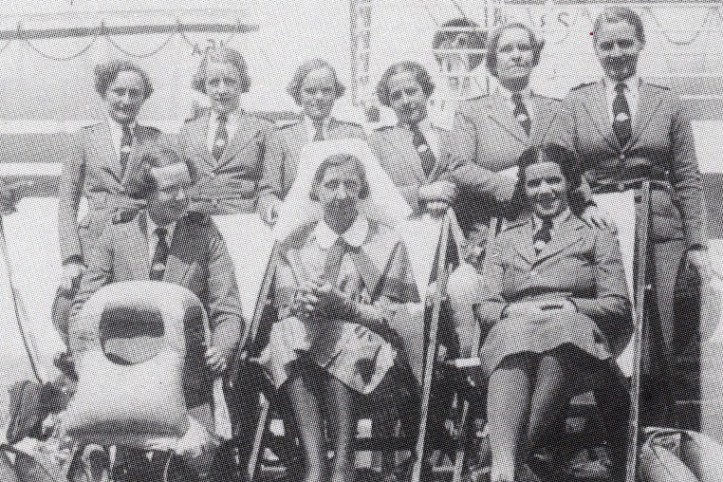
The nurses of the 2/2nd CCS might now be in Tobruk, but they were not exactly reunited with their male colleagues. The men were based in a former Italian hospital at Fort Palestrina, some 10 kilometres out of town, while the nurses were allocated space at the hospital established by the 2/4th AGH in the former Italian barracks in town.
The next day [28 March] we started work at the hospital – a three-quarter-mile walk away [from the Auberge] on a dirty, dusty uneven track. If lucky, we got a ride. The CCS have their own ward consisting of odds and sods – mainly medical. Sixteen admissions the first afternoon, 13 of them Palestinians with petrol poisoning. It was a case of ‘run rabbit run’ and three air raid alarms in the midst of it all.
Tobruk even then was a relic of its former self with scarcely a building that had not been demolished or partially so. A very rough stony area surrounded by a stony escarpment. We had Italian POWs working in our kitchens etc. – a very happy crowd who I feel were happier peeling spuds and singing, especially the singing, than they would be fighting. A different soldier to Mussolini’s storm troops taken POW who, when being marched out past our hotel, spat at us.
ROMMEL’S ADVANCE
On 30 March 1941 the men of the 2/2nd CCS relocated to Barce, near Benghazi. They arrived on 31 March – the day that Rommel launched a full-scale offensive. The Afrika Korps rapidly overran El Agheila and nearby Mersa Brega and advanced eastwards towards Benghazi. On the afternoon of 3 April the officers of the 2/2nd CCS were informed that Rommel had broken through and that Benghazi was to be evacuated. The unit departed Barce very early the following morning and that afternoon arrived back in Tobruk.
All the while, casualties from Rommel’s advance had been arriving at the hospital. Many had machine-gun wounds from Luftwaffe strafing. They were brought to the hospital in whatever they were wearing, with their wounds bandaged in field dressings. Since good drinking water was scarce, sometimes more than one battle-stained patient was washed with the same dirty water. A lack of pyjamas and bed linen only added to the patients’ discomfort. The nurses did at least have mountains of compressed dressings, thanks to the former Italian occupants of the barracks.
During the night, blackout was strictly enforced, with blankets nailed to the windows and doors to keep the lights from showing. The nurses worked all through the night admitting convoys with only shaded hurricane lamps to see by.
Before long the hospital was full. The nurses forgot about time off; they worked until they had to sleep and then started again. They ran out of beds, then mattresses, and soon patients were lying on the floors.
On 6 April it was rumoured that German tanks were within 30 kilometres of Tobruk. Certainly heavy firing could be heard, and the odd shell whizzed overhead. That same day, the call came for the nurses of the 2/2nd CCS and the 2/4th AGH to evacuate.
[On the afternoon of 6 April] we are ordered to pack and be ready for evacuation. Army withdrawing from Barce and retreating to Tobruk. Having packed, we watch our Army men marching in from one direction and the storm troops marching out in another direction.
[On 7 April] we say farewell to Tobruk and our medical men. We are very sad at doing so but were somewhat cheered by the relief on the men’s faces and attitudes, as they knew it was not going to be a place for women. We sailed on the hospital ship Vita [on the evening of 8 April] loaded with casualties from our hospital. The sisters [of the 2/4th AGH] help with the nursing and we sleep on deck. It was a very rough sea and several of us are seasick – including yours truly. A floating mine just missed our ship by what seemed inches.
RETURN TO PALESTINE
The Vita arrived at Haifa on 10 April 1941 – the day that Tobruk was besieged by Rommel’s Afrika Korps. The siege was not lifted until 27 November 1941, when the British 8th Army broke through as part of Operation Crusader. Nevertheless, ships still shuttled between Tobruk and ports in Egypt, bringing in supplies and taking out the wounded and sick. Several such ships carried the men of the 2/2nd CCS in late July and early August when they were withdrawn from Tobruk for reequipping. They moved to Kilo 89 Camp (89 kilometres from Jerusalem – somewhere near Beit Hanoun in Gaza) and then to nearby Beit Jirja.
We disembarked at Haifa and then went by train to 2/1 AGH. Once [again] being odds and sods and doing this and that until 11.00 am, even to washing and ironing 20 pairs of curtains, washing windows and endless pieces of crockery. A very hot time had by me. Again it’s pack and [on 13 May] on our way to El Kantara and 2/2 AGH and night duty once again with heat + + and air raids. Off duty we throw water on our tent floor and hope for improvement. We are again very busy on duty with casualties coming from the desert, Tobruk and Greece.
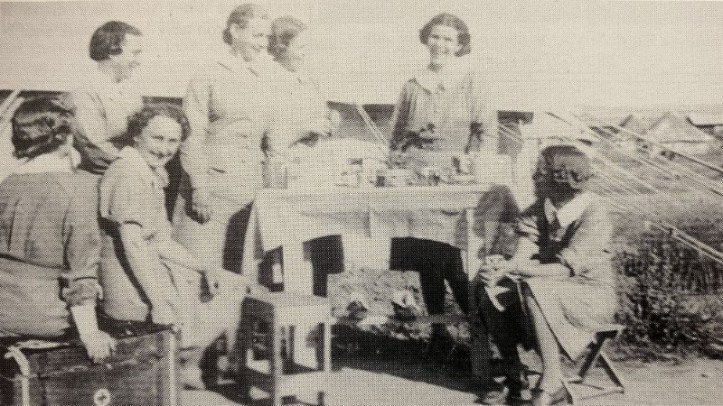
The 2/4th AGH nurses had accompanied the 2/2nd CCS nurses from Haifa to the 2/1st AGH at Gaza Ridge. In May 1941 some went to the 2/2nd AGH at Kantara with the 2/2nd CCS nurses, while others remained in Mandatory Palestine and were sent to the newly arrived 2/7th AGH, which was based at Rehovot.
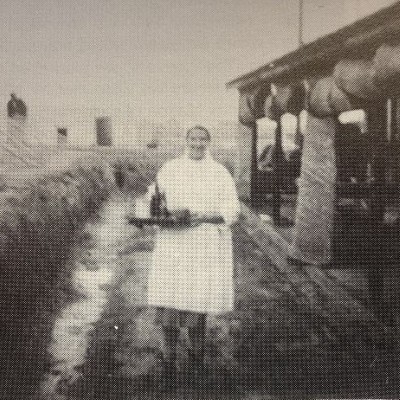
Three months later and again it’s repack and [on 27 August 1941] back to Palestine and 2/1 AGH and work this time mostly in isolation, for me anyway. [Times passes…] It was now the very cold wet season and we were nursing patients in large tents. In one afternoon we admit 40 new mumps, measles and a few diphtheria cases, and would say all of them off the Queen Mary and larger ships just arriving from Australia, and incubation is over – hence the large number. Now tents have to be erected etc. We wear our rain gear and gum boots most of the time having to go from one ward to the other on duckboards used to stop bogging between wards. One night a 40-bed tent blew down in the gale – wasn’t funny trying to accommodate so many patients and some of them very, very ill, and the rain teeming down.
THE ORCADES
On 7 December 1941 the Pacific War began. That day the Japanese 25th Army invaded northern Malaya and bombed Singapore Island. Elsewhere, and near-simultaneously, Pearl Harbour, Guam, Midway, Wake Island and American installations in the Philippines were attacked, and Hong Kong was invaded. With Japan now in a position to threaten Australia, Britain and Australia agreed that, with the exception of the 9th Division, Australian forces should be diverted from the Middle East to Southeast Asia for the defence of Australia. From late January to early February 1942 most elements of the 6th and 7th Divisions, including their associated medical units, together with I Corps Headquarters, were embarked from ports in the Middle East in a movement known as ‘Stepsister.’ A week before the departure of the first ships on 30 January, a Japanese invasion force landed at Rabaul on the island of New Britain, part of the Australian Territory of New Guinea. The war was creeping ever closer to Australia.
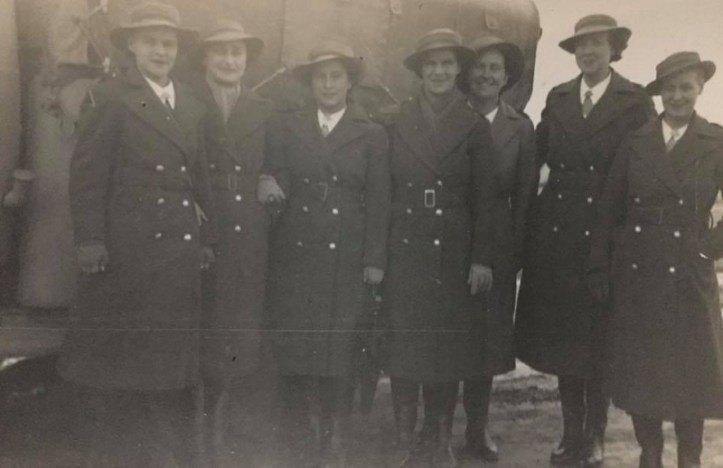
[The] end of January 1942 found us [eight] packing once again and ready to depart. War news very grim – and we hear New Guinea is invaded by the Japanese. Our departure very hush hush, so no fond farewells as we leave Gaza Ridge. Once again it’s El Kantara and then to Port Suez where we have another wait for our ship. We have lunch per kind favour of some English lads. We eat it on a pile of timber and then go to sleep until time for departure. Taken on a lighter to the Orcades where we met up with one of our doctors and the radiologist and other sections of our unit, plus 2/2 Pioneer Battalion and corps groups and then set sail, destination unknown.
The Orcades set out from Port Tewfik on 31 January 1942 with some 2,800 troops of the 7th Division. Most sections of the 2/2nd CCS were on board, including the eight nurses and the unit’s chief surgeon, Major (soon to be Lieutenant Colonel) Ernest Edward ‘Weary’ Dunlop. Small detachments sailed aboard MV Shillong, SS Mathura and SS Penrith Castle with the unit’s vehicles and other equipment.
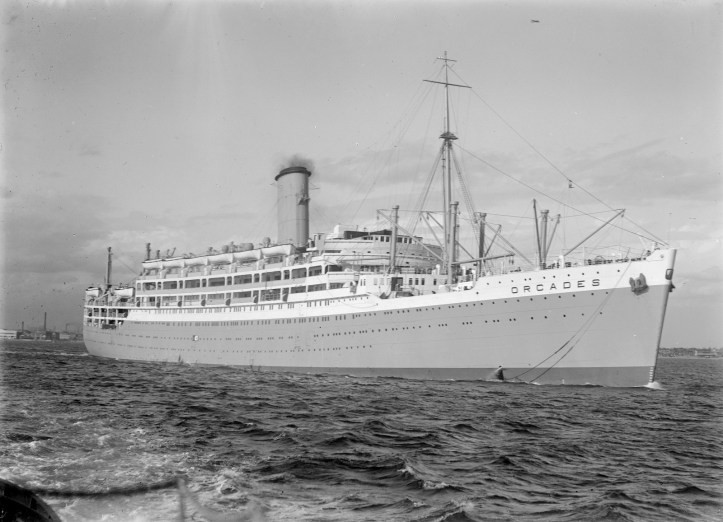
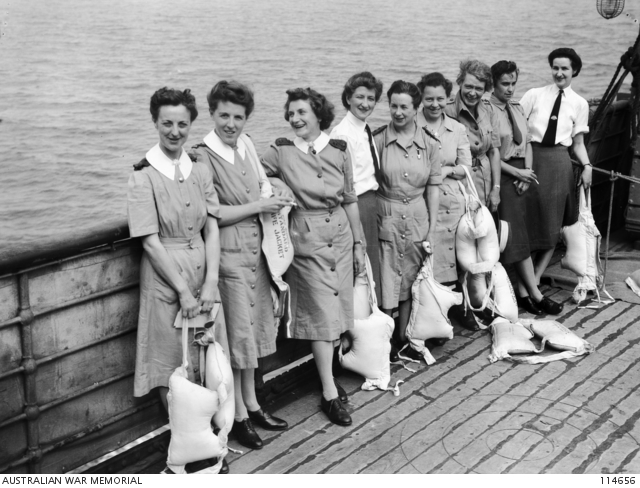
We are given ‘dinky di’ boat drill and action stations and lectures on what to do if taken POW. We are made to wear Red Cross arm bands. We hear of Japanese ships sunk off Batavian coast and we are still retreating at Singapore. Arrive 15 February at Sumatra and watch troops disembark. Next day we arrive at Batavia (35 ships in harbour).
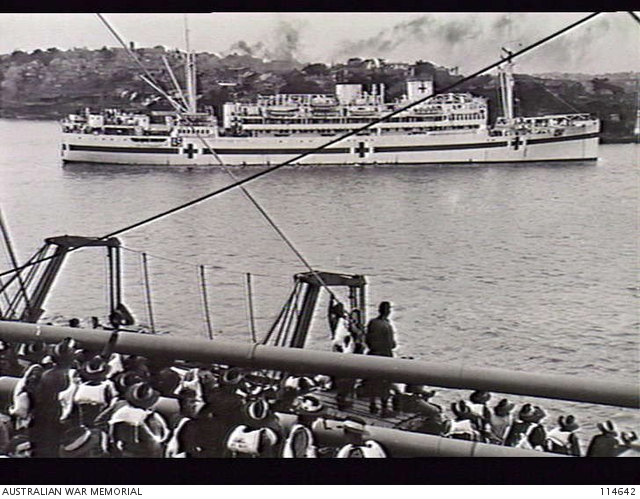
Sailing via Colombo, the Orcades had been bound for Singapore but in view of that city’s imminent fall to the Japanese 25th Army was diverted first to Oosthaven in Sumatra – where 2,000 troops began to disembark but then reembarked, and where the 2/2nd CCS was to have set up a camp dressing station – and then to Batavia in Java. On 16 February, the day after the fall of Singapore, the ship arrived outside Tanjung Priok, Batavia’s port, and entered the harbour the following day. As Vera noted, all manner of ships crowded the harbour, many of which had departed Singapore in the city’s final days. Among the vessels was a makeshift hospital ship called the Wusueh, a converted Yangtze River steamer. It had escaped from Singapore on 12 February with perhaps 350 wounded men, among whom were around 150 Australian 8th Division troops, who had been serving in Malaya. The Wusueh had also carried to (relative) safety several Queen Alexandra’s Imperial Military Nursing Service (QAIMNS) nurses, including Australian nurse Sister Mattie Ward; and six AANS nurses, all members of the 2/10th AGH – Sister Aileen Irving and Staff Nurses Thelma Bell, Molly Campbell, Veronica Dwyer, Iva Grigg and Vi Haig. After disembarking, the nurses had helped to set up and staff a hospital at the Princess Juliana School in central Batavia, 10 kilometres south of Tanjung Priok. However, no sooner had the hospital been established and about 200 patients taken in than orders came for the nurses to leave. They returned to Tanjung Priok and spent the night of 18 February aboard the Orcades. It would appear that officers of the 2/2nd CCS, some of whom had disembarked on the evening of 18 February, had contacted the nurses and arranged for them to accompany the unit inland the following day.
BANDUNG
[On 19 February 1942] we leave the Orcades and catch train to Bandung where we are to stay at YWCA (Dutch) until we join our unit close by. We have very odd food, queer baths etc. and feel nearly starved as they apparently didn’t think we would like their food and were not sure of the nature of the food we ate. Darwin receives its first bombing and we are all very depressed with the news.
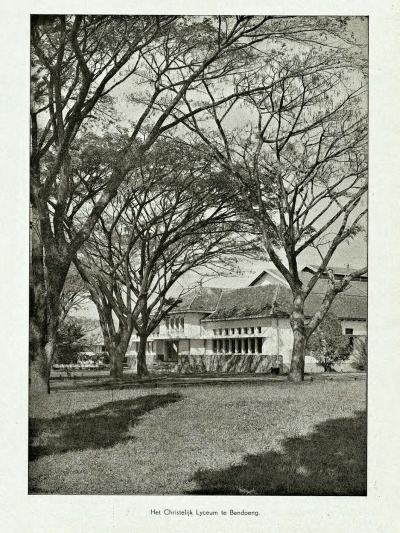
After arriving at Bandung, an attractive town located 150 kilometres southeast of Batavia and set at a comfortable elevation of around 750 metres, the 2/2nd CCS established the 1st Allied General Hospital in the Christelijk Lyceum (‘Christian Lyceum’), a high school on Dagoweg, where an RAF hospital was already operating.
On 20 and 21 February air raid sirens sounded in Bandung. A Japanese invasion was feared, and a degree of panic ensued. Dutch residents began to leave, and it was decided that the nurses should be evacuated too.
Only at Bandung a couple of days when we are visited by our CO [at this time Lieutenant Colonel Norman Menzies Eadie] and Dr Weary Dunlop. We are told to pack and catch the next train and if the going became sticky to leave our luggage and run – as if we would. Had uniforms etc. soaking, which we hastily retrieved and stuffed into our hold-all.
On 21 February Vera and her seven 2/2nd CCS colleagues, together with the six 2/10th AGH nurses and Sister Mattie Ward (and perhaps the other QAIMNS nurses too, though it is not clear what happened to them), entrained for Batavia, travelling in cattle trucks due to the demand for places on board. The men of the 2/2nd CCS remained at the 1st Allied General Hospital in Bandung and within three weeks had become prisoners of Japan. Although thousands of men died in the horrific camps of Southeast Asia, many more would have succumbed had it not been for the work of ‘Weary’ Dunlop, Major Arthur Moon, and each of the doctors of the 2/2nd CCS.
We arrived at Batavia in about the worst torrential downpour I have ever experienced. Complete blackout and chaos everywhere. The Army had taken over the evacuation – thank goodness – and along with civilian women, their golf clubs etc. We suddenly realise we were now among the evacuees and on buses [from Batavia to Tanjong Priok] and back to the good old Orcades, which luckily was still in the harbour. Our 14 pieces of luggage were apparently back at the station somewhere.
RETURN TO AUSTRALIA
The Orcades was about to leave for Colombo, from where it would sail to Australia. The ship’s captain agreed to take the nurses on board and gave them two hours’ notice to get ready. In the end, the ship sailed in such a hurry that their hastily packed luggage was left behind. They had their working uniforms, their tin hats and gas masks, their haversacks, and not much else.
The ship pulled out of the harbour immediately everyone was on board. I might mention the captain had the side of the ship floodlit to speed embarkation although complete blackout orders prevailed, but the night was very dark and with the downpour I am sure accidents could have occurred, plus delays, had he not done so.
We – the ships – [had] to be through the Sunda Straits by daylight. We eight went to bed and slept soundly whilst everyone else sat up with their life jackets on, including the ship’s sister. Of 23 ships to leave Batavia, we hear later, we were the only one to come through – that and our escort ship the Hobart. We CCS sisters look after half of the ship’s sick bay. Mostly tropical fevers. We arrive back at Colombo without incident but are told we have been reported sunk. Then, on our way to Australia.
The Orcades had arrived in Colombo on 27 February 1942. The wounded and sick on board were disembarked and taken to the 2/12th AGH at Welisara, around 20 kilometres north of Colombo, and on 2 March the ship departed for Australia.
Bandung has fallen to the Japanese, the battleship Perth reported sunk and our escort ship the Hobart attacked. We wondered why she had left us in such a hurry. Arrive in [Port Adelaide on 14 March] and three days later take train to Melbourne [arriving on 18 March] and then to Sydney where [on 19 March] we were met by Principal Matron Keary [sic] (did she fill me with fear when I was first called up and had to report to her at Victoria Barracks each day for directions re uniforms, injections etc.). I found by asking the guard on the gate what reception I was going to get and whether it was ‘all smiles,’ which was rarely, or ‘see your hat is on straight today,’ which was frequently. It was a teeming wet day, such as the day of my departure 18 months previously.
After meeting with Matron Kearey, the seven Queensland nurses –Edna Finlay, Margaret Marshall, Vi Paterson, Phyllis Pym, Marcia Thorpe, Mary Wallace and Heather Wilson – said goodbye (for the time being) to Vera and entrained for Brisbane, arriving in that city on 20 March. Meanwhile, what had happened to the 2/10th AGH nurses and Mattie Ward? They had disembarked from the Orcades on 15 March – the day after the disembarkation of the 2/2nd CCS nurses – and had entrained for Melbourne from Adelaide on 16 March, arriving at Spencer Street Station the following day. The 2/10th AGH nurses – and possibly Sister Ward – then reported to Victoria Barracks on St. Kilda Road, where Principal Matron Gwladys Parker Field gave them a dressing down for being out of uniform!
THE RECONSTITUTION OF THE 2/2ND CCS
After a period of leave, Vera returned to duty and on 6 May 1942 was detached to the 207th Eastern Command Camp Hospital at the Sydney Showground. She remained there for just over a month before rejoining the 2/2nd CCS on 14 June at Tenterfield, in northeastern New South Wales.
The 2/2nd CCS had been reformed in Adelaide under Lieutenant Colonel Joseph Hans Stubbe. Between 20 and 24 March 1942 the three small detachments of 2/2nd CCS staff that had departed Port Tewfik with the unit’s vehicles and equipment had arrived at Port Adelaide. The five officers and 31 other ranks were joined by a chaplain and a private, both of whom had embarked from Tanjong Priok with patients, and together they constituted the core of the new 2/2nd CCS. The unit moved to Tenterfield in early June.
At the end of June, Vera was joined at Tenterfield by her seven AANS colleagues. Each of the eight nurses now held the rank of sister, Edna Finlay, Margaret Marshall, Phyllis Pym, Mary Wallace, Heather Wilson and Vera herself having been promoted on 1 December 1941. Vi Paterson remained in charge, with Marcia Thorpe her deputy.
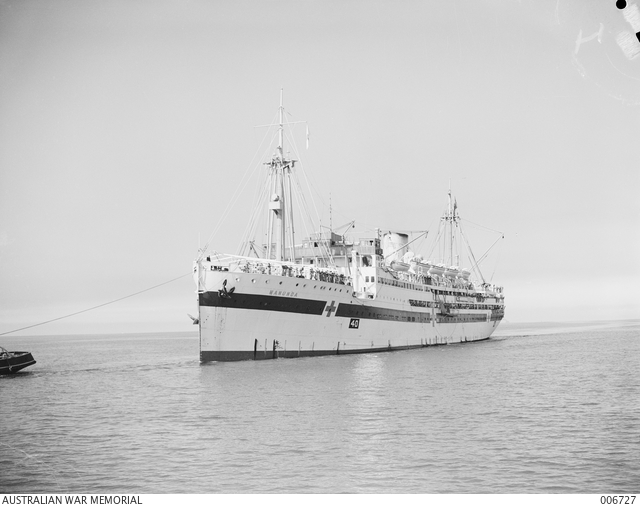
On 24 September the 2/2nd CCS entrained for Brisbane. The following day the men embarked for New Guinea on the AHS Manunda, while the nurses were posted to the 117th AGH at Toowoomba, 120 kilometres west of Brisbane. Sister Heather Wilson was no longer with them; after 20 months of service with the 2/2nd CCS, she had left the army to get married and was replaced by Sister Marjorie Mary (Marg) McDonald.
THE JAPANESE MENACE
All the while, the Japanese threat to the north of Australia had continued to grow. In March 1942 Japanese forces had gained their first foothold on the New Guinea mainland, landing at Lae, capital of the Territory of New Guinea, and at nearby Salamaua. In early May an attempt was made to land at Port Moresby, capital of the Territory of Papua. It was repelled by American and Australian forces during the Battle of the Coral Sea – Japan’s first check in the South West Pacific. Following this setback, Japanese authorities began to plan an overland assault on Port Moresby via a track that ran over the Owen Stanley Range from the village of Kokoda to Owers’ Corner, 50 kilometres east of the capital – the famous Kokoda Track. The Kokoda Track campaign began in July when Japanese forces landed at Gona, Buna and Sanananda on the northern coast of the Papuan Peninsula and pushed inland. At the end of July the Japanese took Kokoda after a fierce battle with Australian troops and began to march southwards along the track. By late September they had advanced to within 40 kilometres of Port Moresby but were withdrawn when Japan came under Allied pressure on Guadalcanal, the largest of the Solomon Islands. Australian troops followed the Japanese northwards along the track.
KOITAKI, NEW GUINEA
On 10 November 1942 Vera and her seven colleagues sailed to Port Moresby on the Manunda. They joined the men of the 2/2nd CCS, who had arrived at the Papuan capital on 1 October and two days later had moved to a rubber plantation at Koitaki, at the southern end of the Kokoda Track. Here they had established the unit’s hospital in the plantation’s homestead and outbuildings, which had formerly been occupied by an annexe of the 46th Camp Hospital – the original base hospital of Port Moresby – and under canvas.
Vi Paterson (in Goodman, p. 221) paints a vivid picture of the somewhat uncomfortable conditions under which the nurses worked at Koitaki:
The homestead was on a hilltop surrounded by rubber trees and jungle, with the misty blue Owen Stanley ranges to our north. A hessian fence on one cleared hillside enclosed the Sisters’ lines – 2 tents for sleeping, one for mess and one for ablutions. We soon had all ‘mod cons,’ such as a bath in the tent, a wood copper outside and two dressing tables constructed by the natives. We also had a hessian enclosed cold shower with duckboard and oozing mud floor … Most afternoons and evenings there were tropical downpours and we slithered in mud as we worked in gum boots. Falls were an occupational hazard we accepted and expected. We worked twelve hour shifts 8.30–8.30 with time off for meals, to change into boiler suits and to draw our mosquito nets before dusk.
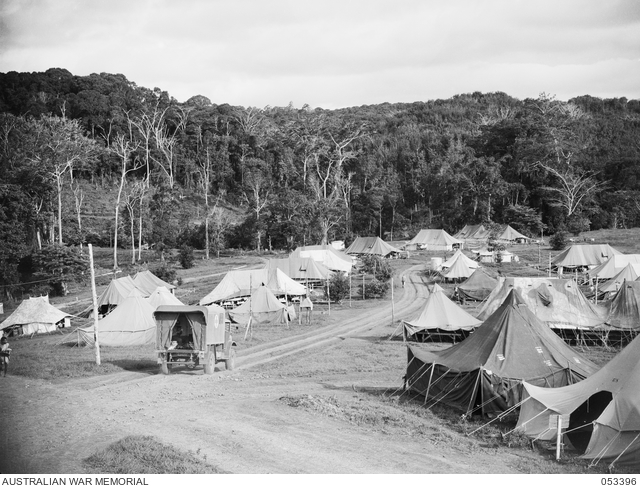
The nurses also had to put up with all manner of creatures, including spiders, snakes and scorpions. There were larger visitors too – some very unwelcome. One such creature visited Margaret Marshall sometime after the nurses’ arrival, as described by Allan S. Walker (1961, p. 465): “While [Sister Marshall] was working in a ward at night, a rat ran up the leg of her boiler suit; the patients tried frantically but unavailingly to help her, and it scurried several times round her body before finally jumping out through the neck of her suit. This underlined the necessity for wearing gaiters.” Less sinister creatures too – stray cows. “One wandered into a nurse’s tent,” recounts Walker (p. 465), “and breathed into a box of powder on an improvised dressing table and another into the ablution tent, where it tramped tooth brushes and the like into the earth.” John Carne (p. 36) tells a story about Vi Paterson and a baby parrot:
Some of the fellows demolished a tree and in the hollow trunk they discovered a recently hatched parrot, devoid of feathers. It was befriended by Sister Patterson [sic] who had it reared in a tin hat filled with cotton wool. Batman Mooney was appointed to the temporary rank of honorary Nurse Maid and had the job of feeding it with condensed milk from an ‘acquired’ eyedropper. The parrot thrived and was christened ‘Joey.’ At a later date, Joey found his way into a church service. In the middle of the service he screeched out “I’m buggered! I’m finished!” He was eventually transferred back to Australia and given an honourable discharge … and lived to a ripe old age.
Until the advent of air evacuation, sick and wounded men walked down the Kokoda Track to Owers’ Corner, from where they were brought by jeep ambulance to Koitaki. Sometimes they were carried down the track by locals known affectionately as Fuzzy Wuzzy Angels. After being stabilised, casualties were evacuated via the 46th Australian Camp Hospital (apparently located nearby) to the 2/9th AGH and the 2/5th CCS at ‘Seventeen Mile’ near Port Moresby. In November the airstrips at Kokoda and at Popondetta, near Buna, were recaptured, after which it became possible to fly casualties directly to Port Moresby. Following the development of an aerodrome at Dobodura, near Popondetta, between December and January 1943, air evacuation became commonplace. From then on, the 2/2nd CCS operated as a camp hospital for resting units.
From 8 October to 31 December over 2,200 patients were admitted to the 2/2nd CCS. Many were suffering from tropical diseases such as malaria and scrub typhus – transmitted through the bites of chiggers (larval mites) – and conditions such as dysentery.
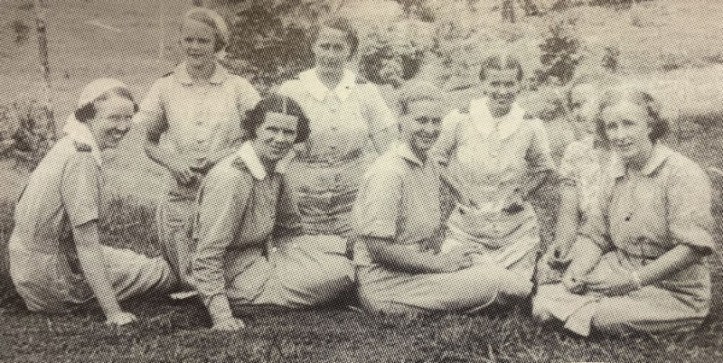
Vera again:
[In New Guinea] we found a different kind of nursing as, mixed with the surgical cases we had the tropical diseases scrub typhus, beriberi and many skin problems with lack of vitamins etc. The scrub typhus patients arrived mostly in a very serious and unconscious condition requiring all our nursing skills. In the desert we had to cope with sand, dust and flies; in New Guinea it was rain daily, the scrub typhus bug and the malarial mosquito.
By the end of January 1943, after desperate fighting, Australian and American forces took Sanananda, the last of the three Japanese beachheads on the north Papuan coast, having earlier regained Gona and Buna. The Allied victory in the ‘Battle of the Beachheads’ ended Japan’s campaign in the Territory of Papua and opened the way for Allied offensives at Lae and Salamaua. However, it had come at an enormous cost, with between 6,000 and 8,000 Australians and Americans killed and wounded.
Between April and August 1943 the Allies moved steadily towards Lae and Salamaua, taking both towns in September. Allied attention then turned to the Huon Peninsula, and by the end of October Finschhafen had been secured. Meanwhile, in July a light section of the 2/2nd CCS had flown from Port Moresby to Dobodura before proceeding by truck to Oro Bay and then by LCT (landing craft tank) northwest along the coast to Morobe in the Territory of New Guinea. The section established a hospital at Eware Plantation and remained there for some weeks before moving in mid-November to Heldsbach Mission north of Finschhafen. At the end of November it was joined at Heldsbach by the main body of the unit, which had relocated to Buna after the 47th Australian Camp Hospital had taken over at Koitaki.
Vera and the other nurses did not travel to Buna with the 2/2nd CCS; instead, on 26 August 1943 they were detached to the 2/5th AGH at Bootless Bay, Port Moresby. The 2/5th AGH had arrived at Port Moresby in January 1943 after service in Mandatory Palestine, Greece and Eritrea.
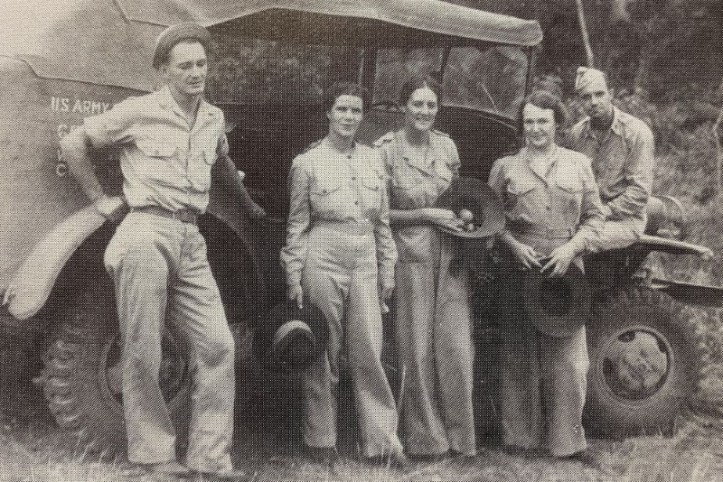
After two months with the 2/5th AGH at Bootless Bay, on 1 November the 2/2nd CCS nurses were attached to the 2/9th AGH, also located at Bootless Bay. By now, Vera, Edna Finley, Margaret Marshall, Phyllis Pym and Mary Wallace had all been promoted to the rank of captain (all AANS nurses had been commissioned as officers on 23 March 1943), while Marg McDonald was a lieutenant. The nurses did not stay long at the 2/9th AGH; on 27 November they embarked for Australia aboard the Katoomba and arrived at Townsville on 29 November. Their time in New Guinea had come to an end – and with it their time together at the 2/2nd CCS.
THE NURSES SEPARATE
After 13 months we say farewell to our men of the CCS and return to Australia and home leave. Here I am re-posted – we all are.
Vera had served with Edna Finlay, Margaret Marshall, Vi Paterson, Phyllis Pym, Marcia Thorpe and Mary Wallace for nearly three years and with Marg McDonald for a year. She now bade her comrades farewell and returned to New South Wales on leave before being marched in to the 113th (Concord) Military Hospital in Sydney on 31 December 1943. The seven Queensland nurses were detached to the 112th (Brisbane) Military Hospital at Greenslopes before being separated and posted to different units: Edna Finlay to the 68th Australian Women’s Army Service barracks at Enoggera; Margaret Marshall and Phyllis Pym to the 2nd Australian Women’s Hospital (AWH) at Redbank; Marcia Thorpe to the 22nd Australian Camp Hospital (ACH) at Canungra; and Mary Wallace to the 7th ACH at Redbank. Vi Paterson stayed at the 112th (Brisbane) Military Hospital.
In March 1944, while Vera was at Concord, she was marched out to the Department of Information for special duties: acting in film director Charles Chauvel’s ‘Rats of Tobruk.’ Three other AANS nurses were granted leave to appear in the film – Captains Lucy Lewington and Agnes (Nessie) Spence, who had served in the Middle East, Greece and New Guinea and were at that time working at Concord with Vera; and Lieutenant Katherine Sturrock (née Neale), who had served in the Middle East and was working at the 3rd AWH, based at the Thomas Walker Convalescent Hospital in Concord. Vera was the only one of the four who had actually served at Tobruk.
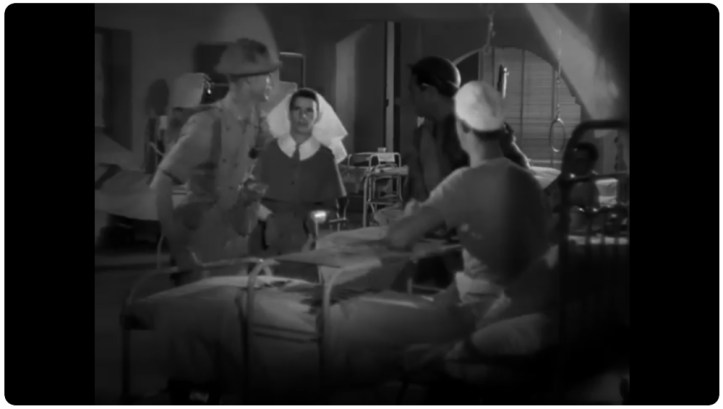
In a scene filmed on 8 March, Vera, Lucy, Nessie and Katherine play four nurses of a generic hospital who are told by their matron, played by Aileen Britton, of the decision to evacuate them from Tobruk. As advised by Vera, the nurses react in the same way that Vera and her 2/2nd CCS colleagues had reacted when given the news. “The film dialogue, almost the same as that at Tobruk, brought back the same intense feeling,” Vera said later, as reported in The Scone Advocate on 14 March 1944.
At Tobruk we all felt we were walking out on the job while there were wounded in the wards. We protested, but matron’s words were final. The men wanted us to go. We were told to get a few things together in eight minutes before embarking on the hospital ship. The men were glad that we were being evacuated. They were ready to deal with the Germans if they broke through, but they didn’t want us to be taken prisoners. They said nothing of their own danger.
Vera added that she found nursing easier than acting. “I now understand why so many actors are temperamental.”
Unfortunately, it was all for nothing: the scene found its way to the cutting-room floor. Vera does appear in one scene that made the final cut: she walks through a ward, claps her hands at some chatting men, and walks out.
TOWNSVILLE AND THE END OF THE WAR
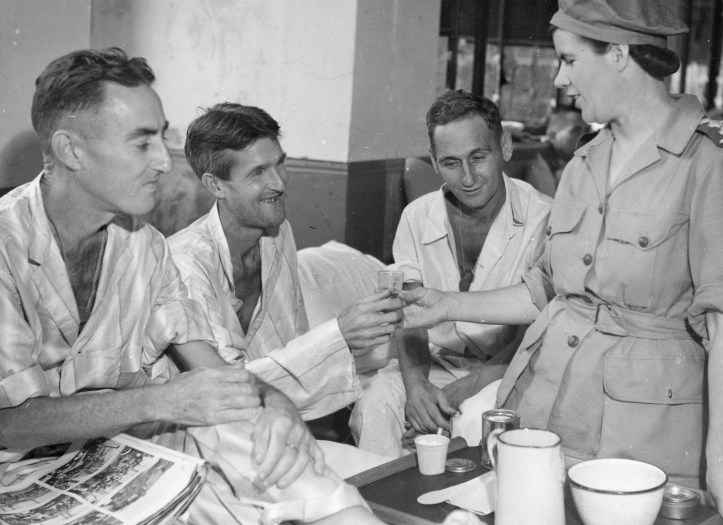
I go to Townsville and the 2/14 AGH where we worked mainly as a clearing station for the incoming from New Guinea who, when well enough, were transferred south to one of the major AGHs. Whilst here peace was declared. Great celebrations in Townsville and I guess everywhere that night.
On 25 August 1944 Vera was marched out from Concord on transfer to the 2/14th AGH in Townsville. She arrived on 30 August. After returning from the Middle East with the ‘Stepsister’ movement in early 1942, the 2/14th AGH had established a hospital in South Australia before moving to Pallarenda, nine kilometres north of Townville, in December 1942. After a cyclone hit the area in March 1944, patients were relocated to the American naval hospital in Townville, the Townsville General Hospital, and the 116th AGH at Charters Towers. On 5 October 1944 the 2/14th AGH reopened at Mundingburra on the Ross River, south of central Townsville. It is not known at which of the makeshift sites Vera worked in the interim.
Vera had been with the 2/14th AGH for nearly a year when, on 15 August 1945, Emperor Hirohito announced Japan’s capitulation. Five days previously, Lieutenant Colonel William Ernest Edward Langford, commanding officer of the 2/14th AGH, had received communication from Land Headquarters instructing him to reorganise the unit for service in Singapore, where it would establish a hospital to receive Australian prisoners of war. Evidently Australian authorities had anticipated the Japanese surrender and were now putting preexisting plans into action.
Only a small number of existing 2/14th AGH staff were chosen to remain with the reorganised unit; those who were not chosen were posted elsewhere. Instead, staff were drawn from a multitude of units in Queensland, New South Wales and Victoria. At this stage, the total strength of the unit was set at 390, including 79 AANS nurses led by Lieutenant Colonel Ida Madge Brown, who had been appointed matron. Vera was the only nurse from the existing 2/14th AGH chosen to go. Five physiotherapists had been appointed too.
On 13 August the 390 personnel began to assemble at concentration areas in Brisbane, Sydney and Melbourne. On 22 August they began to proceed to the final concentration area, Ingleburn, south of Sydney. Vera and the other 78 nurses assembled in Melbourne with 37 members of the Australian Army Medical Women’s Service (formerly known as Voluntary Aids) and on 25 August entrained for Ingleburn.
From Ingleburn the staff of the 2/14th AGH travelled to Sydney, where an advance party departed for Singapore by air while the main body of the unit prepared to embark on MV Duntroon.
SINGAPORE: THE RETURN OF THE PRISONERS OF WAR
In Townsville for 12 months and then onto Melbourne with the 2/14 AGH where we boarded a ship for Singapore. The armistice now being signed, we set up hospital in what had been a school on the outskirts of Singapore. The idea was to nurse these POWs who were too ill to make the journey to Australia. Among them were the sisters taken POW at the fall of Singapore. We visited the infamous Changi Prison Camp and those men still waiting to go home, amongst them several of the original 2/2 CCS we had left behind at Batavia.
The Duntroon departed from Sydney Harbour on 27 August. Aside from the staff of the 2/14th AGH, the ship was also carrying members of the 2nd Australian Prisoner of War Reception Group, which had been tasked with establishing a reception camp in Singapore for the Australian POWs.
After putting into Darwin en route, where those on board were granted shore leave, the Duntroon arrived at Keppel Harbour on Singapore Island on 13 September. That afternoon the 2/14th AGH disembarked and proceeded to St. Patrick’s School, a Catholic boys’ school situated in Katong, 10 kilometres east of Keppel Harbour on the island’s south coast.
While Singapore was under Japanese occupation, St. Patrick’s School had been used by various Japanese military units and was most recently Headquarters No. 3 of the Japanese Air Force. Prior to occupation, the school had been home to the 2/13th AGH, which, together with the 2/10th AGH, was deployed to Malaya with the 8th Division. Five of the nurses aboard the Duntroon, Lieutenants Harley Brewer, Trixie Glover, Mollie Gunton ARRC, Phyll Pugh and Maisie Rayner, had been attached to the 2/13th AGH; their return to the school must have elicited a range of emotions. Two other 2/14th AGH nurses, Captains Joy Bell and Mary McMahon, had served with the 2/10th AGH in Malacca, as had four of the physiotherapists, Captain Thelma Gibson and Lieutenants Merrilee Higgs, Bonnie Howgate and Winsome Zouch. All 11 women had escaped from Singapore aboard the Empire Star on 11 February 1942.
The nursing strength of the 2/14th AGH was bolstered by the arrival at St. Patrick’s School of Lieutenants Bennos Atwood, Sara Baldwin-Wiseman, Jean Floyd, Gertrude McManus, Annie ‘Nan’ Muldoon and May Setchell, all of whom had been serving in Southeast Asia – Lieutenants Floyd, Muldoon, McManus and Setchell with the 2/6th AGH on Labuan, off the coast of British Borneo, and Lieutenants Atwood and Baldwin Wiseman with the 2/5th AGH on Morotai, one of the Maluku Islands (formerly the Moluccas), Netherlands East Indies. They had arrived in Singapore aboard the Australian hospital ship Manunda on 11 September. All six nurses had served with the 8th Division in Malaya – Lieutenants Baldwin-Wiseman, McManus, Muldoon and Setchell with the 2/13th AGH, and Lieutenants Atwood and Floyd with the 2/10th AGH – and all had escaped aboard the Empire Star.
The staff of the 2/14th AGH spent all of 14 September moving furniture and cleaning buildings in preparation for the establishment of wards. The nurses exercised considerable initiative in planning the layout of the wards to utilise the available space to the best advantage.
The first patients were received on the afternoon of 15 September, the start of a very busy three-day period, when many prisoners of war came in from Changi and Sumatra while the unit was still receiving stores. The other particularly busy period was from 4–7 October, when considerable numbers of patients were brought in from Bangkok. From 15 September to 8 October the staff were required to work extra hours without days off, but from 9 October most were allowed one day off per week.
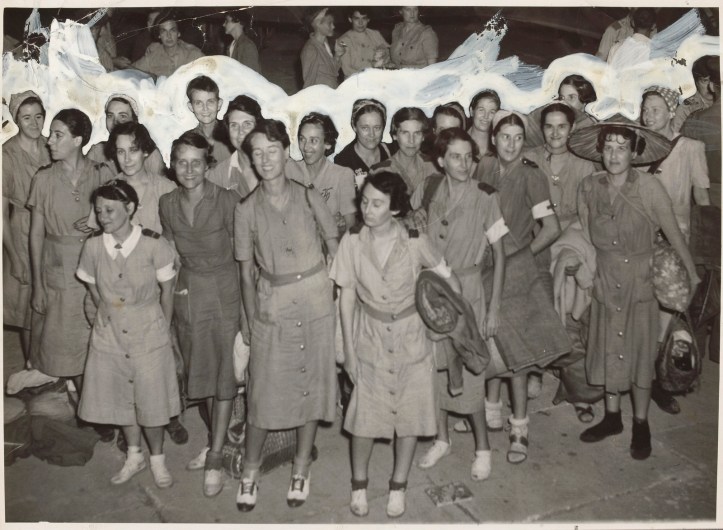
In the early evening of 16 September, during the first busy period, a Douglas C-47 Dakota landed at Singapore’s Kallang Airport. Twenty-four painfully thin women were helped to disembark, of whom three were possibly stretchered out. The 24 women were the survivors of the 65 AANS nurses evacuated from Singapore on 12 February 1942 aboard the Vyner Brooke. Twelve of their number were lost at sea when the Vyner Brooke was sunk on 14 February. Twenty-one were murdered on Bangka Island on 16 February. For the next three years, the surviving 32 were interned on Bangka Island and Sumatra. At the beginning of 1945, disease and malnutrition began to take their terrible toll, and between February and August eight nurses died. After a concerted search, the 24 survivors were plucked from the Sumatran jungle, just hours before they landed in Singapore.
The nurses were met at the airport by a gaggle of photographers and war correspondents, who took countless photographs and peppered them with questions – and by Red Cross personnel, who gave them tea and biscuits, soap, and cigarettes. Finally, they were helped into waiting ambulances and driven to the 2/14th AGH at St. Patrick’s School. The emaciated women were helped up the steps of St. Patrick’s School by orderlies and were given a magnificent reception by the staff – particularly those aforementioned who had served with them in Malaya. The exhausted nurses were taken to their rooms, where food and warm baths awaited them, and eventually they were assisted to bed.
RETURN TO AUSTRALIA ON THE CHESHIRE
The 2/14th AGH closed down on 29 October. During the six weeks that the hospital had operated, 1,406 patients had been admitted, of whom 1,213 were former prisoners of war and civilian internees. Some of the patients had been evacuated by air to Australia, while some had been discharged to the Australian reception camps for return by troopship. The majority, however, were transferred to the AHS Manunda, which embarked on 5 October – with the 24 nurses, among many others – and to HMHS Karoa, which embarked on 29 October.
On 2 November the main body of the 2/14th AGH embarked from Singapore aboard HMT Cheshire, leaving a rear party behind. On the ship with the 2/14th AGH were staff of the 2nd Australian POW Reception Group, 11 prisoners of war, and 27 civilian internees. Sailing via Balikpapan, where 1,020 2nd AIF personnel boarded, the Cheshire arrived at Fremantle on 13 November, Melbourne on 20 November – and Woolloomooloo in Sydney on 23 November, where Vera disembarked. She had already been allotted regimental duties with the 101st AGH at Herne Bay, a southwestern suburb now known as Riverwood.
CONCORD REPATRIATION GENERAL HOSPITAL
[At] the closure of the [2/14th] hospital it was back to Australia and the 101 AGH at Herne Bay for five months – mainly a staging hospital for discharges etc. From Herne Bay I was transferred [on 19 April 1946] to Concord and the 113th AGH, working mainly in surgical wards doing night duty. Most of my Army life seemed to be spent doing night duty. Always given night duty first thing when staging at another hospital.
When the tuberculosis patients were transferred to Concord I was asked to volunteer to work in TB wards and was told I could refuse to do so but was made to feel a ‘bit of a heel’ if I did so. We had to have a positive Mantoux test to work in TB wards, so I tried to give myself a negative Mantoux by trying to squeeze the serum out of my arm. Needless to say all I got was a very sore arm.
Three hundred to 400 patients (TB) arrived at Concord, and I was very fortunate to have been allotted the chest investigation ward, which included chest surgery. Once diagnosed, positive TB they were transferred to TB wards. This kind of nursing I found most interesting, so much so that when Concord became a repatriation hospital [in May 1947], I was easily persuaded to go along with it, which meant my resignation from Scott Memorial Hospital. Prior to this I was on leave of absence.
Whilst in the Middle East, penicillin was first introduced and was made up by the theatre staff – gowned and gloved. Whilst at Concord I had the privilege of being one of the team to administer the first course of streptomycin [c. early 1947], which really helped so much to eradicate TB. A young Army officer had TB of the throat, but all tests were negative. His throat became worse and the patient was only able to speak in whisper and showing signs of distress and unable to swallow his saliva. A doctor was on round-the-clock call to do a tracheotomy if necessary.
It was at this stage doctors decided to diagnose positive tuberculosis. The doctors managed to obtain the first issue of streptomycin to arrive in Australia and the day it was first administered, the patient produced his first positive test for tuberculosis. Within 24 hours of commencement of treatment the patient was able to swallow some milk and soda water. He quickly wrote on some paper ‘Sister I can swallow.’ I might say he cried – and so did I!
Vera remained at Concord until her retirement. On 29 August 1947 she was discharged from the army and three days later was transferred to the Reserve of Officers (AANS). In 1959 she travelled to London, and from London flew to New York, arriving in early July. She then departed for Honolulu before returning to Australia. Vera’s permanent address as stated on the ship’s manifest was 10 Centre Street, Blakehurst, a southern suburb of Sydney.
The following years at Concord were to see so many fascinating changes in medicine generally, and nursing. The war years were responsible for the discovery of wonder drugs like the sulpha group. Together with Dr Harry Windsor (first heart transplant at St. Vincent’s Hospital) and Dr Dave Perry, the intensive care unit was formed [in 1976]. I remained as charge sister of that unit until my retirement.
It would appear that Vera, who was known among staff as ‘Hammie,’ had in fact been in charge of a high-care ward at Concord that predated the inception of the ICU and had retired before 1976. No matter; she had devoted four decades of her life to caring for others.
THE FINAL YEARS
For many years Vera was a member of the 2/1st and 2/2nd Pioneer Battalions Association. Each Anzac Day she would join the members of the association at their dismissal area in Elizabeth Street, Sydney for a chat. She also attended many of the association’s country reunions, often with Sue Malcolm of the 2/5th AGH (who had sailed with Vera on the Johan de Witt). On 1 June 1990 Vera and Sue attended the battalions’ 50th anniversary party in Gosford, southern New South Wales.
As Vera entered her 90s her health began to fail, and in 2003 she moved to Inverell in northern New South Wales and became a resident of McLean Nursing Home. She was visited by her sister Marj, who lived in Inverell and was only two years younger, and by those nieces and nephews who lived locally.
Vera died on 22 May 2005 at the age of 95. She had lived a long and productive life. A funeral service was held at the Inverell Presbyterian Church, with a Poppy Service conducted by the local RSL, and she was buried at Macquarie Park Cemetery in Sydney’s northern suburbs.
On 11 November 2005 Vera’s war medals were presented to the Ethel Lane Museum at Concord Hospital by her sister Marj.
We will not forget her.
SOURCES
- 2/1 and 2/2 Pioneer Battalions Association, ‘NX 70326 – Vera Hamilton,’ Pioneer News Vol. 51, No. 3, Nov 2005, p. 2.
- Ancestry.
- Australian War Memorial, ‘Full report on operations of 2/14 Australian General Hospital, August to November 1945 … by Commanding Officer Colonel W. E. Langford,’ AWM54 403/7/1.
- Australian War Memorial, ‘War Diaries of J. E. R. Clarke Capt. O.X.6245,’ AWM2021.7.6.
- Arnold Hague Convoy Database, ‘Convoy US.7.’
- BirtwistleWiki, ‘128th Australian General Hospital.’
- BirtwistleWiki, ‘2/14th Australian General Hospital.’
- BirtwistleWiki, ‘2/2nd Australian Casualty Clearing Station.’
- Carne, J. (1994), 2/2 Australian C.C.S. – A Brief History and Personal Anecdotes 1940–1945.
- City of Canada Bay Heritage Society, ‘Thomas Walker Convalescent Hospital.’
- Department of Veterans’ Affairs, Anzac Portal, ‘Australians at the Battle of the Beachheads 1942 to 1943.’
- Department of Veterans’ Affairs, Anzac Portal, ‘Ernest (Weary) Dunlop.’
- Department of Veterans’ Affairs, Anzac Portal, ‘North Africa and Syria.’
- Department of Veterans’ Affairs, Anzac Portal, ‘Sister Hamilton Served Much of the War on Night Duty’ (based on information provided by Vera Hamilton on 8 Jan 2002).
- Durrant, D. (1998), Quirindi 1939–1950: Courage and Commitment (pp. 154–59).
- Goodman, R. (1985), Queensland Nurses: Boer War to Vietnam, Boolarong Publications.
- Hobbs, V., ‘Nursing at Tobruk in the Second World War’ (transcription of an oral presentation that was donated to the Battye Library Oral History Program), State Library of Western Australia OH135.
- Long, G. M. (1961), Australia in the War of 1939–1945, Series 1 – Army, Vol. I – To Benghazi, Chap. 8 – The Battle of Bardia (pp. 163–206), Australian War Memorial.
- Monument Australia (website), ‘117th Australian General Hospital & No. 1 Australian Orthopaedic Hospital.’
- The National Archives (UK), Merchant Shipping Movement Cards, Batory, BT 389/3/201.
- The National Archives (UK), Merchant Shipping Movement Cards, Johan de Witt/Neptonia,BT 389/40/102.
- The National Archives (UK), Merchant Shipping Movement Cards, Nieuw Zeeland, BT 389/40/133.
- The National Archives (UK), Merchant Shipping Movement Cards, Stratheden, BT 389/28/193.
- National Archives of Australia.
- Naval History, ‘British and Other Navies in World War 2 Day-by-Day (by Don Kindell).’
- Reed, B., ‘Endurance, Courage and Care: The Kokoda Campaign of Captain Alan Watson and the 2/4th Field Ambulance,’ Journal of Military and Veterans’ Health (Vol. 19 No. 2), Australasian Military Medicine Association.
- Royal Naval Research Archive, ‘H.M.H.S. Vita.’
- ssMaritime (website), ‘S.S. Johan de Witt.’
- State Library of Queensland, ‘Diary of Major Oswald Ellis Murphy1940–1941.’
- UNSW Canberra, Australians at War Film Archive, Cyril Real, (interviewed 25 Aug 2003, archive number 779).
- Walker, A. S. (1962), Australia in the War of 1939–1945, Series 5 – Medical, Vol. II – Middle East and Far East, Part II, Chap. 21 – I Australian Corps Returns (pp. 459–67), Australian War Memorial.
- Walker, A. S. (1962), Australia in the War of 1939–1945, Series 5 – Medical, Vol. II – Middle East and Far East, Part I, Chap. 5 – Preparations in the Middle East, 1940 (pp. 86–115), Australian War Memorial.
- Walker, A. S. (1962), Australia in the War of 1939–1945, Series 5 – Medical, Vol. II – Middle East and Far East, Part I, Chap. 7 – Bardia and Tobruk (pp. 124–156), Australian War Memorial.
- Walker, A. S. (1957), Australia in the War of 1939–1945, Series 5 – Medical, Vol. III – The Island Campaigns, Chap. 3 – Events at Moresby (pp. 38–45), Australian War Memorial.
- Walker, A. S. (1961), Australia in the War of 1939–1945, Series 5 – Medical, Vol. IV – Medical Services of the Royal Australian Navy and Royal Australian Air Force with a section on women in the Army Medical Services, Part III – Women in the Army Medical Services, Chap. 36 – The Australian Army Nursing Service (pp. 428–76), Australian War Memorial.
- Wikipedia, ‘6th Division (Australia).’
- Wikipedia, ‘Operation Compass.’
- Wikipedia, ‘Saint Patrick’s School, Singapore.’
SOURCES: NEWSPAPERS
- The Age (Melbourne, 19 Mar 1942, p. 2), ‘Escape from Java.’
- The Age (Melbourne, 17 Nov 1945, p. 3), ‘War Veterans on Cheshire.’
- Army News (Darwin, 10 Mar 1944, p. 2), ‘Re-Lived the Past.’
- The Daily News (Perth, 27 Aug 1945, p. 1), ‘Cats Fly Comforts to Singapore P.O.W.’
- Goulburn Evening Penny Post (NSW, 10 Jan 1940, p. 4), ‘Matron’s Tribute to Her Nurses.’
- The Newcastle Sun (NSW, Mar 1944, p. 2).
- The Scone Advocate (NSW, 29 Jun 1937, p. 1), ‘Personal.’
- The Scone Advocate (NSW, 27 Jun 1939, p. 1), ‘Personal.’
- The Scone Advocate (NSW, 30 Jun 1939, p. 1), ‘Personal.’
- The Scone Advocate (NSW, 17 May 1940, p. 3), ‘Scott Memorial Hospital.’
- The Scone Advocate (NSW, 4 Feb 1941, p. 1), ‘Personal.’
- The Scone Advocate (NSW, 17 Sept 1943, p. 1), ‘Personal.’
- The Scone Advocate (NSW, 14 Mar 1944, p. 4), ‘Plays True Role in Tobruk Film.’
- The Sydney Morning Herald (NSW, 9 Aug 1940, p. 8), ‘Nurses for A.I.F.’

