| Conflict | Second World War |
| Nursing Service | Australian Army Nursing Service |
| Unit | 2/10th Australian General Hospital |
| Overseas Service | Malaya |
| Final Service No. | QFX19077 |
| Final Rank | Lieutenant |
Family Background
Florence Elizabeth Trotter was born on 4 October 1915 in Nurse McWhirter’s Private Hospital in Ryde, Sydney. She was the second child of Agnes Beatrice Elphinston (1884–1954) and James Cosser Trotter (1884–1960).
Agnes and James were both from Sydney. Agnes was born in Ashfield and grew up in Petersham. James was born in Balmain to parents who had migrated from England and grew up in Eastwood. In 1900 he was apprenticed to the Colonial Sugar Refining Company (CSR) as an engineer and rose to become a manager. In the 1930s James ran as the Queensland Party candidate for the Queensland Legislative Assembly in the Hamilton by-election.
Agnes and James, both well-known and popular in Petersham, were married on 26 January 1910 at the Petersham Presbyterian Church by the Rev. Dr. Merrington. Following the ceremony a reception was held at the Empire Hall with around 80 guests in attendance. Afterwards the happy couple left amid showers of rice and confetti for their honeymoon, which was spent in Melbourne and Adelaide.
After returning from their holiday, the newly married couple moved into a house on Clanalpine Street in Eastwood, and in November Agnes gave birth to their first child, Mary Agnes Trotter (1910–1997). Five years later Florence was born, followed three years after that by James Elphinston Trotter (1918–1989).
School
In 1924 the Trotter family relocated from Sydney to Brisbane. They moved into ‘Booreella’ on Stanley Terrace in Taringa, and in September of that year Florence became a pupil of Taringa State School.
As Florence grew up, she demonstrated an aptitude for music. In December 1926, under the guidance of Miss Mabel B. Fallon, she achieved a Pass with a score of 93 in her Trinity College of Music musical theory examination in the Preparatory category. A year later she achieved Honours with a score of 96 in the Junior category of the Trinity musical knowledge examination. In May 1928 she achieved a Pass with a score of 73 in her Trinity piano examination.
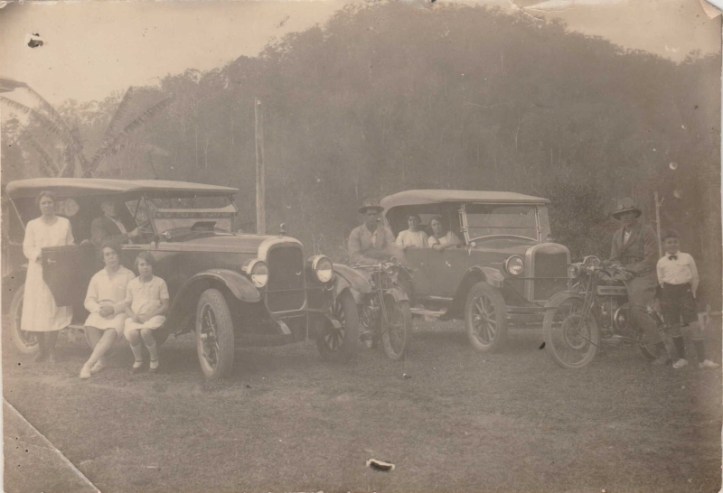
Nevertheless, however good Florence was at piano and musical theory, singing was her real passion. At the Australian Natives’ Association (ANA) Eisteddfod, held at the South Brisbane City Hall in October 1926, she came third in the Girls’ Solo (under 12) category with a rendition of ‘Wee Willie Winkie’. At the following year’s ANA Eisteddfod, held in September, Florence came first in the same category with a rendition of ‘The Second Minuet’ by Maurice Besly and Aubrey Dowdon. She also sang at such events as the ‘Florin Afternoon’ given by the St. Paul’s Church of England Women’s Guild and held in the Taringa Masonic Hall in October 1927. Later in her life Florence would discover how sustaining and uplifting singing could be.
Florence completed her schooling at Taringa State School at the end of 1929 and successfully sat the State Scholarship Examination, entitling her to attend any government high school in the state. She chose the Domestic Science High School (part of the Central Technical College on George Street, Brisbane), which she attended for the next two years.
At the end of 1931 Florence, now 16 years old, successfully sat the University of Queensland Junior Public Examination, entitling her to a two-year extension of her high school scholarship. It appears, however, that she decided against further secondary education. Instead, for the next four years she immersed herself in society as a young woman on the move. She attended bridge parties, afternoon teas, balls, dances, weddings, diverse fundraising events, the Doomben races, etc.
Nursing and Enlistment
At a certain point Florence took a secretarial job, then decided that nursing was the career she wanted to pursue. On 20 November 1935, after spending a month in Mackay with her sister, Mary, who was a teacher at the high school, Florence became a probationer at Brisbane General Hospital. By January 1939 she had finished her training and was on the staff of the hospital.
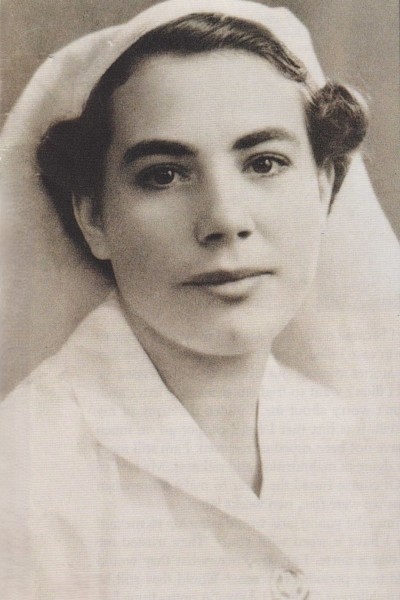
In 1940, with war raging in Europe, Florence volunteered for service with the Australian Army Nursing Service (AANS). On 17 January 1941 she was appointed to the Second Australian Imperial Force (2nd AIF) at the rank of staff nurse and advised that she had been allotted to a unit and to prepare herself for an overseas posting – destination unknown. She was then sent on pre-embarkation leave.
Many of the nurses with whom Florence had trained and worked at Brisbane General had also volunteered for service with the AANS. Among them were Jessie Blanch, Iva Grigg, Pearl Mittelheuser and Joyce Tweddell, who would serve in the same unit as Florence; Blanche Hempsted, Sylvia Muir and Phyllis Pugh, who would serve in a different unit in the same theatre; and Cynthia Thiedeke, who would serve in a unit in Ceylon.
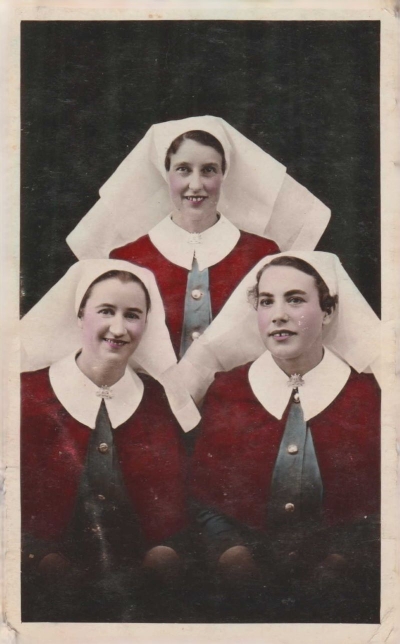
Florence returned from her leave and on the morning of 31 January made her way to Brisbane railway station in time for the 10.00 am train to Sydney. There she met Jessie, Iva, Pearl and Joyce, along with fellow AANS appointees Monica Adams, Cecilia Delforce, Chris Oxley and Irene Ralston. Together with Florence, they had all been attached to the 2/10th Australian General Hospital (AGH) that very day.
The 2/10th Australian General Hospital
The 2/10th AGH had been raised in Sydney under the command of Colonel Edward Rowden White. Along with the 2/4th Casualty Clearing Station (CCS), the 2/9th Field Ambulance, and other, smaller medical units, the 2/10th AGH was tasked with looking after the approximately 5,800 personnel of the 22nd Brigade, 8th Division – known as ‘Elbow Force’ – in Malaya. The British government had requested the Australian troops to bolster British and Indian troops garrisoning the British colonial possession in the face of possible Japanese aggression. The 22nd Brigade was due to sail on the Queen Mary in four days’ time.
There were six other nurses waiting for the train to Sydney that morning – Ivy Machon, Jessie Newman, Eileen O’Keefe, Winifred Short, Thora Skyring and Daphne Tomlins. They would not, however, be joining Florence and the others on the Queen Mary. Instead, they would board the Aquitania and sail to the Middle East for service with the 2/5th AGH.
At the appointed time, Florence and her peers, laden with gifts of flowers, fruit and sweets, departed amid cheers and fluttering streamers from family, friends and official representatives. En route, another 2/10th AGH nurse, Nell Calnan, boarded.
The Queenslanders arrived in Sydney at around 8.00 am the next morning. The 2/10th AGH nurses were taken to Darling Harbour and caught a ferry to Bradley’s Point, where the Queen Mary lay at anchor. At around 1.00 pm they boarded the famous vessel. Meanwhile, the other nurses were taken to Woolloomooloo and boarded the Aquitania. That venerable ship was embarking around 3,300 troops bound for the Middle East and would sail in convoy with the Queen Mary and a third troopship, the Nieuw Amsterdam, due to arrive on 3 February from Wellington with around 3,800 New Zealand troops.
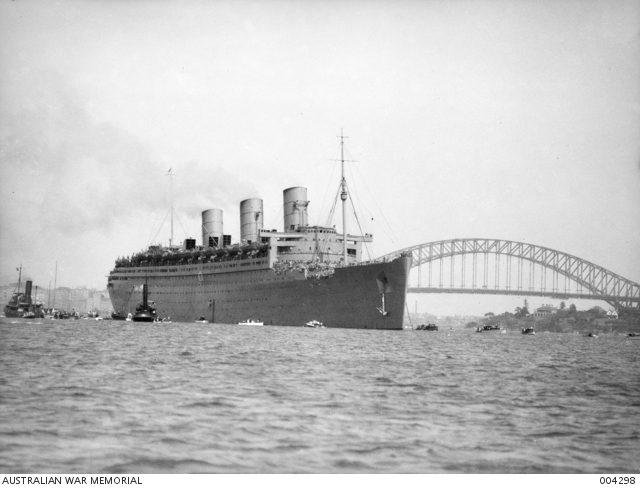
Florence was allocated a cabin with Jessie Blanch, Monica Adams and Iva Grigg, and over the next two days the four of them met their counterparts from New South Wales and Victoria, as well as the six South Australian and Tasmanian nurses of the 2/4th CCS. Each unit established a medical facility soon after boarding, the 2/10th AGH a hospital and the 2/4th CCS a dressing station. Even before the Queen Mary sailed, there were patients requiring care.
Voyage to Singapore
On 4 February 1941, a beautiful blue day, the Queen Mary was ready to depart. The troops had completed their embarkation, and countless crates of equipment and supplies had been loaded – some marked ‘Elbow Force, Singapore’, which somewhat undermined the secrecy surrounding the ship’s destination. In the early afternoon, to the cheers of thousands of well-wishers on land and in boats, the ships set off under the escort of HMAS Hobart. The convoy was joined by the Mauretania in the Great Australian Bight and on 10 February arrived at Fremantle, where small vessels circled the ships and collected parcels and letters from the men (6,000 of which were later confiscated lest they reveal details of ‘Elbow Force’).
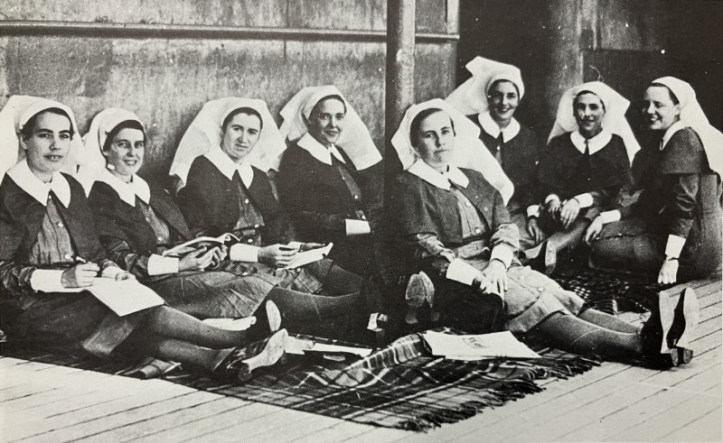
In Fremantle two more 2/4th CCS nurses joined their unit aboard the Queen Mary, and on 12 February the convoy weighed anchor again. The following day Major Norman H. Whitfield, Deputy Assistant Adjutant-General of the 8th Division, told those on board the Mary that they were going to Malaya, and described their probable role. Until that point most personnel, including many of the nurses, thought that they were destined for the Middle East.
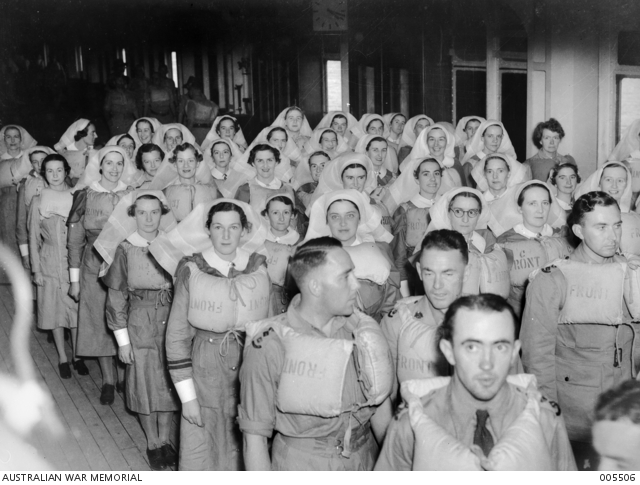
On 16 February, as the convoy was nearing Sunda Strait, the British cruiser Durban came into sight and swung into line abreast of HMAS Canberra, which had taken over escort duty from the Hobart at Fremantle. At this point the Queen Mary swung to port and circled behind the other ships. Then, when they were again in formation, and to the cheers of those on board, the Queen Mary charged past them at a rate of knots and peeled off to the right for Singapore. The Aquitania, the Nieuw Amsterdam and the Mauretania carried on for Bombay, from where the troops would transship for the Middle East.
On 18 February the Queen Mary arrived at Sembawang Naval Base on the north coast of Singapore Island. The nurses disembarked and walked to adjacent railway sidings. They gave their names and addresses, were issued with rations, and then entrained for the Malay Peninsula. Early in the morning Florence and the other 2/10th AGH nurses alighted at Tampin, while the 2/4th CCS nurses continued north to Seremban.
Malacca
From Tampin the 2/10th AGH nurses were driven to Malacca, situated on the west coast of the peninsula. The unit had been allocated several wings of the modern Malacca General Hospital, a five-storey building set in spacious grounds on a slight rise and some way out of town. The grounds were replete with bougainvillea, frangipani, hibiscus, and other tropical plants, creating a pleasant haven. The patients would be accommodated on four floors of one of the wings in spacious and airy wards, while the nurses were quartered on the fourth floor of one of the wings, from where they enjoyed expansive views of the countryside. The building was fitted with louvred shutters instead of glass windows, which served to let in breezes and moderate the heat and humidity.
At first the nurses’ work was easy. The number of cases grew, however, as the 8th Division soldiers began to injure themselves during training exercises or contract tropical infections and diseases. Between April and December, the 2/10th AGH treated an average of 400 patients each month. Nonetheless, with housemaids (known as amahs) to do their housework, Florence and her colleagues had plenty of time for activities such as shopping, golf, tennis and swimming, dining out and dancing, Sampan picnics, chicken-suppers on the beach, visits to the cinema, etc. They were made honorary members of European-only clubs, visited tin and gold mines and rubber estates, and were taken on long drives through the delightfully verdant countryside.
From 30 July to 3 August Florence was granted leave, and with Jessie Blanch, Iva Grigg and Victorian nurse Caroline Ennis travelled to Fraser’s Hill, a hill station in the cool highlands north of Kuala Lumpur – a world away from the heat and humidity of Malacca. Jessie Blanch (quoted in Kirkland, p. 15) described the trip in her diary:
Up bright and early to go to Fraser’s Hill. Trotter, Grigg and self. Left by military car at 7 am for the station, caught the 18 mins past 7 train, nice trip up. Picked Ennis up at Seremban. Arrived at Kuala Lumpur at about 11.30 am, met by military car and taken to see the sights. Had lunch and then left for Fraser’s Hill at 12.30 pm. Had lovely trip up – a lot of corners but we weren’t sick. Arrived at the Hill about 3.30 pm, met by the 4 who were coming home. Very cool, have to wear a cardigan. Went for a walk and went to bed early after a luscious dinner. Two blankets on.
Soon after returning to Malacca, Florence, Iva Grigg and possibly other colleagues travelled to Singapore Island on detachment to the Alexandra Hospital, the primary military hospital for the British Far East Command. Opened in July 1940, the modern, 350-bed hospital was located just to the west of Singapore city and had some of the best medical facilities in Asia. Florence and Iva were there between 11 and 17 August and were among very few AANS nurses to be detached to the hospital.
Reinforcements
On the day of Florence’s and Iva’s return to Malacca, five reinforcement nurses arrived at the 2/10th AGH – Beth Cuthbertson, Clarice Halligan, Jean Russell, Florence Salmon and Ada ‘Mickey’ Syer. They had travelled with the 27th Brigade, which had been sent to Malaya to supplement the 22nd Brigade and bring the 8th Division up to strength. An earlier contingent of reinforcement nurses had arrived in June, among whom were Jean Stewart, Mary Clarke, Jenny Greer, Nell Keats, Beryl Woodbridge and Betty Jeffrey.
On 15 September a second AGH arrived in Malaya, the 2/13th. In the light of intelligence reports suggesting the possibility of a Japanese invasion, Colonel Alfred P. Derham, the commanding officer of Australian medical services in Malaya, had felt that a second military hospital was urgently needed to support the 2/10th AGH. The unit was billeted at St. Patrick’s School on Singapore Island and had a staff of around 175 officers and men and 49 AANS nurses, among whom were Florence’s former Brisbane General colleagues Blanche Hempsted, Sylvia Muir and Phyllis Pugh.
Soon after the arrival of the new hospital, Florence was admitted to the 2/10th AGH with an unknown illness. She stayed in hospital from 27 September to 29 October and upon discharge went on convalescent leave until 12 November. Jessie Blanch was granted leave between 5 and 12 November and joined Florence. In a letter to her parents written soon after (and published in The Sunday Mail on 11 January 1942), Florence described a visit to former Brisbane friends Edith and Roy Black that she and Jessie paid during their leave:
After our arrival, we slept for a few hours, and then got dressed, as we were all going into Kuala Lipis that night, as it was a very big night there in aid of Poppy Day. We went to the pictures first to see ‘The Merry Widow,’ and then all went on to the club, where we had dinner, and then there was some dancing. On the Sunday morning Roy took us round the mine. We went right through the mill, and then down underground – we went down 500 ft into the Bukit Koman mine, and it certainly was all very interesting. After this we returned to the mill to see them pouring some sponge gold — only 5000 dollars’ worth! Just imagine!
Florence was granted further leave from 25 November to 1 December. Among others, she spent it with her former Brisbane General colleague Joyce Tweddell.
JAPANESE INVASION
One week after Florence’s return to Malacca, Japan invaded Malaya. Soon after midnight on 8 December 1941, a force of some 5,000 troops of the Imperial Japanese Army launched an amphibious assault at Kota Bahru on the Malay Peninsula’s northern coast. Four hours later, 17 Japanese bombers attacked Singapore Island. Soon, from their beachhead at Kota Bahru, the well-trained, combat-ready Japanese forces, backed by mechanized units and substantial sea and air power, began to press southwards, forcing severely outgunned British and Indian troops to retreat before them.
Many years later, in a book of AANS nurses’ stories called We Too Were There, Florence described the course of events from then on:
We were now right in the thick of it. As the Japanese advanced towards Malacca, the hospital was forced to evacuate and was re-established on Singapore Island in Oldham Hall, Manor House and other private homes as owners evacuated. Here we nursed the wounded under very difficult conditions of continuous daylight bombing raids and shelling. The situation grew worse daily until 10 February 1942, when six of our nurses left at very short notice on the Chinese Hospital ship Wah Sui [more correctly Wusueh] taking as many of the badly wounded as they could. That same day Matron [Dorothy] Paschke [of the 2/10th AGH] was informed that the Japanese had surrounded the hospital and we might be taken prisoners of war. Even with this threat there was no sign of panic. The nurses simply carried on with the work they had to do.
The next morning [11 February] the order came that half the nursing staff must leave immediately. It was a dreadful decision for Matron to have to make since she knew that none of us would want to leave. So she simply divided us into two groups – one to go and one to stay. By this time, there was a constant stream of wounded men being brought in; our 200-bed hospital was required to accommodate 1,000.
During the afternoon of 12 February those of us who were left were ordered to leave since headquarters had heard of shocking atrocities being committed by the Japanese against women. There was no alternative. Reluctantly we had to leave the men who were in our care. Ambulances took us to Singapore where air raids were still raging.
We were joined in St. Andrew’s Cathedral by the remaining nurses of 13AGH and 2/4 CCS. We numbered 65. When the All Clear sounded, we were driven to the wharf where hundreds of men, women and children were trying to leave Singapore.
Eventually a tug took us to Vyner Brooke, owned (in peace time) by the Rajah of Sarawak, Sir Charles Pembroke. We got underway as darkness fell, leaving behind a scene that we would never forget. Singapore was ablaze; thick black smoke billowed high behind the city. There were 200 aboard – far too many for the size of the ship.
Our progress was very slow, and we hadn’t got very far when, at about 2 pm on the 14th, we saw six enemy planes approaching. We donned life jackets and tin helmets and took up our positions lying on the deck of the ship. The planes grouped in two formations of three and flew towards us but the ship zig-zagged and the bombs missed their target. They soon regrouped, however, flew in again and scored three direct hits. We felt as if the last bomb had landed right beside us. Then there was the dreadful noise of smashing glass and timber. The ship shuddered and came to a standstill.
We had been given instructions what to do if we were bombed or torpedoed. Each nurse had been given a job to do and now we all hurried about the deck doing the work we had been assigned. We were carrying morphia, dressings etc. in our pockets. But the Japanese hadn’t finished with us yet. They returned yet again and machine gunned the deck and lifeboats. On our side of the ship, they had severed the ropes holding the lifeboats which dropped into the sea and sank. The oldest people, the wounded, Matron [Irene] Drummond [of the 2/13th AGH] and some of our girls with all the first aid equipment were put into the remaining lifeboats on the starboard side and lowered into the sea. Greatcoats and rugs were thrown down to them and the two boats quickly got away as the ship was listing badly. When a final search of the ship had been made to make sure that all the wounded had been taken off and that nobody remained on board, it was finally our turn. We were told to remove our shoes and get over the side as soon as possible. Our side of the ship was way up in the air so one of the crew told us to climb on to the railing, swing out and jump into the sea. We were then able to swim away from the ship as quickly as possible. The Japanese came back and machine gunned us in the water. Our tin hats came in handy! We watched the ship roll over and sink. She broke up very quickly but five of us managed to grab on to a piece of railing and hold on tightly. One of the girls [Jenny Greer] was quite a wag and started singing ‘We’re off to See the Wizard.’ We all joined in and took off at a great bat. It didn’t take long to realise that we couldn’t keep up that pace. Bangka Island was 10 miles away and just visible in the distance. We tried all night to get into the beach where two lifeboats had landed. The girls had built a fire, but we had to go where the currents took us. After 18 hours in the water, we were swept around the lighthouse into a sandy cover. It was wonderful to feel sand under our feet.
A native climbed up a coconut palm and gave us milk to drink but we had swallowed so much oil during the night that we were all violently ill. We told him we wanted to get to the other girls, but it was impossible to get through the dense tropical growth. He suggested that we go in the other direction to [the town of] Muntok , so we set off and were walking through a small stream when some Japanese approached from the other side.
They realised who we were and ordered us out and up into the clearing. Obviously they intended to shoot us. They lined us up with our backs turned. Suddenly they changed their minds, walked us into Muntok, herded us into the Customs House and took us prisoners. Some girls were already there, as well as civilians and naval men. Apparently many ships had been sunk in the Bangka Straits on the same day as the Vyner Brooke. Many more people were brought later, and soon overcrowding forced them to move us. As we went out the gates, they gave us a little cold rice in the palm of our hand and enough meat to fit on a sixpence. There was still nothing to drink and we were all feeling dehydrated.
We had three moves in the two weeks on Bangka Island. Food and water were always scarce, and conditions were very primitive. A few days before our next move Vivian Bullwinkel came into our camp. She told us of the massacre of 21 of our nurses.
On the morning of the move we were woken at 3 am and told we were moving to Sumatra. We were given a small bowl of rice for breakfast then handed some cold rice wrapped in a banana leaf and two tiny biscuits as our ration for the trip. We walked in a long line through the village to the pier where we waited for hours until two small launches arrived and ferried us out to a dirty-looking old barge. It was a dreadful trip. On arrival at Palembang, we were herded into cattle trucks and driven at great speed through the native village where the locals booed us. We stayed overnight in a Dutch school and next day marched off again.
Finally, we came to a group of empty houses which was to be our new camp. There was no furniture but at least there was an electric stove. Since there were no beds, we slept on tiled floors. This was a difficult period since the Japanese officers decided they needed a Club for their entertainment. We soon learned the part we were to play when the Club opened. First, we had to clean out the houses in the street opposite the Club and make up the beds. Then the Japanese wanted us to sign on the dotted line, agreeing to entertain them. Our firm answer was ‘No.’ They replied that the whole camp would starve for four days.
We knew we had no choice but to go to the Club on opening night, but we decided that all of us would go even though the Japanese wanted only four women. We felt there might be safety in numbers and we were right. Even though four girls were kept behind in the Club, we all got home safety. None of us, not even the four girls kept at the Club, was harmed. Fortunately, a Dutch doctor who had a practice in Palembang and whose wife and family were in the camp, reported the matter to the Japanese military authorities and the Club was closed.
Food was always scarce, so we learned to be creative. Privet hedge and hibiscus leaves are quite tasty when made into a soup with a little rice!
There was another move on 1 April 1942. The men were separated from the women and marched off. We walked for hours in the heat, barefooted and without hats to protect us. Eventually we reached some empty houses and were told to go in and wait. We were there for 18 months! The houses only had three rooms but there were at least 24 people in each house; a number which increased whenever more people were brought into the camp.
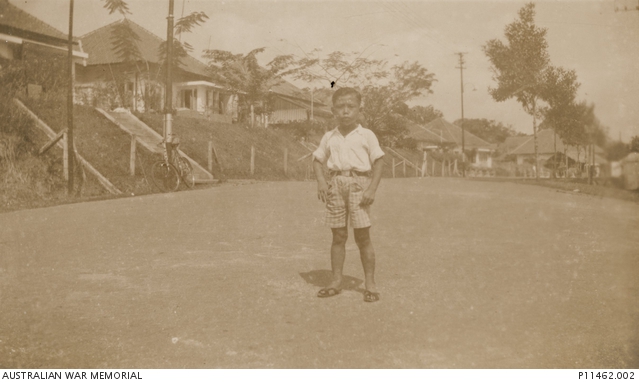
Again we slept on tiled floors and there were no cooking utensils or wood to cook with. We overcame the latter by knocking down doors and moving facia boards. We also retrieved some Mobil Oil cans for cooking and several photograph albums from a fire heap in the backyard. Later we used the photos to make playing cards.
Our rations consisted of one cigarette tin of rice per person per day and rotten vegetables; cabbage and carrot or kang kong [water spinach], which grew in the gutters and sewers. Sometimes there was a small piece of wild pig which the guard would cut up with his penknife. Each house would get enough to cover the palm of one’s hand.
Margaret Dryburgh, a missionary, teacher, and pianist, wrote the music and words of ‘The Captives’ Hymn’ during our stay here. It was sung for the first time in July 1942 and at our church service every Sunday from then on. It is a wonderful hymn. The words are very moving, and it is being sung by choirs throughout the world today.
For most of our time in this camp, the sick were taken by ambulance to the Charitas Hospital in Palembang and nursed by the Dutch nuns, so we acted as district nurses. There was plenty to do since women and children were always getting sick. The open drains in the camp didn’t help the situation even though many hours each day were spent sweeping them. The poor diet, malnutrition, and lack of vitamin C soon began to undermine everyone’s health. Food, water and wood were always short, and we would go for days when the water was cut off. We would be given permission to carry water from a tap at the bottom of the hill which gave only a trickle!
From one of the houses at the end of our road, the women discovered they could catch a glimpse of the men as they went out to work. As Christmas drew near it was decided that everyone would gather and sing ‘O Come All Ye Faithful.’ The men stopped and listened, and we could hear an echo of ‘Thank you.’ Two days later they stopped in the same spot and sang the same hymn in both English and Dutch. Everyone wept!
On Christmas Day we attended church. The missionaries took the service and then we invited friends to morning tea. We had saved up some rice and ground it down to make cakes and biscuits to offer them. We even had some real tea that we had been saving up for this occasion. During the day the Japanese brought in a typed message of Christmas greetings from England, America and Australia. Ours was from the Prime Minister, Mr. Curtin, and read: ‘Australia sends greetings. Keep smiling. Curtin.’
The men’s camp sent our camp a piece of beef, some tiny onions and real potatoes. We were able to have a meal without rice and that foul vegetable weed we called kang kong. What excitement there was! I wonder if they realise what a boost they had given the whole camp! Goodness knows where they got it from.
In March 1943 we were allowed to write our first card home. It was dreadful to realise that they had not heard any news of us as yet.
In August 1943 there were bombing raids every night and we were on permanent blackout. This was good news. In September 1943, Japanese Officers came to our house and gave us one hour’s notice to pack up. We were ready in ten minutes. We loaded all our treasured possessions on to an old truck and went to the men’s camp about one mile away.
What a mess! It was a filthy place built on a swamp. The camp was a rectangular open space with two thatched-roofed huts each, with a mud path down the centre, wooden platforms on each side and a shelf above our heads for our belongings. There were sixty to a hut and the bed space was 20½ inches by 5ft 6 inches. Bugs, rats, lice and mosquitoes were our constant companions.
There were two bathrooms, one for the Dutch and one for the British. A tong in the middle, but once again water was a problem. One of the women cut a hole in the roof to let the rain come in. Lavatories were just one long cement drain with no privacy at all. The conditions were simply shocking.
We certainly were white coolies. They brought in chunkels [hoes] weighing 20lbs for us to dig up all ground both inside and outside the camp to plant sweet potatoes and tapioca. When this job was finished we had to carry water. The whole camp would be lined up for tenko [bowing to the Emperor, literally ‘changing direction’]. We would stand in the midday sun and then move out of the camp carrying whatever utensils we could find, walk about half a mile down the hill to a pump beside the road, fill up with water and carry it back to water the vegetable gardens. Goodness knows how many trips we made each day. We were not allowed to keep any for ourselves, so when it rained all stood under the leaking roof to have a bath and wash our hair.
One very good thing that happened in this camp was the birth of the camp choir, later to be known as the vocal orchestra. There were thirty of us who joined – Dutch, British and Australians. The talented missionary, Margaret Dryburgh, who, from seemingly hopeless conditions, gave the world ‘The Captives’ Hymn,’ and Norah Chambers, a graduate of the Royal Academy of Music, London, were the driving forces behind this endeavour. Margaret, who had a most retentive memory, wrote down page upon page of classical music. Together she and Norah rearranged the scores for choral singing, condensing a 15-minute symphony to a five-minute work without losing the sense of balance and flow. The orchestra was divided into four parts. We each copied our part on to any paper we could find, and, on practice nights, we would meet in a little room behind the Dutch kitchen. The music was absolutely wonderful. It was so good for the soul and lifted our spirits immeasurably.
We put on our first concert on 27 December 1943 and performed the ‘Largo,’ ‘Andante Cantabile,’ Mendelsohn’s ‘Song without Words,’ a Brahms waltz, ‘Londonderry Air,’ Debussy’s ‘Reverie,’ Beethoven’s ‘Minuet’ and ‘To a Wild Rose.’ It was a glorious concert. All the women put on their best dresses, curled their children’s hair and dressed them as best they could for the occasion. That concert did wonders for the camp. The women said it helped to renew their sense of human dignity and feeling of being stronger than the enemy. That night, everyone forgot about the rats and the filth of the camp. We did several more concerts, but sadly they ceased when half the choir died.
The Japanese had tried to stop our first concert but Norah, our conductor, took no notice, and soon the music worked its spell even on the guard, who sat and listened to the entire concert.
So much happened in this camp. The military took over again and we seemed to have constant inspections by high officials. More British, including the matron of the British hospital in Malacca and a Scottish doctor, were brought in from a little further north.
In April 1944, the Japanese decided to pay us four guilders a month which worked out to about two shillings a week. As they allowed a shop to be set up where we could buy the odd banana, sweet biscuits, the occasional egg or some gula, this money soon went. Suddenly the pay stopped.
We were allowed to write home again and in August 1944 we received our first letter from home. Even though it was two years old, it was marvellous to have news of families and friends.
By this time there were bombing raids every night. In this camp, we were all given injections – probably typhoid and cholera. We also had a visit from a dentist and abscessed teeth were extracted without any injection. The patient, seated on a kitchen chair, hung on grimly while the guards stood by and laughed at us.
More and more people were dying now. We seemed to have funerals every day. These were our responsibility. We had to carry and bury our own dead. Two of the women in the camp made wooden crosses and engraved the name and date with a hot wire poker.
Most of us were earning some money and could buy food such as an egg, banana, fresh coconut or gula. Two of us did all the hair cutting for the camp with a pair of nail scissors and a comb with very few teeth. We also washed for the Dutch who had been able to bring some money with them.
We used to watch the Japanese unpack Red Cross parcels, help themselves and then bring the leftovers to the camp some days later. By the time it was divided among the whole camp each person got about one inch of chocolate, four tiny loaf sugars, a spoonful of coffee essence, a spoonful of butter, an inch of cheese, half a cup of powdered milk, a half tin of jam, one small tin of meat and one of salmon for 15 of us, a small packet of soup powder for three, and 20 cigarettes. Those who didn’t smoke were able to trade them for an egg, gula etc. It was wonderful to taste real food, even in such tiny amounts.
We were still having concerts whenever we could. Our vocal orchestra performed, as did the glee singers, and groups of women put on plays and individual performances.
As time passed everyone was gradually becoming weaker. We simply tried to take every day as it came. In October we were moved again to a new camp. We had a shocking trip packed like sardines in a coolie boat, with no food and little water. We were all hungry and ill when we arrived but were not allowed any of the food prepared for us until the next day.
For a change, this camp looked brand new and spotless. There was much more bed space and as it was built on top of a rise, we even got the benefit of a little sea breeze. Community bathrooms and lavatories were primitive; the latter just cement pits right beside the kitchens, which was a concern.
Many more civilians from a camp at Benkoelen came with the first arrivals. Now we numbered 700. It was not long before Bangka fever was rife in the camp and our four doctors were kept very busy. Except for one oil lamp for each housing block of 140 persons, there was no lighting. We were all still getting malaria but were not given any quinine treatment – just a bit of bark to chew on every now and then. For those still on their feet, the work of caring was constant. Hundreds were down with the fever, and victims were dying every day. By the time our third Christmas in captivity arrived, things were getting worse. There were funerals every day. Even the younger ones were dying – usually from a combination of malaria, dysentery, Bangka fever and of course malnutrition. Beri-beri was bad too and some of our girls were desperately ill. Four of our nurses died as well as many civilians.
In March 1945 we were told that we were to return to Sumatra, to a camp outside Loebok Linggau. The three-day journey claimed many lives. It was all too much for the very ill patients and an ordeal for everyone.
Very soon after we arrived at this camp, Margaret Dryburgh died. She had organised all the music for our vocal orchestra and been an inspiration to everyone. Our concerts, too, had ceased, for everyone was far too weak to sing.
In this camp, we were given a few vegetables every three days, but only after they had been left in the sun and rain for a couple of days. We were constantly tormented by fleas and bugs. Malaria, beri-beri and amoebic dysentery were affecting us regularly.
Meat was brought in from time to time. There was monkey, deer and tiger. They smelled absolutely rotten when brought in but, as the smell disappeared in the cooking, we all ate it. Rations were always left outside to go rotten before they were given to us.
As time passed, rumours that the war was over persisted and increased but no one knew what to believe until, on 24 August, the Commandant of the camp announced that the war was indeed over.
We were free women! What great excitement! We could hardly believe that we were to be rescued from this hell hole.
The Dutch government sent a message saying that they would send in food and pay for it. Everything was being taken care of. The men took over the running and repairs of the camp, and even ran the kitchen. They did a wonderful job.
A little later, two young Australian paratroopers [Sergeant Bates from Melbourne and Sergeant Gillam from Perth] arrived at the camp. We plied them with questions and were told of the atom bomb and how it had brought the war to an end.
On [15] September we were told to be ready to leave the camp at 4 am the next day. Hayden Lennard, an Australian war correspondent, Flying Officer Brown, RAAF, and Sister Beryl Chandler, RAAF had been searching for us for two weeks. They finally contacted two Dutch paratroopers who had visited our camp at Loebok Linggau and in no time at all, they located us and arranged our liberation.
We had breakfast at 1 am and the rain set in. We had collected our treasured possessions and said our farewells. In open trucks, 60 of us left the camp that morning headed for Linggau station. Hayden Lennard and Flying Officer Brown were there to meet us and accompany us to Lahat.
Once in Lahat, we waited impatiently for our plane to arrive. When it did, out stepped Colonel Sage, our Matron in Chief, Sister Floyd, and Beryl Chandler, who had trained with us Queenslanders. It was so wonderful to see them.
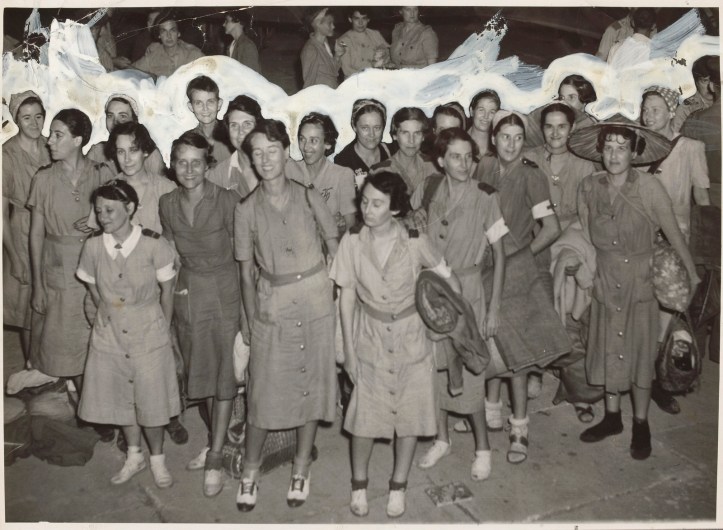
An Australian hospital [the 2/14th AGH] was ready in Singapore – a ward awaited us. We were all so tired and were longing for bath and bed. When we arrived in Singapore, however, cameras and reporters took precedence. Red Cross helpers from England and Australia were there to greet us with cups of tea and biscuits. All felt so dirty, shabby and untidy. The Red Cross people were wonderful and helped us with our few miserable belongings.
Soon we were in the hospital surrounded by the familiar faces of nurses we knew so well. We bathed and put on the very pretty nighties these girls had given us. It was so wonderful to feel clean. When we finally got into bed we hardly slept a wink all night because it was too comfortable!
The day after our arrival, we were interviewed again by reporters and were able to broadcast a message home. It was such a marvellous feeling to be able to make contact with our loved ones. We knew we would be in Singapore for a few weeks but it wouldn’t be long before we saw them again.
Our departure date from Singapore was 5 October 1945, aboard the hospital ship Manunda. We arrived in Fremantle 15 days later to a very warm welcome by the people of Perth. After a reception and luncheon in our honour, we sailed for Melbourne, arriving on 24 October, coincidentally my father’s birthday. It was a terrific birthday surprise for him because I was actually able to speak to him.
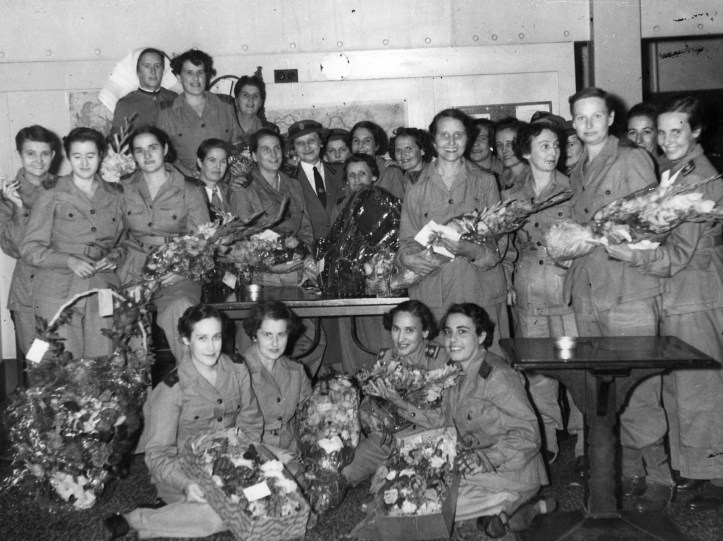
We sailed for Sydney next day and, once again, there was a wonderful welcome awaiting us. Our family was slowly breaking up and we knew we would miss each other very much. After a night in Sydney, six of us departed for Brisbane by train.
Finally we arrived at Clapham Junction [the nickname given to Moorooka Railway Station] where our families were waiting for us. Home at last! It was almost unbelievable. We were overjoyed to see our parents and brothers and sisters.
From the station we were driven through the streets of Brisbane. What a welcome we were given! The streets were lined with people, cheering and clapping. We were quite overcome.
Those of us who survived that camp together have remained a close-knit group. The friendship we share is very important to us all. After all these years we still keep in regular contact. This enduring friendship has been the most precious thing to emerge from those dreadful years in prison camp.
Life Goes On…
Over the next few months Florence recovered to the extent that she could and then got on with the rest of her life. She ceased full-time duty with the AANS on 27 March 1946 and convinced Allan & Stark Limited, a Brisbane department store, to take her on as an industrial nurse – one of Australia’s first. Then on 1 August she was mentioned in despatches for her “gallant and distinguished services in Malaya in 1942.”
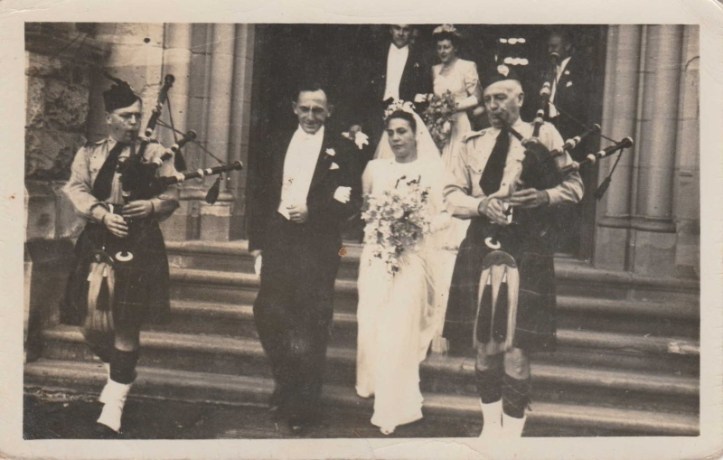
On 15 November 1947 Florence married Francis Vernon Syer, younger brother of her friend and ex-POW comrade Ada Syer. They had two daughters. Francis passed away in September 1959.
Florence retired from work in 1976 and spent time travelling with her good friend Joyce Tweddell when the latter retired in 1979 from her role as Queensland’s chief radiographer. In March 1993 the two of them, together with fellow camp survivors Mavis Allgrove (née Hannah), Jean Ashton, Pat Darling (née Gunther), Vivian Statham (née Bullwinkel) and Wilma Young (née Oram), returned to Indonesia.
At Radji Beach, Bangka Island, the seven women dedicated a memorial to their 21 comrades murdered on 16 February 1942 by Japanese soldiers. The memorial had been unveiled the previous year in the presence of Vivian Statham, a driving force behind its inception. The seven women then travelled to Jakarta to pay tribute to their 12 comrades lost at sea following the sinking of the Vyner Brooke and to the eight who died in the camps and now lie in the Jakarta War Cemetery.
On 6 June 1999 Florence attended the opening of a refurbished and recommissioned unit named in her honour at Greenslopes Private Hospital in Brisbane. Greenslopes originally opened in February 1942 as the Greenslopes Military Hospital and was staffed by elements of the 112th AGH. The Florence Syer Unit is a 30-bed sub-acute unit for patients awaiting nursing home places.
After a long and extraordinary life, Florence died at Greenslopes on 31 July 2002 at the age of 86.
We will remember her.
SOURCES
- Ancestry.
- Arthurson, L., ‘The Story of the 13th Australian General Hospital, 8th Division AIF, Malaya’ (edited by P. Winstanley, 2009).
- Colijn, H. (1995,1996), Song of Survival, Millennium Books.
- Crouch, J. (1989), One Life is Ours: The Story of Ada Joyce Bridge, Nightingale Committee, St Luke’s Hospital.
- Goodman, R. (1985), Queensland Nurses: Boer War To Vietnam, Boolarong Press, 1985.
- Kenny, C (1986), Captives: Australian Army Nurses in Japanese Prison Camps, University of Queensland Press.
- Kirkland, I. (2012), Blanchie: Alstonville’s Inspirational World War II Nurse, Alstonville Plateau Historical Society Inc.
- National Archives of Australia.
- Nelson, H (1999, 2020), ‘A map to Paradise Road: A guide for historians’, Journal of the Australian War Memorial (issue 32, Apr 1999).
- Palembang and Muntok Internees of WWII (website), ‘The Camps at Palembang.’
- Queensland States Archives, ‘Admission Register – Taringa State School (1915–1929).’
- Queensland States Archives, ‘Admission Register – Domestic Science High School (1924–1949).’
- Syer, F. (1995), ‘More Than Conquerors,’ from Fisher, F. G. (ed.), We Too Were There: Stories Recalled by the Nursing Sisters of World War II 1939–45, Returned Sisters sub-branch, R&SLA (Queensland).
- Taringa History Group (website), ‘Meeting Notices and Notes 2009 and 2010.’
- Wigmore, L. (1957), Australia in the War of 1939–1945, Series 1 – Army, Vol. IV – The Japanese Thrust, Part I – The Road to War, Chap. 4 – To Malaya (pp. 44–61), Australian War Memorial.
- World War II Troop Ships (website), ‘Queen Mary’.
SOURCES: NEWSPAPERS AND GAZETTES
- The Brisbane Courier (1 Nov 1926, p. 18), ‘Taringa State School Fete.’
- The Brisbane Courier (26 Sep 1927, p. 16), ‘Art of Singing.’
- The Courier-Mail (Brisbane, 26 Jan 1940, p. 13), ‘Guests See Trousseau.’
- The Cumberland Argus and Fruitgrowers Advocate (Parramatta, 5 Feb 1910, p. 12), ‘Weddings.’
- Daily Standard (Brisbane, 11 Oct 1926, p. eight), ‘A.N.A. Eisteddfod.’
- Daily Standard (Brisbane, 4 Mar 1927, p. 4), ‘Music Examinations.’
- Daily Standard (Brisbane, 25 Feb 1928, p. 1), ‘Trinity College of Music.’
- The London Gazette (30 Jul 1946, Supplement 37671 [1 Aug 1946], p. 3922).
- Sunday Mail (Brisbane, 6 Oct 1935, p. 20), ‘Spotlights On Society.’
- Sunday Mail (Brisbane, 11 Jan 1942, p. 10), ‘AIF Nurses Wore Tin Hats at Party.’
- Sunday Mail (Brisbane, 30 Sep 1945, p. 6), ‘Round about with Penelope.’
- The Telegraph (Brisbane, 13 Oct 1927, p. 13), ‘Musical Afternoon.’
- The Telegraph (Brisbane, 23 May 1928, p. 5), ‘Music Students.’
- The Telegraph (Brisbane, 24 Jan 1930, p. 5), ‘State Scholarships.’
- The Telegraph (Brisbane, 21 Jan 1932, p. 11), ‘University of Queensland.’
- The Telegraph (Brisbane, 31 Oct 1935, p. 16), ‘The Social Round.’
- The Telegraph (Brisbane, 19 Feb 1941, p. 10), ‘Departure of Nurses.’
- Truth (Brisbane, 29 Jan 1939, p. 29), ‘Younger Setters Hear a Call to Duty.’

