| Conflict | Second World War |
| Nursing Service | Australian Army Nursing Service |
| Units | 7th, 107th & 2/10th Australian General Hospitals |
| Overseas Service | Malaya |
| Final Service No. | VFX47776 |
| Final Rank | Lieutenant |
CLARICE’S FAMILY
Clarice Isobel Halligan was born on 17 September 1904 in Ballarat, Victoria. She was the daughter of Emily Watson Chalmers (1880–1972) and Joseph Patrick Halligan (1876–1957).
Emily Chalmers was born in Ballarat to Emily Watson, from Geelong in Victoria, and John Carter Chalmers, a clerk from Airdrie in Scotland. Joseph Halligan was born at Spring Hill, a locality around 60 kilometres northeast of Ballarat, and grew up at 113 Ascot Street in Redan, a suburb of Ballarat. His father was James Halligan, from Dublin in Ireland, who was a labourer at the time of Joseph’s birth and later a miner, and his mother was Margaret Ryan, from Tipperary in Ireland.
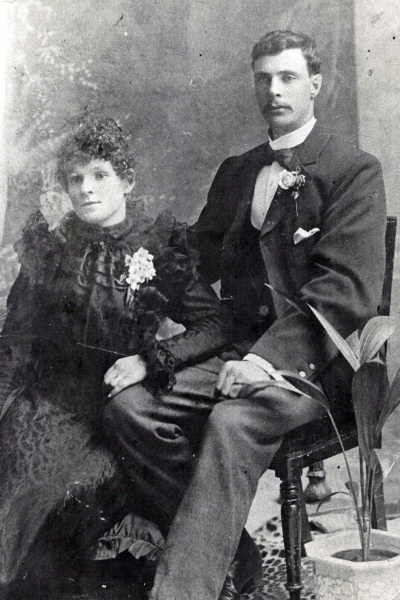
Emily and Joseph were married on 11 May 1898 at ‘Glenroy,’ a property at 73 Lydiard Street North in Ballarat. Joseph was still living on Ascot Street and was working as a brewer at Ballarat Brewery, where his younger brother William worked as well. Emily, who was one of three Chalmers daughters to marry Halligan sons, was living at home at 49 Dawson Street South in Ballarat.
In 1899 Emily’s and Joseph’s first child, Violet May, was born. Violet was followed by Minnie Margaret in 1900 and Clarice in 1904.
Soon after Clarice’s birth, the Halligans left Ballarat and relocated to Melbourne. Joseph had secured work in the inner-northern suburb of Abbotsford as a cellarman for the Melbourne Co-operative Brewery Company, better known as Abbotsford Brewery. For a short while the family lived at 392 Victoria Street in Richmond before moving to 6 Grosvenor Street in Abbotsford. Unfortunately, Joseph became insolvent, and on 29 June 1906 his estate was placed in sequestration (and was not released until May 1930). Later in 1906 the Halligans’ fourth child, James Joseph Gordon, was born.
By 1910 the family had moved from Grosvenor Street to 27 Lithgow Street in Abbotsford. That year Emily’s and Joseph’s fifth child, Jessie Chalmers, was born. She was followed in 1913 by John William.
CHILDHOOD
By 1915 the family had moved to 167 Derby Street in Kew, a suburb in Melbourne’s inner east. Later the house became known as ‘Tilbury.’ According to Clarice’s niece Lorraine Curtis, who wrote a short biography of her aunt, while living in Kew the Halligan children enjoyed “a carefree childhood and played down at the Yarra River … where they swam and bought ice cream from a punt…. They all went to school in Kew. They also went for escapades into the expansive grounds of the Kew Mental Asylum, which was forbidden of course” (Curtis, p. 2).
At the age of 11, Clarice gained her first qualification – a cookery certificate awarded by the Victorian Education Department on 30 June 1916 upon the completion of a six-month course at the Richmond Cookery Centre in the theory and practice of elementary cookery. The cookery course was part of a government program to broaden the educational experience of children at Victorian state schools beyond basic literacy.
Two more Halligan children were born in Kew, Winnifred Elaine Emilie in 1915 and Robert Wallace Percival in 1918. The family was now complete.
NURSING
Sometime after leaving school Clarice decided to become a nurse and in 1923 began a four-year combined course that comprised three-and-a-half years’ general nursing training at Melbourne Hospital and six months’ midwifery training at the Women’s Hospital. She graduated on 3 October 1927 and exactly two years later, on 3 October 1929, became registered in both specialties with the Australian Nursing Federation.
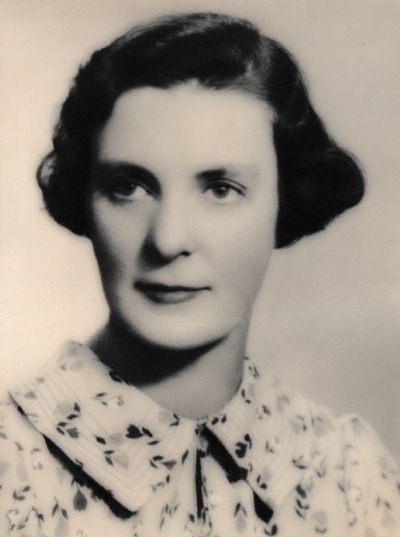
From October 1929 to February 1930 Clarice was a non-resident member of St. Margaret’s Trained Nurses’ Home, at 361 Church Street in Richmond, which appears to have been a private nursing agency.
In 1933 Clarice trained in mothercraft and infant welfare nursing. She graduated at the end of June and gained her registration on 25 August. She was now a highly sought-after triple-certificated nurse.
MISSION IN PAPUA
In 1934 Clarice volunteered with the Australian Board of Missions (ABM), an Anglican missionary society, to work as a nurse in the Australian Territory of Papua (the former British New Guinea). She was assigned to the ABM’s head mission station at Dogura on the northeastern coast of Papua – where, in August 1891, the Revds. Albert Maclaren and Copland King had founded the first Anglican mission in the territory. The ABM subsequently established a network of missions stations along a 400-kilometre stretch of north Papuan coast from Samarai near Milne Bay to the mouth of the Mambare River on the border of German New Guinea (which became the Australian-mandated Territory of New Guinea in 1920).
After meeting with ABM officials in Melbourne, on 18 July Clarice embarked from Sydney on the SS Montoro for Port Moresby, the capital of Papua. Sailing via Brisbane, Townsville and Cairns, the Montoro arrived at Hanuabada on the outskirts of Port Moresby on 26 July.
In Hanuabada Clarice received what she described in her diary (extracts of which appear in Lorraine Curtis’s biography, p. 12) as
my first introduction to the New Guinea native and to a native village. [It was] was so full of surprises that I am afraid I did not take in much that day. We landed about 4.00 p.m., hundreds of small boys swimming round the ship looking like frogs as they dived for money which some of the white people threw to them. I went to the other side of the ship, and there were dozens of large puffing dirty natives unloading the cargo. The native in Port Moresby has been rather spoiled by the white tourist throwing money to them.
After Port Moresby the Montoro’s next port of call was the island of Samarai, which lay at the very end of the Papuan Peninsula, 360 kilometres southeast of the capital. The ship arrived on 29 July and here Clarice disembarked. In her diary she wrote that Samarai was “like a dream, so beautiful at first sight, that one is left gasping.”
Samarai lay halfway between Port Moresby and Rabaul, the capital of the Australian Territory of New Guinea, and for this reason the tiny island had become an administrative and commercial centre. It had even developed a tourism industry. Among the companies present on the island was Burns, Philp & Co., owners of the Montoro, which began as a trading and shipping company before expanding into tourism and coconut plantations.
THE MACLAREN KING
From Samarai Clarice embarked on the Maclaren King, an ABM schooner captained by Fred C. Rennels and named after Albert Maclaren and Copeland King. The schooner plied the route between Samarai and the Mambare River, calling into each mission station with mail, missionaries, locals and visitors.
Clarice’s destination was the village of Wedau on Goodenough Bay, 120 kilometres from Samarai. “Four a.m. we left in pitch dark,” she wrote in her diary.
Rain [was] coming down in sheets, so cold that I had to fish out my top coat. The sea so high that it was impossible for the ‘Maclaren King’ to come onto the wharf, so we went out to her in a mission dinghy. I thought my last day had come when we stood on her hind legs several times before we got to the ‘Mac.’ After gingerly picking our way through the small group of islands, [we] found our way into the open sea. So started our eighty odd mile trip round the tail end of Papua.
[We] turned the corner and headed into Milne Bay, which is supposed to be the deepest and the most dangerous sea in the world, but apart from nasty looking sharks that we could see, and a toss and a roll now and then nothing happened to give us a pang of fear. We passed Taupota and then onto Laronai [Divari], where all the missionaries lived [at St. Aidan’s College], then on to Wamira, the next port of call, and onto Weadaw [Wedau] and the end of my journey.
DOGURA
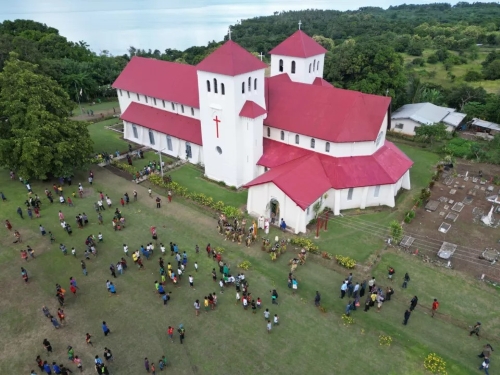
Above Wedau village rose the Dogura plateau with its almost completely flat top, visible from the sea for miles around. Prior to the arrival of Maclaren and King the plateau had been the fighting ground of the Wedau and Wamira peoples. Now, it was the centre of the Anglican church in Papua. Work had just begun on a massive concrete cathedral, the Saints Peter and Paul Cathedral – which, by the time it was consecrated in 1939, was the largest structure in the territory.
While Clarice was on her way to Dogura, Sister Lucy Willoughby was being invalided home to Melbourne after succumbing to fatigue while nursing at Dogura. Lucy Willoughby had trained with Clarice at Melbourne Hospital, and in May 1926 they had each passed their half-yearly examination. It is entirely possible that it was Lucy who had put forward Clarice’s name while discussing her return to Australia with the ABM.
It is not surprising that Lucy Willoughby experienced burnout at Dogura. Conditions were certainly trying. The mainly Australian mission staff – teachers, priests, nurses and others – had to contend with hot and humid weather, limited opportunities for recreation, unfamiliar customs, unappealing food, and tropical diseases. The medical staff were particularly busy, with tens of thousands of outpatients presenting each year at the mission hospital. Among the conditions treated were blackwater fever, pneumonia, yaws, ulcers, malaria, and venereal diseases. People also turned up with fractured limbs and skulls (from fighting) and with lacerations from wild pigs.
LIFE AS A MISSIONARY
Following her arrival at Dogura, Clarice described life in Wedau in her diary. Dogs and pigs shared the houses of the villagers, she noted, with baby pigs often sharing human milk with the baby of the house – one of the reasons why the villagers did not eat their own pigs. Taro, a rather grey, stodgy root vegetable, was the main food, but the villagers also ate sweet potatoes, pumpkins, corn and yams. Men wore a strip of banana or pandanus leaf and a strip of calico tied around the waist. Girls and women wore skirts made from the leaves of pandanus. They were a cheerful mob and had no fear of Europeans.
Clarice wrote about meeting a retired teacher who had been in Papua for 30 years and who was crippled with arthritis and nearly blind. She noted that the school at Dogura had 116 boys and 35 girl boarders, some of whom had come from hundreds of kilometres away. They were all clean and neat in their blue school aras, as the local dress was called. They attended school until 12.30 pm, played football or cricket at lunchtime, attended school again until 3.30 pm, then paraded to the hospital.
The nearest store was at Samarai, 120 kilometres away, and a boat [presumably the Maclaren King] called every six weeks if the missionaries were lucky. It was a case of living on yesterday’s meal, wrote Clarice, but they all looked healthy enough, so it was not as bad as all that.
The missionaries’ progress was slow but sure, but they were hampered by a lack of money and workers, and by sickness among their numbers. Clarice recorded that thousands of people in the mountains had never been touched. They were crying out for missionaries to go among them but there was nobody to go in.
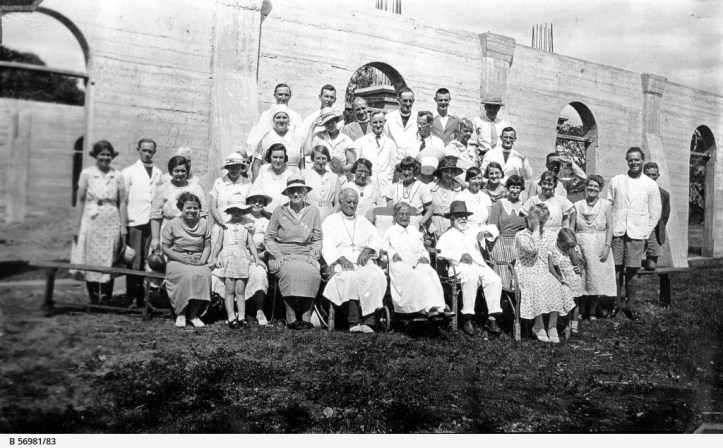
Clarice was an attendee at the Papua-wide ABM conference held at Dogura in 1935, at which 40 or more ABM staff were present. The attendees were photographed in front of the partially complete edifice of the concrete cathedral.
RETURN TO AUSTRALIA
After more than two years in Papua, Clarice returned to Australia on furlough. She departed Samarai Island on 8 October 1936 aboard the SS Montoro and arrived in Sydney around 16 October.
During her furlough Clarice attended the marriage of her sister Winnifred to Douglas Rylah of Kew. The wedding was held on 30 January 1937 at the Halligan family church, the Holy Trinity Church in Kew, with Clarice and Douglas’s sister Dorothy as Winnifred’s bridesmaids.
Winnifred was the fourth of Clarice’s sisters to marry. In 1920 Violet Halligan had married a cousin, Lieutenant Archibald Chesterman Chalmers, a Military Cross recipient during the Great War, and had gone to live on a station north of Deniliquin in New South Wales. On 2 January 1932 Minnie Halligan had married Gordon Davenport of Ascot Vale, Melbourne at the Holy Trinity Church, with Clarice and Jessie Halligan as her bridesmaids. In April 1936 Jessie herself had married Sydney Pigott of Broome, Western Australia at the Holy Trinity Church. Jessie only had one bridesmaid, Winnifred, presumably as Clarice was in Papua.
On 23 March, just two months after Winnifred’s wedding, Joseph and Emily Halligan were driving along the Murray Valley Highway to Cobram in northern Victoria with one of their sons when their Oldsmobile skidded on gravel and overturned three times. Joseph was thrown from the vehicle and sustained serious injuries, while Emily was pinned underneath but not badly hurt. Their son escaped without injury. We do not know where Clarice was at the time of her parents’ accident. If she had already set out again for Dogura, news of it might not have reached her for weeks or even months. Regardless, it must have been a shock when she did hear the news.
When Clarice finally finished her ABM posting to Papua and returned to Melbourne, she spent time working for an Anglican charity, possibly Community of the Holy Name or the associated Mission to the Streets and Lanes of Melbourne.
On 16 February 1939 Clarice arrived in the town of Moe in Victoria’s Gippsland region. She had been been appointed sister in charge of the Moe Bush Nursing Hospital, succeeding Sister Shoobridge, who was transferred to Cowes Hospital. Clarice stayed in the position for four and a half months, leaving at the end of June. She remained in Moe with an acquaintance, Mrs. Morris, for a week in early July before (presumably) returning to Melbourne. We do not know where she subsequently worked.
ENLISTMENT
When war broke in September 1939, Clarice, like so many other Australian nurses, decided to join the Australian Army Nursing Service (AANS). In July 1940 she went to the recruitment office at the Australian Army Medical Corps depot on William Street in Melbourne, filled in her attestation form, and awaited her call up, continuing her work in the meantime.
Clarice’s call up came five months later. On 20 December 1940 she was taken on strength of the AANS and at the same time detached as a reinforcement staff nurse to the 7th Australian General Hospital (AGH) and placed on leave without pay.
The 7th AGH had been raised in August 1940 at Seymour army camp in central Victoria for service in the Middle East with the 2nd Australian Imperial Force (AIF). To begin with, the unit staffed the camp hospital at Seymour and then camp hospitals at Darley (outside Bacchus Marsh near Melbourne), Bonegilla (near Wodonga in northern Victoria) and Balcombe (at Mount Martha on the Mornington Peninsula). By December the 7th AGH had moved to the new Puckapunyal army camp, 10 kilometres west of Seymour.
A nurse by the name of Beth Cuthbertson was taken on strength of the AANS on the same day that Clarice had been. Beth too was simultaneously detached as a reinforcement staff nurse to the 7th AGH and placed on leave without pay. Beth was five years younger than Clarice. She was born at Stirling in the Adelaide Hills and grew up in Melbourne and Ballarat. She had trained at Ballarat Base Hospital before moving to Melbourne to continue her training at the Queen Victoria Hospital.
On 31 January 1941, the day that the Victorian nurses and masseuses (physiotherapists) of the 7th AGH departed Puckapunyal for the Middle East, Clarice and Beth, having completed their periods of leave without pay, reported for duty at the Seymour camp hospital. They were attached to the 107th AGH, which had previously staffed the Puckapunyal camp hospital and had now taken over the camp hospitals at Seymour and Bonegilla. The two nurses remained at Seymour for the next six months.
On 9 April Clarice became ill and was evacuated to the Epworth Hospital in Richmond, Melbourne. Six days later she was transferred to the Lady Dugan Nurses’ Hostel in South Yarra to convalesce. From 24 to 29 April, she was granted pre-embarkation leave – despite that fact that she (and Beth) would not embark for some months – after which she returned to Seymour. Beth too was granted pre-embarkation leave, from 30 April to 5 May.
THE 2/10TH AUSTRALIAN GENERAL HOSPITAL
By mid-July, Clarice and Beth had been allocated as reinforcement staff nurses to a unit they would soon join in Malaya – the 2/10th AGH.
The 2/10th AGH had arrived aboard the Queen Mary at Sembawang Naval Base on the north coast of Singapore Island on 18 February 1941. It was the largest of several medical units to accompany ‘Elbow Force,’ a brigade group composed of the 22nd Brigade and ancillary units of the 8th Division sent to Malaya to reinforce British and Indian troops against a possible Japanese invasion.
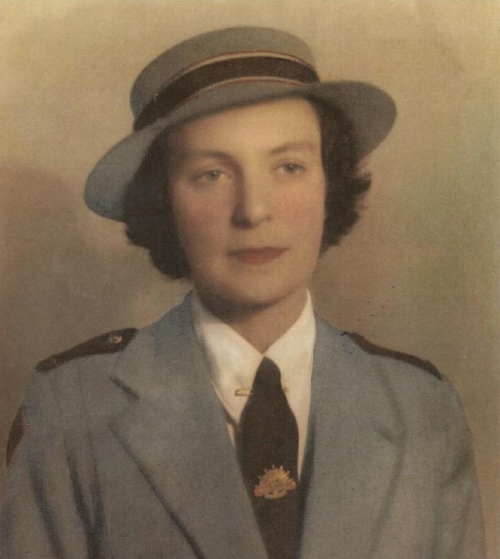
The 2/10th AGH had a nursing strength of 46 – nine sisters, 33 staff nurses and three masseuses under Matron Dot Paschke. Soon, more medical staff were needed, and on 23 May a contingent of reinforcement nurses and masseuses – Sister Jean Stewart, Staff Nurses Mary Clarke, Jenny Greer, Mary Holden, Betty Jeffrey, Nell Keats, Betty Pyman and Beryl Woodbridge, and masseuses Nancy Aiken and Merrilie Higgs – departed Melbourne aboard the Zealandia with other 2/10th AGH reinforcements and additional 8th Division combat troops, including members of the 4th Anti-Tank Regiment. The Zealandia arrived at Keppel Harbour on the south coast of Singapore on 9 June.
On 24 July, less than a week before they themselves embarked for Singapore, Clarice and Beth were detached to the 115th AGH at Heidelberg in Melbourne’s northern suburbs. At Heidelberg they met a nurse by the name of Ada Syer, who had also been allocated to the 2/10th AGH as a reinforcement staff nurse and would depart with Clarice and Beth. Ada was nicknamed Mickey after the C. J. Dennis character Ginger Mick on account of her red hair. She was born in Melbourne and had enlisted in Perth before returning to Victoria, where her parents lived. A fourth nurse, Staff Nurse Rose Wilson from Tatura in Victoria, who had been at the 107th AGH with Clarice and Beth and had travelled with them to Heidelberg, was also due to sail to Singapore, where she would relieve on hospital ships.
The four nurses did not stay long at Heidelberg. On 29 July they were detached to the Lady Dugan Nurses’ Hostel and the following day travelled to Port Melbourne to embark on the converted Dutch liner Marnix van Sint Aldegonde for Malaya.
VOYAGE TO MALAYA
The Marnix van Sint Aldegonde, codenamed ‘EE,’ was carrying more than 2,000 troops of the 27th Brigade, 8th Division, including members of the 2/26th Battalion from Queensland and the 2/29th Battalion from Victoria. After leaving Port Phillip Bay under the escort of HMAS Canberra, the Marnix sailed into Bass Strait and on 31 July rendezvoused with the Dutch liner Johan Van Oldenbarnevelt (‘FF’) and the Katoomba (‘K’), which had both departed Sydney on 29 July escorted by HMAS Sydney. Aboard the Johan Van Oldenbarnevelt was the 2/30th Battalion of the 27th Brigade. The ship also carried a number of 2/10th AGH reinforcements, including three staff nurses – Jean Russell from Hurstville in Sydney, Mary Russell from Coonabarabran in northern New South Wales, and Florence Salmon from Punchbowl in Sydney. The Katoomba carried over 600 members of the 2/15th Field Regiment and other 8th Division troops. Together the ships sailed as Convoy US11B.
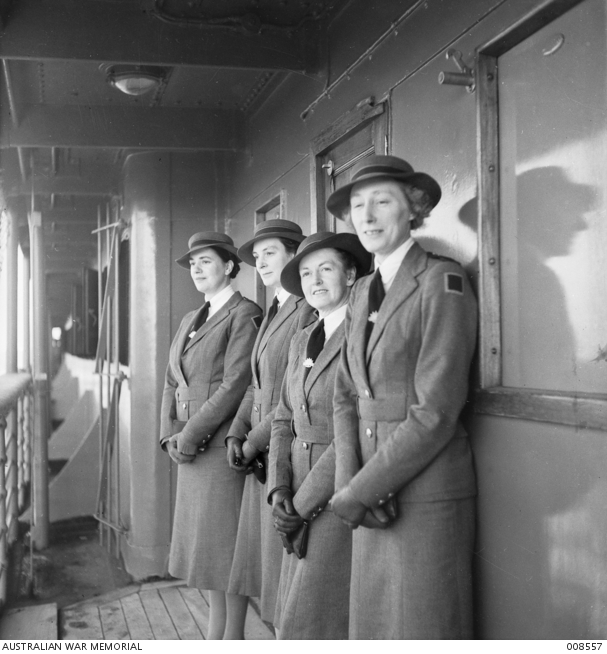
Crossing the Great Australian Bight, the convoy sailed south of the normal shipping lanes in sometimes windy and rough conditions. During the crossing the Marnix experienced an outbreak of mumps, and when the convoy arrived at Fremantle on 6 August the ship was quarantined for a day due to a case of meningitis.
In Fremantle the troops from the Katoomba were transferred to the Sibajak, which had arrived in port on 31 July from Singapore, and on 8 August the convoy departed again. On 15 August the convoy arrived in Singapore. As the ships approached Keppel Harbour, British Hurricanes flew out to welcome them.
MALACCA
In due course the seven nurses disembarked – Clarice, Beth, Ada and Rose from the Marnix van Sint Aldegonde, Jean Russell, Mary Russell and Florence Salmon from the Johan Van Oldenbarnevelt – and while Rose remained in Singapore, Clarice and the other five nurses travelled to their new home, the Malacca General Hospital. Ada Syer described their journey when she was interviewed by Don Wall in December 1989:
We travelled from Singapore in a very comfortable train as far as Tampin in sleeper carriages. When we got to Tampin it was dawn and … we were met by ambulances that took us to the general hospital at Malacca, and there we stayed until the shooting war began in December ’41.
The six nurses were formally attached to the 2/10th AGH upon arrival at the hospital on 17 August and soon got to work. With thousands of 22nd and 27th Brigade troops to treat, they were kept busy. Ada again:
[We] had a lot of malaria patients, a lot of dermatitis [and] a lot of straight-out accidents. [There were] hernias, gall bladders, infected ears [and] a lot of tinea. The skin wards were always full. [The patients) were all Australian – or they were servicemen, sometimes it was the English, a very, very occasional American.
Nevertheless, the nurses had plenty of time off and many diversions. Ada continues:
There was much of interest [in Malacca] and we quickly made friends. There was a very attractive swimming pool [the Malacca Swimming Club], which we patronized a lot. The English-speaking population – the business people – were very kind to us. They invited us to their homes, and to the golf course, and to things of general interest, and gave us introductions to people in the countryside, where we could go for our days off…. From time to time we’d have the weekend free [and] we’d go down to Singapore.
The nurses were also granted longer periods of leave and would go to Singapore, Kuala Lumpur or Fraser’s Hill, a hill station in the cool highlands north of Kuala Lumpur. Clarice and Beth were granted their first period of leave between 2 and 7 October.
THE ARRIVAL OF THE 2/13TH Australian General Hospital
Around the time that Clarice and the other nurses were preparing to embark, Colonel Alfred P. Derham, Assistant Director of Medical Services, 8th Division, had urged the deployment of a second AGH to Malaya. Australian military authorities agreed, and on 29 August the 2/13th AGH, with a strength of around 180 officers and other ranks, 43 nurses, and three masseuses, departed from Sydney aboard the Wanganella.
After an uneventful voyage, the Wanganella arrived at Keppel Harbour on 15 September. Ten of the nurses were detached from the 2/13th AGH and sent up to the 2/10th AGH at Malacca to learn tropical nursing from their experienced peers, while the other staff moved into St. Patrick’s School, a Catholic boys’ school located in Katong, eight kilometres east of Keppel Harbour. The school would house the 2/13th AGH until such time as the unit received movement orders to relocate to its permanent home, the unfinished Tampoi Mental Hospital in the south of the Malay Peninsula.
Not long after the arrival of the 2/13th AGH, Clarice wrote home to her mother. Her letter was reproduced in Lorraine Curtis’s biography of her aunt (p. 20), as follows:
Dear Mum
In case anything happens in the meantime this is a note to wish you many happy returns of your birthday I hope you have a very nice day I cant do anything about Wins birthday because I don’t know where she is. I think she knows I wish her all the best.
I have posted my Xmas cards but when I got down to Win & Doug [sister and brother-in-law], Jess & Syd [sister and brother-in-law] Grandma & the aunts I found that I did not know where any of them are so have left it to you to foreward [sic] on. I couldn’t wait to ask for addresses because the last mail in time for Xmas closes tomorrow, it seems such a long time since last Xmas I wonder what this one will bring forth. Good news I hope.
Its great fun I am shifting at the moment going on night duty for a month I am rather pleased with the idea of being able to see what is going on all over the hospital instead of staying in the one ward all the time. I go back to my own ward at the end of the month though, still its good experience to see how people work, all training schools are not the same.
We dont get much Australian news in our papers here so dont know how the new Government is getting on, so Min [sister Minnie] had better start sending me some papers now even if the news is stale, its still news.
THE APPROACHING WAR
On 29 October further reinforcements for the 2/10th AGH departed from Sydney aboard the Zealandia, among them Staff Nurses Sheila Daley and Jean Floyd. In Melbourne two reinforcement staff nurses for the 2/13th AGH, Margaret Anderson and Vera Torney, boarded the ship.
By the time the four nurses arrived at Keppel Harbour on 20 November it had become abundantly clear to British and Australian military authorities that war with Japan was imminent. Japan had been building up its forces in French Indochina since September 1940, when it signed an agreement with Vichy France and began to move troops into northern Indochina. In July 1941 the troops had begun to move south.
In anticipation of a Japanese invasion, at midday on 1 December the codeword ‘Seaview’ was issued, advancing all Commonwealth forces in Malaya to the second degree of readiness. All leave was cancelled and units had to be ready to move at a few hours’ notice to their war stations.
On 6 December a three-aircraft patrol from No. 1 Squadron RAAF flew out of the RAF base in Kota Bharu on the northeastern coast of Malaya. Soon after midday the crew of one of the planes spotted a Japanese naval convoy heading into the Gulf of Thailand from the South China Sea approximately 400 kilometres northeast of Kota Bharu. The convoy, carrying units drawn from the 5th and 18th Divisions of General Tomoyuki Yamashita’s 25th Army, had departed Hainan Island in southern China on 4 December before being joined by ships from Saigon in southern Indochina. At 2.00 pm Air Chief Marshal Sir Robert Brooke-Popham was advised of the sighting, and at around 4.00 pm the codeword ‘Raffles’ was issued to Commonwealth units across Malaya, indicating advancement to the first degree of readiness. By the late afternoon of 7 December, the Japanese invasion fleet was just 170 kilometres from Kota Bharu.
THE PACIFIC WAR BEGINS
At around 12.30 am on 8 December troops from the 18th Division landed at Kota Bharu. The 8th Indian Brigade offered stiff ground resistance, while No. 1 Squadron RAAF bombed and strafed the landing force, but despite this the Japanese units soon established a beachhead. Meanwhile, troops from the 5th Division had landed largely unopposed at Pattani and Singora (Songkhla) in Thailand.
Four hours after the landing at Kota Bharu, 17 Japanese bombers attacked targets on Singapore Island, including air bases at Tengah and Seletar in the north of the island. Raffles Place in Singapore city was also hit, killing 61 people and injuring hundreds, mainly soldiers. Elsewhere, Pearl Harbour, Guam, Midway, Wake Island and American installations in the Philippines were attacked and Hong Kong was invaded. Japan declared war on the United States, Great Britain, Australia, Canada, New Zealand and South Africa. The Pacific War had begun.
While these dramatic events were unfolding, Clarice and Beth were on leave at Fraser’s Hill. They had departed Malacca on 3 December, no doubt aware of the gravity of the situation but doubtless confident of the capacity of the Australian, British and Indian forces to deal with any Japanese incursion. Japanese soldiers were held in contempt by British and Australian military authorities. They were dismissed as short, weak and inferior, and it was believed that even if they did manage to land, they would never be able to advance southwards to Singapore through hundreds of kilometres of jungle and rubber plantation.
A FATEFUL LETTER HOME
Clarice and Beth returned to Malacca on 9 December. A day later those same inadequate Japanese forces sank HMS Prince of Wales and HMS Repulse off the east coast of Malaya. Eight hundred and forty men lost their lives, and the shockwaves were felt throughout Malaya, Britain and Australia. A number of the survivors were treated at the 2/10th AGH. Shortly afterwards Clarice wrote a fateful letter to her parents, seeking to reassure them. It was reproduced in Lorraine Curtis’s biography (pp. 17–19), as follows:
Dear Mum & Dad & family,
Just a line to let you know that we are alright, up to the moment we are not in any danger, so you are not to worry, we must all be prepared to take whatever comes after all we are better off than lots of others. We are just starting and they have been getting it for years.
The loss of our ships was not so good but the fact that there were more than 2000 men saved from the Repulse & the Prince of Wales makes good news, for every bad piece of news there is always a good bit. So long as the men at home do their bit to support the soldiers out here we will come out alright in the end, so long as we get a steady flow of munitions nothing can stop our boys, they have been waiting a long time for this business to start, they wont be caught napping now.
I think the parcels you sent must have gone astray because none have arrived yet. I dont suppose I will get much chance to make a garden now anyway however one never knows.
You will be glad to know that I was able to get my weeks leave at Frasers Hill. We were glad to get back tho’ if there is any fun we want to be in it with the rest of the mob. We had a good rest, plenty of golf in the mornings, bridge in the evenings the weather in the hills is much colder than it is here but we had nice fires to sit by. The Chinese boys were very good to us, they make very good cooks, the only thing we had to do was our own washing & that did not take long. We came home in the blackout with an armed guard which was a bit grim but now we are back on the job again feeling very fit with a good coat of sun tan and a few extra lbs in weight.
Don’t ever drive in a blackout, Pop its not so hot, and not worth the strain.
You would all laugh if you could see us with our steel hats & respirators hanging round our necks, plus gas capes & caps, we look something out of a circus, the whole darn thing is a circus anyway. Nothing is so grim that we cant have a laugh even if it is at ourselves.
There isnt much news that I can give you at the moment I expect you get it in the papers or over the air, we get our main news from London.
How is the Red Cross going Mum. I have to thank them for my holiday at Frasers Hill, they pay our expenses at the house but we pay our own fares.
Its getting dark now so will have to stop for the time being, nearly time to get ready for duty, no planes seen today.
1.45 A.M. All quiet on the Eastern front, nearly time for the roof spotters to change over, its starting to rain, only one alarm so far. The first sound finds us flat on our faces on the ground I dont suppose we will keep that up tho’.
The parcel with the seeds in turned up tonight, everything in parcel in good condition except raisins, its not going to stop us from eating them even if they are alcoholic, all tinned stuff goes into the bottom of kit bag. Other goes into common pool, we may be glad of those tins later on especially if we are on the move, which does not seem likely just now.
I will answer Jess’ letter as soon as I can thank Jack & Joyce [brother John and sister-in-law] for Xmas card which came tonight.
Must stop. Love to all, Clar.
EVACUATION SOUTHWARDS
From Kota Bharu the forces of the Japanese 18th Division advanced down the eastern side of the Malay Peninsula, while from Pattani and Singora those of the 5th Division crossed into Malaya and advanced down the peninsula’s western side. Backed by mechanized units and devastating air power, the three columns of well-trained, combat-ready troops forced severely outgunned British and Indian soldiers to retreat southwards. The myth of Japanese inferiority was put to rest.
In late December, with Japanese troops advancing unstoppably, a decision was made to relocate the 2/10th AGH. While Colonel Derham set about finding a suitable site for the hospital on Singapore Island, the staff and patients were evacuated to the 2/13th AGH, which had moved to the Tampoi Mental Hospital in late November.
The first contingent of 20 nurses, Clarice among them, arrived at Tampoi on 29 December and were attached for duty the following day. Beth arrived at Tampoi on 5 January 1942 with a large contingent of nurses, masseuses, medical officers, other ranks and patients. On 6 January Ada Syer arrived with Matron Paschke and 18 other nurses at the Mengkibol rubber estate near Kluang, 80 kilometres north of Tampoi, where the 2/4th CCS had been based since 8 December.
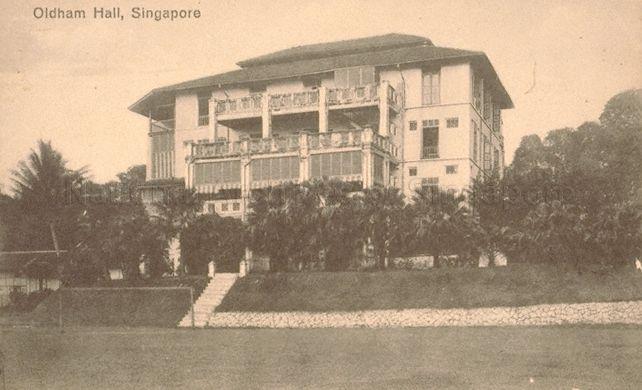
On 15 January the 2/10th AGH reopened at Oldham Hall, a Methodist boarding school on Bukit Timah Road in Singapore. On 17 January the unit’s surgical wing opened at Manor House, a boarding house 750 metres from Oldham Hall. That day Ada and the other nurses detached to the 2/4th CCS returned to the 2/10th AGH. Meanwhile, at Gemas, 200 kilometres northwest of Singapore, 8th Division troops had engaged Japanese troops for the first time. A small tactical victory was achieved at the cost of scores of casualties, who flowed into the 2/4th CCS at Mengkibol and the 2/13th AGH at Tampoi.
Clarice, Beth and other detached nurses returned to the 2/10th AGH on 24 January, when the 2/13th AGH began its own relocation to Singapore, returning to St. Patrick’s School. On 25 January three more reinforcement staff nurses turned up at Oldham Hall. Bennos Atwood, Ida Morse and Dorothy Sturgess had arrived at Keppel Harbour the previous day with a convoy carrying nearly 3,500 8th Division reinforcements. The three nurses had travelled with three other reinforcement staff nurses, Gethla Forsyth, Bonnie Gordon and Mavis Mulvihill, who were attached to the 2/13th AGH.
By 26 January the 2/10th AGH was accommodating 538 patients, many of whom were casualties of the fighting at Mersing and Jemaluang on the southeastern coast of Malaya, only 150 kilometres from Singapore. As Australian casualties continued to mount, the unit expanded into nearby bungalows and erected tents in the grounds of Oldham Hall and Manor House.
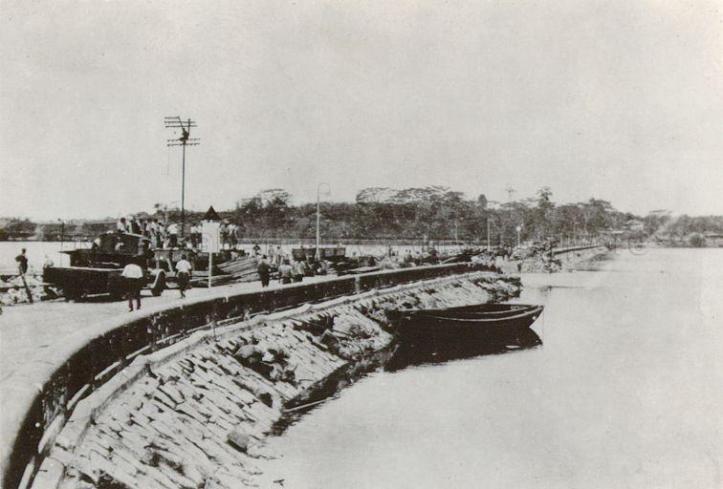
On 28 January the 2/4th CCS followed the two AGHs to Singapore, moving into the Bukit Panjang English School. The unit’s eight nurses, who had been detached to the 2/10th AGH at Oldham Hall, rejoined their male colleagues on 30 January. The following day, after the last Commonwealth troops had crossed Johor Strait from the Malay Peninsula to Singapore, the Causeway was blown in two places.
THE FINAL DAYS OF SINGAPORE
The forces of the Japanese 25th Army were now in complete control of the peninsula and on 3 February began a ferocious bombardment of Singapore’s oil infrastructure. The resulting fires generated palls of thick black smoke, which hung over the city and created an eerie twilight. On 4 February several shells fell a short distance from Oldham Hall; three days later, three staff members were killed, and several were injured by stray ordnance. To make matters worse, the large British guns to the south of the hospital were returning fire, so artillery was travelling over the hospital in both directions. Meanwhile, wealthy residents, mainly European and Eurasian women, children and men, had by now fully realised the gravity of the situation and were seeking passage on any vessel that would take them away from Singapore.
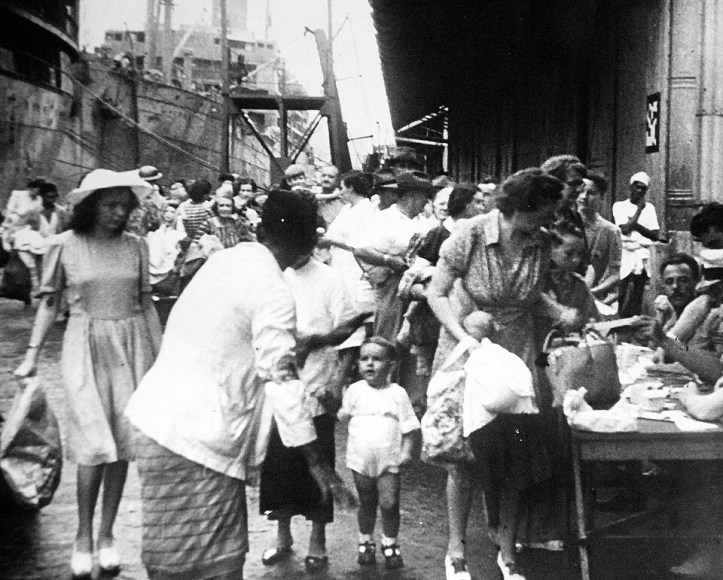
In the daylight hours of 8 February, Japanese forces concentrated their artillery fire on the northwestern defence sector of Singapore, severely disrupting the field communications of the Australian troops defending the area. That night, a Japanese assault group crossed Johor Strait in small boats and landed in the vicinity of Sarimbun River, aiming to capture Tengah airfield by the next morning. They were initially repelled by units of the 2/20th Battalion of the 22nd Brigade and the 2/4th Machine Gun Battalion, but the Australians were not reinforced and the Japanese managed to establish a beachhead. On the following night a second Japanese assault group landed further east, between the mouth of the Kranji River and the Causeway, an area defended by 27th Brigade troops. Again, despite effective fighting on the part of the Australians, there were simply too many Japanese troops, and they gained a second foothold on the island.
Hundreds of Australian casualties poured into the 2/10th AGH, and Oldham Hall and Manor House became so overcrowded that many were sent on to the 2/13th AGH at St. Patrick’s School; to the British Military Hospital (also known as the Alexandra Hospital); and to one or more of the Indian General Hospitals. The nurses worked long hours treating severe head, thoracic and abdominal injuries. There were also many amputations and double amputations, and one soldier lost both legs and one arm. When the nurses finally went off duty, they found it difficult to sleep, as the shelling was constant.
THE EVACUATION OF THE NURSES
Early on 25 December 1941 between 150 and 200 soldiers of the 38th Infantry Division of the Imperial Japanese Army had entered a 400-bed emergency military hospital established at St. Stephen’s College in the south of Hong Kong Island and had proceeded to massacre as many as 100 patients and medical staff. Among the medical staff were two British nurses from the Bowen Road Military Hospital, six British Voluntary Aid Detachments and five Chinese St John’s Ambulance nurses. They were all wearing nurses’ uniforms and Red Cross armbands. The Chinese nurses and three of the British nurses and VADs were raped and then murdered, while the other four were raped but survived.
Reports of the horrific events soon reached Malaya and began to circulate widely; and as Japan’s southward march continued, Colonel Derham began to worry about the Australian nurses. In late January 1942 he sought the permission of Major General H. Gordon Bennett, commander of the 8th Division, to evacuate the nurses and was refused on the basis that evacuation would undermine civilian morale. He then turned to Lieutenant General Arthur Percival, General Officer Commanding Malaya, who also refused.
Hedging his bets before approaching Percival, Colonel Derham had asked his deputy, Lieutenant Colonel J. G. Glyn White, to send as many nurses as he could with any 8th Division casualties leaving Singapore, on the pretext that they were on duty. This Colonel White agreed to do, and on the morning of 10 February six nurses of the 2/10th AGH were chosen by Matron Paschke to embark on the hastily converted hospital ship Wusueh, a Yangtze River steamer, with as many as 350 wounded men, including 150 8th Division troops, a few RAAF men, and scores of British and Indian troops. General Bennett then agreed that the remaining nurses should be embarked as soon as practicable.
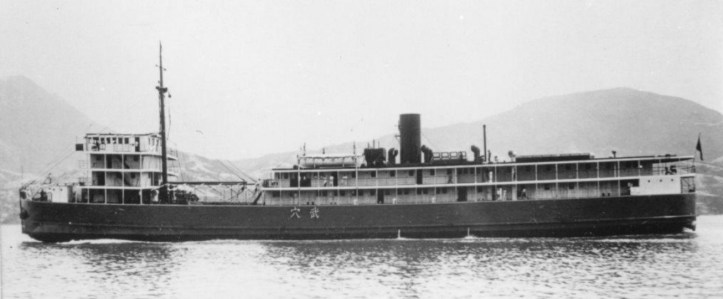
Clarice’s colleague Betty Jeffrey described the nurses’ evacuation in her 1954 book White Coolies (pp. 2–4), as follows:
Here we worked, under continuous daylight bombing raids, while the situation grew more tense daily. By [Tuesday] 10th February it was obvious that matters were working up to a climax. Six of our sisters had left earlier at an hour’s notice in a Chinese Hospital ship [the Wusueh], taking many patients with them – but not enough. At breakfast that fateful day Matron Paschke was informed that the hospital was surrounded by Japanese. We looked like being taken prisoners at any moment, but there was not a sign of panic. We finished our meal, put on our red capes, and with small week-end suitcases, greatcoats, and hats walked from our quarters to the main hospital [Oldham Hall] and got on with the job.
About 10 a.m. came a summons for about thirty sisters to leave immediately. A ship [the Empire Star] was available and was to make a dash for it.
Poor Matron! What a decision she had to make! In her usual calm manner she assembled as many of us as she could, then simply divided us into two groups – those on the one hand to go, those on the other to stay. There was no time for anything else – and everyone wanted to stay and carry on. But off they went, under orders, with hardly anyone to see them on their way. We were flat out receiving wounded, and still more wounded, while the bombing and noise went on and on.
On Thursday [12 February] there was worse to come. Matron drove Sisters Halligan, Cuthbertson, Blanch, Davis, Freeman, and myself over to our other hospital [Manor House] on the next hill.
Never had I seen such a sight. There were wounded men everywhere – in beds, on stretchers on the floor, on verandas, in garages, tents and dug-outs. Low-flying planes were machine-gunning all around us. They just cleared the roof and trees, but did turn off their guns while passing over us, starting to fire again immediately they left us behind. We had rigged up a large red cross on the front lawn with white sheets and yards of red material Matron had obtained.
At 1.45 p.m. Matron made us stop working and have lunch. Just as we started a car arrived. It was to take us to the wharf at Singapore, about three miles away. There were only six of us.
We all flatly refused to go. There was so much to be done. Wounded were arriving constantly; no hospital ships were in Singapore to relieve the congestion. Our two-hundred-bed Manor House hospital, with the smaller homes [requisitioned bungalows nearby], was rapidly approaching the one thousand mark.
But our refusal was useless. We were ordered to leave and had to walk out on those superb fellows. All needed attention; not one complained – doctors, too, who needed our help so badly. I have never felt worse about anything. This was the work we had gone overseas to do. We sat in the car quite dazed about the suddenness of it all. Back at our main hospital we were transferred to ambulances and joined a convoy of all the remaining sisters.
We got under way at once, taking only what we could carry. An orderly threw my half-filled kit-bag to me – what a pal! The last person I saw was a doctor with the same name as mine, standing there waving and wishing us luck. I shall never forget the expression on his face.
We drove through an air raid into Singapore by side tracks. Japs were everywhere and the main road was taboo. Once we took cover – in St. Andrew’s Cathedral. It was a queer sensation, sitting in that huge cathedral seeing the rows of Army sisters– some wearing captails, some in tin hats, one or two with outdoor felt hats on (we had all been on duty) – sitting quietly while an air raid raged and ack-ack guns echoed loudly through the church.
A list of our names and numbers was taken…. Later we were joined by the remaining sisters of the 13th A.G.H. and the 2/4th Casualty Clearing Station, whose names and numbers were added to the list. We now numbered sixty-five.
When the all-clear sounded we were driven to the wharf. Singapore seemed to be ablaze. There were fires burning everywhere behind and around us and on the wharf hundreds of people trying to get away, long queues of civilian men and women, and a long grey line – us. Masts of sunken ships were sticking up out of the water, but no ships were in sight other than forlorn-looking barges.
As we walked along the wharf we noticed that dozens of beautiful cars had been dumped in the water; some were smashed on top of each other, others were visible only by a wheel or part of the engine sticking out of the water. Cars during that last week in Singapore were literally given away as people evacuated; these obviously were scuttled to prevent the Japanese from using them.
While we waited for our ship another air raid started. This time the ack-ack guns were alongside us – terribly noisy things which made the tin roofs of buildings near by rattle and rumble.
At last we were on the move – into a tug which took us down harbour to a small, sinister-looking dark-grey ship, Vyner Brooke.
VIVIAN BULLWINKEL’S STORY
The story of the 65 AANS nurses’ escape from Singapore is continued by another of Clarice’s colleagues, Vivian Bullwinkel. On 29 October 1945 Lieutenant Bullwinkel (as she was by then) testified before the Australian Board of Inquiry into War Crimes, led by Sir William Webb. Through her answers to questions put to her by Webb and his assistant William Cuppaidge, Lieutenant Bullwinkel related the tragic events leading up to the horrific massacre on Bangka Island, as follows (edited for narrative flow):
We boarded [the Vyner Brooke] at about 5 o’clock and sailed down the harbour. We were told that we might be going to Batavia. We sailed all day Friday [13 February], and on Saturday morning at about a quarter past two p.m. three planes appeared over us. They machine gunned and bombed the boat and she commenced to sink in the Bangka Straits about 10 miles from land.
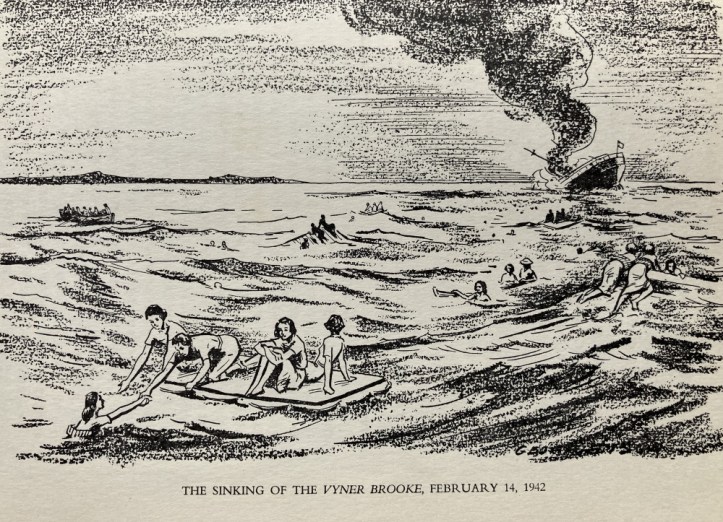
We had been told that all civilians were to go over first and we were to await orders. The civilians were to go first and Matron [Irene] Drummond [of the 2/13th AGH] told us to go over. There were about 12 Sisters on this part of the boat at the time. We went over and there was a submerged lifeboat beside the ship. We got into it. There were three injured Sisters, Sister [Kath] Neuss, Sister [Joan] Wight and Sister [Florence] Salmon. [Also in the boat were] two civilian women and the husband of one of them, and a ship’s officer.
We reached land about half past ten [on Saturday night] and about two miles further down the coast there was a fire that had been lit by a previous boat that had come in. We went down there to get help and to bring the Sisters down to the fire, and we all eventually got to the fire about midnight. Whilst there a third boat from the Vyner Brooke arrived bringing civilian women and about four or five Sisters, [Peggy] Farmaner, [Lorna] Fairweather, [Clarice] Halligan, [Jean] Stewart and [Nell] Keats.
We spent the night by the fire and it was decided next morning [Sunday 15 February] to try and get help, so one party of men went to one lighthouse; a second party went to a second lighthouse; and, a third party consisting of about four civilian women and six Sisters and a ship’s officer went inland to a village to try to get information and help. There was Mr Sedgeman, the ship’s officer; Nurse Halligan; Nurse [Joyce] Bridge; Nurse [Jenny] Kerr; Nurse [Mona] Tate; Nurse [Nancy] Harris; myself; Miss Rossi, Mrs. Hutchins; Mrs. Langdon Williams. So the native women gave us drink whilst there but the men would not let them give us anything to bring away in the way of food or clothing.
We returned to the beach and one party from the lighthouse returned but the other party we learned later had been taken prisoner. The ship’s officer, Mr Sedgeman, explained the position that the Japanese were on the island and that there was no way of getting away, that there was no food on the island and that the only thing to do was to give ourselves up. Everybody was agreeable to that. That night there was shelling out to sea and two hours later a lifeboat arrived with about 20 Englishmen from the English Ordnance Corps. They were told the position and what had happened on the island and they agreed that it was best to give ourselves up the next morning. [On the beach] by this time there would be about 100 men, women and children.
The next morning [Monday 16 February] Mr Sedgeman went over to Muntok [a nearby town] to get the Japanese to come and collect the party and take us over. While he was away Matron Drummond who had taken charge of the women suggested that the civilian women and children should commence on the way so that there would not be so many walking off to the jungle path. They had a Chinese doctor named Tey but the Japs were on his track and he committed suicide later on.
About 10 o’clock in the morning Mr Sedgeman arrived back with a Japanese party consisting of about 20. They separated the men from the women in two bunches and the ship’s officer tried to tell them we were giving ourselves up as prisoners of war. They just ignored him. [The Japanese] had khaki shirts and trousers after the style of Jodhpurs and little caps with a star in front of them and they all carried rifles with bayonets on them. I did not see any small arms on them. The one in charge was only a small fellow and was dressed very nattily and much tidier than the others. The suit he had on seemed to have been tailored. He carried a sword. Afterwards we found out that those who carried swords were supposed to be officers. They belonged to the first lot that ever arrived at Bangka. They arrived only the morning before, because the remainder of our girls who came in on rafts actually arrived before the Japanese landed.
They took half the men down the beach about 100 yards behind the headland. There would be about 25 of them. Then they came back and took the remainder of the men down the same direction. I suppose they were away five or ten minutes. We heard some shots from that direction. Then they came back and sat down in front of us and cleaned their rifles and bayonets wiping them on a piece of rag or a handkerchief. Two men escaped, Mr Eric German an American, and a naval rating [Ernest] Lloyd
When they had finished cleaning their rifles and bayonets they stood up and the one in charge suggested that we [22 nurses and one civilian woman] should go towards the sea and he sent a couple of Japs to push us along. We went towards the sea and kept walking in and when we got up to our waists they started firing up and down the line with a machine gun [from] up underneath the trees a matter of 20 or 30 yards away. They just swept up and down the line and the girls fell one after the other. I was towards the end of the line and a bullet got me in the left loin and went straight through and came out towards the front. The force of it knocked me over into the water and there I lay. I did not lose consciousness. The waves swept me back.
Clarice, Beth and 19 of their comrades died that day. Twelve other nurses had been lost at sea when the Vyner Brooke was sunk. After living in the Bangka jungle for two weeks, Vivian Bullwinkel surrendered to Japanese authorities and joined the remaining 31 nurses in captivity. Ada Syer was one of them.
THE END OF HOPE
In early July 1942 the names of the 65 Vyner Brooke nurses began to appear as “missing” in army casualty lists published in Australian newspapers. Clarice’s appeared on 6 July, Beth’s in mid-July. The families of the 65 had been notified of the status of their missing daughters prior to publication.
In early February 1943 the 32 interned nurses were visited by a Japanese official at their camp in Palembang, Sumatra. The official recorded their full personal details and a personal message for home, and in late February the names and messages were broadcast over Radio Tokyo. The transmissions were picked in Australia by official listening posts – and by individuals with shortwave radios – and conveyed officially and unofficially to the nurses’ families. By November 1943 the status of the 32 interned nurses had changed from “missing” to “prisoner of war.”
Clarice, Beth and the other 31 deceased nurses remained “missing” until June 1944, when their status was changed to “missing believed killed on or after 11 February 1942.” On 14 June 1944 Clarice’s parents published the following notice in the ‘Deaths on Active Service’ section of the personal columns of The Age:
Clarice Isobel Halligan, 10th Aust. General Hospital, previously reported missing, beloved third daughter of Mr. and Mrs. J. T. Halligan of 167 Derby-street, Kew, loved sister of James, Gordon (2nd A.I.F.), Wallace (R.A.A.F.), John, Violet (Mrs. A. C. Chalmers), Min (Mrs. G. Davenport), Jess (Mrs. S. Pigott), Win (Mrs. W. D. Rylah). Until we meet again.
In January 1945 the missing nurses’ status was changed again, to “became missing on 14 February 1942 and for official purposes presumed to be dead.”
When the surviving Vyner Brooke nurses – now only 24 – were rescued from captivity on Sumatra on 16 September 1945 and flown to Singapore, they were interviewed by newspaper correspondents upon arrival and subsequently. Over the next few days, the story of the sinking of the Vyner Brooke, the massacre on Bangka Island, and the deaths of eight of the nurses in the camps became known across Australia. If just a flicker of hope had remained in the hearts of the families of the deceased nurses, it was now snuffed out forever. And yet, perhaps the end of hope allowed the families to begin to come to terms with the loss of their daughters.
“OUR POOR MOTHERS…”
When Betty Jeffrey was recovering at the Heidelberg Military Hospital, she wrote a heartfelt letter to Clarice’s mother, Emily Halligan (reproduced in Curtis, p. 37):
Our poor mothers, what an awful time they have been through – words just cant express how I feel for you. I’m so very sorry Mrs. Halligan.
I am still in hospital at Heidelberg and have just been told by the Doctor that I may go home for about a week, then I have to go to Bonegilla (as a patient) for some months. I cant understand it, I’m so fat and feel so well now. Suppose I’ll be going home in a few days. May I come over and see you when I come back all cured from Bonegilla? I knew Claire so well, I would like to know her mother.
Thank goodness it is cooler, I don’t like heat, I’ve had enough of that.
With kind regards,
Yours very sincerely
Betty Jeffrey.
On 1 June 1952 a memorial service was held at the Holy Trinity Church in Kew to mark the unveiling of a Book of Remembrance and a Mural Tablet. Clarice’s name was recorded among those of the men and women associated with the church who had given their lives in the Second World War.
In memory of Clarice.
SOURCES
- 2/30th Battalion A.I.F. Association, ‘Convoy US11B.’
- Ancestry.
- Arthurson, L., ‘The Story of the 13th Australian General Hospital, 8th Division AIF, Malaya’ (edited by Peter Winstanley, 2009).
- Australian War Memorial, 2nd AIF (Australian Imperial Force) and CMF (Citizen Military Forces) Unit War Diaries, 1939–45 War, 8 Australian Division Administrative Headquarters AIF Malaya and Headquarters AIF (Prisoner of War) No. 1 Prisoner of War Camp Changi, December 1941, AWM52 1/5/19/7.
- Australian War Memorial, Ada Syer interviewed by Don Wall 1 Dec 1989, WX11105/W102.
- Australian War Memorial, Australian Board of Inquiry into War Crimes, testimony of Vivian Bullwinkel, 29 Oct 1945, AWM 1010/4/24.
- Bassett, J. (1992), Guns and Brooches: Australian Army Nursing from the Gulf War to the Boer War, Oxford University Press.
- BirtwistleWiki, ‘107th Australian General Hospital.’
- BirtwistleWiki, ‘115th Australian General Hospital.’
- BirtwistleWiki, ‘2/7th Australian General Hospital.’
- Commonwealth War Graves Commission, ‘Jakarta War Cemetery.’
- Curtis (née Halligan), L. C. (2017), ‘My story of Aunt Clarice Isobel Halligan.’
- Jeffrey, B. (1954), White Coolies, Angus & Robertson Publishers.
- National Archives of Australia.
- Rennels, F. (1974), ‘New Guinea Reminiscences’ (typescript manuscript dated 1974 in possession of Diocese of Brisbane Archives), Project Canterbury.
- Strong, P. N. W. (1947), ‘Out of Great Tribulation: The Presidential Address and Charge of the Right Reverend Philip Nigel Warrington Strong M.A., Bishop of New Guinea, to His Diocesan Conference at Dogura, Papua on Monday June 30th, 1947,’ Project Canterbury.
- Wetherell, D. F. (1970), ‘A History of the Anglican Mission in Papua 1891–1941,’ Thesis presented to the School of General Studies, Australian National University for examination for the Degree of Master of Arts.
- Wikipedia, ‘Sinking of Prince of Wales and Repulse.’
- Wishart, A. and Adele Wessell, A., ‘Recipes for reading culinary heritage: Flora Pell and her cookery book,’ reCollections: Journal of the National Museum of Australia (Vol. 5 no. 1, April 2010), National Museum of Australia.
SOURCES: NEWSPAPERS
- The Age (Melbourne, 16 Jan 1937, p. 25), ‘Missionaries on Furlough.’
- The Argus (Melbourne, 30 Jun 1906, p. 19), ‘New Insolvents.’
- The Argus (Melbourne, May 1930, p. 5), ‘Bankruptcy Court.’
- The Argus (Melbourne, 7 Jul 1934, p. 19), ‘Church News.’
- The Argus (Melbourne, 14 Jan 1937, p. 3), ‘Social Notes.’
- The Argus (Melbourne, 14 Jun 1944, p. 2), ‘Family Notices.’
- The Argus (Melbourne, 1 Feb 1945, p. 4), ‘Latest Army Casualty List.’
- The Ballarat Star (Vic., 5 May 1896, p. 1), ‘Advertising.’
- Cobram Courier (Vic., 25 Mar 1937, p. 2), ‘Accident at Strathmerton.’
- The Herald (Melbourne, 4 Jul 1906, p. 2), ‘Advertising.’
- The Herald (Melbourne, 9 Jun 1926, p. 4), ‘Nurses’ Exam.’
- The Herald (Melbourne, 19 Jul 1934, p. 32), ‘News in Brief.’
- The Herald (Melbourne, 11 Apr 1936), p. 8), ‘Melbourne Bride and West Australian Groom.’
- The Narracan Shire Advocate and Yallourn Brown Coal Mine, Walhalla and Thorpdale Lines Echo (Moe, 17 Feb 1939, p. 3), ‘No Title.’
- The Narracan Shire Advocate and Yallourn Brown Coal Mine, Walhalla and Thorpdale Lines Echo (Moe, 24 Feb 1939, p. 3), ‘Moe Hospital.’
- The Narracan Shire Advocate and Yallourn Brown Coal Mine, Walhalla and Thorpdale Lines Echo (Moe, 23 Jun 1939, p. 1), ‘Moe Hospital.’
- The Narracan Shire Advocate and Yallourn Brown Coal Mine, Walhalla and Thorpdale Lines Echo (Moe, Vic., 7 Jul 1939, p. 2), ‘Personal Pars.’
- Papuan Courier (Port Moresby, 20 Jul 1934, p. 8), ‘Local and General News.’
- Papuan Courier (Port Moresby, 27 Jul 1934, p. 5), ‘Shipping News.’
- Papuan Courier (Port Moresby, 9 Oct 1936, p. 5), ‘Shipping News.’
- The Sun News-Pictorial (Melbourne, Thu 25 Mar 1937, p. 32), ‘Man and Wife Injured When Car Overturns.’

