| Conflict | Second World War |
| Nursing Service | Australian Army Nursing Service |
| Unit | 117th Australian General Hospital (Toowoomba) |
| Overseas Service | |
| Final Service No. | Q140158 |
| Final Rank | Sister Group 2 |
Family Background
Margaret Lawrence Jackson, known as Peggy, was born on 27 August 1915 in Maryborough, Queensland. She was the only living child of Annie Lawrence Sinclair (1878–1933) and George Henry James Jackson (1876–1964).
Annie Sinclair was born in Aberdeen, Scotland, and migrated to Queensland with her parents around 1882 on the Selkirkshire, landing at Rockhampton. They spent two years in that town before moving to Tiaro, 25 kilometres south of Maryborough, where they were pioneer farmers.
George Jackson grew up in Tinana, a town across the Mary River from Maryborough. He was the child of English migrants who married in Brisbane in 1870.
Annie and George were married on 9 November 1909 at Tiaro by the Rev. Sweet. They took up residence at Torquay, a locality within Pialba (today known as Hervey Bay), where, in August 1911, George opened the Torquay Bakery. He made everything from bread to three-tiered wedding cakes.
In November 1912 Annie gave birth to Henry James Jackson, who lived for only three days. In August three years later, Margaret – or Peggy as she was known – was born.
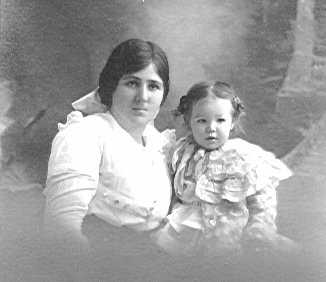
By then the Great War was raging. On 7 December, three months after the birth of his daughter, George enlisted in the Australian Imperial Force (AIF) and was attached to the 50th Battalion. In August 1916 he embarked for England and early in 1917 moved across to France.
While George was away at the war, Annie and baby Peggy were making do back home. In 1916 Annie’s mother, Annie Sinclair, moved in following the death some time earlier of her husband.
George returned home in January 1918 with laryngitis and was discharged from the army three months later. He did not return to baking, but instead found work at Messrs. Hockley’s Limited, an ironmongery store in Maryborough.
School and Nursing
Soon little Peggy was old enough for school. On 6 September 1920 she commenced at Torquay State School and continued there until August 1928. She also attended the Torquay Baptist Sunday School. In 1930 and 1931 Peggy attended the Convent High School in Maryborough, even though the family were Presbyterian. Among other subjects, she studied bookkeeping and shorthand. By then George Jackson was working for the Forestry Department and spending time on Fraser Island, across the bay from Pialba. Over the next two or three decades, he would develop a reputation as a bushman of considerable skill and knowledge.
On 9 August 1933 Annie Jackson died in Maryborough. She was buried at Tiaro Cemetery. Annie had been very active within the Torquay community. She had been a member of the Torquay branch of the Women’s Auxiliary of the Returned Sailors’ & Soldiers’ Imperial League and of the Torquay Progress Association.
By 1934 Peggy, now 18 years old, decided it was time to find a job. In May of that year, she applied to Burrum Shire Council for the position of junior clerk or typist and in June applied for the position of probationer nurse at Barcaldine Hospital in outback Queensland. She appears not to have been successful with either application. Instead, by the end of 1934 Peggy was on the nursing staff of Goomeri Hospital, 150 kilometres to the south of Pialba. After spending time at Goomeri, she finished her training at the Brisbane General Hospital.
Enlistment
When war broke out Peggy decided to enlist, as did many of her colleagues and peers. Her father and her maternal uncles had served in the First World War, and now she would serve in the second. She applied to join the Australian Army Nursing Service (AANS) and after receiving her call up enlisted on 30 January 1942. On 24 February she was posted to the 117th Australian General Hospital (AGH) at the rank of Sister Group 2.
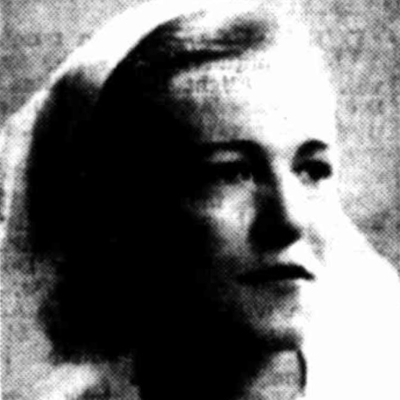
Elements of the 117th AGH had begun to train at Enoggera Army Camp in outer northwest Brisbane in October 1941 before the unit came together in Toowoomba in January 1942 under the command of Colonel Robert Fowler. It was raised hurriedly in response to the threat posed by Imperial Japan, which had unleased the Pacific War in December 1941, and for a time was the northernmost AGH in Australia. Two schools were requisitioned for the unit – Downlands College, a Catholic boys’ school, which became the medical division, and Glennie Memorial School, an Anglican girls’ school, which became the surgical division. As the schools were four kilometres apart, logistical difficulties inevitably arose, and the arrangement was not a successful one.
We do not know at which division Peggy was based.
The surgical division at Glennie opened with two officers and 78 personnel from other ranks, including 10 AANS nurses and a number of Voluntary Aid Detachment nurses. The number of staff at the medical division at Downlands is unknown. All of the nurses were under the charge of Matron Ethel Frances Hanrahan, who shuttled between the two schools.
Among the cases treated by the nurses of the 117th AGH were Australian soldiers returned from the New Guinea campaign against the Japanese. The nurses at Downlands quickly adapted themselves to the treatment of malaria, dengue, dermatitis and other tropical conditions, while those at Glennie saw many battle casualties.
Illness and Death
On 4 August 1942 Peggy was herself admitted to the 117th AGH suffering influenza. She was discharged on 9 August. She was hospitalised again with conjunctivitis from 8 to 13 September. On 21 September she was hospitalised for a third time, this time with tonsillitis. She died in hospital on 30 September of circulatory failure following intravenous anaesthesia. The following day she was buried at Toowoomba Cemetery.
George Jackson, who had lost his son, his wife and now his daughter – his entire family – was profoundly saddened. Every year, to mark the anniversary of Peggy’s death, he placed a notice in the local newspaper. The following appeared in the Maryborough Chronicle, Wide Bay and Burnett Advertiser on 30 September 1943:
JACKSON. — In fond remembrance of my only child, my loved and loving daughter, Margaret Lawrence Jackson, whose death occurred with tragic suddenness on September 30, 1942, at the Military Hospital, Toowoomba, where she was in war service as an enlisted nursing sister. Beloved by all who had the good fortune to know her.
God gives us love. Something to love
He lends us, but when love is grown
To ripeness, that on which it throve
Goes home, and love is left alone.
Inserted by her father, G. H. Jackson, of Torquay, ex-soldier of 50th Battalion, A.I.F.
SOURCES
- Ancestry.
- Australian Dictionary of Biography, ‘Ethel Frances Hanrahan (1909–1981).’
- Monument Australia, ‘117th Australian General Hospital & No. 1 Australian Orthopaedic Hospital.’
- National Archives of Australia.
- Queensland State Archives, ‘Admission Register – Torquay State School, 1901–1933.’
SOURCES: Newspapers
- Maryborough Chronicle (28 Jun 1952, p. 2), ‘Last of Family.’
- Maryborough Chronicle, Wide Bay and Burnett Advertiser (27 Apr 1918, p. 5), ‘Maryborough Contribution.’
- Maryborough Chronicle, Wide Bay and Burnett Advertiser (12 Nov 1927, p. 5), ‘Pialba.’
- Maryborough Chronicle, Wide Bay and Burnett Advertiser (16 Jun 1930, p. 4), ‘Obituary.’
- Maryborough Chronicle, Wide Bay and Burnett Advertiser (8 Dec 1931, p. eight), ‘Convent School.’
- Maryborough Chronicle, Wide Bay and Burnett Advertiser (10 Aug1933, p. 6), ‘Obituary.’
- Maryborough Chronicle, Wide Bay and Burnett Advertiser (10 May 1934, p. 2), ‘Local Government.’
- Maryborough Chronicle, Wide Bay and Burnett Advertiser (7 Jan 1935, p. 6), ‘Social.’
- Maryborough Chronicle, Wide Bay and Burnett Advertiser (16 May 1942, p. 4), ‘Social.’
- Maryborough Chronicle, Wide Bay and Burnett Advertiser (2 Oct 1942, p. 2), ‘Obituary.’
- Maryborough Chronicle, Wide Bay and Burnett Advertiser (3 Jun 1943, p. 3), ‘They Taught the World What Men There Be.’
- Maryborough Chronicle, Wide Bay and Burnett Advertiser (30 Sept 1943, p. 2), ‘Family Notices.’
- The Telegraph (Brisbane, 10 Oct 1941, p. 3), ‘More Units for Camp.’

