| Conflict | Second World War |
| Nursing Service | Australian Army Nursing Service |
| Units | 2/10th, 125th, 118th & 2/1st Australian General Hospitals |
| Overseas Service | Malaya & Bougainville |
| Final Service No. | NX70495 |
| Final Rank | Captain |
FAMILY BACKGROUND
Naomi Theo Drover was born on 28 April 1912 in Coolamon in the Riverina region of southern New South Wales. She was the daughter of Mary King Pyke, known as May (1879–1965), and Prosper William John George Drover (1887–1918), a farmer, orchardist and nurseryman.
Prosper Drover was born in the town of Corowa, 150 kilometres south of Coolamon on the River Murray. His mother, Elizabeth Soles (1859–1913), was born at Indigo, near Rutherglen in Victoria, 10 months after her parents arrived from Britain. Prosper’s father, William Drover (1857–1932), was born in Wangaratta, Victoria. After blacksmithing with his father (also William) in Wangaratta, William farmed at Corowa, returned to blacksmithing in Coolamon, moved to Gillenbah to farm once again, became an orchardist at Leeton, and ended his days in Narandera (today spelt Narrandera).
May Pyke was born in Wodonga on the southern bank of the River Murray in Victoria, the twin town of Albury on the northern bank in New South Wales. She was the daughter of Matilda Sophia King (1840–1917), who was born at Sutton Forest, New South Wales, and William Tucker Pyke (1833–1907), who was born in Devonshire, England and migrated to Australia in 1867. William lived in Wodonga for 15 years and spent three years in Albury before moving to Coolamon around 1885, where he established a flour mill. In 1892 May’s older sister Emily married Fred Aylett, an orchardist in Coolamon.
May met Prosper while Prosper was working for Fred Aylett. They were married on 27 October 1903 and settled on Fred’s orchard, ‘Coolamon Grove,’ which Prosper later leased. Around 1913 Prosper established his own mixed farm and orchard, ‘Austral Eden,’ a 50-acre property off Rannock Road around a kilometre and a half northeast of Coolamon.
The Drovers had four children. Audrey Allison, known as Aud, was born in 1904. He was followed by Prosper William, known as Fin, in 1907, Alwyn Dudley, known as Goll, in 1909 – and Naomi, who was known as Girlie, in 1912.
In the early hours of 12 March 1918 Naomi’s father died of a terminal illness at Austral Eden and was buried two days later. He had known his days were numbered, for he had prepared his will at the end of 1917. May Drover took over the running of the farm and orchard.
SCHOOL
Soon after her father’s death, Naomi began attending Coolamon Public School. She must have been quite a good pupil, for in 1920, when she was in the Second Class, she came fourth in her class in General Proficiency. And at the 1922 Coolamon Show, held in September, she was awarded Best Kept Work Book for children between eight and 10.
By May 1928 Naomi, then 16 years old, had moved to Strathfield in Sydney to live with her aunt and uncle at 66 The Avenue. Aunt Maude was May Drover’s elder sister by two years and was married to James Boyd.
On (at least) three occasions in 1928 Naomi wrote to ‘Sunbeams,’ the children’s pages of the Sun newspaper. Although her letters were not published, she was awarded a prize for each of them – on 13 May a “souvenir,” on 10 June a Blue Certificate for a letter titled ‘Seed Sowing at Coolamon,’ and on 16 September a cash prize.
Naomi completed her schooling in Sydney, possibly attending Meriden Church of England Grammar School for Girls, which was located 400 metres from her aunt’s and uncle’s house. There was a girl at Meriden by the name of Joyce Lockhart Bell, known as Joy. Joy was nine months older than Naomi and lived at 16 Vernon Street, three-quarters of a kilometre away from Naomi. It would appear that they became firm friends.
NURSING – AND ENLISTMENT
Around 1931 Naomi and Joy began nurses’ training together at the Royal Alexandra Hospital for Children in Camperdown. At the end of 1932 Naomi passed her second-year examinations and in November 1934 she and Joy successfully sat the Nurses’ Registration Board examination. Naomi became registered in general nursing on 10 January 1935 and Joy on 2 May 1935.
At the end of 1935 both women began midwifery training at the Crown Street Women’s Hospital in Darlinghurst. They passed the Nurses’ Registration Board examination held in May 1936 and on 9 July 1936 Joy gained her registration, Naomi following on 11 February 1937.
In September 1939 Australia went to war, and women and men across the country volunteered to join the services. Men enlisted in the Citizen Military Forces for home service and in the Second Australian Imperial Force (2nd AIF) for service abroad, while women joined the Australian Army Nursing Service (AANS) and later a number of other services.
Just as volunteer numbers were tailing off, the fall of France and the Low Countries in May and June 1940 brought a new rush of recruits. Enlistments for the 7th Division, 2nd AIF grew from 15,196 on 30 May to 54,897 on 27 June.
Numbers of volunteers for the AANS grew commensurately, and among the applicants were Naomi and Joy. They had their medicals together on 27 June 1940 and on 2 December enlisted together at Victoria Barracks. Naomi was assigned army number NX70495 and Joy NX70496. They were taken on strength of the AANS and detached as staff nurses to the dressing station at Liverpool army camp, 30 kilometres southwest of central Sydney.
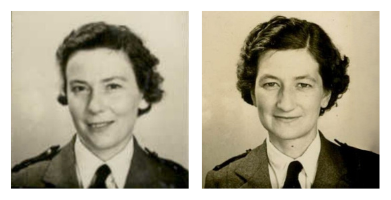
Naomi was the fourth member of her family to serve. Aud Drover had already had a long career in merchant shipping and had become an officer in the Australian Mercantile Marine. Fin Drover, who was a motor engineer, enlisted in the Citizen Military Forces in October 1940 and was attached to the Motor Transport Section of the Australian Army Ordinance Corps. Goll Drover had joined the RAAF as an aircraft mechanic in 1937 and remained in the service for more than two decades. He was awarded an MBE and retired as a warrant officer.
At the time of Naomi’s enlistment, May Drover had relinquished the farm at Coolamon and had moved to Strathfield to live with her sister Maude, who had lost her husband in 1931.
THE GROWING JAPANESE THREAT
The German invasion of northwestern Europe presented expansionist opportunities for Imperial Japan – and although Australia’s focus remained on the Middle East, North Africa and Greece, already in June 1940 the Australian War Cabinet was discussing the possibility of a Japanese invasion of Australia. It was recognised that Australia’s defence hinged to a large extent on the continued security of Singapore Island. Meanwhile, the British Chiefs of Staff had decided that Japan’s first move would probably be into Indochina (today Vietnam, Laos and Cambodia) and perhaps Thailand, and from there into the Netherlands East Indies (Indonesia) and Singapore. The security of Singapore depended largely on the defence of peninsular Malaya, yet Britain was facing invasion and could not spare a single man. Further, with the fall of France, Britain’s naval calculus had changed fundamentally, and it was impossible to send a fleet to Southeast Asia. Instead, Australia would be called upon to help garrison Malaya. At this time, the 6th Division was serving in the Middle East, the 7th Division was reaching strength, and a new division was being raised, the 8th Division.
On 24 September 1940 Major General Gordon Bennett was appointed the 8th Division’s commanding officer. Two days earlier, Japan had moved troops into northern Indochina after signing an agreement with Vichy France; three days later it concluded the Tripartite Pact with Germany and Italy. Concern over the security of Malaya and Singapore grew.
In December 1940 the Australian War Cabinet offered to send a brigade group drawn from the 8th Division to Malaya – an offer the British gratefully accepted – and on 4 February 1941 the 22nd Brigade and ancillary units departed Sydney on the 81,000-ton Queen Mary bound for Singapore. Naomi and Joy were among more than 5,700 personnel on board.
On 31 January 1941 the two women had been attached as staff nurses to the 2/10th Australian General Hospital (AGH), the largest of several medical units travelling with the 22nd Brigade and one of two with AANS nurses on strength – the other being the 2/4th Casualty Clearing Station (CCS). Among the other medical units were the 2/9th Field Ambulance and the 17th Dental Unit. In charge of the medical units was the senior medical officer of the 8th Division, Colonel Alfred P. Derham, whose deputy was Major J. G. Glyn White. Travelling with headquarters divisional staff, Major White preceded the main body of 22nd Brigade troops to Malaya, while Colonel Derham arrived in early April.
The 2/10th AGH had been raised in Sydney at the Royal Agricultural Society Showground under the command of Colonel Edward Rowden White. The nursing strength of the unit was 46 – nine sisters, 33 staff nurses and three masseuses (physiotherapists) under Matron Dot Paschke.
EN ROUTE TO SINGAPORE
The Queen Mary sailed in convoy with the Aquitania, the Nieuw Amsterdam and the Mauretania, which between them were carrying more than 10,000 Australian and New Zealand troops to Bombay, from where they would transship to the Middle East. The convoy was accompanied by HMAS Hobart to Fremantle and thereafter by HMAS Canberra.
On 16 February 1941, when the ships were south of the Sunda Strait, the British cruiser Durban came alongside them. The Queen Mary peeled off from the other troopships and, escorted by the Durban, set course for Singapore Island.
Naomi began a letter to her mother two days after the Queen Mary left Sydney Harbour. Extracts from her letter were published on 25 April 1941 – Anzac Day – in the Coolamon-Ganmain Farmers’ Review, as follows:
February 6th: Well, it is nearly afternoon tea time, and I am feeling hungry, but what I crave more than anything is a nice home cup of tea with real milk; the tea is terrible and the milk worse.
[…]
I have just witnessed a most impressive sight. We left out big convoy and they went one way and we went the other way. It was marvellous and as we passed each ship all the troops and nurses of all the ships were lining the decks, and we gave each ship three cheers and waved our capes to them, and they gave us three cheers and waved back. You have no idea how impressive it was in mid-ocean, with nothing but sea for miles around; each one in turn flew their various flags for signals and at an appointed hour another ship came up and collected us. It’s marvellous to think that ships in mid-ocean run to such schedule. We felt quite sad at leaving the other ships, as we’ve had them for company for a long time now – ever since we left Sydney. I didn’t feel at all sad at leaving Fremantle, the others said I should be sad at leaving Australia. But I left Australia when I left Sydney. No one gave us a send-off from Fremantle, but we were given a marvellous cheerio from Sydney, and we were all so thrilled when Lady Gowrie came over to the boat and had a chat with us, in fact it was so touching we nearly all wept, and then she shook hands with us. Then Lord Gowrie came with us to the Heads in a small boat. We were all very impressed at him coming with us as he has so much to do, and we gave him marvellous cheers.
My friend and I are going down for a swim in the pool now; the heat is intense, and the heat we are going to will be worse. So we are in for a very hot time. I’m afraid it will take us quite a long time to acclimatise ourselves. The last few days have been intense and with no portholes open at night I can’t say what it’s like.
We’ve had lots of entertainment; something on every night – dances, pictures and concerts. I have just done three nights’ night duty and go on day duty again tomorrow – thank heavens. The swim was delightful.
I and another girl dine with the Commodore tonight. The Commodore is the chief captain. We are not looking forward to it. We have had quite a busy trip – plenty of patients.
MALACCA
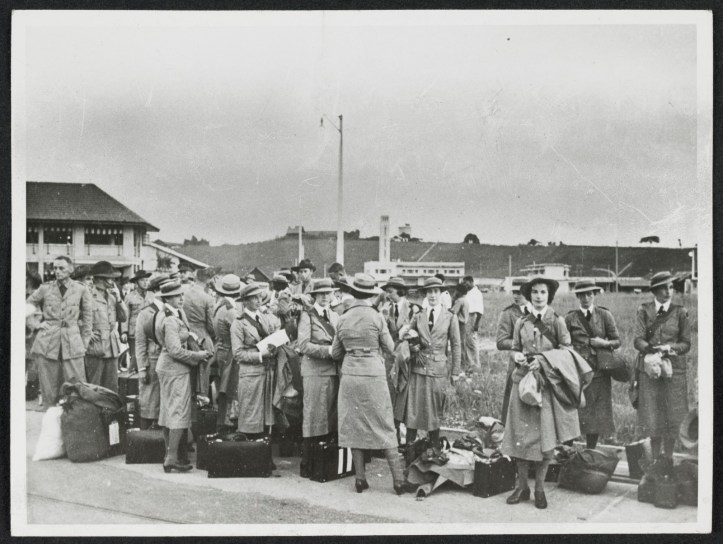
On 18 February 1941 the Queen Mary arrived at Sembawang Naval Base on Singapore’s north coast, from where peninsular Malaya lay just a kilometre across the Johor Strait. Naomi, Joy and their 2/10th AGH colleagues disembarked and entrained for Malacca, on the west coast of the Malay Peninsula. Early in the morning on 19 February they arrived at the modern Malacca General Hospital, one wing of which would be the unit’s home for the next 10 months. A week later Naomi began another letter to her mother. As with her earlier letter, extracts were published on 25 April 1941 in the Coolamon-Ganmain Farmers’ Review:
February 26th: Well, we have arrived at our new home. We left our ship last Tuesday, and we walked half a mile to the station, carrying our suitcase, rain coat, respirators and tin hats – quite a nice weight, too. Then we boarded a train, had a six hour trip, and arrived here at 6 a.m. Wednesday. We are quartered in a most marvellous general hospital. I forgot to say we came about 150 miles in the train, and it was a very comfy train – much better than we run in N.S.W. We have the top floor of one block for our quarters, and they are decent, too. I sleep out on the verandah; it’s really much cooler, as the whole place is open. We have plenty of native labor to do our work, even to cleaning our shoes, but it’s going to cost us so much to pay them that I shall always be broke. These natives even wash our clothes, if we like, but I saw one rinsing them in the overflow on the floor, so since then I have decided to send my uniforms out, and then I won’t be able to see how they are washing them. We never walk about the place barefooted, as there are all kinds of nice diseases we might get and we must even keep our shoes on to shower in, so we have all bought a pair of wooden slippers, with wooden heels and soles; carved out of a piece of wood and just a broad piece of leather across our toes. We are getting quite expert at walking in them now. We only paid 12 cents for the slippers and that is about 4d in Australian money. We lose about 2/ in the £ on our cash.
The scenery round here is simply marvellous, looking out to the hills in the distance, in fact the hills look a bit like our Blue Mountains. That’s the only part that looks anything like home too. This hospital is far superior than anyone we have in N.S.W., and we are having a block of it to run – 200 beds.
Plenty of pineapples, bananas and cocoanuts to eat, but sweets and biscuits are very expensive. Shoes are about 6/ a pair. The night we got off our ship and were waiting for the train, I saw Bill [Pyke, Naomi’s cousin, who was with the 8th Division in a supply role]. He’d had his hair shaved off, but otherwise he looked well. Think I might have mine shaved off soon; it looks terrible and I can’t do anything with it.
There are quite a few English women around here and yesterday one picked us up in her car and took us about five miles out to her home, and then took us across to a friend’s place. They were both very nice, and offered to take us to the swimming club one day. They are getting up a meeting to see how they can entertain us. So I hope they make it snappy.
Everyone tells us we must go round the place slowly; one never hurries here, as it’s too hot. I’m sure the natives have had this instilled in them for generations, as they take half a day to do a spot of work that would take most people less than an hour.
This money racket is a pest, when they tell us the price in dollars and cents, we have to start working it out in our money to know just how much we are paying for things. Most times I think they double the price for us.
We sleep on straw pillows and I wake up every morning smelling of hay; it’s terrible. I’m not sure whether the mattress isn’t straw too. But it’s very comfortable. We often laugh about our camp stretcher and mattress that we have rolled up and packed away on top of our dressing tables. The time may come when we will need them.
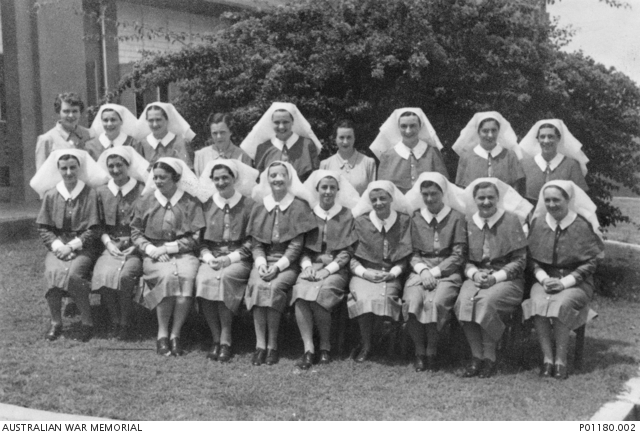
The nearly 6,000 men of the 22nd Brigade – whose three battalions, the 2/18th, 2/19th and 2/20th, were encamped in the Port Dickson–Seremban coastal area, 100 kilometres northwest of Malacca – suffered from various tropical ailments. Prickly heat was rife and caused much discomfort. Septic abrasions and ulcers were common, and fungal infections also appeared. Otitis externa, known in Malaya as ‘Singapore ear,’ was a painful and troublesome lesion. Happily, malaria was controlled in the areas in which the men were encamped, and cases were relatively few. Other diseases included dysentery, hookworm and typhus, though the latter was rare. The troops also suffered injuries resulting from training accidents and the occasional motor accident, and some among them required routine operations.
Beyond aid posts, the battalions’ immediate medical needs were met by the 2/9th Field Ambulance, which had established a small camp hospital at Port Dickson and a camp dressing station at Seremban. The eight nurses of the 2/4th CCS as well as several male staff of that unit had been detached to the 2/9th Field Ambulance upon their arrival in Singapore and for some months ran the camp hospital.
Once the 2/10th AGH was operational, cases were sent to Naomi, Joy and their colleagues in Malacca, and before long the hospital’s capacity had expanded to 600 beds.
A PEACEFUL 10 MONTHS
Despite oppressive weather and many petty annoyances, life for the 2/10th AGH nurses and masseuses was rather pleasant. The work was steady but never frantic, and during their time off they were entertained by well-to-do locals and taken for dinner, dancing and drives by officers. They also enjoyed plenty of leave in groups of four of five.
Leave was generally spent in Singapore – where Raffles, the Singapore Swimming Club, the Haw Par Villa and Gardens, the botanical gardens, cafes, restaurants, cabarets and the cinema featured prominently on itineraries – and at Fraser’s Hill, a typical British hill station lying in the cool highlands north of Kuala Lumpur, where golf, tennis and walking were the main attractions.
Naomi and Joy were always granted leave together and were sent off for the first time on 8 June 1941, possibly to Fraser’s Hill. Upon their return on 12 June they were detached to the 2/4th CCS at Kajang, a town located between Kuala Lumpur and Seremban, where the unit had set up in a high school. By this time three of the 2/4th CCS nurses, Sister Mavis Hannah and Staff Nurses Millie Dorsch and Shirley Gardam, had rejoined their unit from the 2/9th Field Ambulance’s camp hospital at Port Dickson. Aside from treating routine cases, the 2/4th CCS housed a section for venereal diseases staffed by the 2/10th AGH; perhaps this is where Naomi and Joy worked.
On 27 June Naomi and Joy were attached to the 2/9th Field Ambulance. They travelled from Kajang either to the camp hospital at Port Dickson or to the camp dressing station at Seremban. They returned to the 2/10th AGH on 12 July.
The two friends were granted further leave from 3–10 September. On this occasion they travelled to Fraser’s Hill with Staff Nurses Gwendoline Elmes and Marjorie Schuman. Gwendoline, known as ‘Buddy,’ was born in Armadale, Melbourne, grew up in Cheshunt in northeastern Victoria, and enlisted in New South Wales. Marjorie, known as ‘Schuey,’ was born at Topper’s Mountain near Tingha in northern New South Wales. Since embarking on the Queen Mary, Buddy and Schuey had become great friends.
At around this time Naomi wrote to her mother again, and again excerpts of her letter were printed in the Coolamon-Ganmain Farmers’ Review (on 28 November 1941). Naomi told her mother that she was working in the blood bank and finding the work very interesting. Unfortunately, she had broken her hand while playing tennis. (Rather incredibly, she was the second 2/10th AGH nurse to break her hand while playing tennis, following Kath Neuss’s injury a few weeks earlier.)
More interestingly, Naomi told her mother about a Chinese funeral she had witnessed, presumably in Malacca:
The corpse was kept three weeks before burial. They bury their dead by the stars according to their lucky days…
We were invited in to view the proceedings the night before burial and were told they were lucky to get the day so soon after she had died. People are welcomed in to have a look. We were shown everything and told how much everything cost. The canopy over the coffin was magnificent, and cost 20,000 dollars (£3000 Aust.), and was worked in gold. Everything she had possessed in life was duplicated in miniature – chairs, tables, slippers, flowers, jewellery, bed, mattress and sheets, etc., three cars and rickshaw, complete with coolie. All these articles are burnt two weeks after she is buried, so that she will have everything in the next world that she had in this one.
After seeing all this we had eats and drinks. Next day she was buried and a feast held at the cemetery in which several nurses joined. One minute there was wailing and the next everyone was cheerful. It takes all sorts to comprise a world.
Naomi and Joy were sent on leave for a third time between 29 October and 3 November.
THE APPROACHING WAR
In July 1941 Japanese forces began to move into southern Indochina, which greatly increased Allied fears of an invasion of Malaya. Already, the Malayan garrison had been bolstered by the arrival earlier in 1941 of two Indian brigades, both of which were stationed in the north. In September another Indian brigade arrived.
Australian troop numbers were increased too. On 15 August the 8th Division’s 27th Brigade, comprising the 2/26th, 2/29th and 2/30th Battalions, arrived at Singapore’s Keppel Harbour on the Johan Van Oldenbarnevelt, the Marnix Van St. Aldegonde and the Sibajak. Travelling with the brigade were a number of 2/10th AGH reinforcements, including six staff nurses. An earlier contingent of one sister, seven staff nurses and two masseuses had arrived with 1,200 8th Division reinforcements on the Zealandia on 9 June.
On 15 September a large contingent of 43 nurses and three masseuses arrived at Keppel Harbour on the Wanganella with the 2/13th AGH, which had been raised in quick time in response to a request from Colonel Derham. The unit moved into St. Patrick’s School, a Catholic boys’ school located in Katong, eight kilometres east of Keppel Harbour, and remained there pending orders to move into the unfinished Tampoi Mental Hospital in southern Johor state, peninsular Malaya. In the interim, to gain local experience the unit’s nurses and other staff were detached in batches to the 2/10th AGH, the 2/4th CCS (which by then had itself moved into the Tampoi Mental Hospital) and the 2/9th Field Ambulance. Some of the nurses were placed at the Singapore General Hospital, the main civilian hospital on the island.
Two more 2/10th AGH reinforcement staff nurses arrived at Keppel Harbour on 20 November aboard the Zealandia. With them were two reinforcement staff nurses for the 2/13th AGH, Margaret Anderson and Vera Torney.
By the end of November it was abundantly clear that the Japanese build-up in southern Indochina constituted a real and present threat to Malaya. On 1 December the codeword ‘Seaview’ was issued, advancing all Commonwealth forces in Malaya to the second degree of readiness. All leave was cancelled and units had to be ready to move at a few hours’ notice to their war stations.
WAR
On 6 December 1941 a three-aircraft patrol from No. 1 Squadron RAAF flew out of the RAF base in Kota Bharu on the northeastern coast of Malaya. Soon after midday the crew of one of the planes spotted a Japanese naval convoy heading into the Gulf of Thailand from the South China Sea approximately 400 kilometres northeast of Kota Bharu. The convoy, carrying units drawn from the 5th and 18th Divisions of General Yamashita’s 25th Army, had departed Hainan Island in southern China on 4 December before being joined by ships from Saigon in southern Indochina. At 2.00 pm Air Chief Marshal Sir Robert Brooke-Popham was advised of the sighting, and later that day the codeword ‘Raffles’ was issued to Commonwealth units across Malaya, indicating advancement to the first degree of readiness. By the late afternoon of 7 December the Japanese invasion fleet was just 170 kilometres from Kota Bharu. War was imminent.
At around 12.30 am on 8 December troops from the 18th Division landed at Kota Bharu. The 8th Indian Brigade offered stiff ground resistance, while No. 1 Squadron RAAF bombed and strafed the landing force, but despite this the Japanese units soon established a beachhead. Meanwhile, troops from the 5th Division had landed largely unopposed at Pattani and Singora (Songkhla) in Thailand.
Four hours after the landing at Kota Bharu, 17 Japanese bombers attacked targets on Singapore Island, including air bases at Tengah and Seletar in the north of the island. Raffles Place in Singapore city was also hit, killing 61 people and injuring hundreds, mainly soldiers. Elsewhere, Pearl Harbour, Guam, Midway, Wake Island and American installations in the Philippines were attacked and Hong Kong was invaded. Japan declared war on the United States, Great Britain, Australia, Canada, New Zealand and South Africa. The Pacific War had begun.
THE JAPANESE ADVANCE
From Kota Bharu the Japanese forces of the 18th Division advanced down the eastern side of the Malay Peninsula, while from Pattani and Singora those of the 5th Division crossed into Malaya and advanced down the peninsula’s western side. Backed by mechanized units and devastating air power, the three columns of well-trained, combat-ready Japanese troops forced severely outgunned British and Indian soldiers to retreat before them. Without air cover, they never had a chance.
By early January 1942 it had become clear that the 2/10th AGH would have to be evacuated, as the Japanese columns were fast approaching. Colonel Derham decided to move the hospital to Singapore Island but needed time to organise a suitable site. In the interim, most of the unit’s staff, including more than half of the nurses, were sent with the patients to the 2/13th AGH, which in late November had moved into the Tampoi Mental Hospital. The remaining nurses were sent with Matron Dot Paschke to the 2/4th CCS, now established at the Mengkibol rubber estate near Kluang, 80 kilometres north of Tampoi.
By the evening of 5 January, Naomi and Joy, both of whom had been promoted to the rank of sister on 2 December, had relocated to Tampoi with 34 other nurses, around 40 other staff, and scores of patients. The following day Naomi began another letter to her mother. By the time sections of it appeared in the Narandera Argus and Riverina Advertiser on 27 February, Naomi and Joy were safely back in Australia.
On Sunday, 4th January, while we were at the swimming pool [likely the Malacca Swimming Club], a vessel appeared on the skyline. Suddenly three planes arrived and started bombing it. They missed every time, and water sprayed up for hundreds of feet. Then they started dive bombing the ship without effect. The planes then turned in our direction, so we thought we had better scatter. Without shoes and in swimming togs, we took to the jungle. My feet got badly pricked, but I decided I would not lie down until they dropped their bombs on us, and as they did not do so, we went back and continued our swim. It is quite a nightly occurrence to see fireworks in the distance and searchlights playing, and tracer bullets start.
We evacuated from our hospital yesterday and were given 35 minutes to pack. So you can imagine the rush. We were all very sorry to leave after living there and working so hard for 11 months, for nothing. However, I suppose that’s war! I can’t tell you where we are. We came down our long trip by ambulances, and it took many hours. We were given a cup of tea and biscuits at a wayside canteen, an English one – the tea was terrible, but we enjoyed it.
Naomi continued her letter on 10 January:
My friend and I had a nice day in Singapore yesterday. We were taken to a cricket club luncheon; had beautiful grilled steak, egg, onions, grilled tomatoes and chip potatoes. I can tell you it was marvellous after army food. It is always raining here, and we go to work in gum boots, but the nights are much cooler than at our last hospital. We all watched a squadron of our planes go out and cheered them, the last one circled over us and dipped a salute. We anxiously watched for their return and we cheered them to the echo as they all returned safely.
Apparently Singapore’s British residents remained complacent, confident of the inviolability of Singapore Island – even though the Japanese 25th Army was just 300 kilometres away and advancing relentlessly.
THE FINAL DAYS
In mid-January 1942 the 2/10th AGH completed its move to Singapore Island. On 15 January the hospital reopened at Oldham Hall, a Methodist boarding school in Bukit Timah. Two days later, the unit’s surgical wing opened at Manor House, a boarding house 750 metres from Oldham Hall. The hospital’s opening coincided with the 8th Division’s first engagement with the Japanese, at Gemas, 200 kilometres northwest of Singapore. The resulting casualties flowed into the 2/4th CCS at Mengkibol and the 2/13th AGH at Tampoi.
By 25 January the 2/13th AGH had completed its own relocation to Singapore, once again occupying St. Patrick’s School. That day Naomi, Joy and many of the other detached nurses returned to the 2/10th AGH, which by then was receiving Australian casualties from the fighting at Mersing and Jemaluang on the southeastern coast of Malaya, just 150 kilometres from Singapore. That day too three reinforcement staff nurses arrived at Oldham Hall. Having sailed from Australia aboard the Aquitania and then transshipped at Ratai Bay, Sumatra, they had disembarked at Keppel Harbour the previous day with three 2/13th AGH staff nurse reinforcements and more than 3,400 8th Division reinforcements.
By 26 January the 2/10th AGH was accommodating 538 patients, and as Australian casualties continued to mount, the unit expanded into nearby bungalows and erected tents in the grounds of Oldham Hall and Manor House.
On 28 January the 2/4th CCS followed the two AGHs to Singapore, moving into the Bukit Panjang English School. The unit’s eight nurses, who had been detached to the 2/10th AGH at Oldham Hall, rejoined their male colleagues on 30 January. The following day, after the last Commonwealth troops had crossed Johor Strait from the peninsula to the island, the Causeway was blown in two places.
The forces of the Japanese 25th Army were now in complete control of the peninsula and on 3 February began a ferocious bombardment of Singapore’s oil infrastructure. The resulting fires generated palls of thick black smoke, which hung over the city and created an eerie twilight. On 4 February several shells fell a short distance from Oldham Hall; three days later, three staff members were killed and several were injured by stray ordnance. To make matters worse, the large British guns to the south of the hospital were returning fire, so artillery was travelling over the hospital in both directions. Meanwhile, wealthy residents, mainly European and Eurasian women, children and men, had by now fully realised the gravity of the situation and were seeking passage on any vessel that would take them away from Singapore.
In the daylight hours of 8 February, Japanese forces concentrated their artillery fire on the northwestern defence sector of Singapore Island, severely disrupting the field communications of the Australian troops defending the sector. That night, a Japanese assault group crossed Johor Strait in small boats and landed in the vicinity of Sarimbun River, aiming to capture Tengah airfield by the next morning. They were initially repelled by elements of the 2/20th Battalion and 2/4th Machine Gun Battalion, but the Australians were not reinforced and the Japanese managed to establish a beachhead. On the following night a second Japanese assault group landed further east, between the Causeway and the mouth of the Kranji River, an area defended by 27th Brigade troops. Again, despite effective fighting on the part of the Australians, there were simply too many Japanese troops, and they gained a second foothold on the island.
Hundreds of casualties poured into the 2/10th AGH, and Oldham Hall and Manor House became so overcrowded that men were lying on mattresses on the floor while others waited outside. It became impossible to cope with the volume of admissions, and many were sent on to the 2/13th AGH; the British Military Hospital (also known as the Alexandra Hospital); and one or more of the Indian General Hospitals.
The theatre staff at Manor House worked around the clock, treating severe head, thoracic and abdominal injuries. The other staff worked long hours too. At night, with blackout conditions prevailing, Naomi washed patients and dressed their wounds by the light of a small torch and at one point was accused by some of the more nerve-wracked among them of being a Fifth Columnist. When the staff finally did go off duty, sleep was hard to come by due to the sustained shelling, which Naomi considered infinitely worse than the bombing.
VOYAGE ON THE EMPIRE STAR
With Singapore’s fate all but certain, a decision was made to evacuate the nurses. Already in January 1942, following reports of Japanese atrocities in Hong Kong, Colonel Derham had asked General Bennett to evacuate the AANS nurses and masseuses. Bennett had refused, citing the damaging effect on morale. Colonel Derham then instructed Lieutenant Colonel Glyn White (he had been promoted in September 1941) to send as many nurses and masseuses as he could with Australian casualties leaving Singapore. On 10 February 1942 the first six nurses, all attached to the 2/10th AGH, embarked on the Wusueh with around 350 wounded men, including 150-odd Australians.
On 11 February Naomi, Joy and 23 other 2/10th AGH nurses, together with 27 of their 2/13th AGH counterparts and the masseuses of both units, boarded a refrigerated cargo vessel captained by Selwyn Capon, the Empire Star, which departed Singapore early the next morning in loose convoy with other ships. The story of the voyage, based either on an interview with Naomi or on a talk that she gave upon her return to Coolamon, was printed in the Coolamon-Ganmain Farmers’ Review on 31 July 1942, as below:
When it was decided to evacuate the nursing staff from the hospital, the Sisters were given only a short period to get ready and they went aboard ship with little more than what they stood up in. The ship had accommodation for 12 passengers, but 2400 people were crowded on to the boat, including 1600 airmen. [The ships] were escorted by a destroyer and the day after leaving Singapore the convoy was bombed at one period for five hours on end. The [Japanese] planes came over in waves of 22, making a special target of Sister Drover’s ship, owing to the nearly 2000 airmen aboard. During the bombing officers paraded with revolvers and Petty Officers and members of the crew with rifles and fixed bayonets to prevent panic. As the bombs could be heard shrieking towards the ship, the dense mass of humanity sitting on deck would rise as one, but were ordered to sit down again by the armed guards. On one occasion a stick of bombs fell each side of the ship, lifting it from the water, all hands thinking it was the end. During the bombing they frequently thought the next minute would be the last, especially when two direct hits were scored by incendiary bombs. Serious fires were started, which, however, were soon got under control. [The] ship carried several anti-aircraft guns and when [it] was machine-gunned, nine men manning the guns were killed and many wounded. The captain’s masterly handling of the ship had much to do with its escape. Later, the weather was bad, fortunately, as the ship was passing through Sunda Strait, high wind, lashing rain, with the visibility practically nil, and neither plane nor submarine could trouble them. But many aboard were very ill. For most of the voyage Sister Drover and her companions were in the lower hold at the bottom of the ship. The heat was terrific. Except for a tin of fruit, divided amongst four, on the first day Sister Drover and her companions had practically no food. The tin was kept as a water container. The four sisters were able to have a tin full for washing and another tin full constituted the daily water ration for four.
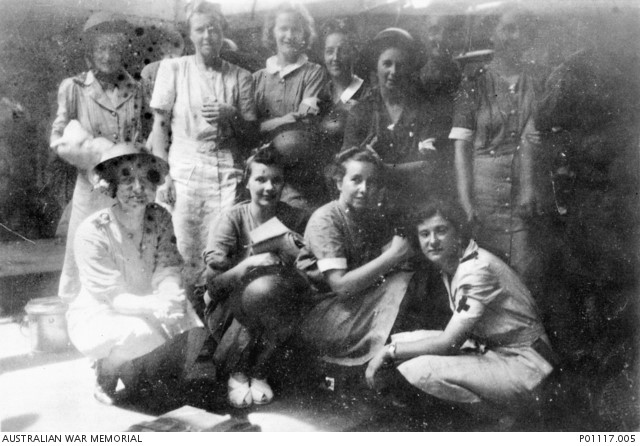
The convoy arrived at Tanjung Priok, the port of Batavia, on the afternoon of Friday 13 February. During the sustained attack on the Empire Star, 12 men had lost their lives, and dozens were injured. Two of the 2/13th AGH nurses, Staff Nurses Margaret Anderson and Vera Torney, had displayed exemplary courage and were later recognised with the George Medal and an MBE respectively.
The nurses remained on board the Empire Star that night and on Saturday transferred to a Dutch ship, the Plancius, where they spent the night. On Sunday they returned to their own ship, which had been patched up, and departed Tanjung Priok on Monday.
SAFE AT LAST
On 23 February 1942 the Empire Star arrived at Fremantle. The 60 nurses and masseuses remained on board until cleared by army headquarters to disembark, then were taken to lunch at the 110th AGH in the Perth suburb of Hollywood.
While still on board the ship, Naomi wrote to her mother and briefly described her escape from Singapore. Sections of her letter were printed in the Narandera Argus and Riverina Advertiser on 10 March.
We have arrived quite safely at Fremantle; at least 30 nurses of the 10th A.G.H. and 30 of 13th A.G.H. We can only hope the remainder of the girls got out safely also. We were heartbroken at leaving the wounded and medicos behind, but they insisted that we leave and there was not enough room for more Sisters. We came over on a cargo vessel and lived in the hold until we reached Batavia, where we transhipped to another vessel for the night and returned to the same ship next day.
We had a look around Batavia; had two air raids alarms while there, but didn’t see any planes. We were given hell while at Singapore and getting to the ship.
The first day out of Singapore 100 planes came over and bombed us from a height and dive-bombed and machine-gunned and dropped aerial torpedoes. We got four direct hits which started two fires on board. Fifteen were killed and 30 injured, but none of the nurses were hurt. Big bomb holes were made in the vessel. The captain was simply marvellous the way he got that ship through it all. Sixty bombs were dropped. We are all very well and haven’t a scratch; only a few bruises from getting under chairs and hugging the floor while bombs fell.
At the 110th AGH, or perhaps while still at the port, the nurses and masseuses were interviewed by newspaper reporters, and the first stories of their safe return to Australia appeared the following day. After lunch they were taken to the 118th AGH at Northam, 80 kilometres east of Perth, where they were provided with new uniforms and kit. While they were there, some army lads came to see them. They told them the worrying news that the Vyner Brooke, on which the remaining 65 AANS nurses had departed Singapore on 12 February, had not arrived in Batavia…
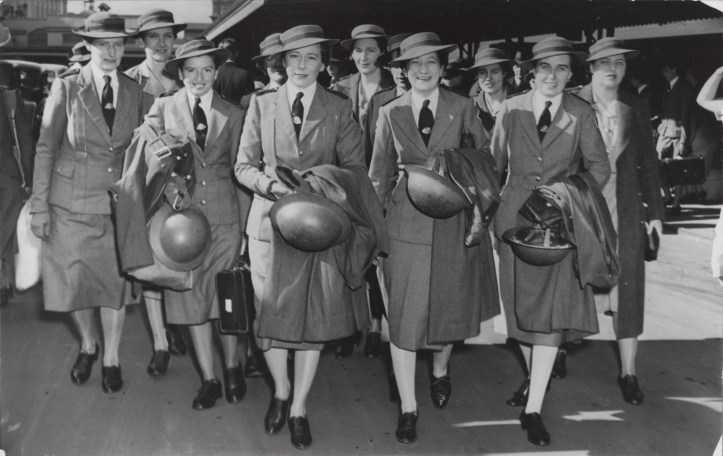
On 8 March, after two weeks at Northam, Naomi, Joy and the 48 other nurses and masseuses from the eastern states entrained for Melbourne. Four days later they arrived at Spencer Street Station and were met by Principal Matron Gwladys Parker Field of Southern Command.
While the Victorians (and perhaps Tasmanians) were received at Government House, Naomi, Joy and the other New South Wales and Queensland nurses and masseuses continued their journey home, arriving in Sydney on 13 March. The New South Wales women were welcomed by relatives and friends at the station and then driven to Sydney Showground, where they were medically examined and given their pay. At some point, too, they were interviewed by the newspapers. As they would do many times, they told the story of their lucky escape from Singapore. Among other things, they spoke in praise of General Bennett. “He did a marvellous job in Malaya,” Naomi told the Sydney Sun. “His men idolised him. He was a leader among leaders, and we all believe we would have a different story to tell today had he been given supreme command.” Meanwhile, the six Queensland nurses continued north and arrived in Brisbane on 14 March.
CONCORD, GOULBURN AND MERREDIN
After a period of leave, on 31 March 1942 Naomi and Joy were attached to the 113th AGH at Concord – as were most (or all) of the returned 2/10th AGH nurses and masseuses. On 17 April the two friends were attached to the 114th AGH in Goulburn, based at the Kenmore Mental Hospital.
On 30 July the Coolamon Patriotic Committee held a public ‘welcome home’ for Naomi in the Country Women’s Association Rest Room. Although the celebration had been arranged only that morning, a large crowd had gathered – testament to the esteem in which Naomi was held in her home town. After tea was served and laudatory speeches given, Naomi began to talk about her experiences in Malaya. She said that she had had good times as well as bad; when the war started, the nurses had had to work very hard. She had seen many Riverina boys, among them Maurice Nimmo, Reg Rowlands and Bill Pyke, but all the boys were splendid. When the Empire Star arrived at Tanjung Priok, she and three other nurses had asked to be driven to the best hotel, where they ordered a meal. Just as it was served the air raid alarms went and everyone left the hotel – except Naomi and her colleagues. When the ship was one day out from Perth, where the nurses knew that submarines might have been lurking, there was a terrifying explosion on board, followed by another. They were just making up their minds that they would never see Australia again, when an officer came running down and told them that it was only one of the ship’s boilers blowing up.
Naomi concluded by thanking everyone for such a cordial welcome and later that day returned to duty on the evening train.
After 16 months at the 114th AGH, on 1 August 1943 Naomi and Joy were allotted to the 200-bed 125th AGH at Merredin in Western Australia and departed Goulburn the following day. Before she left, Naomi was presented with a gold Eversharp pencil by the nursing staff of the 114th AGH as a mark of appreciation for her long service as Mess Secretary.
Travelling by train via Melbourne, Adelaide, Port Augusta and Kalgoorlie, Naomi and Joy took nearly a week to reach Merredin, which was located 250 kilometres east of Perth. They arrived on 7 August and were taken on strength of the 125th AGH and marched in.
From November 1942 to July 1943 the site at Merredin had been occupied by the 2/1st AGH, the first AGH raised in the Second World War. From February 1940 to February 1942 the unit had served in Mandatory Palestine and had returned to Australia following the ‘Stepsister’ movement. After leaving Merredin the 2/1st AGH staged in New South Wales and Queensland and in September 1943 sailed to New Guinea, where it established its hospital at Bootless Bay near Port Moresby in the Territory of Papua.
In late September, less than two months after Naomi and Joy had arrived at Merredin, and by which time Naomi had been appointed the 125th AGH’s Mess Treasurer, army authorities decided to close the unit and replace it with the 90-bed 40th Australian Camp Hospital (ACH). The administrative change was put into effect in November, whereupon the two friends were appointed to regimental duties at the 118th AGH in Northam and were marched in on 29 November. Three days later each was promoted to the rank of captain.
THE FRIENDS SEPARATE
Naomi and Joy spent the next 10 months at Northam. At the end of this time they had worked together for nearly four years, but their partnership was drawing to a close. On 1 September 1944 Naomi was appointed to the 2/1st AGH – which, having returned from New Guinea, was now scheduled to deploy to Bougainville, the largest of the Solomon Islands and administratively part of Australian New Guinea. On 16 September Joy was appointed to the 101st AGH at Herne Bay, a southern suburb of Sydney (today known as Riverwood). The two nurses departed Western Australia and on 27 September arrived at Victoria Barracks in Sydney.
That same day they were split up. Joy was posted to the 17th ACH at Liverpool before being marched in to the 101st AGH on 2 October. On 26 November she was transferred to the 107th AGH at Berrimah, near Darwin in the Northern Territory.
Naomi was posted to the 12th ACH at the Sydney Showground and remained there until 19 January 1945. She was then transferred to the 4th ACH at the Brisbane Exhibition Grounds in Bowen Hills, where she staged pending embarkation for Bougainville.
BOUGAINVILLE
In March 1942 the Japanese 17th Army had landed on Bougainville and had quickly overcome a small Australian garrison. In November 1943 American forces landed at Torokina on the western side of the island and established a perimeter, leaving the Japanese in control of areas to the north and south and on the eastern side of the island. In early October 1944 elements of II Australian Corps began to arrive at Torokina to relieve the Americans.
Travelling with II Australian Corps were the male staff of the 2/1st AGH. An advance party led by Lieutenant Wheelaghan set out from Brisbane on the Lew Wallace and disembarked at Torokina on 2 October. The main party arrived on 5 October, having departed Brisbane on 30 September aboard the Duntroon. Remaining behind for now were a rear party and the women of the unit – the AANS nurses; the masseuses, who were now administered under the Australian Army Medical Corps; and staff of the Australian Army Medical Women’s Service (AAMWS), formerly known as Voluntary Aids.
The men set about clearing a site thick with jungle near the American war cemetery, around seven kilometres inland, and work was well underway by 17 November, when Colonel John Leah, the commanding officer of the 2/1st AGH, marched in. On 23 November work began on barracks (or ‘lines’) for the women, who, it was anticipated, would begin to arrive after 10 January 1945.
On 5 January 1945 an initial contingent of 25 of the unit’s nurses sailed from Townsville aboard the Shawnee with their matron, Major Marie Hurley, and six nurses of the 106th CCS. The male staff of the 106th CCS had arrived at Torokina in early October with those of the 2/1st AGH and the 109th CCS. Matron Hurley was a veteran of the 2/13th AGH and, like Naomi and Joy, had escaped from Singapore aboard the Empire Star. Succeeding Matron Constance Fall, Matron Hurley had taken charge of the nurses of the 2/1st AGH in September 1943 and had led them admirably in New Guinea.
The Shawnee arrived at Torokina on 9 January, but the 32 nurses did not disembark until the following morning. As soon as Matron Hurley and her nurses were organised, the 2/1st AGH opened. The nurses were immediately busy, particularly in the surgical ward, as the unit had taken 100 or more patients from the 106th CCS, which was set up less than two kilometres away.
Meanwhile, Naomi, her AANS colleagues, and the unit’s masseuses and AAMWS staff were waiting in Brisbane. From late January they were flown to Torokina in contingents of 10–15 on RAAF aircraft, sometimes via Finschhafen and Lae in New Guinea. Naomi arrived with a contingent on 14 February, having left Brisbane two days earlier. The final contingent of women arrived on 4 March, not by air but on the Ormiston, which had departed Brisbane on 27 February. Among those on board was Lieutenant Cynthia Sutton, one of the unit’s six masseuses, who had worked with Matron Hurley at the 2/13th AGH in Malaya and had escaped on the Empire Star.
The nurses had been issued with tropical kit consisting of a grey cotton safari jacket, drill slacks, brown boots and gaiters, a khaki slouch hat with the AANS band instead of a puggaree, and a grey cotton beret for use in the wards. Unlike in New Guinea, where the nurses had worn their Cesarine ward dresses during the day and after 6.00 pm had changed into khaki boiler suits (to protect against mosquitos), slacks were now worn all day. The uniforms of the masseuses and AAMWS were similar.
THE 2/1ST AUSTRALIAN GENERAL HOSPITAL
The hospital was surrounded by towering trees and palms and ferns of a vivid green. Even so, the first contingent of nurses arrived to find bare buildings and set about planting gardens. Lieutenant Mary Kiel, known as Mollie (whose twin sister, Captain Maude Kiel, known as Jo, was also serving with the unit), brought 18 varieties of seeds with her, and soon an assortment of flowers, including balsams and zinnias, were growing in the fertile soil. After her arrival on 5 February, Lieutenant Meg Gibbons took a great interest in the garden too, planting many vegetable seeds. At one point she traded a bottle of beer for some highly recommended bean seeds, and before long the seeds had produced lovely fresh beans. Among the other vegetables grown were tomatoes and cucumbers.
The women’s quarters consisted of a long hut divided into cubicles, each of which was shared by two women. The floors were of beaten earth, which was watered and pounded each day. Initially only cold water was available in the ablution block, but in April a hot-water system was installed. The nurses taught young local women to wash and iron – an ambitious project, as none of the local women had seen an electric iron before.
The women of the 2/1st AGH received many unwelcome visitors in their quarters. Rats were everywhere, and on one occasion one of the nurses was awakened by an awful noise at night and found a python killing a rat on the bed of her roommate, who was on night duty. Another nurse lost her dentures to a rat (which were said to be attracted to the pink part of the dentures). There were also enormous centipedes and other creepy-crawlies.
The wards were tropical-proofed tents with hutted annexes made of wood and iron. There was an officers’ ward; a psychiatric ward; a shock ward, situated between the operating theatre and the blood bank; an all-American ward; and later a ward for Japanese prisoners of war. Early on, when the green timber walls of the psychiatric ward dried out, some of the patients were able to escape.
In February Matron Hurley arranged for an ice cream machine to be flown in, and from March onwards patients were supplied with half a cup of ice cream two or three times a week. Matron Hurley also arranged for the Red Cross to fly in 98 hens, and the nurses regularly distributed eggs to the patients. They were proud of their egg run and vigilantly guarded the hens against possible raids.
By the end of February, 930 beds were ready for occupation. During the month there had been 885 admissions, of which only 28 had been combat casualties. In March, when Naomi was working in the plastic surgery ward (and finding it most interesting), permission was given for the hospital to expand to 1,200 beds, and by the end of the month 1,091 patients had been admitted, of whom 69 were combat casualties. In April, May and June admissions averaged around 1,250 a month, with casualty figures of 109, 96 and 191 respectively.
As can be seen, the vast majority of cases treated at the 2/1st AGH were medical, chiefly skin conditions such as tinea, pyoderma (a bacterial skin infection), prickly heat, intertrigo (caused by rubbed skin, heat and trapped moisture), and lesions of the feet and ankles. The lesions largely went away after staff were permitted to go gaiter-free during the day.
Malaria was common but thanks to the use of DDT and the prophylaxis atebrin, cases were fewer than they would otherwise have been. Dengue fever was rare. There was a steady number of cases of bacillary and amoebic dysentery, but it was never severe. There were cases of hepatitis. Hookworm disease was widespread, but many patients experienced only mild symptoms. Rates of scrub typhus – a very dangerous disease spread by exposure to infected chiggers (the larval stage of mites) – were kept fairly low thanks to precautions, but in July severe cases began to appear. Mild respiratory infection was common, and – unusually – in June an outbreak of tonsillitis occurred.
Naomi had had experience treating many of these conditions and diseases in Malaya.
THE END OF THE WAR
All the while, Australian forces had been fighting an aggressive campaign against the 40,000-odd troops of the Japanese 17th Army. From Torokina the Australians had advanced eastwards along the Numa Numa Trail across the mountainous interior of the island towards Numa Numa; northwards via the northwest coast towards the small island of Buka, encountering their only defeat of the campaign at Porton Plantation in June 1945; and southwards along the Buin Road towards Buin, the major Japanese base on the island. By August 1945, after seven months of slog and grind, the Australians controlled around two-thirds of the island.
On 9 August an atomic bomb was dropped on Nagasaki, Japan. Three days earlier one had been dropped on Hiroshima. With no other option, Emperor Hirohito announced Japan’s surrender on 15 August. The war was over. That day four aircraft on whose underwings had been painted in Japanese characters “Japan Has Surrendered” flew over the remaining Japanese positions on Bougainville dropping 230,000 leaflets announcing the news. Nevertheless, with so many Japanese soldiers holding isolated pockets of the island, it took at least a week for the news to filter through to all of them, and it was not until 8 September that General Stanley Savige, general officer commanding II Australian Corps, formally took the surrender of Lieutenant General Kanda, commander of the Japanese 17th Army.
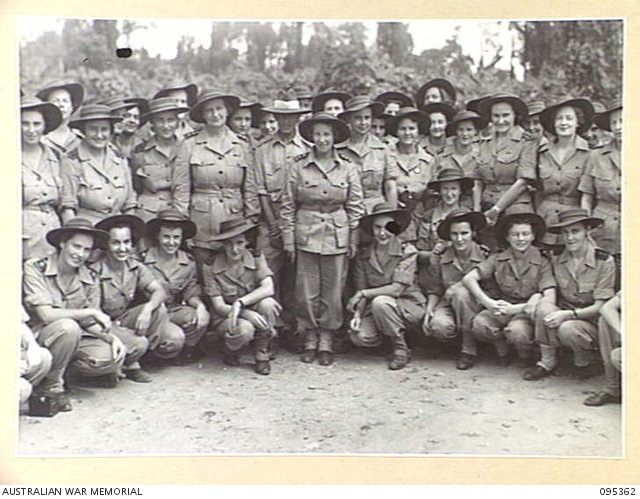
Meanwhile, there was still a hospital full of sick and wounded patients for Naomi and her colleagues to care for – at the end of August there were still 1,265 beds equipped – and a list was taken of staff who were prepared to remain until all patients were evacuated. Naomi was among those who opted to stay.
In September the 2/1st AGH began slowly to shut down. Despite 1,190 new admissions, two medical wards were closed and 36 of the unit’s nurses departed Torokina on the Taroona.
From 2–17 October Naomi was marched out on detachment for special duties in New Zealand. It is not known what these special duties entailed, but they likely had something to do with the repatriation of freed POWs, many thousands of whom had emerged from Japanese POW camps.
On 5 November the 2/1st AGH stopped admitting new patients and the following day closed down. Naomi and those of her colleagues who had elected to stay on were transferred with the remaining patients to the 109th CCS. Naomi returned to the 2/1st AGH on 28 November and on 11 December embarked from Torokina aboard the 2/1st AHS Manunda with all remaining nurses, masseuses and AAMWS staff. They disembarked in Sydney on 19 December. Just over a week later the male staff of the unit embarked from Torokina aboard the Katoomba.
On 26 December Naomi was allotted regimental duties at the 113th (Concord) Military Hospital in Sydney.
WHAT OF JOY BELL?
While Naomi was entering the home stretch of her service on Bougainville, Joy Bell was preparing to return to Singapore. On 23 August 1945, after nine months with the 107th AGH in Berrimah, she had been attached to the 2/14th AGH. The 2/14th AGH had been tasked with establishing a hospital in Singapore to receive freed Australian POWs. On 27 August Joy embarked from Sydney Harbour on the Duntroon with the main body of the unit. Several of the unit’s nurses had, like Joy, served in Malaya and escaped on the Empire Star. Lieutenants Harley Brewer, Trixie Glover, Mollie Gunton ARRC, Phyll Pugh and Maisie Rayner had served with the 2/13th AGH, while Captain Mary McMahon had served with the 2/10th AGH – as had four of the 2/14th AGH’s masseuses, Captain Thelma Gibson and Lieutenants Merrilee Higgs, Bonnie Howgate and Winsome Zouch.
On 13 September the Duntroon arrived at Keppel Harbour. The members of the 2/14th AGH disembarked and proceeded to St. Patrick’s School – the same school that the 2/13th AGH had occupied. Here they were joined by six other nurses who had served in Malaya before escaping on the Empire Star. Lieutenants Sara Baldwin-Wiseman, Jean Floyd, Gertrude McManus, Annie ‘Nan’ Muldoon and May Setchell had served with the 2/13th AGH, while Lieutenant Bennos Atwood had served with the 2/10th AGH. Prior to their attachment to the 2/14th AGH, Jean, Nan, Gertrude and May had served with the 2/6th AGH on Labuan off the northwestern coast of Borneo. Bennos and Sara had served with the 2/5th AGH on Morotai, one of the Maluku Islands (formerly the Moluccas). All had arrived in Singapore on 11 September aboard the Australian Hospital Ship Manunda.
From 15 September to 28 October, the 2/14th AGH treated 1,406 patients, of whom 1,213 were former POWs and civilian internees. Among the patients were the 24 survivors of the party of 65 AANS nurses evacuated from Singapore on 12 February 1942 on the Vyner Brooke.
With its work complete, the hospital closed down on 29 October and on 2 November Joy embarked from Singapore with the main body of the 2/14th AGH aboard HMT Cheshire. Sailing via Balikpapan on Borneo, where 1,020 Australian troops boarded, the ship arrived at Fremantle on 13 November, Melbourne on 20 November and Sydney on 23 November, where Joy disembarked. She returned to the 101st AGH at Herne Bay. She was discharged from the army on 12 April 1946 and transferred to the Reserve of Officers (AANS) the following day.
LIFE AFTER WARTIME
Naomi’s own discharge came five weeks earlier than Joy’s – on 4 March 1946, following which she too was placed on the Reserve of Officers. Eight months later, on 2 November 1946, Naomi was one of approximately 1,500 Australian service personnel Mentioned for gallant and distinguished services in the South West Pacific between 15 April and 1 August 1945. The Mentions in Despatches were promulgated in the London Gazette and the Commonwealth of Australia Gazette on 6 March 1947.
Not much about Naomi’s later life is on the public record, and whether she returned to nursing after her war service is unknown. In April 1948 her engagement to Kenneth Malcolm McIntyre of Strathfield was announced in the newspapers, but marriage did not eventuate. In December 1948 Naomi attended a reunion of Coolamon residents at the Paddington Town Hall in Sydney with her brother Aud, who was just back from Bombay, and her mother. By then The Avenue in Strathfield had been renamed Churchill Avenue.
On 17 August 1964 Naomi retired from the Reserve of Officers. The following year her mother died at 80 Churchill Avenue, having (apparently) moved from 66 Churchill Avenue, where she had been living with her sister Maude Boyd. In 1967 Maude herself died.
In 1967 Naomi married Keith James Baker in Burwood, a suburb neighbouring Strathfield. Keith was born on 17 February 1912 in Granville in western Sydney and became a storeman. In 1939 he married Eileen Deans, with whom he had a son, Bryan. During the war he served with the 28th (New South Wales) Battalion of the Volunteer Defence Corps. Tragically Eileen died in 1944, aged only 31.
After their marriage, Naomi and Keith lived at 80 Churchill Avenue. Keith died on 13 April 1984.
Naomi died on 28 June 2006 at 80 Churchill Avenue. She had lived a long and interesting life and will not be forgotten.
In memory of Naomi.
SOURCES
- Ancestry.
- Australian War Nurses, ‘Vera Hamilton.’
- Goodman, R. (1985), Queensland Nurses Boer War to Vietnam, Boolarong Press.
- Heritage Council of Western Australia, Register of Heritage Places, ‘2/1 Australian General Hospital (ruins), Merredin’ (2 Dec 2011).
- Long, G. (1963), Australia in the War of 1939–1945, Series 1 – Army, Vol. VII – The Final Campaigns, Chap. 5 – The Bougainville Campaign Takes Shape (pp. 89–115), Australian War Memorial.
- Long, G. (1963), Australia in the War of 1939–1945, Series 1 – Army, Vol. VII – The Final Campaigns, Chap. 9 – The Floods and the Cease Fire (pp. 217–240), Australian War Memorial.
- National Archives of Australia.
- Simpson, S. (1990), Medical Pathfinders: A History of the 2/1 Australian General Hospital 1939 – 1945, 2/1 Australian General Hospital Association.
- Staunton, A., ‘Bougainville 1942–1945,’ Anzac Portal, Department of Veterans’ Affairs (Sept 2005).
- UNSW Canberra, Australians at War Film Archive, Helen McCallum (interviewed 5 Jun 2003, archive no. 440).
- UNSW Canberra, Australians at War Film Archive, Joan Wicks (Donkey) (interviewed 12 Jun 2003, archive no. 446).
- UNSW Canberra, Australians at War Film Archive, William Flowers (interviewed 28 Apr 2003, archive no. 61).
- Walker, A. B. (1962), Australia in the War of 1939–1945, Series 5 – Medical, Vol. II – Middle East and Far East, Part II, Chap. 23 – Malayan Campaign (pp. 492–522), Australian War Memorial.
- Walker, A. S. (1957), Australia in the War of 1939–1945, Series 5 – Medical, Vol. III – The Island Campaigns, Chap. 13 – Bougainville (pp. 299–331), Australian War Memorial.
- Walker, A. S. (1961), Australia in the War of 1939–1945, Series 5 – Medical, Vol. IV – Medical Services of the Royal Australian Navy and Royal Australian Air Force with a Section on Women in the Army Medical Services, Part III – Women in the Army Medical Services, Ch. 36 – The Australian Army Nursing Service (pp. 428–76), Australian War Memorial.
- Walters, P. (2021), ‘Australia’s First Action in the Pacific in World War II: A Valiant Catastrophe,’ The Strategist (1 Apr 2021), Australian Strategic Policy Institute.
- Wigmore, L. (1957), Second World War Official Histories, Australia in the War of 1939–1945, Series 1 – Army, Vol. IV – The Japanese Thrust, Part I – The Road to War, Chap. 2 – Australia’s Problem (pp. 13–27), Australian War Memorial.
- Wigmore, L. (1957), Second World War Official Histories, Australia in the War of 1939–1945, Series 1 – Army, Vol. IV – The Japanese Thrust, Part I – The Road to War, Chap. 3 – Plans and Preparations (pp. 28–45), Australian War Memorial.
- Wigmore, L. (1957), Second World War Official Histories, Australia in the War of 1939–1945, Series 1 – Army, Vol. IV – The Japanese Thrust, Part I – The Road to War, Chap. 4 – To Malaya (pp. 44–61), Australian War Memorial.
- Wigmore, L. (1957), Second World War Official Histories, Australia in the War of 1939–1945, Series 1 – Army, Vol. IV – The Japanese Thrust, Part II – South-East Asia Conquered, Chap. 15 – Defence of Western Area (pp. 308–334), Australian War Memorial.
- Wikipedia, ‘Battle of Kota Bharu.’
- Wikipedia, ‘Bougainville campaign.’
- Wikipedia, ‘Japanese Invasion of Thailand.’
SOURCES: NEWSPAPERS & GAZETTES
- The Albury Banner and Wodonga Express (NSW, 15 Nov 1935, p. 42), ‘Coolamon.’
- The Australian Women’s Weekly (31 Mar 1945, p. 9), ‘First Australian Servicewomen in Solomons.’
- Commonwealth of Australia Gazette (6 Mar 1947 [Issue No.43], p. 752), ‘Government Gazette Appointments and Employment.’
- Coolamon-Ganmain Farmers’ Review (NSW, 15 Mar 1918, p. 2), ‘Mr. Prosper W. Drover.’
- Coolamon-Ganmain Farmers’ Review (NSW, 17 Dec 1920, p. 2), ‘Public School.’
- Coolamon-Ganmain Farmers’ Review (NSW, Oct 1930, p. 2), ‘Personal.’
- Coolamon-Ganmain Farmers’ Review (NSW, 23 Dec 1932, p. 2), ‘Personal.’
- Coolamon-Ganmain Farmers’ Review (NSW, 17 Jan 1941, p. 2), ‘Personal.’
- Coolamon-Ganmain Farmers’ Review (NSW, 31 Jan 1941, p. 2), ‘Personal.’
- Coolamon-Ganmain Farmers’ Review (NSW, 25 Apr 1941, p. 1), ‘A Nurse’s Letters: Sister Drover Writes from Malaya.’
- Coolamon-Ganmain Farmers’ Review (NSW, 24 Apr 1942, p. 2), ‘Personal.’
- Coolamon-Ganmain Farmers’ Review (NSW, 31 Jul 1942, p. 2), ‘A.I.F. Nursing Sister Honored: Sister N. Drover Welcomed Home.’
- Coolamon-Ganmain Review (NSW, 10 Sept 1943, p. 2), ‘Personal.’
- Coolamon-Ganmain Review (NSW, 23 Mar 1945, p. 2), ‘Personal’
- Coolamon-Ganmain Review (NSW, 9 Apr 1948, p. 2), ‘Personal.’
- Coolamon-Ganmain Review (NSW, 25 Mar 1955, p. 4), ‘District Property Sale.’
- Coolamon-Ganmain Review (NSW, 23 Nov 1956, p. 14), ‘Coolamon’s First Great Attraction.’
- Daily Advertiser (Wagga Wagga, NSW, 6 Sept 1922, p. 4), ‘Coolamon Show.’
- Government Gazette of the State of New South Wales (Sydney, 16 Jun 1936 [Issue No.101 (Supplement)], p. 2337), ‘Register of Nurses as at 31st December, 1935.’
- Narandera Argus and Riverina Advertiser (NSW, 22 Jul 1932, p. 2), ‘Obituary.’
- Narandera Argus and Riverina Advertiser (NSW, 27 Feb 1942, p. 1), ‘A Nurse’s Experiences in Malaya.’
- Narandera Argus and Riverina Advertiser (NSW, 10 Mar 1942, p. 1), ‘Escape from Singapore: Sister N. Drover’s Experiences.’
- Narandera Argus and Riverina Advertiser (NSW, 23 May 1944, p. 2), ‘Personal.’
- Narrandera Argus (NSW, 15 Nov 2016, p. 7), ‘Narrandera Families: Drover.’
- The Sun (Sydney, 13 May 1928, p. 2), ‘Competition Corner.’
- The Sun (Sydney, 10 Jun 1928, p. 2), ‘Country Breezes.’
- The Sun (Sydney, 13 Mar 1942, p. 4), ‘A.I.F. Nurses from Malaya.’
- The Sydney Morning Herald (14 Dec 1934, p. 3), ‘Nurses.’
- The Sydney Morning Herald (19 Jun 1936, p. 3), ‘Midwifery Branch.’
- The Sydney Morning Herald (16 Sept 2006, p. 74), ‘Legal Notices.’
- The Telegraph (Brisbane, 9 Feb 1945, p. 3), ‘Brisbane Nurses on Bougainville.’
- Townsville Daily Bulletin (Qld., 10 Feb 1945, p. 2), ‘First Australian Nurses on Bougainville.’
- Wodonga and Towong Sentinel (Vic., 12 Apr 1907, p. 2), ‘Death of William Tucker Pyke.’

