THE TRIAL RUN
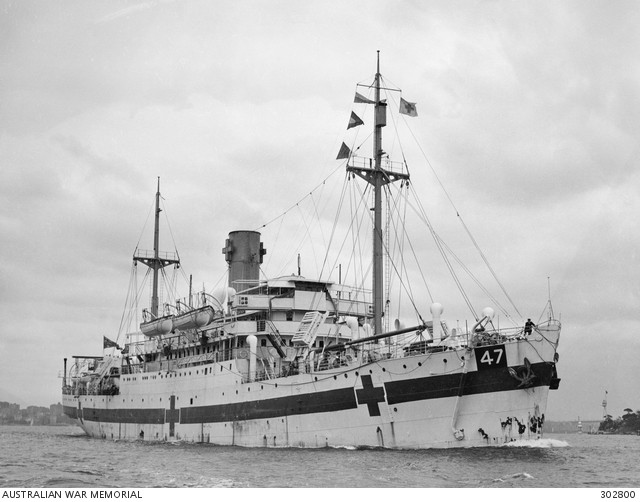
On 17 March 1943, 12 nurses of the Australian Army Nursing Service (AANS) boarded the 2/3rd AHS Centaur in Sydney Harbour. The Centaur had recently been converted into a hospital ship and was on a trial run that had commenced in Melbourne on 12 March.
The Centaur was built in Scotland in 1924 and arrived in Australia later that year to ply a route between Fremantle and Singapore. In 1940 the ship was placed under the control of the British Admiralty and at the beginning of 1943 loaned to the Australian government for use as a hospital ship. Due to its relatively small size and shallow draft, the ship was thought to be ideal for operating in the shallow, island-dotted waters of the southwest Pacific, where Australia was engaged in an existential battle with Japan. The Centaur was refitted in Melbourne and recommissioned on 1 March.
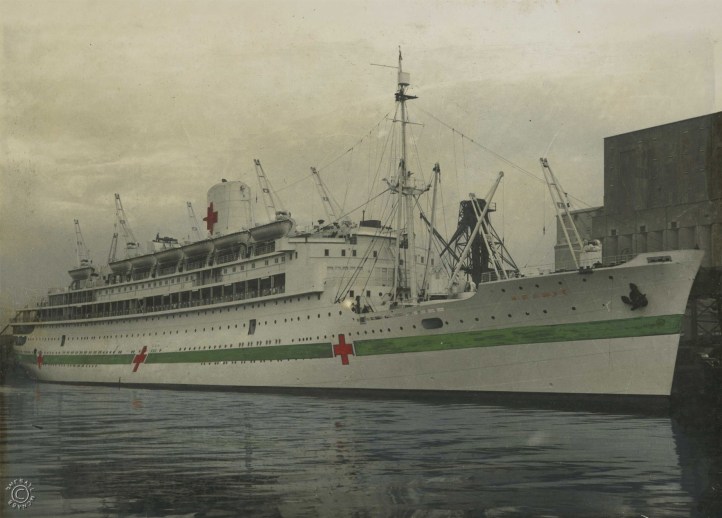
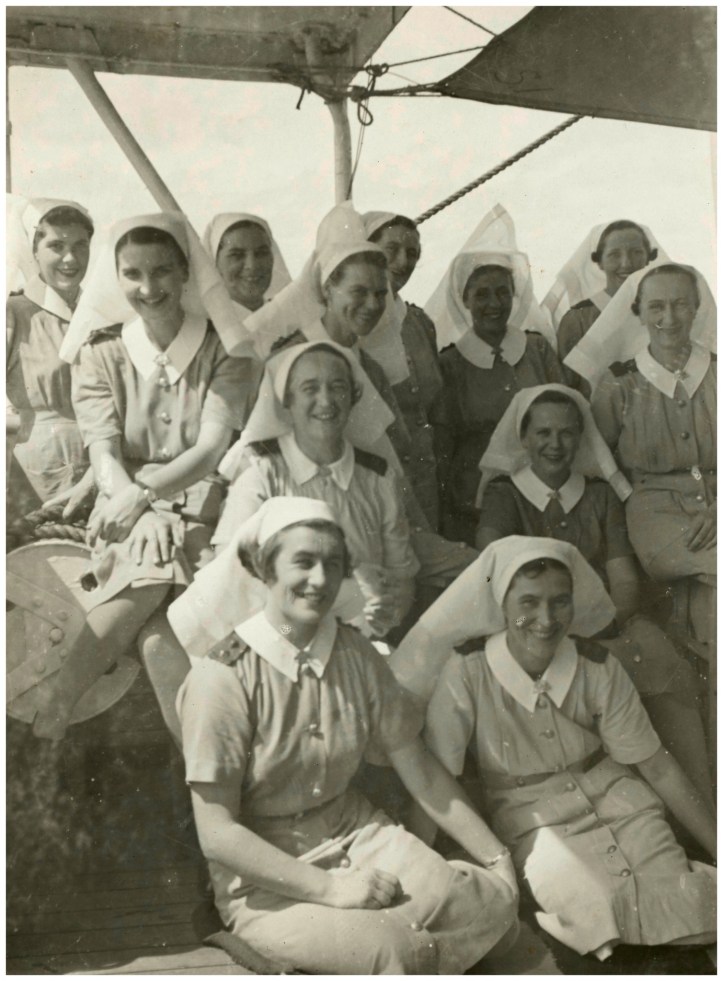
Eight of the 12 nurses – Matron Anne Jewell, Senior Sister Mary McFarlane, and Sisters Margaret Adams, Cynthia Haultain, Eva King, Eileen ‘Nan’ Rutherford, Nell Savage and Jenny Walker – had recently served together on the 1st Netherlands Military Hospital Ship Oranje, nursing Australian and New Zealand troops invalided from the Middle East. They were among 28 Australian medical staff withdrawn from the Oranje when the Centaur was commissioned.
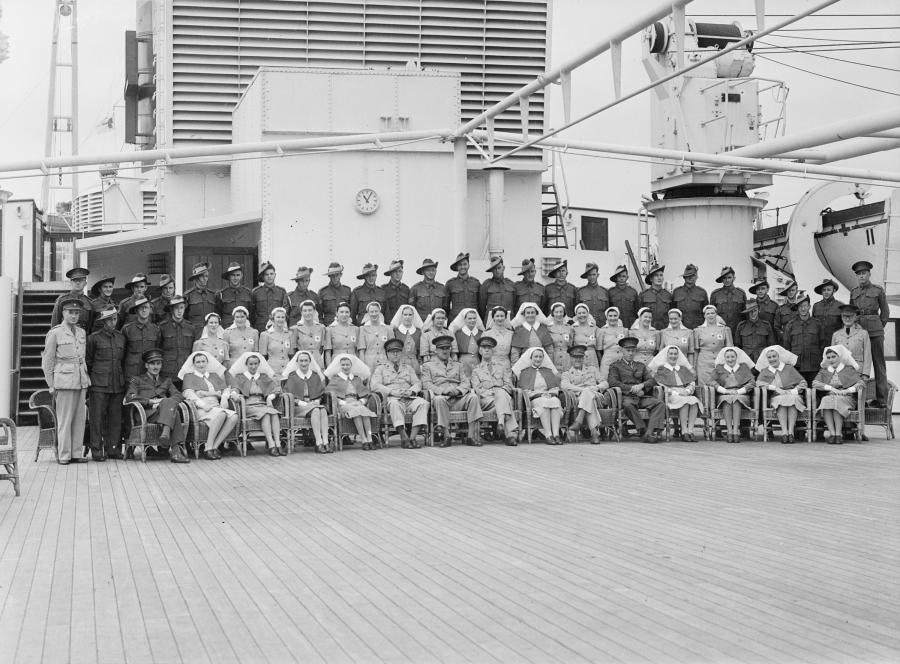
The Oranje veterans were joined aboard the Centaur by Sisters Myrle Moston, Alice O’Donnell, Edna Shaw and Joyce Wyllie. Nell Savage and Eva King, who were good friends, already knew Myrle Moston and Joyce Wyllie. Matron Jewell was in charge, and Sister McFarlane was her deputy.
Once a number of identified issues were addressed, the Centaur resumed its trial run on the morning of 21 March, when it departed for Brisbane. It arrived in the Queensland capital on 23 March and after more problems had been ironed out sailed again on 1 April for Townsville. In the northern city Australian casualties invalided from New Guinea were embarked, and on 7 April the Centaur arrived back in Brisbane, mooring at Newstead Wharf.
The final leg of the trial voyage began on 8 April, when the Centaur departed Brisbane for Port Moresby with medical personnel. The ship returned on 18 April with Australian and American casualties, along with several wounded Japanese prisoners of war.
The nurses were impressed with the Centaur. Cynthia Haultain noted in a letter to a friend in Hay, New South Wales (reproduced in The Riverine Grazier on 28 May 1943) that although it was “a tiny little ship, about one-sixth the size of our luxury liner,” it had been “marvellously converted and very well equipped [and carried] nearly half as many patients as the ‘O’ [Oranje].” Mary McFarlane was somewhat disappointed to find that her cabin did not have an ensuite bathroom but was impressed by the addition of a washbasin with running water and by the fact that a steward made her bed and brought her morning tea. She was surprised at the quality of food on board too. There were salads, fruits, grills, and even lobster mayonnaise.
Notwithstanding certain deficiencies in rafts and emergency equipment, the Centaur’s effectiveness as a hospital ship had been demonstrated, and it was ready for service proper.
THE FINAL VOYAGE OF THE CENTAUR
At 10.45 am on 12 May 1943 the Centaur embarked from Sydney for New Guinea. The ship’s crew had been tasked with transporting 193 members of the 2/12th Field Ambulance to Port Moresby and then returning with Australian casualties. In all there were 332 people on board.
Nell Savage was sharing a cabin with Myrle Moston, and Eva King was next door. Eva had wanted to be close to her friend Nell, as Nell was a strong swimmer, having learned to swim in the creek at Quirindi, her home town, and Eva was not. They had decided to stick together in the event of trouble.
On the evening of the 13 May, while the Centaur was off the northern New South Wales coast, a party was held for Matron Jewell, whose birthday it had been two days earlier. Arthur Waddington, the nurses’ steward, described the party in a story printed in The Australian Women’s Weekly on 29 May 1943, as follows:
The matron in charge of the nurses, Matron Ann Jewell … was celebrating her birthday with a party. The nurses had decorated the dining-table with flowers and everything looked very jolly. The party started at dinnertime and there was a lovely birthday cake for her. The nurses bought it in Sydney, and the ship’s cook iced it. It was white icing and had ‘Happy Birthday from the Centaur’ written in pink across it. I noticed that it wasn’t finished at dinner, and they took it to the main saloon to finish it off during the evening. Matron cut a slice for them all. A special menu was served that night, too. I meant to ask her the next day, just for a joke, just how old she really was. I was going to remark that there weren’t any candles on the cake, so was it meant to be a secret. I know she’d have enjoyed the joke.
The evening concluded at around 10.00 pm and the nurses retired to their cabins.
That night the weather was clear, and visibility was excellent. The Centaur, which was travelling unescorted and fully illuminated and marked with the Red Cross, had reached the southern Queensland coast and was in the vicinity of North Stradbroke Island. At 4.10 am, while most of those on board were asleep, a Japanese torpedo slammed into the ship. It struck the fuel tank, causing a massive explosion. The bridge collapsed, and the funnel crashed onto the deck. Fire spread throughout the ship as water rushed in through a gaping hole in the portside hull. Many of those not killed in the fire were trapped as the ship began to capsize. It was gone in three minutes.
There had been no time to launch the lifeboats. Some of those who had managed to get off the burning ship were killed in the water by flying metal, some were pulled down by suction, and others were burnt by the flaming oil that poured out of the ruptured fuel tanks. In almost the blink of an eye 268 lost their lives. Of the 12 nurses, only Nell Savage survived. She was one of 64 survivors.
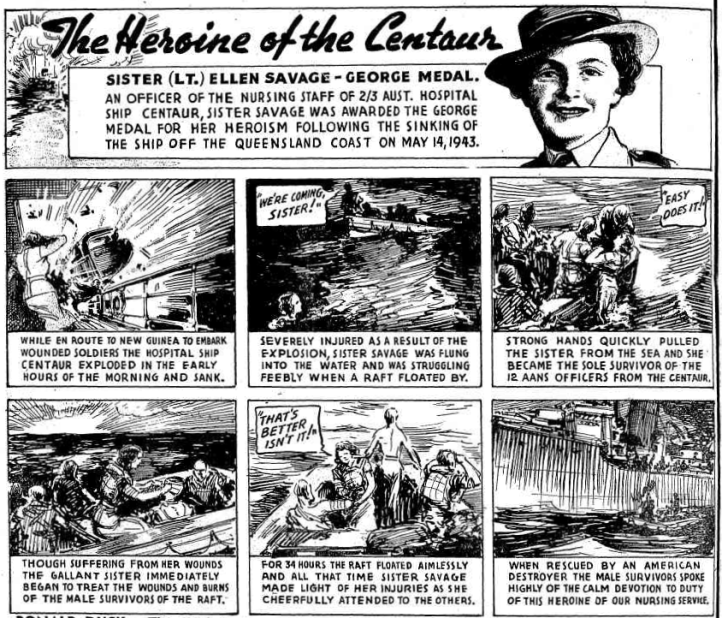
The 64 survivors clambered onto rafts and bits of wreckage, which they tied together. Nell was seriously injured but concealed this from her fellow survivors. She administered what first aid she could, rationed out food and water, and through her own courage helped to keep morale high. After 34 hours, during which time sharks swam round the rafts, the survivors were rescued by an American destroyer.
NELL SAVAGE’S STORY
While recovering in hospital, Nell Savage was interviewed by reporters. Her story was printed in the newspapers and later reproduced by Allan S. Walker (pp. 462–63), the official Second World War medical historian:
On 13th May I was allotted to Regimental Aid Post duties with Dr Thelander. That afternoon proved to be very busy with many men from the 2/12th Field Ambulance reporting their minor complaints. We were interrupted in our duties by the ship’s siren alerting us to lifeboat drill. That was the fourth for that one day. After being dismissed I dashed to my cabin, and still having many duties to attend to, left my lifebelt on the floor at the side of my bed instead of storing it on top of a wardrobe as usual. The reason I mention this is that it was fateful that the lifejacket should be beside me next morning.
The evening on board ship was as usual and we retired about 10 p.m. Early next morning my cabin mate, Myrle Moston, and myself were awakened by two terrific explosions and practically thrown out of bed. In that instant the ship was in flames. Sister Moston and I were so shocked we did not even speak, but I registered mentally that it was a torpedo explosion. The next thing Sister King, a very great friend, who was in the next cabin screamed near my door “Savage, out on deck.” As we ran together, we tied our lifejackets in place. We were so disciplined that we were making for our lifeboat stations when out on deck we ran into Colonel Manson, our commanding officer, in full dress even to his cap and ‘Mae West’ lifejacket, who kindly said, “That’s right, girlies, jump for it now.” The first words I spoke was to say, “Will I have time to go back for my greatcoat?” as we were only in our pyjamas. He said “No,” and with that climbed the deck and jumped and I followed, hoping that Sister King was doing likewise. There were other people on the deck by then and the ship was commencing to go down. It all happened in three minutes.
I endeavoured to jump as we had been instructed, but the suction was so great I was pulled into the terrific whirlpool with the sinking ship. It would be impossible to describe adequately that ordeal under water as the suction was like a vice, and that is where I sustained my injuries – ribs fractured, fracture of nose and palate by falling debris, eardrums perforated, and multiple bruising. When I was caught in ropes I did not expect to be released. Then all of a sudden, I came up to an oily surface with no sign of a ship, and very breathless from this ordeal.
My first contact was with an orderly, Private Tom Malcolm. We exchanged a few gasped sentences and swam to a piece of flotsam which proved to be the roof of one of the deck houses. We balanced our positions and floated on this till about 8 a.m. There were other people swimming around and scrambling on to whatever was available to hang on to; a few rafts had floated off but not one lifeboat was launched. … I am the only one who survived from the deck where the doctors and sisters were quartered and I never saw Colonel Manson, Sister King or any of the others again. I feel that some would have been concussed in their beds and some would have been endeavouring to dress, but there was no time.
About 8 a.m. we were floating not so far from a raft which was already crowded, but those on board unselfishly decided to make room for us, and a brave lad from Western Australia swam with a piece of rope in his mouth and pulled the raft to us; we stepped across and that is when we saw the first shark, as we had floated away from the oily sea surface. During the day we tied up with other rafts and I suppose about 32 of us floated together surrounded by layers of tiger and grey nurse sharks which frequently shook our rafts. We had two badly burnt men with us, one of whom died that night.
During the 34 hours we were adrift we sighted four ships and several aeroplanes. We would get wildly excited, and, as they passed on their way, an air of despondency would descend on the men. It was a long 34 hours, especially the night time, but morale was very high, and I shall never forget the qualities that were displayed by our Australian seamen and soldiers. The submarine surfaced during the night and that was a terrifying experience. An R.A.A.F. aeroplane eventually sighted us and signalled the U.S. destroyer Mugford, which picked us up.
Nell’s words do not convey the extraordinary bravery and dedication she had shown in the water following the sinking. Despite her own severe injuries, she assisted others, many of whom were severely burned. She swam from raft to raft treating survivors with whatever first-aid items were available. As sharks circled and ships and planes passed by, she raised morale by offering encouragement, leading group prayer and at one point organising a sing-along. She also supervised the rationing of food and water.
In 1944 Nell was awarded the George Medal for her dedication to duty.
SOURCES
- 2/3 AHS Centaur Association, ‘Vale Joan Fisher OAM, Veteran NMMHS Oranje,’ Newsletter May 2022.
- The Australian Women’s Weekly (29 May 1943, p. 9), ‘Doctor’s Tribute.’
- The Australian Women’s Weekly (29 May 1943, p. 9), ‘Men of Centaur Mourn Loss of Gallant Nurses.’
- Goodman, R. (1992), Hospitals Ships, Boolarong Publications.
- Goossens, R. SS Maritime (website), ‘MS Oranje.’
- Milligan, C. and Foley, J. (1993), Australian hospital ship Centaur: the myth of immunity, Nairana Publications.
- National Archives of Australia.
- The Riverine Grazier (Hay, 28 May 1943, p. 2), ‘Christmas on a Hospital Ship.’
- Walker, A. S. (1961), Second World War Official Histories, Australia in the War of 1939–1945, Series 5 – Medical, Vol. IV – Medical Services of the Royal Australian Navy and Royal Australian Air Force with a section on women in the Army Medical Services (1st edition, 1961), Part III – Women in the Army Medical Services, Chap. 36 – The Australian Army Nursing Service (pp. 428–476), Australian War Memorial.

