AANS │ Sister Group 2 │ Second World War │ Malaya │ 2/13th Australian General Hospital
Family Background
Nancy Harris was born on 15 January 1913 in Guyra, in the New England region of New South Wales. She was the daughter of Florence Cecily Cumming and John Solomon Harris.
Florence Cumming was from Newcastle and was one of three children of Captain Fergus Cumming, who had arrived in Brisbane from Liverpool on his vessel Shun Lee in August 1886. He then sailed south to Newcastle and married Elizabeth Thomas on 2 October that same year. He was later Superintendent of Navigation in Newcastle.
Florence trained in nursing at Newcastle Hospital and was among the successful candidates at the examination held in June 1908 by the Australasian Trained Nurses’ Association.
John Harris was born in 1880 in Sydney and graduated from the University of Sydney in 1906 with a Bachelor of Medicine degree and a Master of Surgery degree. He became registered to practise medicine on 10 January that same year. By January 1907 he had become medical superintendent at Newcastle Hospital, presumably where he met Florence, and by February 1908 he had set up a medical practice in Guyra.
Florence and John were married in Sydney on 3 November 1909 by the Rev. John Ferguson and thereafter lived in Guyra. The following year John was appointed Government medical officer and vaccinator, which position he held in addition to his private practice.
Early Life
The couple’s first child, Hannah Jean (known as Jean), was born in 1910 in Newcastle. Nancy, born in Guyra, followed in 1913. As she was growing up, Nancy was fond of horses and ponies and became an excellent rider. At the Guyra Show in February 1923, she came second in the ‘Girl rider, under 10’ category. The following year she finished third with Harold Butt in the ‘Pair of girl and boy riders, under 11’ category, and in 1925, 1926 and 1927 she came first in the ‘Girl rider, 10–14 years’ category.
Nancy and Jean both attended the Ursuline Convent School in Guyra. In November 1927, when Nancy had nearly completed Grade VI, the Harris family relocated to North Sydney, where John had bought a medical practice. They were farewelled on 12 November by the people of Guyra at the Oddfellows’ Hall. John was thanked for his service over nearly 20 years, and Florence was thanked for her fine work in organising balls for the Produce, Agriculture and Horticulture Society and Golf Club. The Harrises were then presented with a silver tea and coffee service. Shortly after the conclusion of the function, John, Florence and Nancy set out for Sydney by car. Jean was possibly already in Sydney boarding at Presbyterian Ladies’ College.
School and Nursing
In 1928 Nancy attended Presbyterian Ladies’ College in Pymble, in those days a semi-rural locality on the northern outskirts of Sydney. After finishing school, Nancy decided to take up nursing, following in her mother’s footsteps, and by March 1932 had become a trainee at the Royal North Shore Hospital in St. Leonard’s. She passed her final examination in May 1935 and became registered in general nursing on 14 November that year. Meanwhile, she had joined the staff of the Sydney Dental Hospital.
In the late 1930s or the early 1940s, Nancy travelled to China, Japan and Fiji. She may have travelled with Jean, who, after graduating from Sydney University in March 1932, spent a year in Fiji and whose fiancé, Frederick Pocock, had familial connections there.
Enlistment
With war now raging in Europe, Nancy wanted to volunteer and in February 1941 joined the Australian Army Nursing Service (AANS). She was called up for duty and on 5 April 1941 enlisted in the Australian Military Forces (AMF) for home service with the AANS. On 6 April she was detached to the camp dressing station at Cowra army camp and arrived the next day.
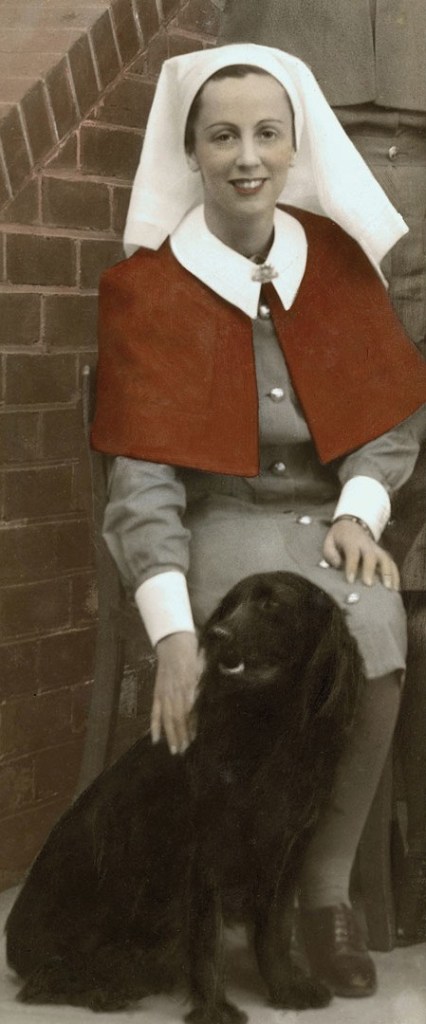
Nancy’s appointment to the AMF was terminated on 18 August upon her secondment the following day to the Second Australian Imperial Force (2nd AIF). She had been chosen to serve in Malaya with the 2/13th Australian General Hospital (AGH) as a staff nurse. The 2/13th AGH was being raised in Melbourne following a request for a second AGH in Malaya to support the 2/10th AGH and the 2/4th Casualty Clearing Station (CCS), both of which units had sailed to Malaya in February with the 5,850 men of the 22nd Brigade, 8th Division. Nancy remained at Cowra for two more days and then went on pre-embarkation leave.
Australian Hospital Ship Wanganella
On 30 August the day of departure arrived. Together with 18 other New South Wales and Queensland nurses, and half-a-dozen other staff of the 2/13th AGH, Nancy boarded AHS Wanganella and departed Sydney. The Wanganella had recently been commissioned as a hospital ship and its hull was gleaming white, with a broad green band and three large red crosses.
The Wanganella arrived at Port Melbourne on 1 September and a further 24 AANS nurses from Victoria, South Australia and Tasmanian embarked, together with around 180 other 2/13th AGH staff. The next day the ship set out again. A final stop in Fremantle saw the embarkation of seven more nurses and one disembarkation. There were now 49 AANS nurses aboard.
Malaya
On 15 September the Wanganella arrived at Keppel Harbour on Singapore Island. However, while still at sea, Nancy and nine of her new colleagues – Staff Nurses Harley Brewer, Joyce Bridge, Vivian Bullwinkel, Veronica Clancy, Trixie Glover, Mollie Gunton, Janet Kerr, May Rayner and Mona Tait – had been detached to the 2/10th AGH to train in tropical nursing with their experienced peers, and upon disembarkation set out for Malacca. They arrived the next morning, still somewhat resentful at being so abruptly separated from their 2/13th AGH colleagues.
Meanwhile, the remaining 2/13th AGH nurses disembarked and were transported in the sweltering heat to St. Patrick’s School in Katong on the island’s south coast, where the 2/13th AGH would be billetted pending the readiness of their permanent home, a psychiatric hospital in Tampoi, in the south of the Malay Peninsula.
In Malacca, Nancy and the other nine spent three weeks with the 2/10th AGH nurses treating such maladies as tropical ulcers, dengue fever and the odd case of malaria. On 6 October they returned to the 2/13th AGH, and the next contingent of nurses travelled to Malacca to undertake training. Other nurses were detached to the 2/4th CCS, which was based at the same psychiatric hospital in Tampoi earmarked for the 2/13th AGH.
On 30 October Nancy was posted once again to the 2/10th AGH. By the time she rejoined her unit on 13 December, the Imperial Japanese Army had invaded Malaya.
Invasion
Faced with minimal resistance from overwhelmed British and Indian troops, the Japanese invasion force moved swiftly southwards. The entry of Australian soldiers into active combat in mid-January did little to stop them, and by the end of January they had forced the Allies to retreat to Singapore Island and had reached the far south of the Malay Peninsula.
The Australian medical units had retreated with the troops. The 2/13th AGH, having moved to Tampoi on the peninsula on 25 November, had returned to St. Patrick’s School, while the 2/10th AGH had relocated to Oldham Hall and Manor House. The 2/4th CCS had moved to the Bukit Panjang English School.
Despite strong opposition from Australian troops, on 8 February Japanese forces crossed Johor Strait and established a bridgehead on Singapore Island. Fortress Singapore was doomed.
St. Patrick’s School was now so overcrowded with wounded combatants that outbuildings and even tents were used as wards. Casualties lay closely packed on mattresses on floors or even outside on the lawns. From outside the school came the constant noise of artillery fire. Nancy and her colleagues worked under enormous strain but were magnificent.
Evacuation
On 9 February, in response to Japanese atrocities in Hong Kong, Major General Gordon Bennett ordered the evacuation of the 131 AANS nurses now in Singapore. Unsurprisingly, the nurses did not want to leave hundreds of wounded patients in the lurch and refused to volunteer. In the end, Nancy and the others had to be ordered to leave by Dot Paschke, matron of the 2/10th AGH and senior matron in Malaya. Many nurses wept as they went about their work on these final days in Singapore. On 10 February, with Japanese forces closing in, six nurses left aboard the Wusueh. The following day 60 more departed on the Empire Star. Then, on Thursday 12 February, the final 65 nurses, among whom was Nancy, were evacuated aboard the Vyner Brooke.
In the gathering dusk the Vyner Brooke steamed slowly out of Keppel Harbour. As the ship departed, several of the nurses looked back at the waterfront to see a city ablaze. For the next 36 hours, the ship made its way slowly and without incident through the many islands that line the passage between Singapore and Jakarta, its destination.
The Sinking of the Vyner Brooke
Then, in the early afternoon of Saturday 14 February, the Vyner Brooke was bombed by Japanese aircraft as it was entering Bangka Strait. In a short period of time, some 27 bombs were released. Most missed but eventually one entered through the ship’s funnel and exploded in the engine room. The ship lifted and rocked with a vast roar. Then another struck the ship, and another, and the Vyner Brooke was doomed. It began to sink and within 30 minutes was beneath the waves.
After treating the wounded as best they could, and helping women, children, the elderly and the wounded into the available lifeboats, Nancy and her colleagues abandoned ship wearing the life jackets they had been issued with. Some found their way onto lifeboats – or just as likely trailed behind – while others clung to rafts and debris. Those who could swim made for nearby Bangka Island.
Bangka Island
Nancy made it to shore late on Saturday night and joined a large group of AANS nurses and civilians around a bonfire. Later, more survivors of ships bombed by Japanese forces came ashore and joined the group. Among them were many wounded.
Sunday passed by, and on Monday it was decided that the group should surrender en masse to Japanese authorities. A deputation left for the nearest large town, Muntok, to negotiate this. A short while later most of the civilian women and children of the group followed behind.
The Australian nurses were duty-bound to remain with the wounded on the beach.
Around mid-morning the deputation returned with Japanese soldiers. The soldiers separated the survivors into groups. They took the men around a bluff in two groups and proceeded to shoot and bayonet them.
They returned to the nurses and the remaining civilians. They ordered the nurses and one, perhaps two, civilian women to advance into the water and form a line, facing the sea. They shot them as they stood there, looking out to sea, knowing their fate.
Nancy and 20 colleagues died on Bangka Island on 16 February 1942. One colleague, Vivian Bullwinkel of the 2/13th AGH, miraculously survived.
Twelve of the 65 AANS nurses to leave Singapore that fateful day were lost at sea when the Vyner Brooke was sunk. Twenty-one had died on Bangka Island. Thirty-two were made prisoners of war.
On 12 January 1945, nearly three years after Nancy’s death, the Australian Army’s NSW Echelon and Records section issued a notice to her parents, as follows:
I regret to inform you that following intensive examination of the evidence in hand regarding the fate of certain members of the A.A.N.S. who were serving in Malaya, and the absence of any communication from them, the decision has been reached that it must be presumed they lost their lives during or as a result of the aerial attack on the transport on which they were travelling near Sumatra. The personal documents of your daughter … have therefore been endorsed as follows: ‘Previously reported missing believed killed on or after 11 February now reported became missing on 14 February 1942 and is for official purposes presumed to be dead.’ With the deepest sympathy of the Minister for the Army and Commander in Chief.
Despite this, Florence and John Harris refused to give up hope of seeing their daughter again. In the 24 January 1945 edition of the Sydney Morning Herald, they are quoted as saying that
of the 66 [sic] nurses who were on the ship that was bombed, it is known that 33 were killed and 33 were saved. Relatives of some of the girls who were saved had letters saying that they were living in a Dutch bungalow in [Palembang] and were being treated as civilian internees. We feel that until those girls are repatriated we will never know what really happened.
On 16 September 1945, with the end of the war, the surviving nurses were flown to Singapore and freedom. Of the 32 captured, eight had died, all in that final, horrendous year. The 24 nurses were met in Singapore not only by Red Cross workers but by members of the press, and stories of their remarkable survival and of the terrible fate of those who had died on the beach came to light. It was only then that Florence and John Harris finally learned the truth of Nancy’s tragic fate.
In memory of Nancy.
SOURCES
- Ancestry.
- Jeffrey, B. (1954), White Coolies, Angus & Robertson Publishers.
- Museums of History NSW, Nurses Index 1926-1954.
- National Archives of Australia.
- Shaw, I. W. (2010), On Radji Beach, Pan Macmillan Australia.
- Simons, J. E. (1956), While History Passed, William Heinemann Ltd.
SOURCES: NEWSPAPERS AND GAZETTES
- The Armidale Chronicle (NSW, 19 Feb 1927, p. 5), ‘Guyra Show.’
- The Armidale Express and New England General Advertiser (NSW, 17 Oct 1945, p. eight), ‘Service for Former St. Ursula Pupil.’
- Government Gazette of the State of New South Wales (Sydney, 3 Jan 1907 [Issue No.2], p. 76), ‘Register of Medical Practitioners for 1907.’
- Guyra Argus (NSW, 5 May 1910, p. 2), ‘Local and General.’
- Guyra Argus (NSW, Feb 1923, p. 3), ‘Guyra Show.’
- Guyra Argus (NSW, 21 Feb 1924, p. 5), ‘Guyra Show.’
- Guyra Argus (NSW, 18 Feb 1926, p. 4), ‘Guyra Show.’
- Guyra Argus (NSW, 3 Mar 1932, p. 2), ‘Personal.’
- Guyra Argus (NSW, 8 Nov 1945, p. 4), ‘Died in Prison Camps.’
- Guyra Argus (NSW, 23 Jan 1947, p. 3), ‘Early Guyra.’
- The Maitland Weekly Mercury (NSW, 27 Jun 1908, p. 10), ‘Doctor’s Differences.’
- Newcastle Morning Herald and Miners’ Advocate (NSW, 7 Oct 1886, p. 4), ‘Family Notices.’
- Newcastle Morning Herald and Miners’ Advocate (NSW, 6 Feb 1907, p. 7), ‘Newcastle Police Court.’
- Newcastle Morning Herald and Miners’ Advocate (NSW, 6 Jul 1908, p. 4), ‘Current News.’
- Newcastle Morning Herald and Miners’ Advocate (NSW, 18 Mar 1932, p. eight), ‘Captain F. Cumming.’
- The Sun (Sydney, 6 Feb 1933, p. 5), ‘Brevities.’
- The Sun (Sydney, 23 Jan 1945, p. 3), ‘Father Believes Nurse Is Alive’.
- The Sydney Mail and New South Wales Advertiser (17 Nov 1909, p. 61), ‘Family Notices.’
- The Sydney Morning Herald (19 Feb 1925, p. 7), ‘Agricultural Shows.’
- The Sydney Morning Herald (24 Jan 1945, p. 5), ‘Seven Army Nurses Presumed Dead.’
 australianwarnurses.org