AANS │ Sister Group 2 │ Second World War │ Malaya │ 2/13th Australian General Hospital
EARLY LIFE
Mona Margaret Wilton was born on 8 September 1913 at Hamilton Hospital in western Victoria. Her parents were Christina Margaret Stewart (1878–1959), from Keilambete, near Terang in western Victoria, and Frederick Richard Wilton (1874–1958), from Essendon in Melbourne.
Christina, a nurse, and Frederick, a blacksmith and later a farmer, were married on 19 April 1911, and the following year Mona’s older sister, Sarah Amy Elizabeth Wilton, known as Amy, was born. Mona’s younger brother, Thomas Frederick Osborne Wilton, known as Tom, was born in 1916.
The family lived in Willaura, in western Victoria, and Mona and Amy attended Willaura State School. In 1924, when Mona was 10, the family moved to Naringal, near Allansford on the western Victorian coast, where Frederick had purchased a dairy farm, Bellbraes. Mona continued her schooling at Naringal State School.
In 1928 Mona moved to Melbourne. She stayed with her maternal aunt Henrietta Meyer in Brighton and attended Mordialloc and Carrum High School. After a year she returned to Bellbraes and worked as sewing mistress at Naringal State School. She played tennis with the Allansford Tennis Club and attended the Allansford Presbyterian Church where, for a time, she was organist.
NURSING
Mona decided to follow her mother and her sister into nursing and in 1933 joined Amy at Warrnambool Base Hospital, not far from Allansford. In October 1934 a trainee by the name of Wilma Oram began at Warrnambool. She was three years younger than Mona, but they nevertheless became good friends. Wilma became a regular visitor at Bellbraes, and later she and Mona would go off to war together.
After completing her training in April 1937, Mona undertook private nursing around Warrnambool. She became registered in general nursing on 18 February 1938 and then moved to Daylesford Hospital, where she trained in midwifery. She obtained her Midwifery Certificate and became registered on 5 December 1938. In October 1940 Mona successfully sat her examination in infant welfare nursing but appears not to have gained her certificate.
ENLISTMENT
Like so many of her nursing peers, Mona was motivated to join Australia’s armed forces after hearing the news in May 1940 that Germany had invaded the Low Countries and France and was threatening Britain. She applied to join the Australian Army Nursing Service (AANS). Her application was accepted, and on 22 August 1940 she was appointed to the AANS, 3rd Military District (Victoria).
Not long after her appointment, Mona ran into her old friend from Warrnambool, Wilma Oram. Wilma also wanted to volunteer for service but could not decide between the AANS and the Royal Australian Air Force Nursing Service and had filled out an application for each. When Mona told her that she had joined the AANS, Wilma’s mind was made up. She too applied for the AANS.
In due course Mona and Wilma each received their call-up. On 12 March 1941 they arrived together at the Australian Army Medical Corps depot on William Street in Melbourne and enlisted in the Australian Military Forces (AMF) for domestic service with the AANS. On 30 April Mona was posted to the 108th Australian General Hospital (AGH) at Darley, near Bacchus Marsh, while Wilma had been posted a week earlier to the 115th AGH at Heidelberg in Melbourne.
Mona’s full-time duty with the AMF terminated on 6 August and the following day she was appointed to the all-volunteer Second Australian Imperial Force (2nd AIF) for overseas service with the AANS. She was assigned the rank of staff nurse, told to prepare herself for an overseas posting, and sent on pre-embarkation leave from 14 to 19 August.
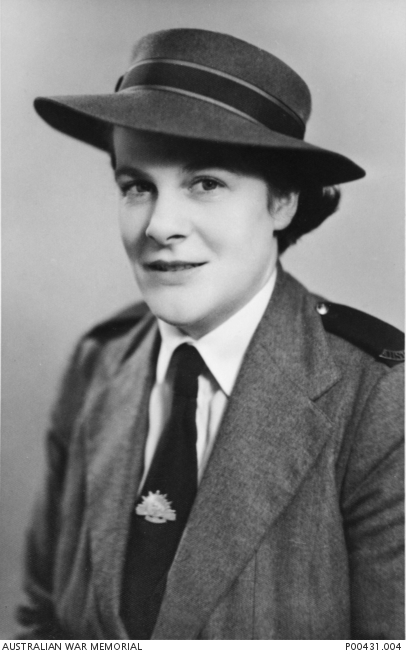
On 1 September Mona was attached to the 2/13th AGH and was taken by bus to the Lady Dugan Hostel in South Yarra. Here the 24 Victorian, South Australian and Tasmanian nurses attached to the unit had been posted prior to embarkation the following day. The 2/13th AGH had been raised in early August at Caulfield Racecourse in Melbourne following a request for an additional AGH to join the 2/10th AGH in Malaya. The 2/10th AGH, together with the 2/4th Casualty Clearing Station (CCS), the 2/9th Field Ambulance, and several smaller medical units, had sailed in February on the Queen Mary with the 22nd Brigade, 8th Division, which had been tasked with helping to garrison the British colonial possession. Among the Victorian nurses was Wilma Oram. She and Mona were very happy to see each other again.
HIS MAJESTY’S AUSTRALIAN HOSPITAL SHIP WANGANELLA
At approximately 9.00 am on 2 September 1941 the 24 nurses were taken by bus from the Lady Dugan Hostel to Port Melbourne, where they boarded HMAHS Wanganella. The newly commissioned hospital ship had left Sydney on 30 August with a contingent of 2/13th AGH personnel from New South Wales and Queensland that included 19 AANS nurses. Later that day the Wanganella slipped out of Port Phillip Bay into Bass Strait.
Mona and Wilma shared a cabin during the voyage, and both suffered seasickness during a particularly rough crossing of the Bight. Six days later the Wanganella pulled into Fremantle, and as it did so those on board stared in awe at the enormous passenger liners turned troopships Queen Mary and Queen Elizabeth, both at anchor in Gage Roads, Fremantle’s outer harbour. Mona and Wilma enjoyed a 36-hour layover in Perth, and by the time the Wanganella sailed again late in the day on 9 September, seven more AANS nurses had joined the cohort.
The following day Mona, Wilma and their colleagues were officially told that they were going to Malaya. Several of them expressed disappointment at the thought of missing out on the action elsewhere. How wrong they would prove to be.
ST. PATRICK’S SCHOOL, SINGAPORE
The Wanganella arrived at Keppel Harbour on Singapore Island on 15 September and berthed at Victoria Dock. Mona, Wilma and most of their new colleagues disembarked and were taken by bus to St. Patrick’s School, located in Katong on the south coast of the island. Here the 2/13th AGH would remain while awaiting orders to move to its permanent base, a psychiatric hospital in Tampoi, near Johor Bahru in the south of the Malay Peninsula. Ten of the unit’s nurses, however, had been detached to the 2/10th AGH and entrained for Malacca, 200 kilometres northwest of Johor Bahru, where the unit had set up in the Colonial Service Hospital.
Although the nurses were disappointed at being separated from their colleagues, there was no work for the 2/13th AGH nurses at St. Patrick’s School, and detachments to the 2/10th AGH and to the 2/4th CCS gave the newcomers an opportunity to learn tropical nursing from their experienced peers. After the 10 returned to St. Patrick’s on 6 October, a second rotation of nurses was posted to Malacca for three weeks, and then a third.
At St. Patrick’s School, meanwhile, Mona and Wilma had a room to themselves and talked often of Victoria. They were given leave from 10.00 am to 12 midday each day and often travelled into Singapore city. When on duty, they and the others attended lectures, went on field trips to hospitals on the island, and gave instruction in general nursing techniques to the unit’s orderlies. Mona despaired somewhat at the lack of work. In a letter home she stated that “since arriving, we haven’t done one bit of work. We have been sleeping, eating and growing fat while we wait for our permanent place of abode to be ready for us” (quoted in Angell, p. 41).
TO TAMPOI
On 14 October Mona, Wilma and six other 2/13th AGH nurses were detached to the 2/4th CCS, which at the time was based in the same psychiatric hospital in Tampoi into which the 2/13th AGH was slated to move. They were now closer to where the 22nd Brigade troops were encamped and finally had some substantial work. “After six weeks of loafing around,” Mona wrote, “we are finding solid work a bit trying, but we’ll manage” (Angell, p. 42). The sprawling, single-storey complex was situated on the edge of the jungle, and it was not unusual for scorpions, centipedes and other creatures to invade the wards. When on night duty, Mona was disturbed by the monkeys that would stare at the staff through unglazed windows. In the spartan but pleasant nurses’ quarters, located some distance from the unit’s hospital, Mona and Wilma shared a room and were provided with the services of an amah (a domestic helper). Mona enjoyed the peace and quiet of the place.
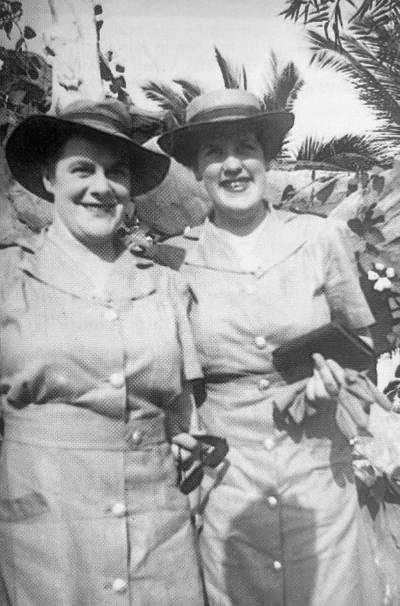
Around 20 November the 2/13th AGH finally received orders to proceed to Tampoi. By 23 November the unit had taken over the site from the 2/4th CCS, which moved north to Kluang, and Mona, Wilma and the other detached nurses were reunited with their colleagues. It was something of a challenge to bring the hospital up to speed, but between the nurses and the orderlies they soon managed to have a functioning hospital of some 600 beds.
Meanwhile, fears of Japanese aggression had grown steadily across the year, and by November all the signs in the international arena pointed to war. By the end of that month, the British, Indian and Australian garrison troops were advanced to the second degree of readiness, which meant that leave was cancelled, and units had to be ready to move at a few hours’ notice to their areas of deployment. Then, on 4 December, the codeword ‘Raffles’ was given, indicating advancement to the first degree of readiness. War was imminent.
JAPAN INVADES
On 8 December war came. Soon after midnight, a force of some 5,000 troops of the Imperial Japanese Army launched an amphibious assault at Kota Bharu on the Malay Peninsula’s northern coast. Four hours later, as many as 17 Japanese bombers attacked Singapore Island. From Tampoi, some of Mona’s colleagues heard the bombing in the distance and saw searchlights and the silver trails of tracer bullets firing vainly at Japanese aircraft overhead.
From their beachhead at Kota Bharu, the well-trained, combat-ready Japanese forces, backed by mechanized units and substantial sea and air power, began to press southwards, forcing severely outgunned British and Indian troops to retreat before them. Within six days, two more Japanese forces had crossed into northern Malaya from Thailand.
The 2/13th AGH was ordered to expand its hospital from 600 to 1,200 beds, and by 15 December two new wards had been set up. Staff were required to wear Red Cross armbands and to carry steel helmets and gas masks about with them. They were no longer allowed outside the hospital compound after dark and were not allowed visitors.
As the war became hotter and closer, Mona and her colleagues quickly became used to interrupted sleep, blackouts and air-raid warnings. “We are having grand fun here,” Mona wrote to her friend Sheilah Jenkin, “getting used to air raids and sirens screaming at us. It’s when we have to get out of our beds at night and rush for safety that we get a bit savage” (Angell, p. 47). Later in the letter she assured Sheila that there was nothing to worry about.
Christmas came as a welcome distraction. The wards at Tampoi were decorated, and the patients’ rations were boosted for the festive event. The officers helped to carve the poultry and ham and helped the nurses to serve the bed patients. They also made the nurses sit down with the up patients and waited on them. In return the nurses arranged a party in their mess for the officers and on Boxing Day a larger party for the troops.
EVACUATION TO SINGAPORE
Events sped up after Christmas. In the face of Japan’s unstoppable push southwards, it became clear that the 2/10th AGH at Malacca would have to evacuate to Singapore Island, and staff and patients were moved south in stages. Between 29 December and 5 January 1942, 36 nurses and around 40 other staff joined Mona and her colleagues at Tampoi and brought scores of patients with them.
On 14 January Australian troops entered combat for the first time. They achieved a victory against a Japanese force at Gemas but then fought much bloodier battles over subsequent days. Convoys of casualties began to flow to the 2/4th CCS, which had by then moved to a rubber plantation at Mengkibol, and on the evening of 16 January reached the 2/13th AGH at Tampoi.
By then the 2/10th AGH had relocated to Oldham Hall and Manor House at Bukit Timah on Singapore Island, and soon it was the turn of the 2/13th AGH to evacuate. Over the weekend of 24–25 January the unit returned to St. Patrick’s School on Singapore Island. Three days later the 2/4th CCS was evacuated to the island. On the night of 31 January, the final Commonwealth troops crossed from the peninsula to the island, and the next morning the Causeway was blown in two places.
Japanese troops reached the northern shore of Johor Strait soon after and began a ferocious artillery bombardment of the island. They crossed the strait on the night of 8 February and by the morning had established a beachhead on the northwestern corner of the island, despite strong opposition from Australian troops.
THE FINAL DAYS OF FORTRESS SINGPORE
Mona, Wilma and their colleagues were now working under extreme pressure. St. Patrick’s had become so overcrowded that outbuildings and even tents were used as wards. Casualties lay closely packed on mattresses on floors and even outside on the lawns, the majority with gunshot and shrapnel wounds. The nurses worked 12-hour shifts, and the theatre, blood bank and x-ray nurses worked even longer. When they did eventually finish their shifts, the constant air-raids, bombings and artillery barrages made sleep hard to come by.
With Singapore’s fate all but certain, a decision was made to evacuate the nurses. On 10 February, six nurses embarked with wounded Australian soldiers on the makeshift hospital ship Wusueh. The following day, a further 60 departed on the Empire Star, 30 from each of the AGHs. Now 65 AANS nurses remained in Singapore.
Late in the afternoon of 12 February, the remaining 2/13th AGH nurses and four 2/4th CCS nurses on detachment were taken by ambulance from St. Patrick’s School to St. Andrew’s Cathedral in Singapore city. They rendezvoused with the remaining 2/10th AGH nurses and the other four 2/4th CCS nurses, and then all 65 nurses continued to Keppel Harbour until their ambulances could drive no further, at which point the nurses got out and walked the remaining few hundred metres. At the harbour there was chaos, as hundreds of civilians, mainly women and children, searched vainly for any vessel that would take them.
THE VYNER BROOKE
Eventually Mona and her 64 comrades were ferried out to the Vyner Brooke, a small coastal steamer and one-time pleasure craft of Sir Charles Vyner Brooke. On board there were as many as 150 people – women, children, old and infirm men. In the gathering darkness the ship slipped out of Keppel Harbour and, after lengthy delays, began its journey south. Behind the, the city was burning, and a pall of thick, black smoke hung in the sky.
That night the Vyner Brooke made little progress and spent much of Friday hiding among the hundreds of small islands that line the passage between Singapore and Batavia. By the morning of Saturday 14 February, Captain Borton was approaching the entrance to Bangka Strait. To the right lay Sumatra; to the left, Bangka Island.
Suddenly, at around 11.00 am, a Japanese plane swooped over, then flew off again. At around 2.00 pm another plane approached before flying off. The captain, anticipating the imminent arrival of Japanese dive-bombers, sounded the ship’s siren and began a run through open water. When a squadron of dive-bombers appeared on the horizon, Borton commenced evasive manoeuvres. As the bombers approached, the Vyner Brooke zigzagged wildly at full speed. After many near misses, a bomb struck the forward deck, killing a gun crew. Another entered the funnel and exploded in the engine room, causing the ship to lift and rock with a vast roar. A third tore a hole in the side. The Vyner Brooke listed to starboard and began to sink. It was 15 kilometres from Bangka Island.
After the first explosion, the nurses went into action. They were carrying morphia and dressings in their pockets and administered first aid to wounded passengers, including their own colleagues, before helping them into two of the three remaining lifeboats, which were lowered into the sea and began to drift away. Now the remaining nurses were ordered to evacuate, and Mona and Wilma jumped over the side.
Decades later, Wilma recalled how events then unfolded:
We got into [the third] lifeboat but that lifeboat was holed and grossly overcrowded, and we couldn’t get it away from the ship, so that’s when Mona and I got out of the lifeboat to try and dog paddle our way or to swim away as best we could from the ship. … Mona couldn’t swim at all … I couldn’t swim very much, and we jumped out to try and get away from the ship, but the ship tipped over on top of us. I said to Mona, “Oh, we’re sunk this time!” It was only an expression that I used and I didn’t realise the irony of it. I came up through the rails [but] when I came to the surface Mona was nowhere about and that was it. I never saw her again. (Angell, p. 59).
Sister Jean Ashton of the 2/13th AGH, who had been in the lifeboat with Mona and Wilma and had jumped out of it with them, witnessed Mona’s death. She had been struck on the head by a raft that had slid off the listing Vyner Brooke and “just floated away” (Angell, p. 60).
Mona was one of 12 AANS nurses lost at sea that terrible day. Twenty-one more were murdered two days later, on Radji Beach. The remaining 32 nurses were interned for three-and-a-half years in camps on Bangka Island and Sumatra. Only 24 came home.
In memoriam
On 29 March 1953, Wilma Oram unveiled a memorial stained-glass window at Warrnambool Base Hospital in honour of her fallen friend Mona. Among the simple words on the inscription is the following sentence:
We proudly remember her.
In memory of Mona.
SOURCES
- Ancestry.
- Angell, B (2003), A Woman’s War: The Exceptional Life of Wilma Oram Young AM, New Holland Publishers.
- Arthurson, L., ‘The Story of the 13th Australian General Hospital, 8th Division AIF, Malaya,’ edited by Peter Winstanley (2009).
- Jeffrey, B. (1954), White Coolies, Angus and Robertson.
- Monument Australia, ‘Sister Mona Wilton.’
- National Archives of Australia.
- Shaw, I. W. (2011), On Radji Beach, Pan Australia.
- Simons, J. E. (1954), While History Passed, William Heinemann Ltd.
- South West Healthcare (22 Apr 2022), ‘We will remember them.’
- Virtual War Memorial Australia, ‘Wilton, Mona Margaret’ (biography of Mona contributed by Steve Larkins, based on information supplied by Mona’s brother Tom Wilton).
 australianwarnurses.org