AANS │ Sister Group 2 │ Second World War │ Malaya │ 2/13th Australian General Hospital
FAMILY BACKGROUND
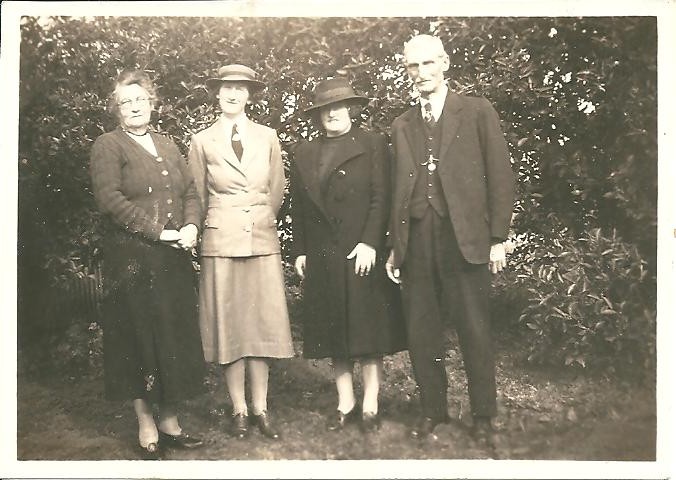
Annie Merle Trenerry, known as Merle, was born on 31 March 1909 in Moonta Mines, a township that sprang up around copper mines on the Yorke Peninsula in South Australia. Merle’s parents were Annie Vincent Osborn (1872–1959) and Edward Joseph Trenerry (1869–1944).
Annie Osborn was born in St. Ives, in Cornwall, England, and grew up in Cross Roads, a hamlet next to Moonta Mines. Her father, John Sandoe Osborn, a tin miner, arrived in South Australia from Plymouth, Cornwall on 10 July 1876 on the Lightning. With him were Annie, her three siblings, and their stepmother, Mary. The four children’s own mother, Juliana, had died in 1874. Like many other Cornish migrants arriving in South Australia at this time, the Osborns proceeded directly to the Moonta district, where John became engaged in copper mining.
Edward Trenerry was born in Moonta, the planned government town that was built next to the town of Moonta Mines. Edward’s parents, Mary Kent and Edward Trenerry, came from Newlyn East in Cornwall, England, married in 1856, and migrated to South Australia with five children, arriving in Adelaide on 20 February 1865 on the Matilda Atheling. They first moved to the Burra district, 150 kilometres north of Adelaide, and then moved to the Moonta district. At first Edward senior worked in the mines but in the early 1890s snr gave up mining and established a boot and shoe business on Ellen Street in Moonta.
Just as his father was leaving mining, Edward junior was beginning his association. Around 1891 he began to work for the Wallaroo and Moonta Mining Company and was at one time underground manager. Annie Osborn’s brother William Vincent Osborn also worked for the Wallaroo and Moonta Mining Company, and it was perhaps through her brother that she met Edward.
However they met, on 28 December 1898 Annie and Edward were married at the Osborns’ family home in Cross Roads and resided thereafter in Moonta Mines. By now Edward had established a bakery and grocery business on Ellen Street in Moonta with his brother, Francis. They traded as Messrs. Trenerry Bros.
Not content with vending baked goods and other food items, from late 1899 until early 1903 Edward undertook a course of study at the Moonta School of Mines, which had opened in 1891 for practical training in mining. By 1901 he was working as a mine agent but appears to have continued to operate the bakery business with Francis until early 1903, after which time Francis continued on his own, in due course moving the business to George Street, Moonta.
Meanwhile Annie and Edward had begun their family. Frank Irving (known as Irving) was born in 1900, followed by Julia Iris (known as Iris) in 1901 and Edward John Vincent (known as Vincent or Vin) in 1904. In 1907 Sylvester Kent (known as Kent) was born, and then Merle in 1909, Mary in 1911 and Lloyd Gordon in August 1913. Sadly, little Lloyd died only six months later, in February 1914. Finally, Norma was born in 1915.
SCHOOLING AND NURSING
As a primary school pupil, Merle attended Moonta Mines Public School. She passed the statewide School Qualifying Certificate Examination on 16 November 1923, entitling her to entry to state high school. She went to Moonta Technical School, and in 1925 and 1926 studied Bookkeeping, Business Correspondence and Shorthand.
At the conclusion of her schooling, Merle decided to follow her sister Iris into nursing. (Iris had begun as a probationer at the Adelaide Hospital in December 1921.) In 1927 Merle was accepted as a probationer at Sister Berry’s private hospital in Kadina, 20 kilometres northeast of Moonta Mines, and began her duties on 6 June.
By May 1929 Merle had transferred to the Hutt Street Private Hospital in Adelaide, whose matron and owner, Miss Janet Sinclair Wood, was a veteran of the First World War and later became the principal matron of the Fourth Military District (South Australia) and finally matron in chief of the Australian Army Nursing Service (AANS) in the Second World War.
As part of her training, Merle undertook Invalid Cookery at the School of Mines and Industries in Adelaide, and passed her examination in December 1929.
Merle’s sister Iris was also by now a nurse at Hutt Street. It would appear that she had not continued with the training she commenced in 1921, since in August 1931 both she and Merle passed their surgical nursing examination while at Hutt Street and in November passed their medical and general nursing examinations.
In 1933 Merle began to train in maternity nursing at Queen’s Home in Rose Park, an inner eastern suburb of Adelaide. Queen’s Home opened in 1902 and was South Australia’s first maternity hospital. It was renamed the Queen Victoria Maternity Hospital in 1939. Merle passed her Nurses’ Board of South Australia midwifery examination in May 1934.
Next, Merle joined the staff of the Northfield Consumptive Home (also known as the Northfield Consumptive Hospital), a tuberculosis and other infectious diseases hospital in north Adelaide. Here she gained her certificate in infectious diseases.
With certificates in general, maternity and infectious nursing, Merle was now highly qualified, and in March 1935 was appointed matron of the Moonta Jubilee Hospital. She replaced Matron Tredrea, who had been the hospital’s foundational matron and had resigned to marry her fiancé.
DISTRICT TRAINED NURSES’ SOCIETY
After a while Merle resigned from Moonta and for several years thereafter worked for the District and Bush Nursing Society, also known as the District Trained Nurses’ Society (DTNS), in such far-flung towns as Tarcoola, Meningie, Moorook, Milang and Poochera.
By October 1936 Merle was in Tarcoola, a remote town 400 kilometres northwest of Port Augusta. On 8 December she came second in a ‘Most happy woman in Tarcoola’ competition held in aid of the Australian Inland Mission (AIM). The AIM was established in 1912 by the Reverend John Flynn of the Presbyterian Church to provide medical services to remote areas of the Australian outback (and evolved into the Royal Flying Doctor Service).
From Tarcoola, Merle took temporary charge of the DTNS branch at Meningie, 100 kilometres southeast of Adelaide, before leaving in December 1937 to take charge of the branch at Moorook, on the Murray River in South Australia’s Riverland district.
During her time at Moorook, Merle was on the committee of the DTNS and was involved in numerous DTNS fundraising activities. For instance, on 18 February 1939 she and other committee members organised afternoon tea at the annual DTNS sports carnival, while at the DTNS winter fete, held on 10 June that year, she was in charge of the jumble stall. The following week Merle set off from Port Adelaide with her friend Miss Joan Goldsworthy on a cruise on the P & O liner Strathaird. The ship was scheduled to sail to Port Moresby but apparently Merle and Joan were only going as far as Cairns. The Strathaird returned to Port Adelaide on 12 July and Merle had returned to work at Moorook by 24 July.
After two years at Moorook, Merle left on 9 February 1940. Many locals bade her farewell at her going away party, and she was presented with a travelling rug by Mr. Ray Swanbury, the president of the DTNS.
From Moorook, Merle moved to the Milang, 60 kilometres south of Adelaide, where she relieved Sister E. Naismith as nurse-in-charge of the local DTNS branch when the latter went on annual leave. Finally, from Milang Merle moved to Poochera, on the upper-western side of the Eyre Peninsula. She remained in charge of the DTNS branch here until beginning her service with the Australian Army Nursing Service (AANS).
ENLISTMENT
Following the outbreak of the war in Europe, and in particular following the German invasion of France and the Low Countries in May and June 1940, many Australian nurses volunteered for service. Merle was no exception. On 7 February 1941 she enlisted in the Second Australian Imperial Force (2nd AIF) for service abroad with the AANS.
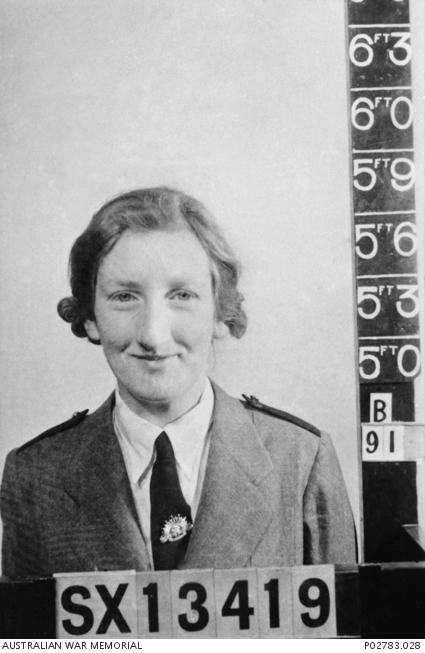
Eventually Merle received her call up and on 17 June was attached as a staff nurse to the hospital at Woodside army camp, 30 kilometres east of Adelaide. At Woodside she met nurses Jean Ashton, Flo Casson, Lorna Fairweather, Loris Seebohm, Maude Spehr and Elvin Wittwer, all of whom would soon be serving with Merle in Malaya.
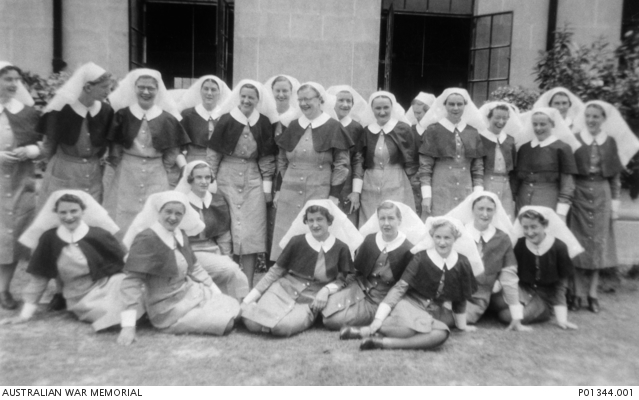
Sometime in August the seven nurses were advised that they had been allocated to a medical unit and to prepare for embarkation. On 28 August they were detached to the camp hospital at Wayville in Adelaide, where they joined nurses Nellie Bentley and Betty Garrood and masseuses (physiotherapists) Marjorie Hill and Audrey Simpson, who had all been allocated to the same unit. On 31 August the 11 women entrained for Melbourne and upon arrival the following day were marched in to their unit, the 2/13th Australian General Hospital (AGH).
The 2/13th AGH had been raised in Melbourne in early August after Col. Alfred P. Derham, the commanding officer of 8th Division medical services in Malaya, urged the deployment of a second military hospital to the British colony in view of intelligence reports suggesting a Japanese invasion. The 2/13th AGH would join the 2/10th AGH and the 2/4th Casualty Clearing Station (CCS), which, together with other, smaller, medical units, had sailed to Malaya in February with thousands of 8th Division troops.
HMAHS WANGANELLA
Merle and her fellow South Australians spent the night with their Victorian and Tasmanian counterparts at the Lady Dugan Nurses’ Hostel on Domain Road in South Yarra and prepared for their departure the next day.
At approximately 9.00 am on the morning of 2 September the nurses and masseuses were taken by bus from South Yarra to Port Melbourne, where they boarded HMAHS Wanganella. The newly commissioned hospital ship had left Sydney on 30 August with a contingent of 2/13th AGH personnel from New South Wales and Queensland that included 19 AANS nurses. At around 5.00 pm the Wanganella slipped out of Port Phillip Bay and headed into Bass Strait.
Six days later the Wanganella arrived at Fremantle, and seven more nurses embarked. When the ship departed again the following day, it was carrying around 220 staff of the 2/13th AGH, including surgeons, physicians, dentists, drivers, orderlies – and 49 AANS nurses and three masseuses.
During the voyage the nurses spent their time teaching the orderlies bandaging and other basic nursing procedures. They attended lectures on tropical medicine and worked shifts in the sick bay. They enjoyed various sports and activities and became acquainted with their new colleagues. Some days after leaving Fremantle, the staff were officially told that they were bound for Malaya. Some expressed disappointment at the thought of going to a backwater far from the ‘action.’ How wrong they were.
MALAYA
On 15 September, after an uneventful voyage, the Wanganella arrived at Keppel Harbour on Singapore Island. Ten of the nurses were immediately detached to the 2/10th AGH and, after disembarking, entrained for Tampin on the Malay Peninsula. They were then driven to Malacca, on the west coast of the peninsula, where the 2/10th AGH was based. The 2/13th AGH nurses would learn from their experienced 2/10th AGH peers as they treated the various tropical diseases and conditions that plagued the 8th Division troops, who were encamped in their battalions at not too great a distance from Malacca. More routinely, the 2/13th AGH nurses would help to patch up the many injuries sustained by the troops during their training exercises.
Meanwhile, Merle and the other nurses disembarked and were met by Colonel Wilfrid Kent-Hughes, Assistant Adjutant and Quartermaster General of the 8th Division, who had organised buses to transport them to St. Patrick’s School in Katong, on the island’s south coast. Here the staff of the 2/13th AGH would be billeted while waiting to be sent to the unit’s permanent base, a psychiatric hospital in Tampoi, in the south of the peninsula.
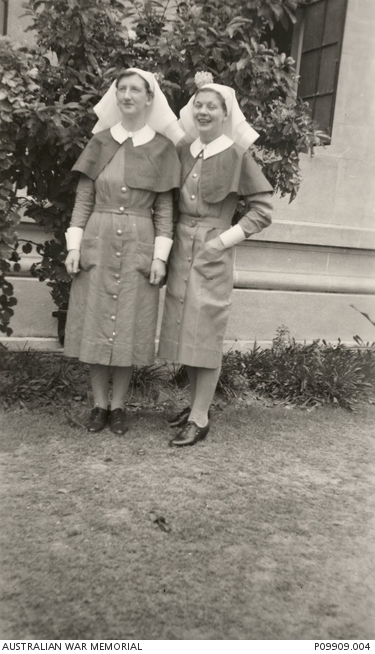
Until then, there would be no nursing work to carry out. Instead, Merle and the others attended lectures, went on field trips to hospitals on the island, and continued to instruct their orderlies in general nursing techniques. They enjoyed plenty of leisure time, playing tennis and golf, and were granted access to the exclusive Singapore Swimming Club. They were taken to dinner and dances and on excursions by wealthy Singapore residents.
On 6 October the nurses detached to the 2/10th AGH returned to St. Patrick’s School and another cohort departed for Malacca, among them Merle. She remained with the 2/10th AGH for a little over three weeks, returning to St. Patrick’s School on 29 October. By then a cohort of 2/13th AGH nurses had been detached to the 2/4th CCS, which was based in the same psychiatric hospital in Tampoi earmarked for the 2/13th AGH and had established a small general hospital of 145 beds.
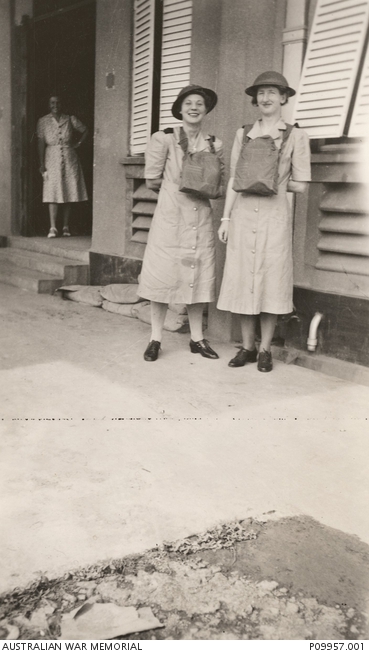
Merle was detached once again to the 2/10th AGH on 20 November. When she rejoined her unit on 13 December, the 2/13th AGH had finally moved into the psychiatric hospital in Tampoi, the 2/4th CCS had moved north to Kluang, and the Imperial Japanese Army (IJA) had invaded the Malay Peninsula and bombed Singapore.
INVASION
Soon after midnight on 8 December, a force of some 5,000 troops of the IJA had launched an amphibious assault at Kota Bharu on the Malay Peninsula’s northern coast. Four hours later, 17 Japanese bombers attacked Singapore Island. Several of the nurses at Tampoi could hear the planes droning overhead, and heard the distant explosions.
The Japanese soldiers surged down the Malay Peninsula, forcing first British and Indian troops and then Australian troops to withdraw southwards to Singapore Island. The Australian medical units followed them. By mid-January the 2/10th AGH had relocated to Oldham Hall and Manor House, by 25 January the 2/13th AGH had returned to St. Patrick’s School, and by the end of January the 2/4th CCS had moved to the Bukit Panjang English School.
On 31 January the last Commonwealth troops crossed the Causeway linking the peninsula with Singapore Island and then blew gaping holes in it. This action bought only eight days’ respite.
THE FINAL DAYS
In the daylight hours of 8 February, Japanese forces began an intensive artillery and aerial bombardment of the western defence sector of Singapore Island. They destroyed military headquarters and communications infrastructure. That night, waves of Japanese soldiers landed in small boats on the northwestern coast of the island. They were initially repelled by the Australian 2/20th Battalion and 2/4th Machine Gun Battalion, but the Japanese were too numerous and eventually overwhelmed the Australians, who could not communicate effectively with their command headquarters due to the damage caused that day.
Convoys of Australian casualties, mainly with gunshot and shrapnel wounds, began to pour into the 2/13th AGH, and surgical teams operated around the clock. Soon the hospital became so overcrowded with wounded combatants that outbuildings and even tents were used as wards. Casualties lay closely packed on mattresses on floors or even outside on the lawns, their wounds needing constant attention. Clean linen, drugs and antiseptics were running short, and, worst of all, the municipal water supply had been cut off.
ESCAPE FROM SINGAPORE
Reports of Japanese atrocities in Hong Kong and elsewhere had been circulating for some time, and already in January, Col. Derham had asked General H. Gordon Bennett to evacuate the AANS nurses from Singapore. Bennett had refused, citing the damaging effect on morale. Derham then instructed Col. Glyn White to send as many nurses as he could with Australian casualties leaving Singapore.
The nurses did not want to leave their patients; it was a betrayal of their nursing ethos, and they protested strongly. Ultimately, they had no choice, and on 10 February six nurses from the 2/10th AGH embarked with several hundred 8th Division casualties on a makeshift hospital ship, the Wusueh, bound for Batavia. The following day a further 60 AANS nurses, 30 from each of the AGHs, boarded the Empire Star with more than 2,000 evacuees, mainly British army and naval personnel, and set out for Batavia. Both ships reached Batavia, and the 66 evacuated nurses eventually made it home to Australia.
On Thursday 12 February at 5.00 pm, Merle and her 26 remaining 2/13th AGH colleagues, together with four nurses detached from the 2/4th CCS, reluctantly and sadly bid farewell to their patients at St. Patrick’s School and were taken in ambulances to St. Andrew’s Cathedral in the city centre. Here they rendezvoused with the remaining 2/10th AGH and 2/4th CCS nurses. Once assembled, the 65 nurses continued through the devastated city to Keppel Harbour. When the ambulances could go no further, they got out and walked the last few hundred metres. At the wharves there was chaos, as hundreds of people attempted to board any vessel that would take them.
VYNER BROOKE
Eventually a tug took Merle and the other nurses out to a small coastal steamer, the Vyner Brooke. As darkness fell, the ship slid out of Keppel Harbour and after some delay began its journey to Batavia. There were as many as 200 people aboard, mainly women and children, but also a number of men. Behind them, Singapore’s waterfront burned, and thick black smoke billowed high into the night sky.
During the night, Captain Borton guided the Vyner Brooke slowly and carefully through the many islands that lie between Singapore and Batavia, and at first light on Friday 13 February he sought to hide the vessel among them – the better to evade Japanese planes. That morning the nurses were addressed by Matron Dot Paschke of the 2/10th AGH, who set out a plan to be followed should the ship be attacked. Essentially, the nurses were to attend to the passengers, help them into the lifeboats, search for stragglers, and only then leave the ship themselves. Since there were not enough places in the Vyner Brooke’s six lifeboats for everybody, if they could swim they were to take their chances in the water. They did at least have their lifebelts, and rafts would be deployed too.
Saturday 14 February dawned bright and clear. After another night of slow progress through the islands, the Vyner Brooke lay hidden at anchor once again. The ship was now nearing the entrance to Bangka Strait, with Sumatra to the starboard side and Bangka Island to port. Suddenly, at around 2.00 pm, the Vyner Brooke’s spotter picked out a plane. It circled the ship and flew off again. Captain Borton, guessing that Japanese dive-bombers would soon arrive, sounded the ship’s siren. The nurses, already wearing their lifebelts, put on their tin helmets and lay on the ship’s lower deck. The captain began to zig-zag through open water towards a large landmass on the horizon – Bangka Island. Soon, the bombers appeared, flying in formation and closing fast.
The planes, grouped in two formations of three, flew towards the Vyner Brooke. The ship weaved, and the bombs missed. The planes regrouped, flew in again, and this time the pilots scored three direct hits. When the first bomb exploded amidships, the Vyner Brooke lifted and rocked with a vast roar. The next went down the funnel and exploded in the engine room. As passengers swarmed up to the open air, a third bomb dealt the ship a last, fatal blow. With a dreadful noise of smashing glass and timber, it shuddered and came to a standstill, around 15 kilometres from Bangka Island.
The nurses carried out their action plan. They helped the women and children, the oldest people, the wounded, and their own injured colleagues into the three remaining lifeboats, the first two of which got away successfully. However, the Vyner Brooke was now listing alarmingly, and as the third lifeboat was being lowered it juddered and swayed and crashed awkwardly into the water. A number of its passengers jumped out and swam, for fear that the ship might fall onto them.
After a final search, it was the nurses’ turn to evacuate the doomed ship. They removed their shoes and their tin helmets and entered the water any way they could. Some jumped from the portside railing, now high up in the air, while others practically stepped into the water on the starboard side. Some slid down ropes or climbed down ladders.
Once in the water, some of the nurses clambered onto rafts and some grabbed hold of passing flotsam. Others caught hold of the ropes trailing behind the first two lifeboats or simply floated in their lifebelts. Meanwhile, the Vyner Brooke settled lower and lower in the water and then slipped out of sight. It had taken less than half an hour to sink.
LOST AT SEA
Merle managed to reach a raft with seven other nurses, Iole Harper and Myrtle McDonald of the 2/13th AGH, Mary Clarke, Caroline Ennis, Betty Jeffrey and Matron Paschke of the 2/10th AGH, and Millie Dorsch of the 2/4th CCS. Two crew members and four or five civilian women were also on the raft, as well as two small children, a Malay boy and an English girl. Caroline Ennis was holding them. Those on board were using pieces of wood as oars, but this was having little effect. It was decided therefore that whoever was able to swim beside the raft should do so in order to lighten the load.
After many hours the current carried the raft close to shore. The evacuees saw a lighthouse and a long pier before being carried out to sea again. Later, the current carried them in again, and they saw a fire on the beach. They knew then that at least one of the lifeboats had made it to shore. During the night a storm blew up, and the raft rocked and tossed until everybody was sick. It woke the little girl, who had slept most of the time in Caroline Ennis’s arms with the little boy, and she said to Caroline, “Auntie, I want to go upstairs.”
When daylight came the raft was as far out to sea as it had been to begin with. At this point, Betty Jeffrey, Iole Harper and the two crew members took their turn to swim alongside. After making progress towards the shore, the raft was suddenly caught in a current that somehow missed the swimmers and pulled swiftly out to sea. Merle and the other nurses called out to Betty and Iole, but it was hopeless. They were now too far away and were being carried further all the time. Betty and Iole never saw their six comrades again.
Six other nurses were lost at sea when the Vyner Brooke sank. Mona Wilton of the 2/13th AGH, after just entered the water with her friend and colleague Wilma Oram, was struck on the head by a falling raft and floated away. Vima Bates of the 2/13th AGH and Kath Kinsella of the 2/4th CCS were seen fleetingly in the water before vanishing, and Nell Calnan, Jean Russell and Marjorie Schuman, all of the 2/10th AGH, disappeared without a trace.
The 53 nurses who survived the sinking of the Vyner Brooke were washed up on the shores of Bangka Island. Twenty-one of them were shot and killed by Japanese soldiers. Vivian Bullwinkel of the 2/13th AGH survived the massacre and managed to find the remaining 31, who had been interned by the Japanese. For three and a half years they were imprisoned on Bangka Island and Sumatra. Eight died during their captivity. In October 1945 the surviving 24 came home. It was only then that the grim fates of their colleagues became publicly known.
Merle’s father, Edward, had died on 1 March 1944 without ever knowing what had happened to his darling daughter. Merle’s mother, Annie, lived until 1959 and perhaps found a measure of closure with the return of the Vyner Brooke survivors.
IN MEMORIAM
Merle is remembered on the Roll of Honour at the Australian War Memorial in Canberra and on the Singapore Memorial at the Kranji War Cemetery in Singapore. Her name is inscribed on the Moonta War Memorial and on numerous honour rolls and memorial plaques across South Australia. The Annie Merle Trenerry RSL Memorial Medal is presented annually to the best player in the Yorke Peninsula Netball Association A Grade competition.
In memory of Merle.
SOURCES
- Ancestry Library Edition.
- Arthurson, L., ‘The Story of the 13th Australian General Hospital, 8th Division AIF, Malaya,’ presented by Peter Winstanley on the website ‘Prisoners of War of the Japanese 1942–1945.’
- Jeffrey, B. (1954), White Coolies, Angus & Robertson Publishers.
- National Archives of Australia.
- State Library of South Australia, ‘Almanacs and directories.’
- State Records of South Australia, ‘Passenger Lists 1845-1940.’
- Wikipedia, ‘Moonta Mines, South Australia.’
SOURCES: NEWSPAPERS
- Adelaide Observer (SA, 14 May 1904, p. 40), ‘Yorke’s Peninsula.’
- The Advertiser (Adelaide, 30 May 1929, p. 17), ‘Dance at the Wentworth.’
- The Advertiser (Adelaide, 11 Dec 1929, p. 26), ‘School of Mines and Industries.’
- The Advertiser (Adelaide, 17 Nov 1931, p. 13), ‘Successful Nurses.’
- The Advertiser (Adelaide, 6 Jun 1934, p. 13), ‘Nurses’ Board Of South Australia.’
- The Advertiser (Adelaide, 5 Mar 1935, p. 11), ‘Reports From Rural Centres.’
- The Advertiser (Adelaide, 19 Oct 1936, p. 27), ‘Our Country Section.’
- The Advertiser (Adelaide, 18 Dec 1937, p. 14), ‘Reports From Rural Centres.’
- The Advertiser (Adelaide, 21 Feb 1940, p. 23), ‘Reports From Rural Centres.’
- The Advertiser (Adelaide, 15 Aug 1942, p. 3), ‘Private Casualty Advices.’
- Chronicle (Adelaide, 6 Oct 1949, p. 26), ‘Eleanor Barbour’s Pages.’
- Daily Herald (Adelaide, 4 Jan 1924, p. 7), ‘Country Schools.’
- The Kadina and Wallaroo Times (SA, 10 Jun 1931, p. 2), ‘Moonta Jubilee Hospital.’
- The Mail (Adelaide, 22 Aug 1931, p. 2), ‘Results of Nurses’ Examinations.’
- Murray Pioneer and Australian River Record (Renmark, 2 Mar 1939, p. 13), ‘D.T.N.S. Effort At Moorook.’
- Murray Pioneer and Australian River Record (Renmark, 1 Jun 1939, p. 4), ‘Moorook Jottings.’
- Murray Pioneer and Australian River Record (Renmark, 22 Jun 1939, p. 14), ‘Moorook.’
- Murray Pioneer and Australian River Record (Renmark, 15 Feb 1940, p. 10), ‘Moorook.’
- News (Adelaide, 16 Jun 1939, p. 5), ‘Personal News.’
- Observer (Adelaide, 26 Dec 1925, p. 60), ‘Education Department.’
- The People’s Weekly (Moonta, 10 Sept 1898, p. 2), ‘Will You Come Into My Parlor?’
- The People’s Weekly (Moonta, 17 Dec 1921, p. 2), ‘Current Topics.’
- The People’s Weekly (Moonta, 24 Dec 1926, p. 2), ‘Moonta Technical School.’
- The People’s Weekly (Moonta, 4 Jun 1927, p. 2), ‘Current Topics.’
- Recorder (Port Pirie, 4 Apr 1938, p. 4), ‘News From The Peninsula.’
- Transcontinental (Port Augusta, 18 Dec 1936, p. 4), ‘Jottings From Tarcoola.’
- West Coast Sentinel (Streaky Bay, 25 Sept 1942, p. 1), ‘News From The Front Line.’
- Yorke’s Peninsula Advertiser (SA, 22 Jul 1898, p. 3), ‘Maitland Town Council.’
- Yorke’s Peninsula Advertiser (SA, 6 Jan 1899, p. 2), ‘The Moonta Concord Society’s Sea Trip.’
- Yorke’s Peninsula Advertiser (SA, 1 Feb 1901, p. 3), ‘Moonta School of Mines.’
- Yorke’s Peninsula Advertiser (SA, 13 Mar 1903, p. 3), ‘Local and General.’
- Yorke’s Peninsula Advertiser (SA, 24 Apr 1903, p. 3), ‘Local and General.’
- Yorke’s Peninsula Advertiser (SA, 15 Sept 1905, p. 3), ‘Local and General.’
 australianwarnurses.org