AANS │ Sister Group 1 │ Second World War │ 2/1st Australian Hospital Ship Manunda
EARLY LIFE
Margaret Augusta de Mestre was born on 16 November 1915 in Kalang, near Bellingen in northern New South Wales.
Margaret’s mother, Alice Isobel Morey (1890–1984), was from Tilbuster, a locality near Armidale in the New England region of New South Wales. She was one of six children born to Richard Marden Morey, who had come to Australia in 1864 and was involved in gold prospecting and mining before turning to farming.
Margaret’s father, James Augustus De Mestre (1869–1957), was born in the Shoalhaven district of southern New South Wales and was one of seven children. His paternal grandfather, Prosper Jean Charles de Mestre, was born in France in August 1789 – a month after the storming of the Bastille – and arrived in Sydney in 1818.
Alice and James were married on 18 September 1913 in Armidale. After the ceremony they left by the 7.45 pm train for the south, where their honeymoon was to be spent. When they returned they settled at Kalang, where James had acquired land and was establishing a dairy farm.
Six children were born to Alice and James over the next 11 years, of whom Margaret was the eldest. Her younger siblings were Andre, Evelyn, Helen, Alice and Richard. Unfortunately, details of Margaret’s early life are scarce. We do understand, however, that from the time that Margaret was a schoolgirl, she wanted to be a nurse.
NURSING
In 1935, at the age of 19, Margaret left home to begin nurses’ training at the Royal Prince Alfred Hospital (RPAH) in Sydney. Her aunt, Sarah de Mestre, was senior sister at the hospital. Sarah had been an Army nurse during the Great War, serving on the hospital ship Grantala in the southwest Pacific and in hospitals in the Middle East, England and France. In 1919 she was awarded the Associate Royal Red Cross for her outstanding military nursing.
Margaret graduated from the RPAH in 1938 and on 11 May 1939 gained her registration in general nursing. Later, her sisters Evelyn and Helen both became nurses too. They completed their training at Bellinger River District Hospital.
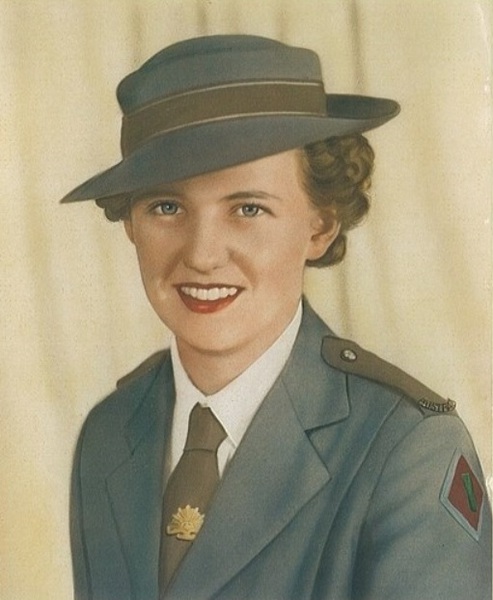
Only months after Margaret became a registered nurse, war broke out in Europe. Following in her aunt’s footsteps, she applied to join the Australian Army Nursing Service (AANS) and was accepted on 20 July 1940. She was called up for duty on 8 August and on 12 August attached to the 2/1st Australian Hospital Ship Manunda as a staff nurse.
The MANUNDA
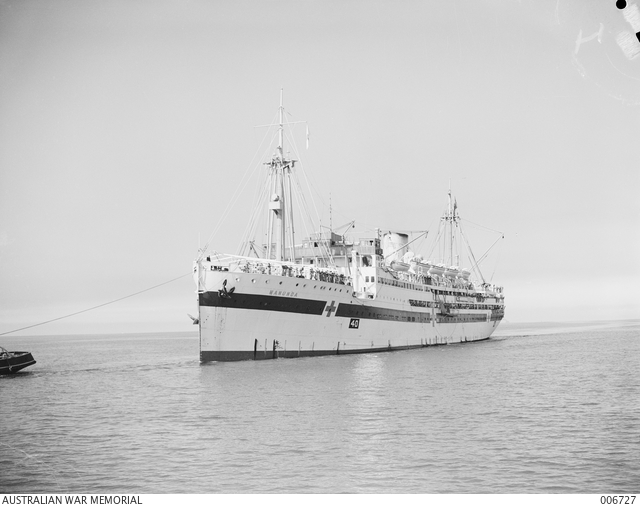
TSMV Manunda was a 9,915-ton coastal passenger ship built in Glasgow from 1927–29 for the Adelaide Steamship Co. In 1940 it was requisitioned by the Australian government, refitted as a hospital ship at Cockatoo Dock, Sydney, and on 22 July recommissioned as the 2/1st Australian Hospital Ship Manunda. The ship’s mission was to repatriate wounded Australian soldiers from the Middle East. After a trial run to Darwin, Port Moresby and back to Sydney, the Manunda was ready to sail to Suez in Egypt.
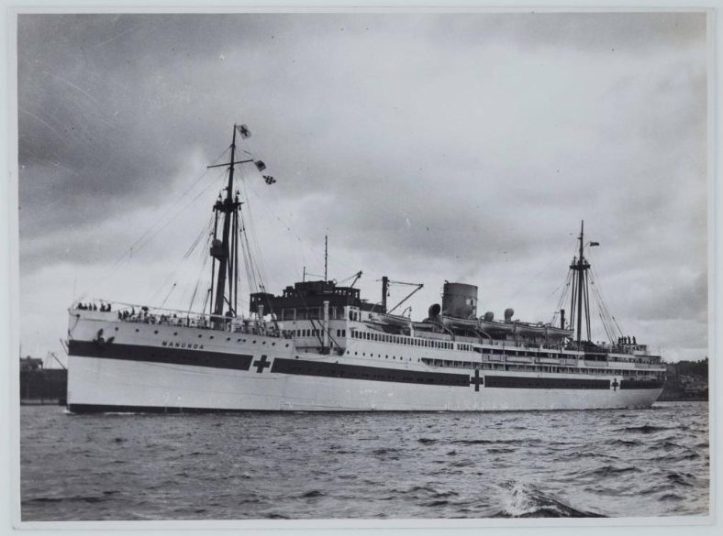
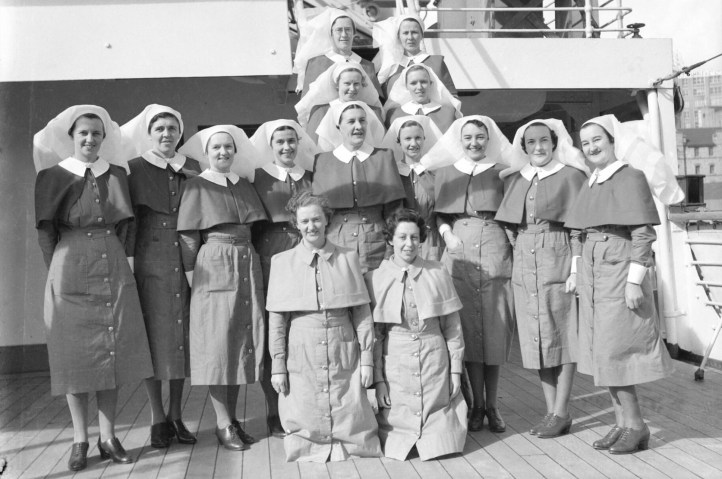
On 14 October 1940 the Manunda departed Sydney, thus commencing its first official voyage as a hospital ship. There were 13 AANS nurses on board, including Margaret, – Staff Nurse Vera Wilkinson – and two physiotherapists (usually known then as ‘masseuses’), all of whom were under the charge of Matron Clara Jane Shumack. The ship called in at Fremantle on 21 October and then continued to Colombo and Aden before arriving at Port Tewfik, the port of Suez, around mid-November.
After a relatively small contingent of some 100 wounded men was embarked, the Manunda departed Suez and arrived in Fremantle on 6 December. It proceeded to Melbourne, arriving on 12 December, and the casualties were disembarked. The ship then continued to Sydney and arrived on 16 December.
Margaret was granted leave from 18 to 26 December. The following day, 27 December, she departed Sydney for her second voyage on the Manunda. Sailing once again via Fremantle, Colombo and Aden, the Manunda arrived at Port Tewfik at the end of January. Margaret was granted more leave from 29 January to 4 February 1941 and again from 12 February to 16 February.
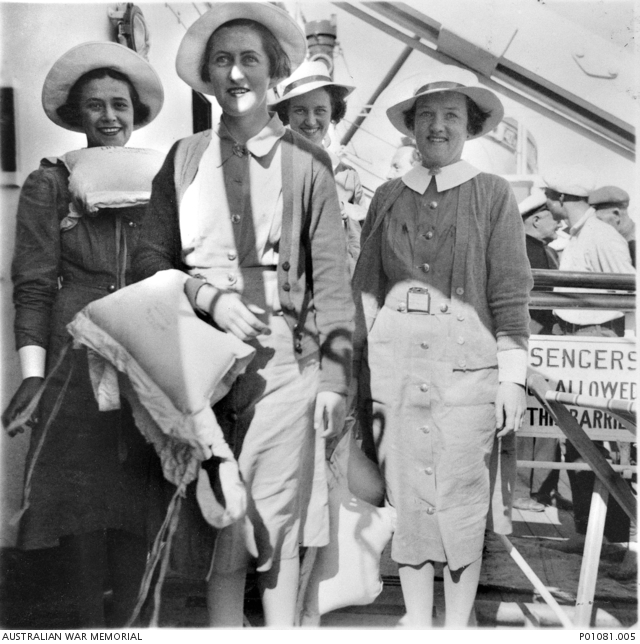
The Manunda departed Suez in mid-February with many more casualties than were carried the first time. After arriving at Fremantle on 4 April, the ship reached Melbourne on 10 April, where the casualties were disembarked, and finally Sydney on 12 April.
After some minor refitting work was carried out, the Manunda departed for the Middle East once again on 22 April, and once again Margaret and her colleagues were on board. After embarking another contingent of Australian casualties in Suez, the ship returned to Sydney on 24 June, and Margaret went on leave.
Margaret sailed for a fourth time between 18 July and 17 September. After arriving back in Sydney, she was granted leave from 19 September to 3 October. At this point the Manunda was laid up for reconditioning, and when Margaret returned from leave, she and a number of the other nurses from the ship were detached to the 113th Australian General Hospital at Concord, in Sydney. Matron Shumack was posted to the Wallgrove Army Camp.
Having been promoted to the rank of sister, Margaret rejoined the Manunda on 29 December 1941. On 7 January 1942 the ship sailed from Darling Harbour to Darwin, arriving on 14 January. For the next five weeks those on board the ship undertook routine tasks and practised evacuation procedures. The medical staff visited facilities run by the 119th AGH, which maintained hospitals at Bagot and Berrimah, as well as a number of beds at Kahlin Hospital (the civilian hospital). They watched the build-up of activities in and around the town and were shocked at the news of the fall of Singapore on 15 February. Four days later Darwin itself came under attack.
THE ATTACK ON DARWIN
At around 10.00 am on 19 February 1942, Darwin was attacked by successive waves of Japanese bombers, accompanied by fighter escorts – up to 188 planes in total. The main objective of the raid was to damage ships and port facilities in Darwin Harbour, and nine vessels were sunk and 10 or more damaged. Among the ships to sink was the Zealandia, which had carried Australian 8th Division troops – and AANS nurses – to Malaya in 1941. The military and civil airfields were also attacked, along with the army barracks and oil store. The town itself sustained serious damage; a direct hit by one of the first bombs killed six women and three men at the post office. Darwin’s air-raid sirens were not sounded before the attack, and for 30 minutes bombs fell relentlessly in the brilliant morning glare. At around 10.30 am the planes finally flew away, leaving palls of black smoke hanging over the harbour and the town.
At 10.25 am, just a few minutes before the raid was over, the Manunda received a direct hit. A bomb had fallen through the music room skylight, just missing the bridge, and exploded on B and C decks, causing heavy damage and casualties. One of the aid-posts was hit, the medical and nursing staff quarters were totally destroyed, and many fires broke out. This was followed by strafing and by a near miss next to No. 4 hatch on the port side, which punched 76 holes in the ship’s plates and sprayed shrapnel across the decks, killing four people and causing further damage.
Seven members of crew and three military staff were killed outright or died shortly after the attack and 32 were seriously injured.
Among the dead was Margaret. She had been hit in the back and abdomen by flying shrapnel, and died instantly from her injuries. One of her colleagues, Sister Lorraine Blow, was seriously injured.
The 10 were landed for burial at 8.00 am on the morning of 20 February, along with casualties from other ships who had been treated subsequently on the Manunda and had died.
The ultimate fate of Margaret’s remains is unclear. It is claimed that the bodies that were landed were subsequently collected and buried at sea, but there is also evidence suggesting that they were buried on land after all. We will perhaps never know.
More than 250 people died in the raid on Darwin that morning, and hundreds more were injured. A second raid at around noon on the same day targeted the Darwin RAAF base, causing substantial damage but only light casualties. Japanese raids of decreasing severity continued throughout the year.
Margaret’s name is inscribed on the Northern Territory Memorial in the Adelaide River War Cemetery, south of Darwin.
We will not forget her.
SOURCES
- National Archives of Australia, ‘SP290/2 HMAS Manunda official log book 20 September 1941–5 November 1942.’
- Naval Historical Society of Australia, ‘Some Truths About Darwin and the Air Raid – 19 Feb 1942’ (article by Captain Thomas Minto, 9 Jun 2002).
- Oz at War (website), ‘Hospital Ship 2/1 HMAHS Manunda in Australian Waters During WW2.’
- Wikipedia, ‘Bombing of Darwin.’
- Wikipedia, ‘Manunda.’
SOURCES: NEWSPAPERS
- The Armidale Chronicle (NSW, 27 Sept 1913, p. 4), ‘Local and General News.’
- Daily Examiner (Grafton, 20 May 1932, p. 4), ‘Personal.’
- Daily Mirror (Sydney, 27 Mar 1942, p. 2), ‘Bombs, Bullets Could Not Keep Nurses on Manunda from Duty.’
- Lithgow Mercury (NSW, 11 Dec 1944, p. 2), ‘Personal.’
- The Raleigh Sun (Bellingen, 12 Oct 1906, p. 5), ‘Land Matters.’
- The Sun (Sydney, 1 Mar 1942, p. 3), ‘She Has Died for Australia.’
- The Sun (Sydney, 6 Dec 1942, p. 21), ‘Death at Darwin.’
- The West Australian (Perth, 13 Mar 1942, p. 3), ‘Killed In Action.’
 australianwarnurses.org