AANS │ Lieutenant │ Second World War │ 1st Netherlands Military Hospital Ship Oranje & 2/3rd Australian Hospital Ship Centaur
EARLY LIFE
Margaret Lamont Adams was born on 8 December 1913 in East Malvern, an eastern suburb of Melbourne. She was the daughter of Gertrude Margaret Cranstoun (b. 1885) and Thomas Lamont Adams (1880–1935), a prominent solicitor. Gertrude and Thomas were married in 1911 and lived at 68 Paxton Street in East Malvern.
Margaret had an older brother, Thomas Cranstoun Adams (1912–1939), and a younger sister, Jean (Jeanie) Campbell Adams (1917–1992).
In August 1922, eight-year-old Margaret was exposed to a terrible domestic tragedy. On the night of 13 August, her maternal uncle Dr George Elliot Cranstoun, of Hampton, a bayside suburb of Melbourne, injected his five children, his wife, and his wife’s young lady companion with what he claimed to be an influenza vaccine. It was in fact morphia. Then he injected himself. His three sons, John, Robert and Colin, along with Miss Gladys Baylis, died that night, while George Cranstoun died in hospital the next day. His wife, Jessie, and his two daughters, Margaret and Bella, survived. The three boys were buried on 15 August at Brighton Cemetery. The funeral procession left from the Adams household on Paxton Street. George Cranstoun was buried the following day alongside his sons. Later, a still-distraught Jessie Cranstoun came to stay with Gertrude and Thomas while arrangements were made to sell her late husband’s practice.
In time Margaret completed her primary schooling and moved onto high school. She gained her Intermediate Certificate in December 1929 and her Leaving Certificate in December 1930. After finishing school, she made many holiday visits to Bacchus Marsh to see her maternal aunt, Adeline Taylor.
NURSING
In due course Margaret decided upon a career in nursing and began her training at the Children’s Hospital in Melbourne. In April 1936 she passed her final Nurses’ Board examination and 1 May gained her registration. Later, Mrs. Picott of the Children’s Hospital would describe Margaret as one of the hospital’s best nurses. After finishing at the Children’s, Margaret nursed at the Women’s Hospital and at St. George’s Hospital in Kew, where she undertook midwifery training, passing her final examination in March 1941.
Meanwhile, on 1 July 1935 Margaret’s father Thomas had died at home. His funeral was held the next day at Burwood Cemetery. On 22 January 1939 her brother, Thomas, died.
ENLISTMENT
With the onset of war, Margaret joined the Australian Army Nursing Service (AANS) and on 2 June 1941 attested for home service with the Citizen Military Forces. Five months later, on 13 November, she was seconded to the 2nd Australian Imperial Force and appointed to the rank of staff nurse.
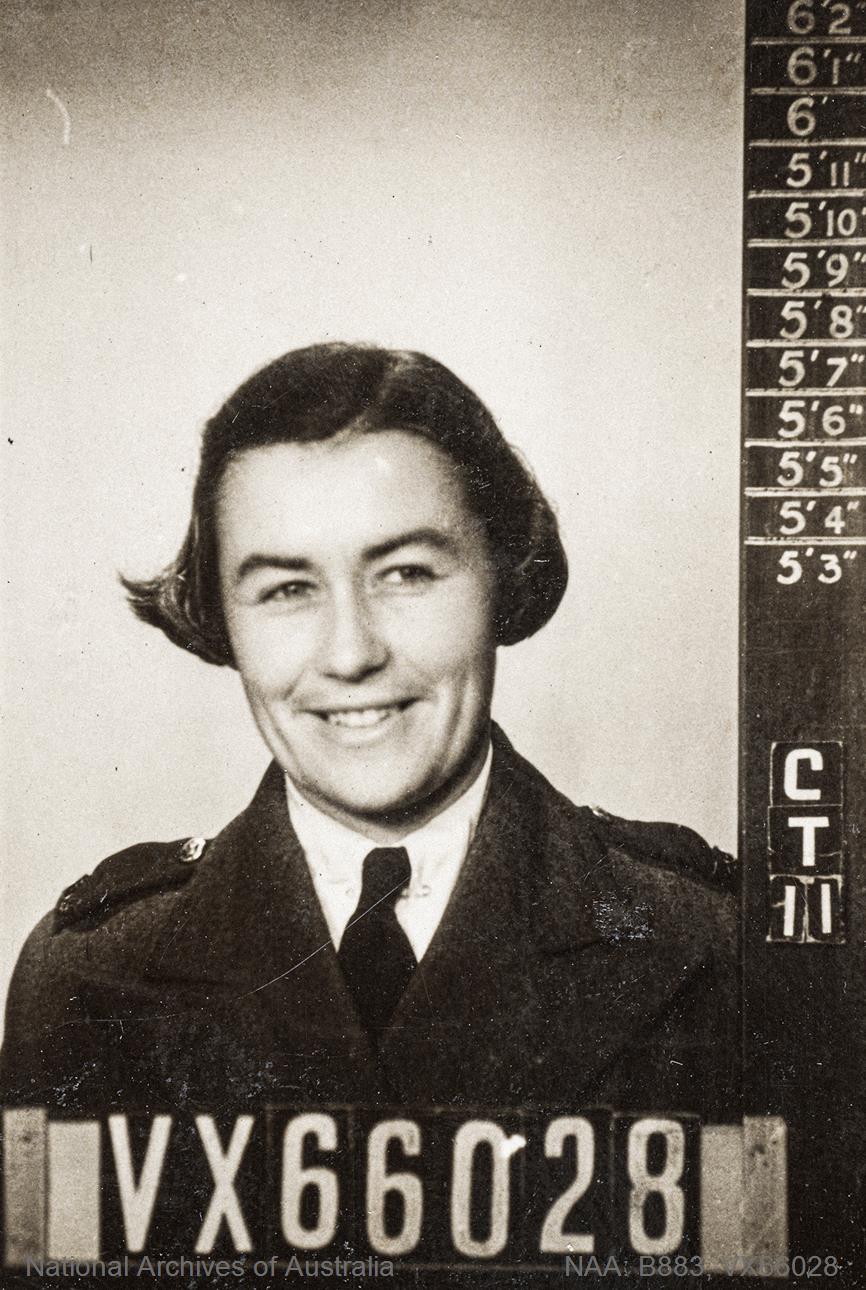
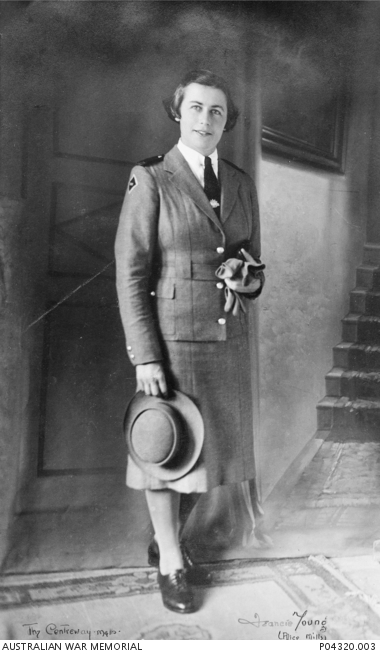
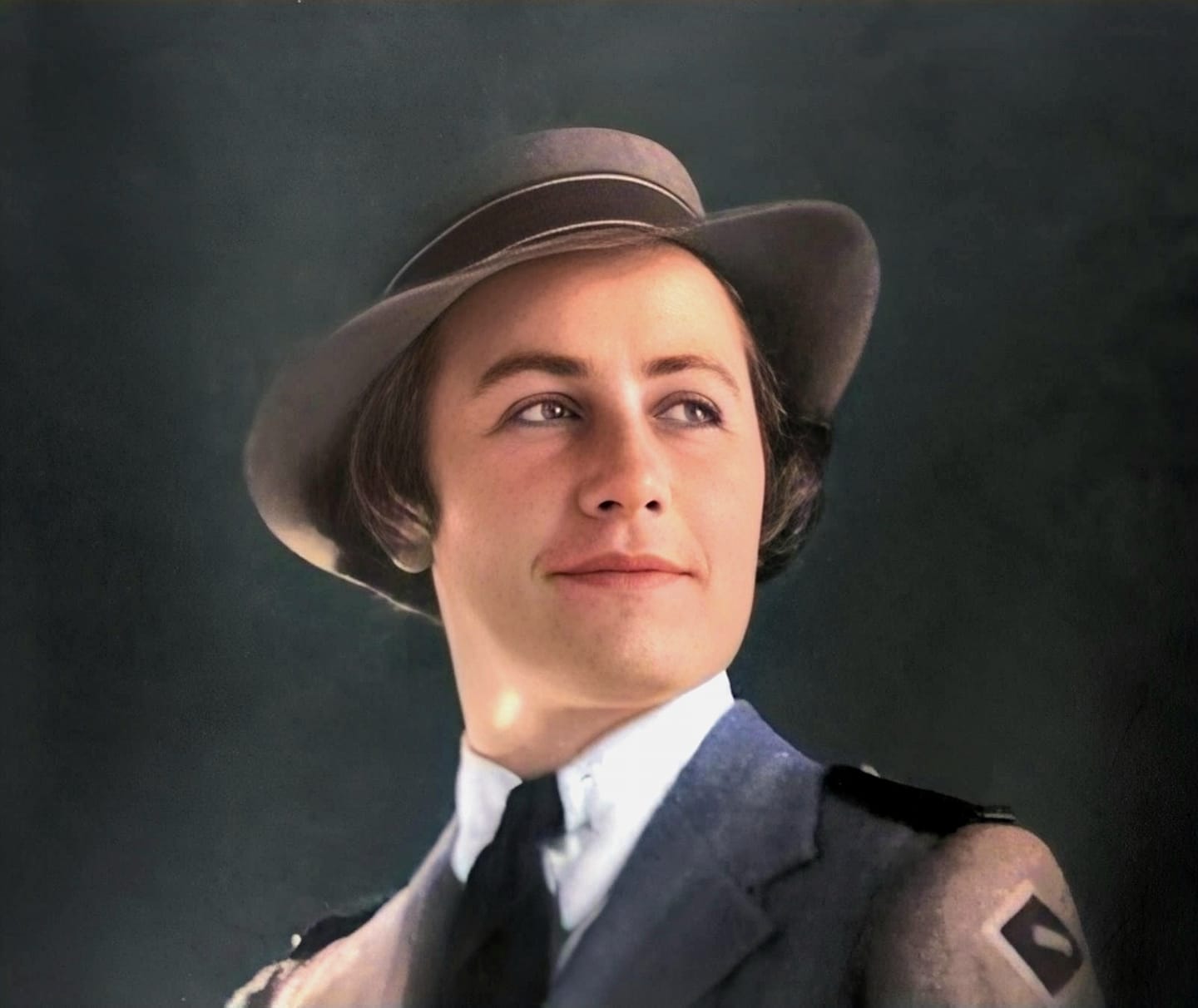
On 17 November Margaret was detached to the 21st Australian Camp Hospital in Dandenong, an outer eastern suburb of Melbourne. She became well known at the Club Hotel, where she stayed during her posting.
Margaret had been earmarked for service on a hospital ship and from 26 November to 3 December was granted pre-embarkation leave. Presumably she returned to Dandenong at the completion of her leave.
In 22 January 1942 Margaret said goodbye to her colleagues and friends at Dandenong and travelled to the Lady Dugan Nurses’ Hostel on Domain Road in South Yarra, an inner suburb Melbourne. Here she met Staff Nurses Kathleen Gardner, Lorna Green, Eileen Rutherford and Jenny Walker. The five nurses had been detailed for duty aboard the hospital ship Oranje and were due to embark in six days’ time.
THE ORANJE
Originally a luxurious Dutch passenger liner, the Oranje had been forced to remain in the Netherlands East Indies (NEI) following the German invasion of the Low Countries in May 1940. In February 1941 the NEI government offered the vessel to the Australian and New Zealand governments for use as a hospital ship, and after sailing to Sydney to be refitted, the vessel was recommissioned in June as the 1st Netherlands Military Hospital Ship Oranje. Staffed predominantly by Dutch medical personnel, in the latter half of 1941 the Oranje completed two voyages to the Middle East to repatriate wounded and ill Australian and New Zealand soldiers. However, following the Japanese invasion of Southeast Asia and the southwest Pacific, the Dutch staff were ordered to return to the NEI, and Australians and New Zealanders were recruited to take their places.
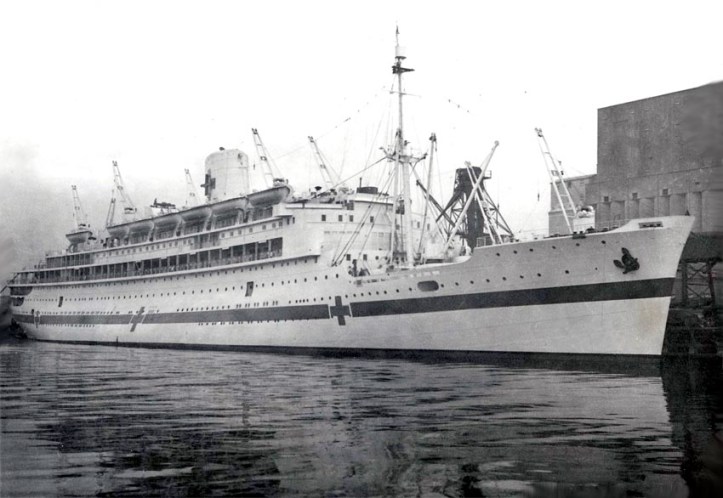
On 28 January Margaret, Kathleen Gardner, Lorna Green, Eileen Rutherford and Jenny Walker were transported to Port Melbourne, where they boarded the Oranje. The previous day the ship had set out from Sydney on its third voyage. Among its medical staff were 15 Voluntary Aid Detachments recruited from the 113th Australian General Hospital (AGH) in Concord, Sydney, and six AANS nurses – Matron Anne Jewell, Sister Mary McFarlane, and Staff Nurses Betty Glasson, Cynthia Haultain, Eva King and Ruth Lindsay.
That afternoon the Oranje left Port Melbourne and after stopping in Fremantle sailed directly to Aden. Due to the Japanese invasion of Southeast Asia and the southwest Pacific, the ship had avoided the usual route, which generally included stops at Colombo and/or Bombay. From Aden the Oranje continued as usual to Port Tewfik, the port of Suez, Egypt, where more than 600 Australian and New Zealand patients were embarked. The Oranje returned to Sydney on 9 March, having disembarked patients in Fremantle, Port Adelaide and Melbourne en route.
The Oranje commenced its fourth voyage on 24 March. On board once again were Margaret, Matron Jewell, Sister Mary McFarlane, and Staff Nurses Kathleen Gardner, Betty Glasson, Lorna Green, Cynthia Haultain, Eva King, Ruth Lindsay, Eileen Rutherford and Jenny Walker. They were joined by Sister Estelle Davis and Staff Nurse Nell Savage. This time the ship sailed across the Indian Ocean to South Africa, and after drydocking in Simonstown, sailed up the east African coast to Egypt. After embarking more Australian and New Zealand casualties in Port Tewfik, the Oranje sailed back to Sydney, crossed the Tasman Sea to Wellington, and then returned to Sydney in early June.
On 20 August, between voyages, Margaret was posted to the Camp Hospital at Ingleburn, on the southwestern fringes of Sydney. She was now at the rank of sister, having been promoted on 17 July.
The Oranje departed Sydney on its fifth voyage on 6 November. Kathleen Gardner and Lorna Green had now been posted elsewhere, and Margaret and the other nurses were joined by Staff Nurse Elizabeth Smith, Sister Phyllis Vickers and Lieutenant Winsome Zouch, a physiotherapist who had previously served with the 2/10th AGH in Malaya and had been evacuated from Singapore on the Empire Star just before the island fell to the Imperial Japanese Army.
From Sydney the Oranje sailed to Fremantle and then to Port Tewfik, where 644 British, South African and other Allied casualties were embarked and transported to Durban. On 11 December the Oranje sailed from Durban back to Port Tewfik on its sixth voyage, arriving 22 December. After embarking 632 Allied casualties, the ship returned to Durban.
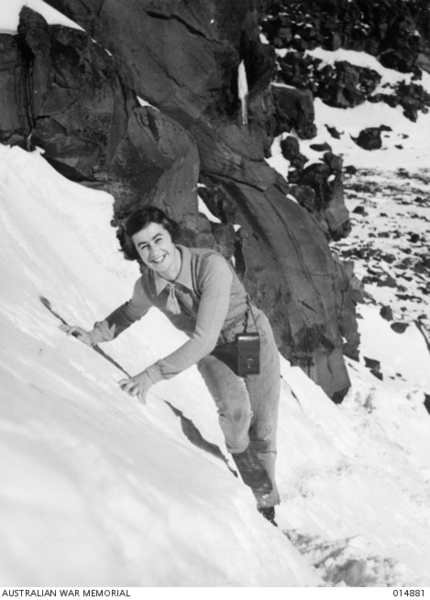
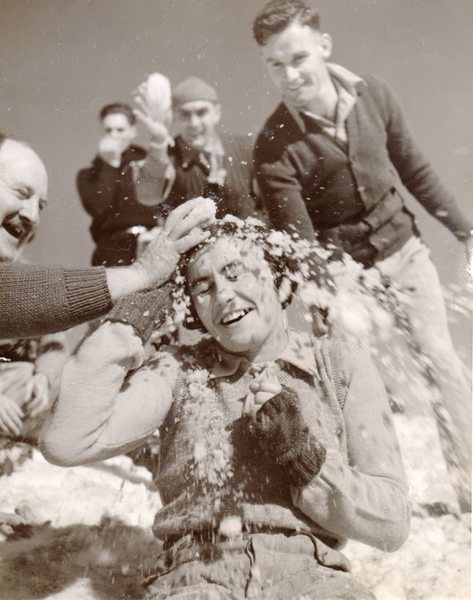
The Oranje’s seventh voyage – Margaret’s fifth – began on 6 January 1943. From Durban the ship sailed once again to Port Tewfik, picked up 644 Australian and New Zealand patients, and headed to New Zealand, bypassing Australia. The ship arrived at Wellington Harbour on 5 February. After the New Zealand patients were disembarked, the Australian nurses were permitted day leave. Margaret was among a group of staff granted a three-day trip to the snow courtesy of the New Zealand government. After 16 days, the Oranje departed Wellington, and after diversions to Adelaide and Melbourne, arrived in Sydney at 8.00 am on 1 March.
THE CENTAUR
The completion of the voyage on 1 March marked the end of the Australian association with the Oranje. The Australian staff were urgently required in Australia and New Guinea and were withdrawn, to be replaced by New Zealanders. Although the Australians were disappointed, two weeks later many of them, including eight of the nurses – Margaret, Cynthia Haultain, Eva King, Eileen Rutherford, Nell Savage, Jenny Walker (all of whom had now also been promoted to the rank of sister), Mary McFarlane and Matron Anne Jewell – were attached to another hospital ship, the 2/3rd Australian Hospital Ship Centaur.
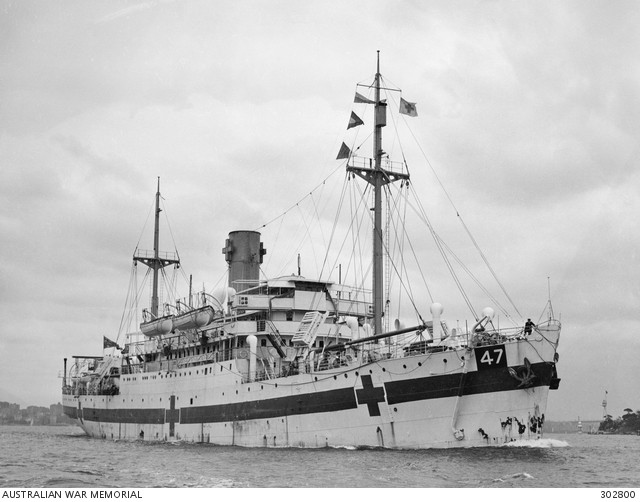
On 17 March Margaret and her seven Oranje colleagues boarded the Centaur in Sydney. They were joined by Sisters Myrle Moston, Alice O’Donnell, Edna Shaw and Joyce Wyllie. The Centaur was on a trial run, having come up from Melbourne, and four days later it departed for Brisbane, then on to Townsville to collect Australian casualties repatriated from New Guinea. The Centaur carried them back to Brisbane and then sailed north to Port Moresby, picked up more Australian wounded, and returned to Brisbane, arriving on 18 April. The Centaur’s effectiveness as a hospital ship had now been demonstrated.
THE FINAL VOYAGE
On the morning of 12 May 1943 the Centaur departed Sydney for New Guinea. The ship was tasked with transporting 193 members of the 2/12th Field Ambulance to Port Moresby and then embarking Australian casualties for repatriation. Among the medical staff on board were Margaret and her 11 colleagues.
On the evening of the 13 May, while the Centaur was off the northern New South Wales coast, a party was held for Matron Annie Jewell, whose birthday it had been two days earlier. A special menu was served at dinnertime and then a birthday cake brought out for her, with ‘Happy Birthday from the Centaur’ written in pink across it. It was a most enjoyable evening.
By early the next morning the Centaur was passing North Stradbroke Island off the southern Queensland coast. At 4.10 am, while most of those on board were asleep, a Japanese torpedo slammed into its hull – despite the fact that the ship was fully illuminated and marked with the red cross. The Centaur exploded in a huge ball of fire and sank within three minutes.
A total of 268 people perished in the fireball or subsequently drowned, including Margaret and 10 of her AANS colleagues. Of the nurses, only Nell Savage survived. She earned the George Medal for the courage and devotion to duty she demonstrated in the aftermath of the sinking. She and the other survivors clambered onto anything that floated and were rescued 36 hours later.
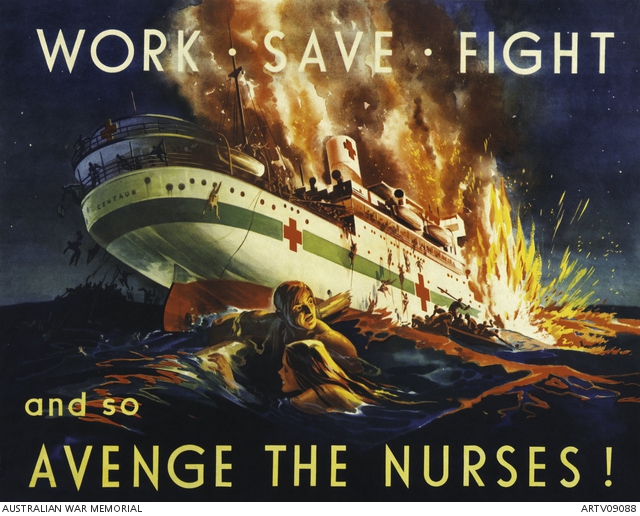
The tragedy of the Centaur was felt deeply by all Australians and touched many personally. People felt outrage and grief in equal measure, and hundreds of ‘in memoriam’ notices appeared in newspapers throughout the country.
In memory of Margaret.
SOURCES
- Ancestry.
- Goodman, R. (1992), Hospitals Ships, Boolarong Publications.
- Goossens, R., SS Maritime (website), MS Oranje.
- Howlett, L. (1991), The Oranje Story, Oranje Hospital Ship Association.
- Milligan, C. and Foley, J. (1993), Australian Hospital Ship Centaur: The Myth of Immunity, Nairana Publications.
- National Archives of Australia.
- Sebire, I., ‘Oranje,’ Shipping Today and Yesterday (14 Sept 2021).
SOURCES: NEWSPAPERS
- The Age (Melbourne, 20 Mar 1931, p. 12), ‘The University.’
- The Argus (Melbourne, 2 Apr 1936, p. 4), ‘Nurses’ Examinations.’
- The Argus (Melbourne, 22 May 1943, p. 10), ‘Nurses In Central Australia.’
- The Australasian (Melbourne, 29 May 1943, p. 18), ‘Spotlight On Society: Nurse’s Bravery In Hospital Ship.’
- The Bacchus Marsh Express (22 May 1943, p. 3), ‘Victims Of Japanese Atrocity.’
- The Herald (Melbourne, 14 Aug 1922, p. 1), ‘Doctor’s Family Drugged.’
- The Herald (Melbourne, 15 Aug 1922, p. 1), ‘Mrs. Cranstoun’s Story of Hampton Tragedy.’
- The Herald (Melbourne, 15 Jul 1935, p. eight), ‘Mr. T. L. Adams’s Funeral.’
- News (Adelaide, 13 Dec 1940, p. 6), ‘Lady Dugan’s Nurses’ Hostel.’
- The Sun News-Pictorial (Melbourne, 13 Mar 1941, p. 35), ‘Midwifery Exams.’
- Sunshine Advocate (Melbourne, 13 Aug 1943, p. 1), ‘Memorial to Centaur Victim.’
 australianwarnurses.org