AANS │ Lieutenant │ Second World War │ New Guinea
EARLY LIFE
Lillian Winifred Smith, known as Lily, was born in Herberton, northern Queensland, on 30 October 1919. She was the fifth of eight children born to Ivy Dorothy Cross (1893–1965), from Charters Towers, Queensland, and Samuel Jackson Christopher Smith (1872–1952), from Bowen, Queensland.
Ivy and Samuel were married on 27 November 1911 and lived on a property known as ‘Lilyvale’ in the locality of Wondecla, south of Herberton, where Samuel worked as a farmer.
The Smiths began their family in 1912 with the birth of Valrie. She was followed by Christopher in 1913, Samuel in 1915, Walter in 1917, and Lillian in 1919.
Around the time of Lily’s birth, the family moved to Ellie Street in Herberton to live in the house of Samuel’s late father, Walter Smith, a medical practitioner, who had passed away in March 1919.
In Herberton three more children were born to Ivy and Samuel, Eunice in 1921, Noel in 1924, and Leslie in 1926.
SCHOOL AND NURSING
From around July 1925 to the December 1935, Lily attended Herberton State and High School (as it was then known). She gained her Intermediate Certificate and after leaving school studied shorthand, typing and bookkeeping.
In due course Lily decided to go into nursing. It is perhaps unsurprising, given that her paternal grandfather had been a doctor and her sister Valrie was on her way to becoming a triple-certificated nurse.
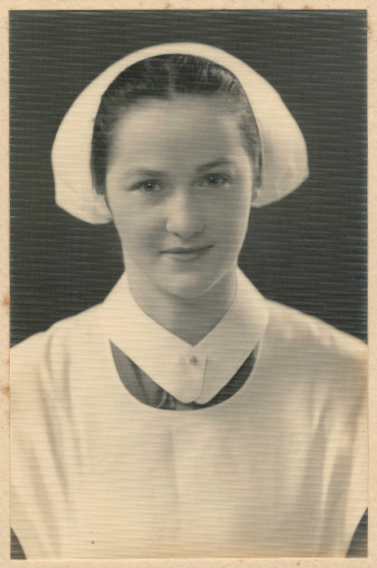
Lily secured a traineeship at the Cairns District Hospital, where Valrie had trained, and after gaining her certificate became registered in general nursing on 5 February 1942. She then undertook obstetric training at King George V Memorial Hospital in Sydney.
ENLISTMENT
In 1940, while Lily was still training at Cairns, her sister Valrie had joined the Australian Army Nursing Service (AANS). She was mobilised in 1941 and in August that year sailed with the 2/13th Australian General Hospital (AGH) to Malaya. On 12 February 1942, seven days after Lily became a registered nurse, Valrie was evacuated from Singapore with 64 AANS colleagues on the Vyner Brooke. The ship was sunk by Japanese aircraft two days later and scores of passengers, among them Valrie and 31 other nurses, were taken captive by the Japanese. Twelve of Valrie’s colleagues were lost at sea, and 21 were shot on Bangka Island.
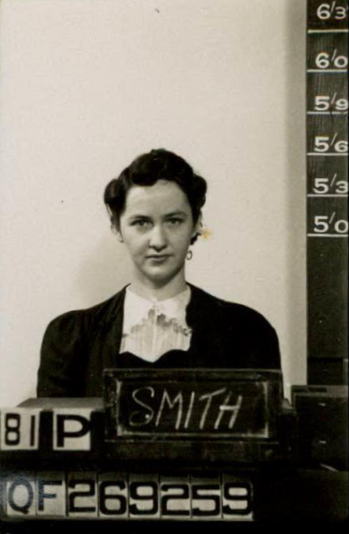
Lily and the other members of the Smith family heard nothing about Valrie’s fate until March 1943, when her name and those of her comrades were broadcast over Tokyo radio. By then Lily herself had joined the AANS, inspired perhaps by Valrie. After being mobilised she enlisted in the Australian Military Forces on 21 January 1943 and was posted (possibly on 24 February) to the 117th AGH in Toowoomba, southern Queensland, at the rank of staff nurse. On 23 March, when all AANS nurses were commissioned as officers, Lily became a lieutenant, although it remained common practice to address nurses as ‘sister.’
117TH AUSTRALIAN GENERAL HOSPITAL, TOOWOOMBA
The 117th AGH had been raised in January 1942 in response to the threat to Australia posed by the Imperial Japan Army, which was advancing into Southeast Asia and the southwest Pacific. Already that month a Japanese invasion force had landed at Rabaul on the island of New Britain in the Australian-mandated Territory of New Guinea and had quickly overcome a small Australian force. The towns of Lae, the capital of the Territory of New Guinea, and nearby Salamaua had fallen in March, and in early May Japanese forces had tried to take Port Moresby, the capital of the Australian-mandated Territory of Papua, from the sea, but were repelled by combined Australian and American forces.
In July Japanese forces began an overland push towards Port Moresby, advancing south over the Owen Stanley Range along the Kokoda Track, and by mid-September were approaching the town. However, with their supply lines stretched thin and their attention turning to Guadalcanal, the Japanese were forced to turn back, and were followed north along the Kokoda Track by a determined Australian counterthrust.
Many Australian casualties resulted from the Kokoda campaign. From advance aid posts close to the fighting, they were taken to dressing stations and then walked or were carried by locals to clearing stations. Here they either waited until air evacuation became possible or, if they were able, hobbled back down the Kokoda Track to Port Moresby. When the Australians retook the town of Kokoda in November, air evacuation opened, and many hundreds of casualties were finally cleared.
Many of these casualties arrived at the 117th AGH, which had set up in two schools in Toowoomba – Downlands College, which housed the hospital’s medical division, and Glennie Memorial School, which housed the surgical division and headquarters. The nurses assigned to Downlands quickly adapted themselves to the treatment of malaria, dengue, dermatitis and other tropical diseases, while those at Glennie treated many horrific battle injuries.
2/7TH AUSTRALIAN GENERAL HOSPITAL, LAE
The duration of Lily’s posting to the 117th AGH remains unknown. However, towards the end of 1944 she was seconded to the 2nd Australian Imperial Force (AIF) and in December posted to the 2/7th AGH, based in Lae. It is likely that she arrived on the SS Taroona and may have departed Townsville on 27 November, arriving in Lae on 1 December.
The male staff of the 2/7th AGH had arrived at Buna on the Papuan coast at the northern end of the Kokoda Track in August 1943, while the nurses of the unit under the charge of Matron Frances Johns arrived in Port Moresby in September, where they relieved the nurses of the 2/9th AGH.
Towards the end of 1943, after Lae had been retaken by Australian troops, an Australian engineering team with local help began to prepare a site for the 2/7th AGH 12 kilometres inland from Lae on the banks of the Busu River. In early January 1944 the men of the 2/7th AGH began to proceed from Buna to Lae with the hospital’s equipment, and soon after the first contingent of nurses under Matron Johns arrived from Port Moresby. By the end of January the 2/7th AGH was ready to receive patients, and the first 70 were admitted on 2 February. Another contingent of nurses arrived on 15 February and the final contingent on 20 March. By then the hospital had more than 1,200 patients. 1,252 beds were occupied.
The surgical nurses treated combat injuries while the medical nurses treated the same range of tropical diseases as had their counterparts at the 117th AGH – dengue fever, malaria, dermatitis, but also a terrible incurable condition known as ‘scrub typhus,’ caused by ticks that lived in the long grass of New Guinea.
Ward 5
The nurses also treated what was known as ‘mental breakdown,’ attributable to battle fatigue, stress, the debilitating climate, as well as other factors. When Lily arrived in December 1944 it appears that she was assigned to Ward 5, the psychiatric ward, where she would have looked after many of these patients. Lieutenant Barbara Lott, who was posted to the 2/7th AGH between January and July 1945, later wrote about the nurses’ experience in the psychiatric ward for the book Lighter Shades of Grey and Scarlet:
It is of Ward 5, the psychiatric ward, that I write, and it is mostly laughter rather than sadness that comes to mind.
We were stationed with the 2/7th AGH at Lae in New Guinea, and to us came all the misfits for whom mentally the War was just too much, from the forward areas where the Australians were subduing fanatical pockets of resistance, while the Americans ‘leap-frogged’ to glory, and to be just, in many, many cases, death.
A CCS or Camp Hospital was no place for men who ran the entire gamut of psychiatric ills, right through to manic depressives and schizophrenics. We, therefore, were the first Hospital to which they could be sent, and our job was to treat them, talk to them, feed them up, and send them South for, we hoped, rehabilitation in Australia, and return to civilian life.
They were so very young; somehow there is great pathos in a mind deranged by forces too great for its capacity, if possible more so than by physical maiming. Our weapons were few, tranquillizers and shock therapy, mainly by intravenous injections of cardiazol, and later, very progressive Electric Convulsive Therapy.
The thatched, gauze-wired Wards were cruciform; at one side the open ward and beyond it treatment rooms, on the other security cells and exercise yards, whilst the central arm contained administration and ablution blocks. The security cells housed those who were dangerous both to themselves and others. I recall that Paraldehyde, orally or otherwise, was our staple quietener.
One man vividly comes to mind, a barrister in civil life and a heroin addict; and my utter shock and disbelief at the tormented animal at which I now gazed. We were young and our experiences had not prepared us for situations such as these. The Orderlies didn’t really think that we should see such scenes either or indeed come near the ablution block, particularly their Sergeant, a splendid man who had been at Ballarat Mental Hospital. He could practically have run the ward without us and could have been trusted to do so, but some of the orderlies with similar ideas, in those days of male ‘superiority’ had to be handled rather firmly and made to realise that the ‘pips’ on our shoulders weren’t there as pretty ornaments.
We tried to keep things light. David Ross was our marvellously humane and very funny MO, and Vi. Smith, when Night Sister started a most hilarious report book; there was always a rush to read this, from David not least of all. Very pretty Vi, alas, fell victim to a form of leukaemia widely believed at the time to be caused in some by the mandatory Atebrin (as did one other girl); and died at Greenslopes Hospital in Brisbane. I well remember her jokingly showing a scattering of bruises to David, and our rather ribald jokes trailed away to silence as he ordered her to report sick immediately. That was the second daughter to be lost by her mother, a widow, the other being a Japanese POW, but I am not sure whether she eventually returned.
Despite the fact that Lily is rather curiously called ‘Vi,’ there can be little doubt that it was she about whom Barbara Lott was so poignantly writing.
DEATH AND FUNERAL
In May 1945 Lily was invalided home to Queensland and died on 17 June at Greenslopes. On 19 June a funeral service was conducted at the Funeral Chapel on Wickham Street in Fortitude Valley, Brisbane by an army chaplain. At 2.30 pm the cortege left the chapel for Lutwyche Cemetery, where Lily was buried. Her funeral was attended by Colonel K. B. Fraser, DDMS; Captain M. Hancock, representing the Principal Matron, Queensland Lines of Communication Area (Miss J. Abbott); and nurses from metropolitan units.
In memory of Lily.
SOURCES: OTHER
- Ancestry Library Edition.
- Australian War Memorial, ‘Capture of Lae.’
- BirtwistleWiki (website), ‘2/7th Australian General Hospital.’
- BirtwistleWiki (website), ‘HMT Taroona.’
- The Glennie School, ‘Glennie Archives: The History of the Glennie Preparatory School.’
- Woodward (née Lott), B., ‘Fragments from New Guinea,’ in Guthrie, S. and Clark, J. (eds., 1985), Lighter Shades of Grey and Scarlet, Gillingham Printers Pty. Ltd.
- Monument Australia (website), ‘117th Australian General Hospital & No. 1 Australian Orthopaedic Hospital.’
- National Archives of Australia.
- Walker, A. S. (1961), Second World War Official Histories, Australia in the War of 1939–1945, Series 5 – Medical, Vol. IV – Medical Services of the Royal Australian Navy and Royal Australian Air Force with a section on women in the Army Medical Services, Part III – Women in the Army Medical Services, Chap. 36 – The Australian Army Nursing Service (pp. 428–76), Australian War Memorial.
- Wikipedia, ‘New Guinea campaign.’
- Wilson, J. W. (2000), Echoes of the Past: 2/7th Australian General Hospital Diamond Jubilee 1940–2000, published by John W. Wilson.
SOURCES: NEWSPAPERS
- The Cairns Post (Qld., 20 Jul 1925, p. 9), ‘News Of The North.’
- The Cairns Post (Qld., 11 Dec 1935, p. 9), ‘Herberton State and High Schools.’
- Courier-Mail (Brisbane, 20 Jun 1945, p. 6), ‘Death of Army Nursing Sister.’
- The Telegraph (Brisbane, 19 Jun 1945, p. 4), ‘Death of Army Sister.’
 australianwarnurses.org