Staff Nurse │ Second World War │ Mandatory Palestine │ 2/5th Australian General Hospital
FAMILY BACKGROUND
Jean Margaret Gay was born on 18 September 1914 in Chatswood, Sydney. She was the youngest child of Isabella Wearing Gall (1879–1952), from Ipswich in Queensland, and Charles Emanuel Humbert Gay (1879–1933), from Tamworth in New South Wales.
Isabella and Charles were married in 1906 and resided in or near the eastern Sydney suburb of Waverley, where their first child, Isobel Ewing Gay, was born in 1907. The family then moved to Mowbray Road in West Chatswood, where three more children were born – Eric Ian Gay in 1910, Roy Keith Gay, known as Keith, in 1912, and Jean.
SCHOOL AND NURSING
Little is known of Jean’s early life. She was educated at Pymble Presbyterian College, just north of Chatswood, and started nursing training at Sydney Hospital after leaving school. “She has always been very keen about nursing,” her mother later told the Daily Telegraph. “She thought of nothing else from the time she was a girl.”
Jean trained for four years and became a highly skilled nurse. Her efforts were rewarded on 29 February 1940 (it was a leap year), when she was awarded second prize for fourth-year trainees at the hospital’s prize distribution ceremony.
ENLISTMENT
On 3 September 1939 Australia entered the Second World War. The Australian Army Nursing Service (AANS) reserve was immediately mobilised, and by January 1940 thousands more Australian nurses had applied to join. In the same month, the first AANS contingent under Matron Constance Amy Fall departed Melbourne for Egypt on the Empress of Japan. The nurses were attached to the 2/1st Australian General Hospital (AGH) and were tasked with looking after the troops of the 6th Division, Second Australian Imperial Force (2nd AIF) in Mandatory Palestine.
Jean applied to join the AANS too and was accepted on 13 February 1940 as a staff nurse, having recently finished her training at Sydney Hospital. She had her medical examination on 16 March and on 17 May was allotted to the 2/5th AGH, 2nd AIF. The 2/5th AGH was being raised under Colonel William Elphinstone Kay for service in the Middle East as a 1,200-bed hospital, fully equipped with operating theatres, wards, staff quarters etc.
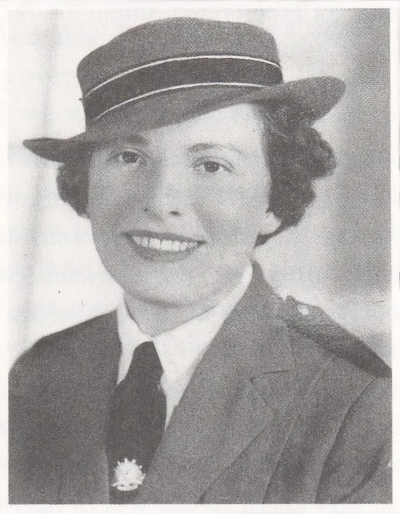
On 29 June, Jean went into Victoria Barracks in Paddington and enlisted in the 2nd AIF. She was taken on strength of the 2/5th AGH and attached to the camp dressing station at the Royal Agricultural Showground in Moore Park, Sydney, where a recruit and reinforcements reception depot was based. At the Showground Jean joined other 2/5th AGH nurses, among them Una Mills, Mary Morton, Mollie Nalder and Ruth Tayler. The dressing station comprised a number of wards set up in various pavilions, and here Jean and her new colleagues treated new recruits for the 7th Division, 2nd AIF. The nurses were billeted at the Olympia Hotel, opposite the Showground, for the duration of their posting.
THE QUEEN MARY
Soon the day came for Jean to embark for overseas. At around 10.30 am on Saturday 19 October 1940, she and her fellow 2/5th AGH nurses, having said their goodbyes to family and friends, were taken by bus from the Showground to Pyrmont on Sydney Harbour. They boarded a ferry that took them to the passenger liner turned troopship Queen Mary, which was sitting at anchor in Athol Bight near Bradley’s Head. They mounted the gangway and were taken to their cabins on the ‘Deluxe Sun Deck,’ just below the bridge. Later they met other nurses of their unit, and Kathleen Best, their matron.
By the following morning, a beautiful, sunny Sunday, around 5,700 troops of the 7th Division had embarked on the Queen Mary, and the ship was ready to depart. Everyone assembled on deck – the troops in their khaki, the nurses in their grey uniforms, red capes and white veils – and as the ship moved out into the harbour, the 2/13th Battalion band played ‘The Māori Farewell’ (‘Now is the Hour’).
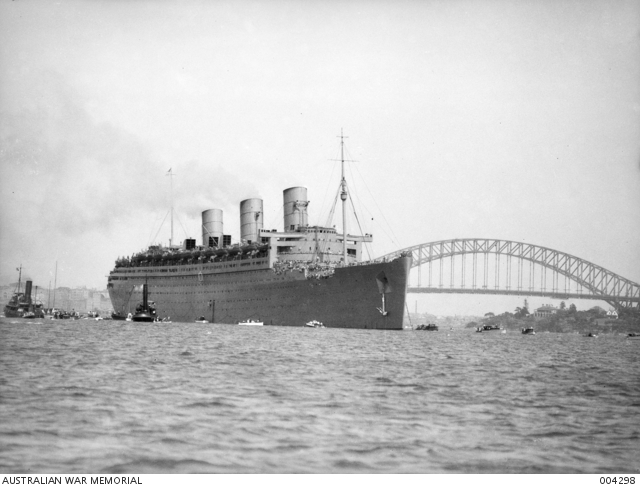
The Queen Mary was sailing in company with the Aquitania, which was carrying around 2,800 7th Division troops, as well as other members of the 2/5th AGH, among them several Queensland nurses.
Thousands of spectators around the harbour and on scores of small craft cheered and clapped as the mighty ships sailed through the Heads.
One or two days later the Queen Mary and the Aquitania were joined by the Mauretania, which had departed Melbourne on 21 October with around 2,300 7th Division troops and elements of various medical units, including eight Tasmanian and four New South Wales nurses of the 2/5th AGH.
VOYAGE TO THE MIDDLE EAST
After stopping in Fremantle, the convoy arrived in Bombay on 4 November, and here, in the foyer of the Hotel Majestic, Jean and the other nurses of the 2/5th AGH came together for the first time. They spent eight enjoyable days in Bombay, going sightseeing and socialising with officers. Some of the nurses were escorted to lunch at a yacht club, while others went to the Taj Mahal Hotel.
On 12 November the journey to the Middle East continued, but now the troops and the staff of the 2/5th AGH and the other medical units were split up among a convoy of smaller ships. The nurses for their part had boarded the Slamat, the Takliwa and the Nevasa, among others. On 25 November they reached Egypt. After a brief stop at Port Tewfik, the port of Suez, they arrived at El Kantara on the Suez Canal and disembarked.
MANDATORY PALESTINE
In El Kantara the nurses ate an unappetising meal and then entrained for Mandatory Palestine. As they stepped up onto the train each was carrying a steel helmet, water bottle, haversack, respirator and kitbag. They disembarked at Gaza, the station for Gaza Ridge, where their sister hospital the 2/1st AGH was based. To begin with, the staff of the 2/5th AGH did not work as a unit but instead were posted to other units. The nurses were detached to the 2/1st AGH while the doctors, orderlies and other medical staff went elsewhere.
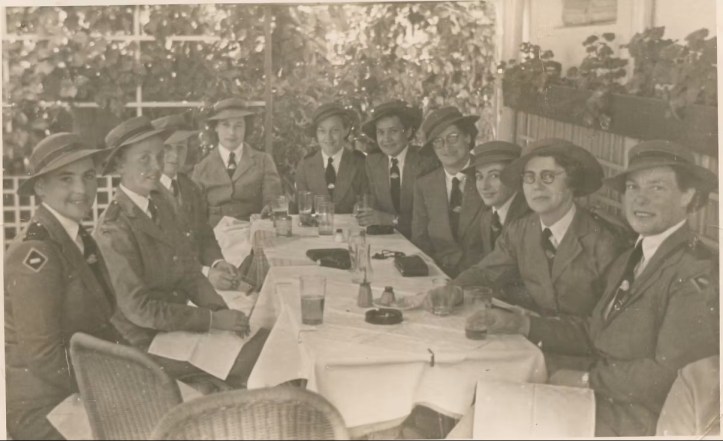
On 26 December 1940 the 2/5th AGH was set up amid orange groves at Kafr Balu near Rehovot, 20 kilometres south of Jaffa, for purposes of administration only. The hospital was not able to start work, as the buildings and other facilities were not ready, and Jean and the other nurses remained detached to the 2/1st AGH.
ILLNESS AND BURIAL
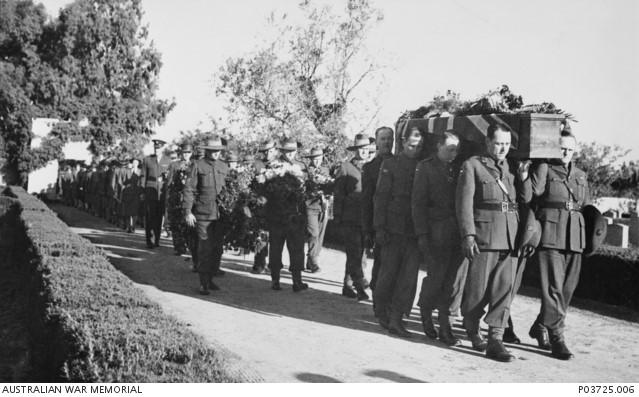
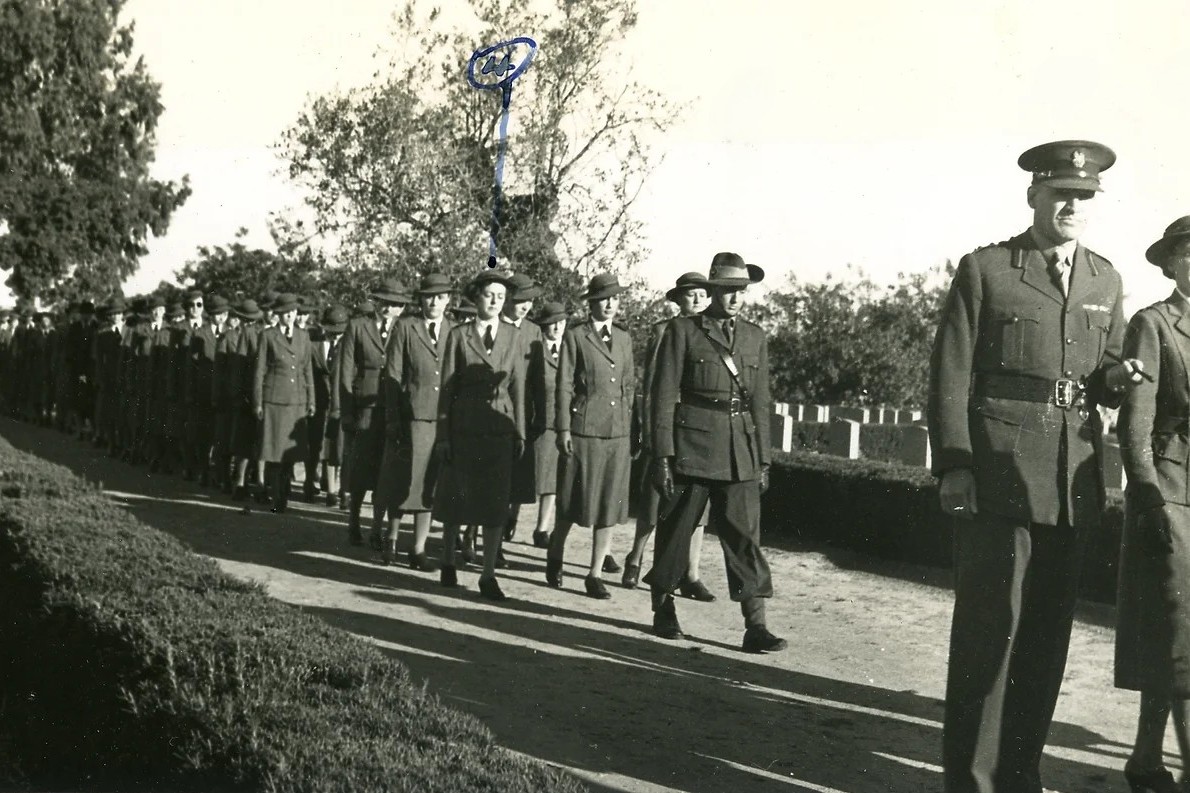
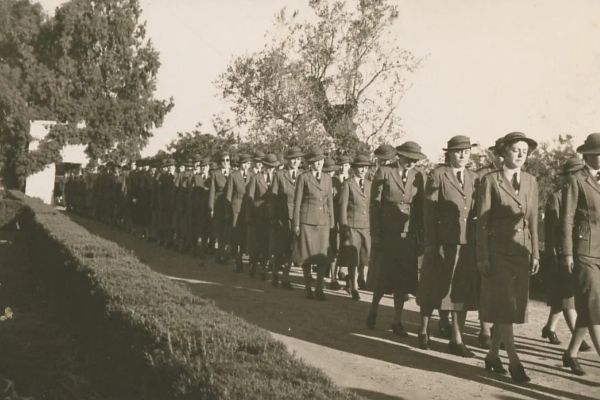
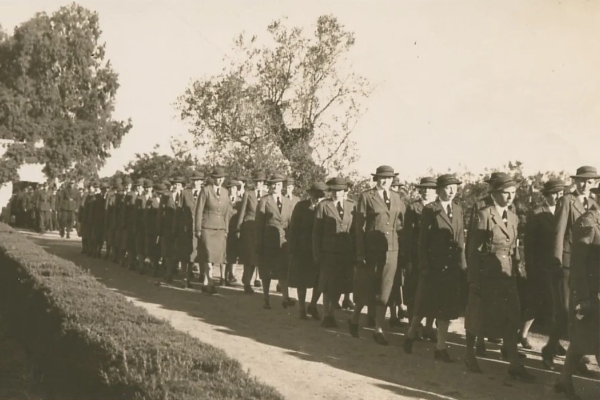
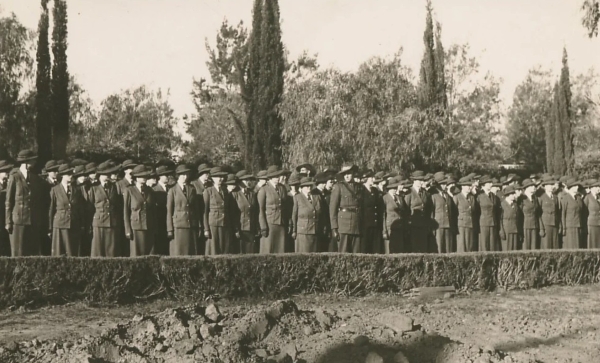
On 20 January 1941 Jean was suddenly taken ill and admitted to the 2/1st AGH. She had suffered a ‘spontaneous subarachnoid haemorrhage,’ most likely caused by a ruptured brain aneurysm, and was placed on the dangerously ill list. By 26 January her condition had improved somewhat but on 13 February Jean died. She was buried the following day at the Gaza War Cemetery with full military honours.
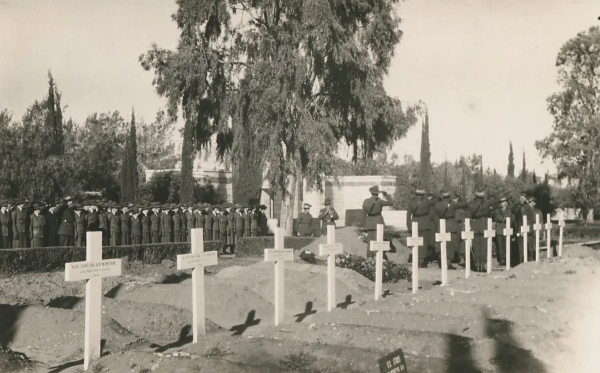
We will remember her.
SOURCES
- 2/5 AGH Association, ‘History.’
- 2/5 AGH Association, ‘Jean Gay.’
- Goodman, R. (1988), Our War Nurses: The History of the Royal Australian Army Nursing Corps 1902–1988, Boolarong Publications.
- University of NSW Canberra, Australians at War Film Archive – Una Keast (transcript of interview recorded 30 May 2003).
- Walker, A. S. (1961), Australia in the War of 1939–1945, Series 5 – Medical, Volume II – Middle East and Far East, Part I, Chap. 5 – Preparations in the Middle East, 1940 (pp. 86–115), Australian War Memorial.
- Walker, A. S. (1961), Australia in the War of 1939–1945, Series 5 – Medical, Vol. IV – Medical Services of the Royal Australian Navy and Royal Australian Air Force with a Section on Women in the Army Medical Services, Part III – Women in the Army Medical Services, Chap. 36 – The Australian Army Nursing Service (pp. 428–76), Australian War Memorial.
SOURCES: NEWSPAPERS
- Daily News (Sydney, 1 Mar 1940, p. 7), ‘Prizes for Nurses.’
- The Daily Telegraph (Sydney, 2 Feb 1941, p. 2), ‘Sydney Nurse in Casualty List.’
- The Sun News-Pictorial (Melbourne, 3 Feb 1941, p. 12), ‘First Woman Casualty.’
- The Sydney Morning Herald (5 Jun 1940, p. 15), ‘Nurses for A.I.F.: N.S.W. Contingent.’
- The Sydney Morning Herald (3 Feb 1941, p. 9), ‘Casualties in A.I.F.’
 australianwarnurses.org