AANS │ Lieutenant │ Second World War │ Malaya, Australia, Labuan, Singapore │ 2/10th, 2/6th, 2/14th, 107th & 115th Australian General Hospitals
FAMILY BACKGROUND AND EARLY LIFE
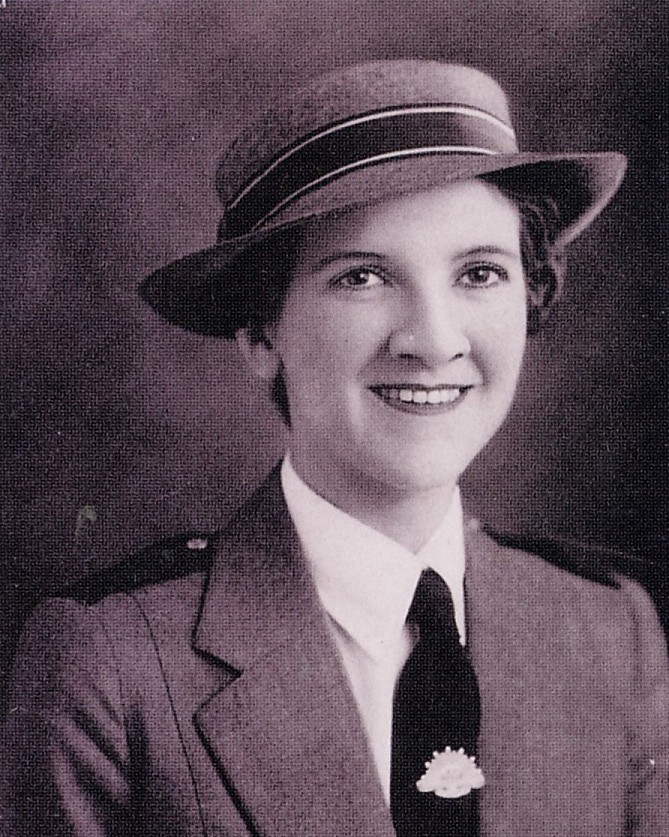
Jean Elizabeth Floyd was born on 19 March 1916 in Malvern, an eastern suburb of Melbourne. An only child, she was the daughter of Mary Catherine Brown (1884–1931), born in Carlton, Melbourne, and James Dougall Floyd (1886–1955), born in (or near) Dundee in Scotland.
Mary and James were married on 21 September 1914 at the Armadale Presbyterian Church and honeymooned in the Blue Mountains in New South Wales. Prior to his marriage, James was living at 34 Murray Street in Elsternwick, Melbourne and working as a tramways ticket inspector. Mary was living with her mother, Charlotte Brown, at ‘Airlie House’ on Acre Place in Malvern. Mary’s father, Alexander, had died in 1895. Following their wedding, Mary and James appear to have moved to 4 Mercer Road in Malvern.
On 17 August 1915 James enlisted in the Australian Imperial Force. He embarked from Australia on 20 February 1916 on HMAT Ulysses and served in France with the 1st Tunnelling Company of the Mining Corps.
James missed the birth of his daughter and her infancy. When he returned to Australia on the Boonah in late May or early June 1919 as 2nd Corporal Floyd, Jean was three years old. It would appear that during her husband’s absence, Mary and her daughter had stayed with Charlotte Brown at Airlie House.
In the 1920s James worked as a wood and coal merchant. In July 1926, while living at 1 Toorak Road in South Yarra, he was charged with selling firewood that was short in weight. Despite declaring that he had weighed the wood honestly, he was fined £4 plus costs.
On 4 August 1931 Mary Floyd died at the age of 46. She was buried at Brighton Cemetery. At the time she was living at 71 Union Street in Malvern.
NURSING
We know nothing about Jean’s childhood or schooling. She was connected with the Salvation Army and as an older teenager or young adult joined the Malvern Corps. She then entered the Salvation Army Officer Training College on Victoria Parade in East Melbourne and in 1937 began nursing training at the Salvation Army’s Bethesda Hospital, on Erin Street in the inner-Melbourne suburb of Richmond.
In November 1939 Jean passed her Nurses’ Board general nursing examination and in November 1940 passed her midwifery examination. She was now a double-certificated nurse.
As Captain Jean Floyd, she graduated from Bethesda Hospital in December 1940 and was awarded her graduation certificate and badge during a new graduates’ ceremony held at the Collingwood Town Hall on 17 December 1940.
ENLISTMENT
Following the outbreak of the Second World War, Jean joined the Australian Army Nursing Service (AANS) and on 31 January 1941 commenced full-time duty with the Citizen Military Forces (CMF). We do not know where she was posted, but quite possibly to the 107th Australian General Hospital (AGH) at Puckapunyal.
The 107th AGH had been raised at Puckapunyal in June 1940 as Camp Hospital Puckapunyal. In February 1941 the unit was expanded to become the 107th AGH and operated three camp hospitals across northern Victoria.
On 17 July Jean was seconded to the Second Australian Imperial Force (2nd AIF) for service abroad. The following day she was taken on strength of the AANS as a reinforcement staff nurse for the 2/10th Australian General Hospital (AGH) and detached to the 107th AGH at Puckapunyal (where, as mentioned, she had perhaps already been posted).
The 2/10th AGH, together with the 2/4th Casualty Clearing Station (CCS) and several other medical units, had sailed to Malaya in February 1941 with the 22nd Brigade, 8th Division on the Queen Mary. The 22nd Brigade had been tasked with supporting British and Indian troops in garrisoning Malaya in the face of Japanese expansionism.
On 10 October Jean reported to the Lady Dugan Nurses’ Hostel in South Yarra pending embarkation. There she met a nurse by the name of Sheila Daley, who had also been taken on strength of the AANS as a reinforcement staff nurse for the 2/10th AGH. On 11 October Jean and Sheila were detached to the 115th AGH at Heidelberg, more commonly known as the Heidelberg Military Hospital. They returned to the Lady Dugan Hostel on 15 October, and the following day entrained for Sydney from Spencer Street Station. On 17 October they were marched in to Eastern Command (New South Wales).
THE ZEALANDIA
On 29 October 1941 Jean and Sheila embarked on the Zealandia for Singapore as members of a Sea Ambulance Transport Unit (SATU). When the Zealandia arrived in Melbourne on 2 November, two more reinforcement staff nurses boarded, Margaret Anderson and Vera Torney. They had been allotted to the 2/13th AGH, which had arrived in Singapore in September as disquiet over Japanese intentions continued to mount.
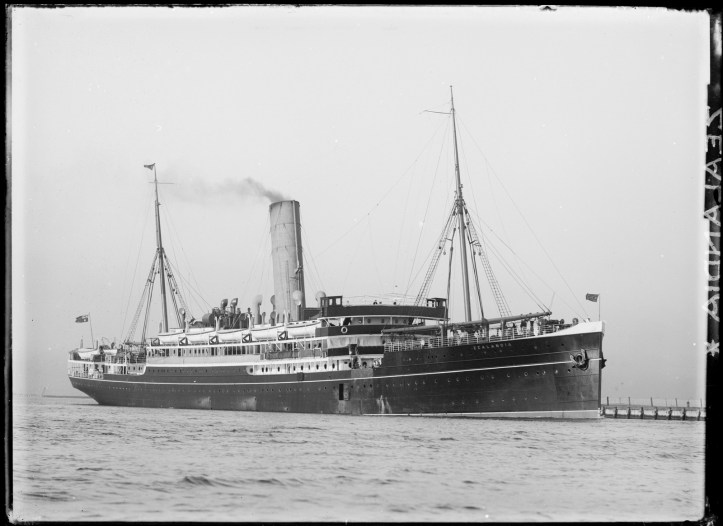
The Zealandia arrived at Keppel Harbour, Singapore on 20 November and the four nurses disembarked. Jean entrained for Malacca on the Malay Peninsula, where the 2/10th AGH occupied a wing of the Malacca General Hospital, but unfortunately Sheila Daley had to be taken to the Alexandra Hospital, to the west of Keppel Harbour, with an unexplained fever. She remained there until 26 November. Margaret Anderson and Vera Torney, meanwhile, were taken to St. Patrick’s School in Katong, on the southeast coast of Singapore Island, where the 2/13th AGH was based.
JAPANESE INVASION
Early in the morning of 8 December 1941 Japan launched an amphibious invasion of Malaya. At the time, it was thought that the Commonwealth forces present on the peninsula and on Singapore Island would be sufficient in number and strength to repel any invasion. However, the potency of the Japanese invasion force was vastly underestimated and within days British and Indian troops were being forced southwards. The entry of the Australian 8th Division into combat on 14 January 1942 did little to stop the Japanese surge, and by the end of January the forces of the Japanese 25th Army had reached Johore Bahru in the far south of the peninsula. Only the kilometre-wide Johore Strait kept them temporarily from crossing over to Singapore.
Meanwhile, the British, Indian and Australian troops, and their respective medical units – in Australia’s case the 2/10th AGH in Malacca, where Jean and Sheila were based; the 2/13th AGH at the Tampoi Mental Hospital (where the unit had moved soon after the arrival of Margaret Anderson and Vera Torney); and the 2/4th CCS, with eight AANS nurses on staff – had all fallen back to Singapore Island.
THE EMPIRE STAR
When the Japanese crossed onto Singapore on the night of 8–9 February 1942, the island’s days were numbered, and a decision was made to evacuate the Australian nurses. On the morning of 10 February six of Jean’s colleagues from the 2/10th AGH were chosen by Matron Dot Paschke to embark on the Wusueh with as many as 350 wounded men, including around 150 Australian troops. On 11 February Jean, who had been promoted to the rank of sister on 31 January, a year after commencing full-time duty, was among 60 nurses to board the Empire Star, which departed Singapore early the next morning with as many as 2,400 passengers on board, mainly military personnel. Later that day the remaining 65 AANS nurses boarded the ill-fated Vyner Brooke.
Soon after entering the Durian Strait south of Singapore Island the Empire Star was attacked by dozens of Japanese planes for four hours. At least three direct hits resulted in 12 deaths and dozens of injured men, whom the Australian and British nurses took care of in makeshift dressing stations set up in the hold. During the attacks Margaret Anderson and Vera Torney demonstrated instinctive bravery that later earned them the highest honours.
On 14 February the Empire Star limped into Tanjung Priok, the port of Batavia. It was patched up and departed for Fremantle on 16 February, arriving on 23 February. Jean and her 59 comrades were home. They remained on board the Empire Star until cleared to disembark by army headquarters. After lunch at the 110th AGH in Perth, the nurses were taken to Northam army camp, 80 kilometres to the east.
RETURN TO MELBOURNE
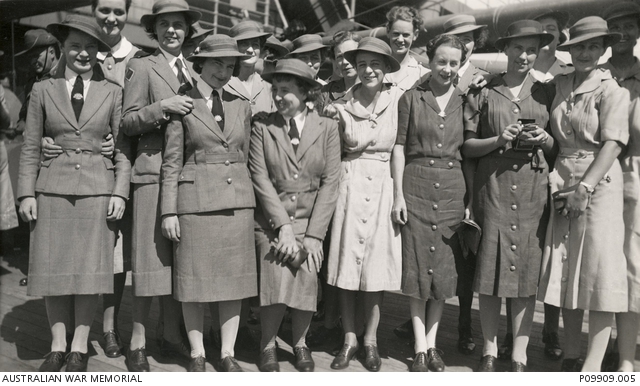
After two weeks at Northam, the nurses were separated into two groups, as those from the eastern states prepared to return home. On 8 March 1942, Jean and 49 other nurses from Victoria, New South Wales, Queensland and Tasmania entrained for Melbourne and arrived at Spencer Street Station on 12 March. Waiting for them were family and friends. As the women stepped from the train, they looked trim and spotless in their neat uniforms – the nurses in grey and the masseuses in navy blue – and were still carrying their tin helmets and gas masks. That afternoon the Victorian and perhaps Tasmanian nurses were guests at Government House, while the New South Wales and Queensland nurses entrained for their home states.
On 13 March, the day after arriving back in Melbourne, Jean went on leave until 26 March. On 24 March, just before her return to duty, Jean and other returned 2nd AIF personnel were welcomed back to the Salvation Army Melbourne City Temple by Commissioner W. R. Dalziel.
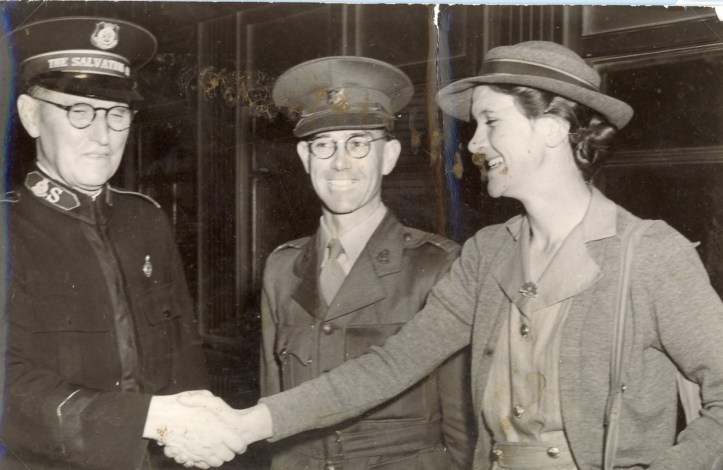
Jean returned from leave on 27 March and was posted to the Heidelberg Military Hospital. She remained at Heidelberg until 21 April, when she was marched out to 19 Camp Hospital in Bendigo, central Victoria.
From 25 September to 6 October Jean went on sick leave before being evacuated to Heidelberg on 7 October and placed on the x list (which meant that another nurse could be taken on strength of 19 Camp Hospital during her absence). She returned to Bendigo on 13 October.
On 30 December 1942 Jean returned to Heidelberg before being posted to the 107th AGH at Puckapunyal – her old unit – on 20 February 1943. She was formally taken on strength the following day. On 23 March all AANS nurses became commissioned officers, and Jean now held the rank of lieutenant.
107TH AGH, ADELAIDE RIVER
In April Jean and the other staff of the 107th AGH were advised that their unit was to be sent somewhere up north to relieve a hospital. (The hospital turned out to be the 119th AGH at Adelaide River, 110 kilometres south of Darwin. Following the air attack on Darwin in February 1942, the 119th AGH had moved from Berrimah, 25 kilometres south of Darwin, to remote Adelaide River.) The nurses were sent home on a few days’ leave and refitted with tropical uniforms, trunks and kit bags, guessing that their destination was somewhere north of the 26th parallel (which roughly divides Australia in half horizontally).
On 5 May 1943 the nurses set out. Many years later, Jean’s 107th AGH colleague (and fellow Victorian) Alva Storrie described their long journey north:
We left Melbourne at night, on a crowded troop train, most of us sad to leave our friends and families. We arrived in Adelaide in the morning, and went on a local train to Port Pirie and somehow we transferred to the Ghan on our way to Alice Springs….
I was told later that the carriages [were] converted from cattle trucks but were comfortable enough, better than that crowded troop train from Melbourne. We chose our bunks, stowed away our gear, and prepared for the journey ahead.
The first stop was up the line past Port Augusta; the CWA [Country Women’s Association] ladies served a morning tea for all troops going through on that train. Everyone gets a cuppa and a bite to eat….
The train was slow, we took photos [and eventually] arrived in Alice Springs, where we were transferred to trucks, and joined the convoy. We sat on boards with legs, our luggage was in one truck, and small kit bags were with us.
The roads were red dust and heavily corrugated, not very comfortable, but it was an adventure. The drivers were on orders not to drive more than 20 miles an hour and to stop for 5 minutes every hour to preserve the trucks. For some of these stops our ‘luggage truck’ would go ahead and ‘boil the billy’ so we had a break from those hard seats.
We lunched at Ti Tree Wells. I remember going down into a large underground cellar, very cool; then went on to Barrow Staging Camp the first overnight stop. I believe we were the first women to go overland, and each night there was a dinner dance arranged for us, no rest for us, but it was fun.
The journey to the second camp, Banka Banka, was 612 m (985 kms). We were told to be ready for the road at 6am each day, we had to be well organised after our social evenings, making up our bunks and packing up by 6am! we continued on to Elliot, then to Larrimah. There we saw an outdoor show sitting on cans or on the ground, a change from the dinner dances!
I remember stopping for lunch under canvas at Mataranka, which must have been working as a cattle station. Aboriginal stockmen were breaking in horses… Aboriginal girls worked in the kitchen and brought in the food… We continued on to Katherine in the trucks to connect with the Hospital Train to Adelaide River, the troops [going] on a different train to Darwin.
On 15 May the nurses detrained at Adelaide River and were taken to their hospital – the only one in Australia completely under canvas. For six days a week they worked in the heat in tented wards, travelling on a specially adapted truck between their quarters – large huts divided into sections, each of which held six beds – and the hospital.
According to Alva Storrie, the nurses enjoyed a good social life. They had dances in the recreation hut and went out unofficially with officers who managed to obtain a vehicle, for instance to the Marrakai Plains for picnics.
JAPANESE AIR RAIDS
At around 10.00 am on 19 February 1942, Darwin was attacked by successive waves of Japanese bombers, accompanied by fighter escorts – up to 188 planes in total. That day, more than 250 people died, and hundreds were injured.
Between that infamous date and 12 November 1943, Japanese aircraft returned to bomb Darwin and surrounds no fewer than 64 times. However, no subsequent raid was as devastating as the first had been. The final raid, on 12 November 1943, targeted Adelaide River. Alva Storrie described the events:
Tokio Rose had been threatening [to bomb our hospital] for some time. I came off duty about 9pm, and just walk in to relax before going to bed, when the sirens rang. The wardens came around immediately, all lights were off, and told us to get under our beds, don’t smoke and stay there until the siren rings again. We heard the well known droning, up and down the road, and then the scream of their engines as they dropped their load in what seemed to be on the hospital.
We stayed as we were, thinking the hospital was gone, the wardens arrived calling to us, are we OK? They were certain we had collected the lot, but the bombs had fallen on a rubbish dump, which had been a tennis court. We were all lucky, if they had turned in a half circle they would have got us and the wards as well.
On 31 May 1944, Jean, Alva and some (or all) of the other Victorian nurses were sent home on leave. They flew in a DC 3 to Adelaide (presumably from Darwin) then entrained for Melbourne. After her leave Alva was posted to the Ballarat Convalescent Depot, while Jean returned to the Heidelberg Military Hospital, reporting on 30 June. There was a nurse at Heidelberg by the name of Annie Muldoon, known as Nan. Nearly three years earlier Nan had been attached to the 2/13th AGH in Singapore and, like Jean, had escaped on the Empire Star.
2/6th AGH, ROCKY CREEK
On 15 October 1944 Jean and Nan were attached to the 2/6th AGH at Rocky Creek, between Atherton and Mareeba in Far North Queensland. They were marched out of Heidelberg on 30 October and arrived at Rocky Creek on 7 November. Joining them at the 2/6th AGH was another veteran of the 2/13th AGH, who had also escaped on the Empire Star, Sister Gertrude McManus from Western Australia.
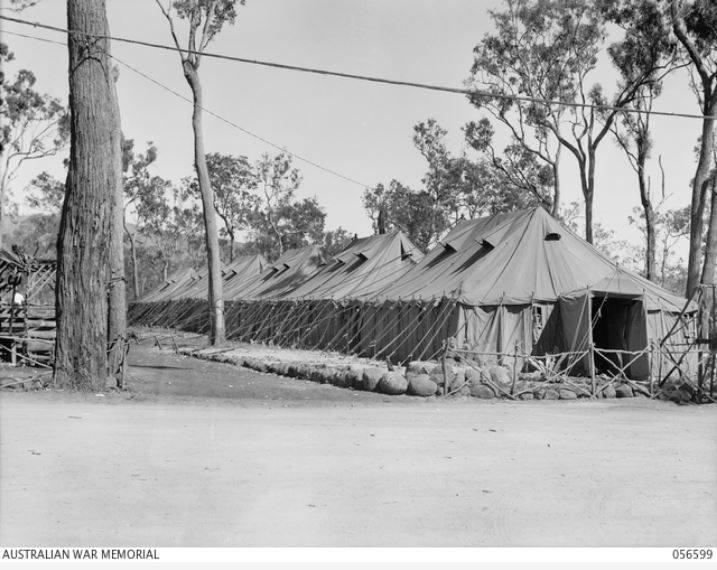
The 2/6th AGH was originally formed in July 1940 in Sydney. After serving in the Middle East, Greece and North Africa, the unit returned to Australia as part of the ‘Stepsister’ movement following the Japanese invasion of Southeast Asia and by April 1943 had joined the 2/2nd AGH (which had also returned from the Middle East) at Rocky Creek. The 2/1st Australian Convalescent Depot was also based there. By March 1944 both AGHs had been transformed from tent to hut hospitals, and in October 1944 mains electricity was connected.
The hospitals treated sick and wounded patients from New Guinea. They were evacuated to Cairns by air and were transported to Rocky Creek by the 2/4th Australian Hospital Ambulance Train, which ran three times a week.
TO THE ISLANDS
In September 1944 American forces recaptured Morotai, one of the Maluku Islands (Moluccas) in the Netherlands East Indies. It became a nerve centre of Allied operations in the region and the base from which in 1945 Australian forces landed on Borneo at Tarakan Island (1 May), Brunei Bay and Labuan Island (10 June), and Balikpapan (1 July). The Australian landings were met with fierce resistance, but by August the Japanese were beaten.
Supporting the Australian offensive were a number of medical units – the first of which, the 66th Camp Hospital, arrived on Morotai in January 1945. This unit was followed in mid-April by the 2/5th AGH and the 110th CCS. In early May the Australian hospital ship Wanganella arrived at Morotai with the 2/4th and 2/9th AGHs and the 2/1st and 2/3rd CCSs. In due course the 110th CCS relocated to Tarakan, the 2/1st CCS and the 2/4th AGH to Labuan, and the 2/3rd CCS to Balikpapan.
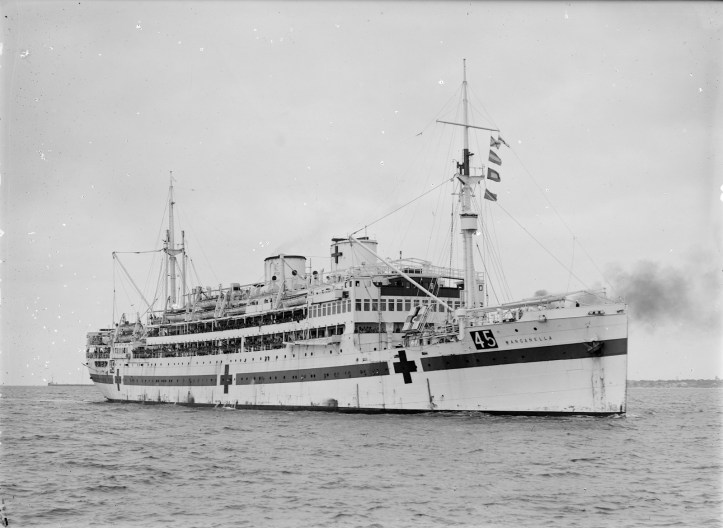
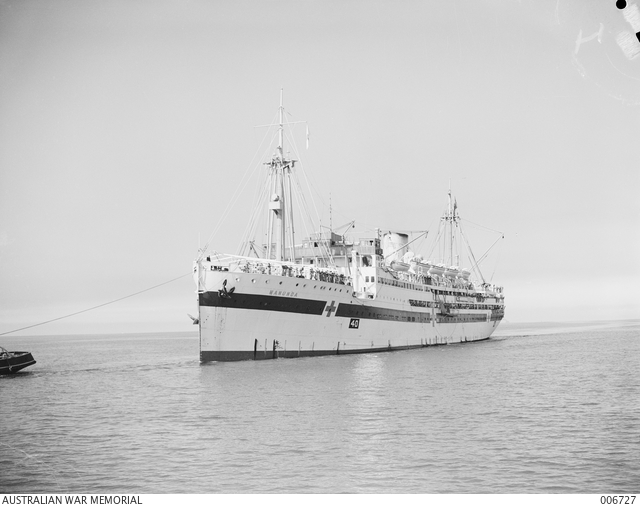
On 12 June the men of the 2/6th AGH embarked for Morotai aboard the SS Jose Pedro Varela from Cairns. They staged on Morotai from 22 June to 8 July then sailed for Labuan, arriving on 10 July, and began to establish their hospital. That same day, 10 July, the nurses of the unit, including Jean, Nan Muldoon and Gertrude McManus, departed Cairns aboard the AHS Manunda and arrived on Morotai on 20 July. On 10 August they embarked on the Manunda for Labuan and rejoined their unit.
Five days later Emperor Hirohito announced Japan’s capitulation. Within two weeks of the Japanese surrender thousands of liberated prisoners of war, Australians, British, Indian and others, began to fill the available beds of the Australian hospitals. On Labuan, the 1,200 beds of the 2/6th AGH soon filled up. Most of the POWs were in a shocking state and required careful nursing to prepare them for evacuation home on hospital ships Manunda and Wanganella. After so many years of malnutrition, their diet required careful supervision, and special food was flown in from Australia.
RETURN TO SINGAPORE
On 7 September Jean, Nan Muldoon, Gertrude McManus and Sister Sara Baldwin-Wiseman, who had been with the 2/5th AGH on Morotai and was another veteran of the 2/13th AGH, embarked from Labuan on the Manunda for Singapore – which, like Morotai, was a major hub for Allied POWs rescued from the many prisoner-of-war and internment camps in the broader region. They were being posted to the 2/14th AGH, which had embarked from Sydney on 27 August aboard the Duntroon and would be responsible for looking after Australian POWs in Singapore.
Jean and her three colleagues disembarked in Singapore on 11 September and on 13 September were taken on strength of the 2/14th AGH, which had arrived from Australia that day and was setting up its hospital in St. Patrick’s School – the former home of the 2/13th AGH. At St. Patrick’s the four nurses met Sister Phyll Pugh, another former 2/13th AGH nurse, who had arrived on the Duntroon with the unit.
WHERE ARE THE VYNER BROOKE NURSES?
Even as hundreds of prisoners of war began to be admitted to the 2/14th AGH, the 24 surviving Vyner Brooke nurses remained hidden with hundreds of other women in an internment camp near the town of Lubuklinggau in southern Sumatra. Although conditions at the camp, known as Belalau, had improved dramatically following the Japanese surrender, there seemed little prospect of rescue while Japanese officials continued to deny the camp’s existence. It took the determination of two Allied special operations teams to locate the camp.
On 7 September, the day Jean, Nan, Gertrude and Sara sailed for Singapore, Staff Nurse Betty Jeffrey of the 2/10th AGH recorded the arrival of the first of the teams in her secret diary, which she later published as White Coolies:
7 September 1945. … 3 p.m. The Allies have arrived!!! Two very young Dutch soldiers and a Chinese military man arrived today as advance guard to the Army of Occupation. They had been dropped by parachute, a few days ago and were most impressed with our camp apparently, their first English words being, ‘What a bloody mess!’ (Jeffrey, p. 190).
Four days later another team arrived, which included two Australians:
11th September 1945. Cheers and more cheers. We have been discovered by two young Australian paratroops who visited our camp today and came straight past everybody until they landed on the doorstep of our Hut 13. Viv [Bullwinkel], who is usually unmoved, and very quiet, came rushing in, face positively crimson, and panted, ‘Australians are here!’ (Jeffrey, p. 191).
Although the Australian nurses’ location was now known, they were still stuck in the Sumatran jungle. However, five days after the visit of the Australian soldiers, they were rescued thanks to the combined efforts of a pair of Australian correspondents and a team of Australian army and air force medical personnel – among them Jean.
THE RESCUE OF THE VYNER BROOKE NURSES
On the morning of 15 September a plane flown by Squadron Leader Fred Madsen and Flying Officer Ken Brown of the RAAF left Singapore with six people on board – ABC correspondent Haydon Lennard; Sister Beryl Chandler of the RAAF’s Medical Air Evacuation Transport Unit; Major Harry Windsor and Private Frederick Prott of the 2/14th AGH; Lieutenant Colonel Hayes of the Royal Army Medical Corps; and Major Jackie Clough of the Repatriation of Allied Prisoners of War and Internees Organisation.
The plane landed in Palembang, Sumatra, and Haydon Lennard and Ken Brown questioned Japanese authorities. They then set out in a car for Lahat, 220 kilometres to the southwest, while Beryl Chandler, Harry Windsor and Private Prott remained in Palembang visiting internment camps and hospitals. They assembled a group of 30 sick prisoners of war, who then returned to Singapore with Fred Madsen.
Lennard and Brown arrived in Lahat later that day and learned that the Australian nurses were at Belalau, 150 kilometres to the west. They organised transport to collect the nurses and other very sick internees and phoned through the plan to Beryl Chandler and Harry Windsor at Palembang. Ken Brown then telephoned the women’s camp at Belalau and – incredibly – spoke to Sister Nesta James of the 2/10th AGH, the most senior of the surviving AANS nurses.
Very early in the morning of 16 September, the surviving nurses and nearly 40 seriously ill women and children walked out of the camp and were helped aboard waiting trucks. They were driven to Lubuklinggau, where they were met by Haydon Lennard and Ken Brown, and at around 8.00 am boarded a train for Lahat. They arrived at midday and proceeded to the airstrip. At around 4.00 pm a Douglas C-47 Dakota piloted by Fred Madsen landed.
Madsen had flown in from Singapore that morning with a party composed of newspaper correspondent A. E. Dunstan, Colonel Annie Sage, matron-in-chief of the AANS – and Jean. He had landed first at Palembang to collect Beryl Chandler and Harry Windsor.
The plane came to a standstill and Harry Windsor jumped out. He struggled to distinguish the Australian nurses from the civilian internees. Meanwhile, Colonel Sage, Beryl Chandler and Jean had emerged from the plane. Upon seeing Jean, several of her friends from the 2/10th AGH dropped their few possessions to hug and kiss her. They were overjoyed.
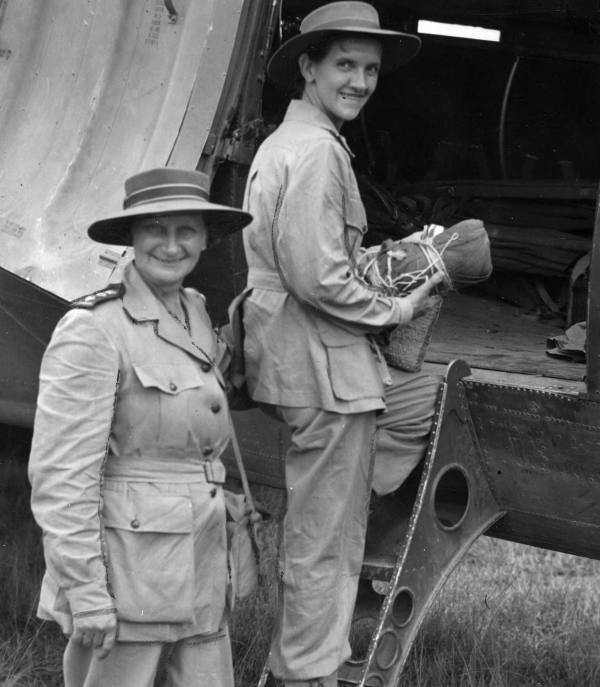
The nurses and civilians were helped aboard the Dakota, and Fred Madsen, joined once again by Ken Brown, took off for Singapore. Haydon Lennard and Beryl Chandler flew with them, while A. E. Dunstan, Colonel Sage, Harry Windsor and Jean stayed behind in Lahat to look after those civilian internees who could not fit on the plane. Fred Madsen returned the following day to collect them all, and by the evening of 17 September Jean was back at the 2/14th AGH at St. Patrick’s School. Among the hospital’s patients were the 24 rescued nurses.
RETURN TO AUSTRALIA
By the end of October 1945 most of the liberated Australian POWs had returned home, and the work of the 2/14th AGH was coming to an end. On 2 November Jean, Sara Baldwin-Wiseman, Gertrude McManus, Nan Muldoon, Phyll Pugh and other members of their unit, together with more than a thousand 2nd AIF men, ex-POWs, and members of the 2nd Australian POW Reception Group, embarked from Singapore on HMT Cheshire and headed home too.
The Cheshire reached Fremantle on 13 November and Melbourne on 20 November, where Jean disembarked. She was allotted regimental duties with the 106th AGH at Bonegilla in northern Victoria, which specialised in the treatment of tuberculosis.
On 9 May 1946 Jean returned to Heidelberg and a fortnight later was transferred to the 50th Camp Hospital at Balcombe, near Mount Martha on the Mornington Peninsula. On 5 August Jean was appointed to the rank of Temporary Captain.
LIFE AFTER THE ARMY
On 15 January 1947 Jean was discharged from the army, retaining the substantive rank of lieutenant. At the time her home address was 33 Lang Street, South Yarra.
Jean maintained her connection to the Salvation Army and in March or April 1948 travelled to Tasmania to stay as a guest of Adjutant and Mrs. C. Petch of the Ulverstone branch.
On 25 April, following the Ulverstone Anzac parade, Jean spoke at the Leven Theatre about her experiences during the evacuation of Singapore – and about its long-delayed sequel, the return of the POWs. She told the audience that the most wonderful experience of her life occurred when she was chosen as a member of the 2/14th AGH and sent to Singapore to receive the POWs. The reunion with the nurses that she had known from her time in Malaya was something she would never forget; to welcome and care for them was a privilege seldom encountered, she said. Jean spoke again on 27 April at the Ulverstone Salvation Army.
On 23 April 1949 Jean married Leslie Charles Allen (1918–1982) at the Salvation Army Citadel in Malvern. Leslie was from Ballarat in central Victoria and had had a difficult upbringing. During the war he served in the Middle East and New Guinea as a stretcher bearer with the 2/5th Infantry Battalion. Known as ‘Bull’ Allen, Leslie was formidably strong – and extraordinarily brave. In February 1943 he rescued wounded soldiers under fire in the vicinity of Crystal Creek, near Wau in Papua, for which act of valour he was awarded the Military Medal. Five months later, during the Battle of Mount Tambu, Leslie rescued 12 wounded American soldiers and in 1945 was awarded the Silver Star Medal for services to the Allied cause.
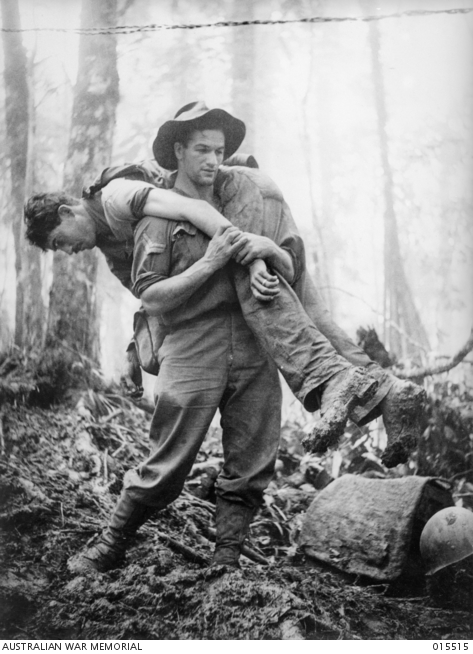
Jean and Leslie had three sons and a daughter, Eleanor, named after Eleanor Roosevelt.
On 12 May 1955 Jean’s father died while residing at Lotus Lodge in Rosebud, a state-run home for the aged. He was buried at Brighton Cemetery.
Leslie died in 1982. Jean outlived him by 26 years. After a long life full of happiness and sadness, she died in Ballarat on 15 April 2008. She was 92 years old.
We will not forget her.
SOURCES
Ancestry.
Australian War Memorial, ‘Beryl Maddock ‘Flying Sister,’’ Penny Hyde (4 July 2011).
Australian War Nurses (website), ‘Gethla Forsyth.’
BirtwistleWiki, ‘106th Australian General Hospital.’
BirtwistleWiki, ‘107th Australian General Hospital.’
BirtwistleWiki, ‘2/6th Australian General Hospital.’
Courtis (née Storrie), A., ‘A Nurse at War.’
De Man, J. Th. A. (1987), Opdracht Sumatra: het Korps Insulinde 1942-1946 [Mission Sumatra: the Insulinde Corps 1942-1946], De Haan.
Gilchrist, C., ‘“Anxious about you hope you are well”: Remembering 1942 and the Bombing of Darwin,’ Anzac Memorial Hyde Park Sydney.
Jacobs, G. F. (1965, 1982), Prelude to the Monsoon: Assignment in Sumatra, University of Pennsylvania Press.
James, K., ‘CPL Leslie Allen, one of Australia’s most gallant stretcher-bearers,’ Journal of the Royal Australian Army Chaplains Department (2021 edition), Royal Australian Army Chaplains Department.
Jeffrey, B. (1954), White Coolies, Angus & Robertson Publishers.
National Archives of Australia.
National Archives of Australia (SP300/3, 637), ‘Radio talk presented by ABC war correspondent Haydon Lennard. Release of nurses & civilian internees Sumatra (including Sister Vivian Bullwinkel).’
Simons, J. E. (1954), While History Passed, William Heinemann Ltd.
Stanley, P. (2007), ‘Borneo 1942–1945,’ Anzac Portal, Department of Veterans’ Affairs.
Virtual War Memorial Australia, ‘Jean Floyd.’
Walker, A. S. (1957), Australia in the War of 1939–1945, Series 5 – Medical, Vol. III – The Island Campaigns, Chap. 16 – Borneo (pp. 371–98), Australian War Memorial.
Walker, A. S. (1961), Australia in the War of 1939–1945, Series 5 – Medical, Vol. IV – Medical Services of the Royal Australian Navy and Royal Australian Air Force with a Section on Women in the Army Medical Services, Part III – Women in the Army Medical Services, Chap. 36 – The Australian Army Nursing Service (pp. 428–76), Australian War Memorial.
Wikipedia, ‘Bull Allen (soldier).’
SOURCES: NEWSPAPERS
The Advocate (Burnie, Tas., 10 Apr 1948, p. eight), ‘Social Notes.’
The Advocate (Burnie, Tas., 24 Apr 1948, p. 10), ‘Advertising.’
The Advocate (Burnie, Tas., 26 Apr 1948, p. 5), ‘Anzac Day.’
The Age (Melbourne, 18 Dec 1940, p. 12), ‘Bethesda Hospital Badges.’
The Age (Melbourne, 25 Apr 1949, p. 5), ‘Married on Saturday.’
The Argus (Melbourne, 21 Jul 1926, p. 15), ‘Fuel Merchants Fined.’
The Argus (Melbourne, 5 Aug 1931, p. 1), ‘Family Notices.’
The Argus (Melbourne, 2 Dec 1939, p. 13), ‘Nurses’ Exams.’
The Argus (Melbourne, 17 Sept 1945, p. 1), ‘Camp Horrors in Sumatra: Search for Nurses.’
The Argus (Melbourne, 15 Dec 1955, p. 15), ‘Advertising.’
The Herald (Melbourne, 26 May 1919, p. 10), ‘On the Way Home.’
The Herald (Melbourne, 25 Mar 1942, p. 6), ‘Personal.’
Punch (Melbourne, 24 Sept 1914, p. 38), ‘Mr. J. D. Floyd to Miss Brown.’
The Sun News-Pictorial (Melbourne, 14 Nov 1940, p. 16), ‘Nurses’ Exams.’The West Australian (Perth, 14 Nov 1945, p. 11), ‘Woman’s Realm. Return from Singapore, Nurses’ Job Completed.’
 australianwarnurses.org