AANS │ Staff Nurse │ First World War │ India
FAMILY BACKGROUND
Irene McPhail, sometimes known as Rene, was born on 24 January 1893 in Echuca, Victoria. She was the third child of Alice Maud Upton (birth and death dates unknown) and James Junius McPhail (c. 1846–1940).
James McPhail, who was of Scottish heritage but appears to have migrated to Australia from the United States at a young age with his family, arrived in Echuca around 1875. By 1877 he had joined Samuel Stephens in running a butcher’s shop on Hare Street. In August 1885 their partnership was dissolved by mutual consent and James took over the business entirely.
James met Alice and the two were married in April 1887 at the Manse in Echuca by the Rev. J. C. Johnstone. To begin with they lived on Hare Street, possibly in the dwelling attached to James’s butcher’s shop, and sometime after that moved into a house on Nish Street. In 1888 the couple’s first child, Ida (or Ada) Maud, was born.
Indicative perhaps that not all was well with James’s finances, towards the end of 1888 he advertised that he was leaving the district and on 27 October an auction was held of his assets. Up for sale was his butcher’s shop on Hare Street, still known as Stephens and McPhail’s, with attached dwelling; a 19-acre block in North Echuca containing a weatherboard cottage, a slaughterhouse and a piggery; and two other blocks in North Echuca of 89 and 98 acres respectively.
Nevertheless, James appears not to have left the district after all and continued to work in the butcher’s shop. In 1890 his and Alice’s second child, Alice Mary, sometimes known as Lallie, was born. Alice later became a teacher, like her paternal aunt Victoria Stickels (c. 1853–1949), who was to play a significant role in the McPhail children’s lives in the coming years.
FINANCIAL DIFFICULTIES
In a further sign that James’s debts were mounting, in October 1891 Alice McPhail sold off the furniture and effects of the Nish Street house. Among the items going to auction were a drawing room suite, carpets, linoleum, hearthrugs, fenders and fireirons, a black-marble and gold eight-day clock, a writing desk and book cupboard, double bedsteads, a chest of drawers, toilet glasses, kitchen tables and chairs, meat safes, cutlery, a portable copper, a walnut suite etc. It is unclear whether the family had moved back to the dwelling on Hare Street prior to the sale or taken another house in town.
In January 1893 Irene was born. The McPhails now had three girls and plenty of expenses. All the while, financial pressure was pushing James’s finances further into the red and in mid-1894 he was declared insolvent. In August a trustee was appointed to administer James’s estate. On 22 August his butcher’s shop was taken to auction once again, along with a block of land that he co-owned with a certain Mr. J. Stokes in Moama, Echuca’s twin town on the New South Wales side of the Murray River.
Again, the butcher’s shop appears not to have been sold – and indeed, it would seem that Alice McPhail took over the running of it during the period of her husband’s insolvency. From soon after the auction until August 1895, Echuca’s local newspaper spruiked “A. M. McPhail” as “the successor to Stephens & McPhail.”
Meanwhile, James’s financial situation seemingly began to improve. In February 1895 his boiling-down plant in Moama was put up for auction by the trustee, and in April he applied for and was granted a certificate of discharge and was therefore able to trade again. In July James reapplied for a slaughtering licence and in September returned to his butcher’s shop, an event celebrated in the local newspaper.
FAMILY TRAGEDY
On 20 May 1896, after selling off her furniture once again, Alice McPhail moved from Echuca to Short Street in Bendigo, presumably with the children. It is not clear when James joined them in Bendigo.
By February 1897 Alice and James had moved from Bendigo to the town of Elmore, 40 kilometres to the northeast, and were living on Railway Place East. Young Alice, by then six or seven years old, appears to have gone with them, since on 8 February she gave a recitation at a concert and fruit soiree held at the Elmore Wesleyan Church. Then in October it was reported in the Elmore Standard that she was suffering from enteric fever (also known as typhoid fever).
Irene and Ida, however, went to stay with Victoria Stickels and her husband, George, in Kaarimba, 50 kilometres east of Echuca and 15 kilometres southwest of Numurkah. Just why this might have been so remains a mystery.
On the night of Saturday 5 February 1898, a shocking tragedy occurred. Ida had been placing a kettle on the fire when the flames caught her dress and almost instantly enveloped her. A girl of 16 years of age, Lizzie Heath, was in the house at the time and tried to remove the burning clothes but could not do so before Ida received fatal burns. She died at around 2.00 am on Sunday morning. We do not know whether Irene was in the house at the time.
It is impossible to comprehend the effect of such a tragedy on Alice and James and their two daughters. The birth in Elmore of Alice’s fourth and final child, Donald James, on 12 April – only two months after Ida’s death – may even have induced a more profound bereavement.
Four months after Donald’s birth, Alice sold off her household furniture for a third time, as she was leaving Elmore. A month after that, James was working as a butcher in Deniliquin, over the border in New South Wales. Whether Alice was with him or not is unknown. By early 1900 James had returned to Echuca and was trading on High Street with Mr. A. G. Theobald as Theobald and McPhail, Butchers. In May they dissolved their partnership by mutual consent and by October James was working as a butcher for a certain Mr. Roberts in Echuca.
CHILDHOOD
In Irene’s military file there is a medical case sheet dated 9 June 1918 in which Lt. Col. Charles Bickerton Blackburn of the 14th Australian General Hospital (AGH) in Port Said, Egypt states that “both [of Irene’s] parents died while she was a child. She does not know the cause of death.”
In fact, James McPhail lived until 1940, moving to Melbourne, possibly by 1908. By December 1918 he was living in the suburb of Windsor and by 1931 in Prahran. He died in September 1940 at the Freemasons’ Home in Prahran at the age of 93.
We do not know what happened to Alice McPhail. After leaving Elmore she disappears from the record.
In 1900 Irene was living in Echuca once again and attending Echuca State School as a Third Class pupil. She was also attending the Presbyterian Sunday School. In April she performed at the Sunday School’s annual entertainment and prize-giving evening, held at the Temperance Hall in Echuca. Together with Daisy Broomhead, she recited a story, ‘The Giant.’
By October 1903 Irene, now 10 years old, had returned to Aunt Victoria at Kaarimba. With her was Alice, by now 12 or 13 years old, and apparently also Donald, now five. The children remained under the guardianship of Aunt Victoria into adulthood.
While living at Kaarimba, it would appear that the children attended Waaia South State School, around seven kilometres directly north of the Stickels’ property. On 10 August 1906 a concert was held at Kaarimba Hall to raise funds to build a windmill for the school, which would draw water from the creek to irrigate the school garden. The pupils, under the direction of Mr. Lambden, the head teacher, performed songs, recitations, duets, dialogues, and club swinging. Irene recited ‘The Pride of Battery B’ and with Donald sang ‘The Mountain Shepherd.’
Recitation was something that Irene was becoming quite good at. Earlier in 1906 she had taken part in a musical and literary competition held by the Numurkah Branch of the A.N.A. (Australian Natives’ Association) and had come second in the Girls’ Recitation (Under 16) category with a reading of ‘Over the Range.’ The judges assessed her as having “a very pleasant voice, good natural delivery … if the voice is not forced this young lady will make a very fine reciter.”
PICOLA WEST
In June 1906 George Stickels auctioned the property at Kaarimba and sometime later the family moved to the district of Picola West, 40 kilometres to the northwest, where Irene, and presumably Alice and Donald, attended Picola West State School.
Each year in June the school celebrated ‘Arbor Day’ to encourage the planting of trees. Arbor Day in 1908 clearly struck a chord with Irene, and she wrote to ‘Aunt Connie,’ the editor of the children’s pages of the Weekly Times newspaper, to tell her all about it. Her interesting letter was printed on 18 July, as follows:
Picola West – Dear Aunt Connie, – This is the first time I have written to you, and I would like to become one of your nieces. As you know a little of this district from other nieces about here, I will not write on that subject, but will choose instead ‘All About Arbor Day.’ The first approach to the arbor of to-day was in 1854, in Scotland, when a society called the Arboricultural Society was formed. Its object was to report the practical uses of trees – forest trees. News about it soon spread to England, and the English not only learnt the uses of trees, but they planted them and learnt their uses in a practical way. In England at that time there were many bleak and treeless hills, which are now well timbered, and the benefits are great, namely, shelter has been provided, the ground fertilised by the decaying of leaves and old wood, and with richer soil better crops are produced, and therefore more food is provided for the inhabitants. All through the trees. Let us do all in our power to aid this good work. In Australia there is a day set apart for the very purpose of planting trees, both foreign and native. Why should we, and why do we, plant these trees? We may derive no benefits from them, but those who come after us will. Their beauty and shade may cheer the heart of the weary traveller, especially if he be a foreigner, and sees his native tree growing and flourishing here. But some we plant may die, and then our trouble and care will be – not wasted, for then we will know that the tree we planted will not grow in this climate. I remain, your would-be niece, Rene McPhail.
Irene continued to give recitations at community events. On 3 March 1909 she recited ‘Mother’s Old Shawl’ at a concert held at the Picola West State School to raise funds for an organ. In May she recited ‘The Life Boat’ at an event held at Yielima, 15 kilometres east of Picola West. And in March 1910 she recited ‘The Fable for Musicians’ and sang ‘Dreamland’ at a concert and fete held at the Church of England in Yalca, near Yielima. At the same event Donald sang ‘Captain Baby Bunting’ and ‘The Land Where the Best Man Wins.’
NURSING, ENLISTMENT AND EMBARKATION
In 1914 Irene turned 21. She decided to become a nurse and was accepted as a probationer at the Alfred Hospital in South Yarra, Melbourne. Another of her paternal aunts, Josephine McNeece (c. 1851–1931), lived at 47 Tivoli Road in South Yarra, so Irene was not alone.
During her final year of training, Irene spent three months masked and gowned in the meningitis ward, gaining valuable experience in infectious nursing. She passed her Royal Victorian Trained Nurses’ Association (RVTNA) final examination in mid-May 1917, gained her certificate, and became registered with the RVTNA on 6 September.
It was now more than two years since the first troops of the Australian Imperial Force (AIF) had stormed the beaches of Gallipoli, and the Great War was showing no signs of ending. Irene was keen to help. Upon finishing her training, she applied to the matron of the 11th Australian General Hospital (AGH) in Caulfield, also known as the Caulfield Military Hospital, for a position as staff nurse and in August was accepted for domestic service with the Australian Army Nursing Service (AANS). She had her medical examination on 14 August and was attached to the 11th AGH on 29 August.
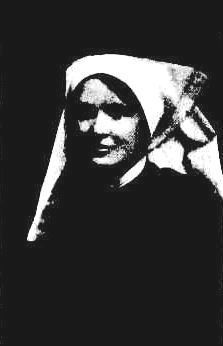
After two months at Caulfield, the opportunity arose for Irene to work in India treating sick and wounded British and Indian troops invalided from Mesopotamia (modern Iraq), where they were fighting Ottoman (mainly Turkish) troops. After being treated in military hospitals in Basra, then Amara, and later Kut and Baghdad, they were transported thousands of kilometres down the Persian Gulf and across the Arabian Sea to Bombay. Following the capture of Baghdad in March 1917, large numbers of sick and wounded Turkish prisoners of war were transported to Bombay too, and later German prisoners of war from East Africa.
On 8 November Irene signed her attestation paper for service abroad with the AANS, nominating Josephine McNeece as her next of kin, and was appointed to the AIF as a reinforcement staff nurse. On 16 November she and 55 other reinforcement staff nurses, in the charge of Sister Ethel Brice Butler (whose brother Col. Arthur Graham Butler would go on to write the official history of the Australian Army Medical Services in the Great War), departed Sydney for Bombay aboard the newly commissioned troopship Canberra. The Canberra was carrying hundreds of AIF troops and 20 AANS nurses to Egypt. After a stop in Colombo, where the nurses were granted shore leave, the ship arrived in Bombay, and on 11 December the 56 nurses for India disembarked. Irene and at least a dozen of her colleagues then went into quarantine.
THE FIRST AANS NURSES IN INDIA
The first Australian nurses had arrived in India in July 1916. Following the movement of AIF infantry divisions to France in April 1916, more than 100 nurses based in Egypt had become surplus to requirements. Fifty of them were offered to India, and on 23 July they arrived in Bombay on the Neuralia under Sister Emily Hoadley.
The Australian nurses expected to serve together as a complete staff but instead were split up and posted in groups of three or four or even individually to ‘station’ hospitals, usually of 100 or 150 beds, maintained by the British Indian Government at cantonments (permanent army stations) across northern and central India. They were often located in very hot districts and were poorly equipped. Here the nurses treated sick and injured non-combatant garrison soldiers as well as troops who had been invalided from the Mesopotamian front to the large military hospitals in Bombay and then discharged to convalesce at their home garrisons. Since the nurses were not directly treating battle casualties, they did not consider their work to be true war nursing, and felt a certain sense of grievance.
Most of the 50 nurses were transferred to England in January 1917. Two remained in India, and tragically three died during their service. Staff Nurses Amy O’Grady and Kitty Power contracted cholera and died a day apart in mid-August at Colaba Military Hospital in Bombay, while Staff Nurse Gladys Moreton died of enteric fever at her station hospital in Quetta on 11 November.
FURTHER CONTINGENTS
Another contingent of 50 AANS nurses sailed from Australia on the RMS Mooltan in the charge of Sister Gertrude Davis and disembarked at Bombay on 13 September 1916. Unlike the first 50, the new arrivals were not immediately scattered to the four winds but were posted to base hospitals in Bombay. Most ended up at the Victoria War Hospital under Sister Davies, where they replaced British nurses, who were transferred to Mesopotamia. The Victoria War Hospital was located close to the docks and so received the most serious British and Indian casualties.
A third contingent of 50 nurses arrived in two batches of 25 each, the first arriving on the RMS Kashgar on 26 September under Sister Bessie Lowrey and the second on the RMS Karmala on 10 October under Sister Teresa Dunne. By the end of October 1916 there were 148 AANS nurses serving in the various hospitals in India.
Contingents of Australian nurses continued to arrive in Bombay across 1917, including on the Mooltan on 15 January, on the Khiva in June, and on the Somali on 30 July.
On 6 October 1917 the British War Office asked the Australian Minister for Defence for a further 100 AANS nurses for service in India. The Minister for Defence approved, and they arrived in Bombay in December 1917, 56 on the Canberra – Irene’s ship – and 44 on the Indarra a week later.
IRENE IN INDIA
On 9 January 1918 Irene and her colleagues Sister Ethel Butler and Sister Effie Munro and Staff Nurses Elizabeth Duncan, Christina Durack, Vera Flae, Ida Harris, Ada Hockings, Agnes McGeoch, Doris Overell, Amy Warner and Ada Wilshire came out of quarantine and were posted to King George’s War Hospital, a newly opened 600-bed hospital in the city of Poona (today known as Pune). They were joined on the same day by Staff Nurse Olive Russell from the Canberra, who had stayed in quarantine only until 24 December, and Staff Nurses Dorothy Baker, Teresa Fulton and Hilda Logan from the Indarra. Staff Nurse Mary Langan from the Canberra arrived at King George’s on 12 January after being discharged from hospital.
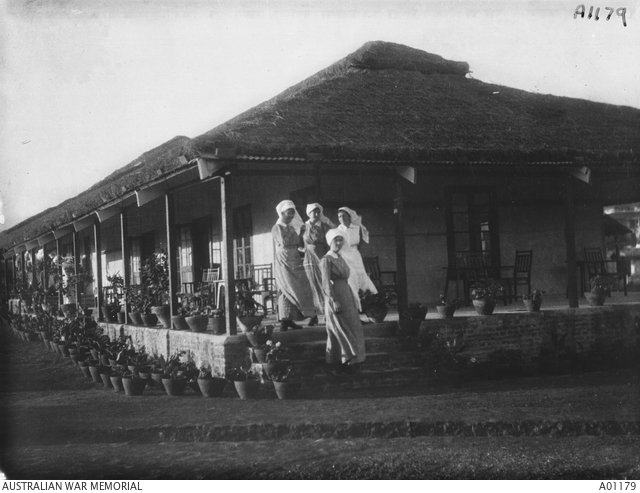
Poona lay 150 kilometres southeast of Bombay in the Western Ghats – and, by dint of its elevation, enjoyed a reasonably comfortable climate. King George’s Hospital was based within Poona cantonment, which had been established on the eastern side of the older, Marathi core of the city. A description of the hospital is lacking in the records, but two photographs of Irene and her colleagues show that the nurses were billetted in a rustic, thatch-roofed building.
It is not clear whether King George’s Hospital functioned as a station hospital, treating the soldiers of the cantonment, or as a convalescent hospital, receiving patients from the Mesopotamian theatre via the Victoria War Hospital. We do know that it was the smaller of the two hospitals in Poona staffed by Australian nurses, the other being the Deccan War Hospital. This longer-established hospital of 1,200 beds was based at the College of Agriculture on the northern outskirts of Poona, around six kilometres northwest of King George’s, and treated patients invalided from Mesopotamia. At first these were mainly wounded, but as medical arrangements improved in Mesopotamia, medical cases began to predominate.
At King George’s Hospital, the Australian nurses worked under a British matron, Nancy Harris, with Ethel Butler as assistant matron, and alongside British and Indian male staff – medical officers, orderlies and others.
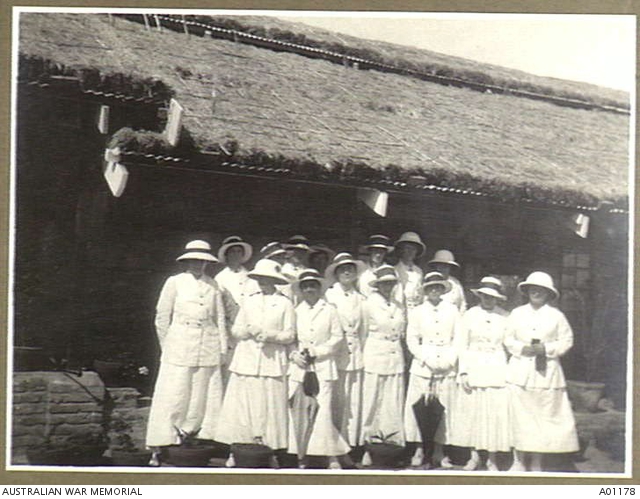
Soon after the nurses’ arrival, Teresa Fulton, who was from southwest Victoria, wrote a letter to her parents. An excerpt was printed in the Port Fairy Gazette on 21 March, as follows:
The week before Christmas we arrived at Bombay and had three weeks’ holiday there. The other girls were very good to us and cheered us up a lot. Our girls were sent to different hospitals and stations. This is a new hospital minus patients so far. There is very little doing in India just now, it seems to be a dumping ground. They must be keeping us here for something. Nobody in this country kills themselves with hard work. Our hours are every other day off or rather start 8 a.m. until 1 p.m. one day, then the next, 8 a.m. to 8 p.m., with 3 hours off – one long and one short. I wish we were busy as it makes things a lot more interesting. Our hospital is surrounded with military camps, and the gardens, racecourse and canal are near us. At present we go out a good deal now that we know a few people. We have been made honorary members of the gymkhana club and boating club, and had several afternoons at the club; also been rowing on the river, in fact, we go to numerous concerts and picnics. Then we have our own tennis court, in fact, this is the game in India. We are having a good time now but intend to work hard when it comes our way.
We do not know whether hard work ever did eventuate. Perhaps Irene, Teresa and the other nurses were kept busy treating the sick soldiers of the cantonment, but certainly they were not treating large numbers of sick and wounded from Mesopotamia. Since 1914 medical arrangements in Mesopotamia had improved so dramatically that far fewer men needed to be invalided to India. According to Matron Davis’s 1919 report to the Assistant Collator of Medical War History, “from January until we closed August 9th 1918 the work [at the Victoria War Hospital] was only sub-acute and so few were our patient [sic] that part of the hospital was converted into a clearing depot for Bombay.” In fact, according to Butler’s Official Histories, the work was so light at the Victoria War Hospital during 1918 that 20 nurses darned socks and sewed on buttons and tapes for a period of two months, during which no patients were in their wards.
ILLNESS AND RETURN TO AUSTRALIA
Irene soon had much more serious concerns than unwanted idleness. Within a few short months of arriving, she became unwell and on 28 April 1918 was admitted to her own hospital as a patient. Sputum tests showed signs of tuberculosis. On 3 May a medical board sitting in Poona confirmed that Irene was suffering from pulmonary tuberculosis aggravated by the climate and her duty. It recommended that she be granted leave to proceed to Australia for six months and further found that she was unfit for duty during the voyage.
On 19 May Irene was transferred to what was known as the ‘Sisters’ Hospital,’ a section of the Colaba War Hospital in Bombay that treated AANS and British nurses exclusively. The following day she departed Bombay aboard HMHS Devanha for Egypt. The Devanha arrived at Suez on 1 June and Irene disembarked. She was transferred to Port Said and on 2 June was admitted to the 14th AGH.
On 10 June another medical board convened in Port Said to discuss Irene’s case. It found that she was unfit for service of any kind and recommended that she be discharged as permanently unfit.
On 21 July Irene travelled from Port Said to Suez and the following day embarked on HMAHS Kanowna for Australia. She arrived in Melbourne on 1 September and was admitted to the Caulfield Military Hospital.
Though Irene rallied for a time, the disease and complications that came with it could not be beaten. On 10 March 1920 a medical officer at Caulfield found that Irene’s condition was caused by war service and recommended that she be discharged from the military and admitted to a sanatorium as an inpatient for 12 months. Accordingly, she was formally released from the Australian Military Forces on 9 April and admitted to Mitcham Sanatorium.
Before long Irene returned to Caulfield, where at 3.15 pm on 4 August 1920 she died of heart failure and pulmonary tuberculosis. Her funeral took place two days later at the Brighton Cemetery in South Caulfield.
IN MEMORIAM
In September 1920 a roll of honour was unveiled at Picola West State School in memory of pupils who had served in the Great War. Irene was one of seven who had paid the ultimate price. Among the speakers at the unveiling ceremony was George Stickels. Trees were planted at the school in memory of the fallen pupils too.
Irene’s name is also inscribed on the Australian Military Nurses Memorial at the Hervey Bay RSL and Services Memorial Club in Pialba, Queensland; on the Dutton Park Bullwinkel Memorial in Kapunda, South Australia; on the Roll of Honour at the Australian War Memorial in Canberra; and elsewhere besides.
In memory of Irene.
SOURCES
- Australian War Memorial, Australian Imperial Force, Unit embarkation nominal rolls, 1914–18 War, Nurses (Jul 1915–Nov 1918), 26/100/1.
- Australian War Memorial, Butler Collection, Nurses’ Narratives, Sister G. E. Davis, AWM41 960.
- Australian War Memorial, Official History, 1914–18 War, Records of Charles E. W. Bean, Official Historian, Diaries, Notebooks and Folders, 1917–27, AWM38 3DRL 606/259/1.
- Burke, E. K. (ed., 1927), With Horse and Morse in Mesopotamia, Arthur McQuitty & Co.
- Butler, A. G. (1943), Official History of the Australian Army Medical Services, 1914–1918, Vol. III – Special Problems and Services, Section III – The Technical Specialties, Chap. XI – The Australian Army Nursing Service (pp. 527–89), Australian War Memorial.
- Grinter, G. C. (1986), By-gone Days of Picola West: Picola West State School – No. 2558.
- Macpherson, W. G. and Mitchell, T. J. (1924), History of the Great War: Based on Official Documents, Medical Services General History Vol. 4: Medical Services during the Operations on the Gallipoli Peninsula; in Macedonia; in Mesopotamia and North-West Persia; in East Africa; in the Aden Protectorate; and in North Russia. Ambulance Transport during the War. H.M. Stationery Office, London.
- National Archives of Australia.
- Public Record Office Victoria, Royal Victorian Trained Nurses’ Association Nurses Register (VPRS 16407/P0001), No. 4, 2,429–3,470, 4 Mar 1915–1 May 1919.
- Public Record Office Victoria, Unassisted passenger lists (1852-1923), VPRS947.
- Scotch College Melbourne, ‘Walter Ernest Isaac Summons OBE.’
- SS Maritime (website), ‘TSS Canberra.’
SOURCES: NEWSPAPERS
- The Argus (Melbourne, 31 Dec 1931, p. 1), ‘Family Notices.’
- The Ballarat Courier (Vic., 7 Jun 1917, p. 5), ‘Nurses’ Examination.’
- The Bendigo Independent (Vic., 16 Oct 1896, p. 2), ‘Slow Progress.’
- The Bendigo Independent (Vic., 24 Dec 1896, p. 1), ‘Sutton Ward.’
- The Elmore Standard (Vic., 12 Feb 1897, p. 2), ‘No Title.’
- The Elmore Standard (Vic., 8 Oct 1897, p. 1), ‘Huntly Shire Council.’
- The Elmore Standard (Vic., 11 Feb 1898, p. 2), ‘No Title.’
- The Evening Telegraph (Charters Towers, Qld., 14 Apr 1919, p. 2), ‘Sister S. M. McElroy.’
- The Nathalia Herald and Picola, Narioka, Kotupna and Moira Advertiser (Vic., 10 Feb 1898, p. 2), ‘News of the Day.’
- The Nathalia Herald and Picola, Narioka, Kotupna and Moira Advertiser (Vic., 4 Jul 1905, p. 2), ‘County Court.’
- The Nathalia Herald and Picola, Narioka, Kotupna and Moira Advertiser (Vic., 10 Aug 1920, p. 2), ‘Obituary.’
- Numurkah Leader (Vic., 9 Oct 1903, p. 7), ‘Advertising.’
- Numurkah Leader (Vic., 16 Mar 1906, p. 5), ‘A.N.A.’
- Numurkah Leader (Vic., 17 Aug 1906, p. 3), ‘Kaarimba.’
- Numurkah Leader (Vic., 6 Mar 1908, p. 2), ‘Picola.’
- Numurkah Leader (Vic., 12 Mar 1909, p. 3), ‘Picola.’
- Numurkah Leader (Vic., 7 May 1909, p. 2), ‘Picola.’
- Numurkah Leader (Vic., 1 Apr 1910, p. 2), ‘Festival at Yalca.’
- Numurkah Leader (Vic., 22 Jun 1917, p. 2), ‘Personal.’
- Numurkah Leader (Vic., 14 Dec 1917, p. 2), ‘Personal.’
- Numurkah Leader (Vic., 3 Sept 1940, p. 2), ‘About People.’
- Numurkah Leader (Vic., 22 Dec 1947, p. 3), ‘What Happened Thirty Years Ago.’
- Port Fairy Gazette (Vic., 21 Mar 1918, p. 2), ‘Letter from a Nurse.’
- The Riverine Herald (Echuca, Vic. and Moama, NSW, 28 Jul 1877, p. 3), ‘Advertising.’
- The Riverine Herald (Echuca, Vic. and Moama, NSW, 7 Jun 1879, p. 2), ‘Goods by Railway.’
- The Riverine Herald (Echuca, Vic. and Moama, NSW, 19 Apr 1887, p. 2), ‘Family Notices.’
- The Riverine Herald (Echuca, Vic. and Moama, NSW, 8 Oct 1888, p. 3), ‘Advertising.’
- The Riverine Herald (Echuca, Vic. and Moama, NSW, 20 Aug 1894, p. 3), ‘Advertising.’
- The Riverine Herald (Echuca, Vic. and Moama, NSW, 19 Sept 1894, p. 3), ‘Advertising.’
- The Riverine Herald (Echuca, Vic. and Moama, NSW, 11 Apr 1895, p. 3), Insolvency Court.
- The Riverine Herald (Echuca, Vic. and Moama, NSW, 16 Sept 1895, p. 3), ‘J. J. McPhail.’
- The Riverine Herald (Echuca, Vic. and Moama, NSW, 14 May 1896, p. 2), ‘The Riverine Herald.’
- The Riverine Herald (Echuca, Vic. and Moama, NSW, 20 Apr 1900, p. 2), ‘Presbyterian Sunday School.’
- The Riverine Herald (Echuca, Vic. and Moama, NSW, 31 Oct 1900, p. 2), ‘Found Dead in His Bed.’
- The Riverine Herald (Echuca, Vic. and Moama, NSW, 22 Dec 1900, p. 2), ‘Annual Speech Days. Echuca State School.’
- The Riverine Herald (Echuca, Vic. and Moama, NSW, 30 Oct 1891, p. 3), ‘Advertising.’
- Weekly Times (Melbourne, 18 Jul 1908, p. 37), ‘The First Arbor Day.’
 australianwarnurses.org