AANS │ Matron │ Second World War │ Mandatory Palestine, Libya & Egypt │ 2/4th Australian General Hospital & 2/2nd Australian General Hospital
GWLADYS’S FAMILY
Gwladys Margaret Thomas was born on 24 June 1907 in Canterbury, a leafy eastern suburb of Melbourne. She was the daughter of Florence Maud Smith (1873–1965) and George Homan Thomas (1870–1944).
Florence was born in Emerald Hill (which became South Melbourne in the 1880s). Her mother, Margaret Ellen Blackader (1845–1924), was from Cork, Ireland, and her father, John Thomas Smith (1844–1917), was from Hampshire, England. They migrated separately to Australia, ended up in Geelong, Victoria, and in 1869 were married in Richmond, Melbourne.
In 1892 Florence married Charles William Edgerton before divorcing him in 1898.
George was born in Sandhurst (officially renamed Bendigo in 1891) in central Victoria. His mother, Ann Rachael Homan (1849–1938), was from Whitechapel, London and arrived as an infant at Port Adelaide in July 1849, while his father, George Thomas (1835–1922), was from Gloucestershire, England. They were married in Victoria in 1869.
As a 13-year-old in 1884, George lived in Long Gully, now a suburb of Bendigo. At the time he was doing very well at school. In 1896, when George was a clerk in the Victorian Railways, he married Euphemia Ann (Effie) Redpath (1870–1897) of Bendigo. She died on 12 April 1897 at their house at 5 Moir Street in Hawthorn, inner-eastern Melbourne. In 1899 George married Elizabeth Jane Pritchard (1868–1904). They had three children, Gwendoline Elizabeth Thomas (1901–1902), Bertha Inez Thomas (1903–1989) and George Homan Thomas (1904–1965). Elizabeth died in 1904 in Hawthorn, and on 5 September 1906 George married Florence at her parents’ residence, ‘Newbury,’ on Lyndhurst Crescent in Auburn, a suburb adjacent to Hawthorn.
Florence and George lived in Canterbury and had three children, the eldest of whom was Gwladys, born in 1907. She was followed by Arthur John Thomas, known as John, in 1910 and Florence Anne Thomas, known as Flossie, in 1911.
In May 1912, while working for the Victorian Railways Stores Branch, George was appointed controller of stores to the Postal Department in Western Australia. By June he had moved to Perth and was advertising for a six- or seven-roomed house in Claremont or Subiaco. By February 1913 the family had relocated and was living on Forrest Street in South Perth.
George was still in Perth in June 1915 but appears to have returned to Melbourne by 1916. By September 1920 he was controller of stores and chief ordnance officer for the Department of Defence and eventually became controller of stores in the Postmaster-General’s Department.
EARLY LIFE AND NURSING TRAINING
Little is known of Gwladys’s early life. According to the Rev. E. H. O. Nye, who delivered her eulogy in September 1941, throughout her life she never retired at night without Bible reading and prayer. She had to leave school at the age of 12 owing to frail health and from then on educated herself at home. Her sister Florence meanwhile attended Methodist Ladies’ College in Kew.
In time Gwladys decided to take up nursing and in 1928, at the age of 21, became a trainee at the Alfred Hospital in South Yarra, Melbourne. She gained her certificate in March 1933 and became registered with the Victorian Nurses’ Board on 28 April 1933. Gwladys then trained in obstetrics at the Women’s Hospital in Carlton, becoming a registered midwife on 14 December 1933.
Finally, Gwladys trained in infant welfare nursing through the Victorian Baby Health Centres Association and gained her certificate on 31 August 1934. At the age of only 27 she was a highly sought-after, triple-certificated nurse.
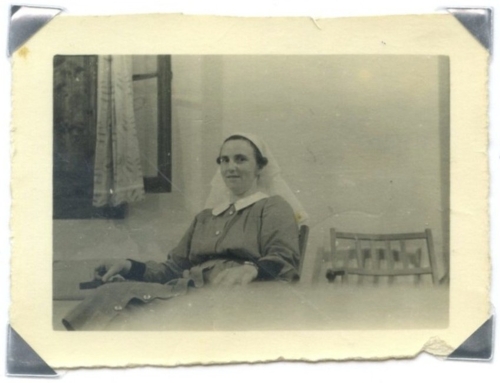
Gwladys returned to the Alfred Hospital and remained on staff until October 1936, when, at the age of just 29, she was appointed matron of the Hamilton and District Base Hospital, where her qualities of leadership and administrative capacity would come to the fore. She left Melbourne to take up her position on 23 October.
By then, Florence and George Thomas were living at 15 Milton Street in Canterbury. George had recently retired from the Postmaster-General’s Department and now devoted his energies to the Boy Scouts’ Association, having become chairman of the State Executive Committee around 1921 and chairman of the Federal Council around 1929.
ENLISTMENT
On 3 September 1939 Australia entered the Second World War and in early 1940 Gwladys was mobilised. She had been a member of the Australian Army Nursing Service (AANS) reserve since 1933 and now her country needed her. In April 1940 she attended the Australian Army Medical Corps depot on William Street in Melbourne and completed an attestation form for service abroad with the Second Australian Imperial Force (2nd AIF). She also underwent a thorough medical examination. On 30 May, having cleared her medical, she was appointed matron of the 2/4th Australian General Hospital (AGH).
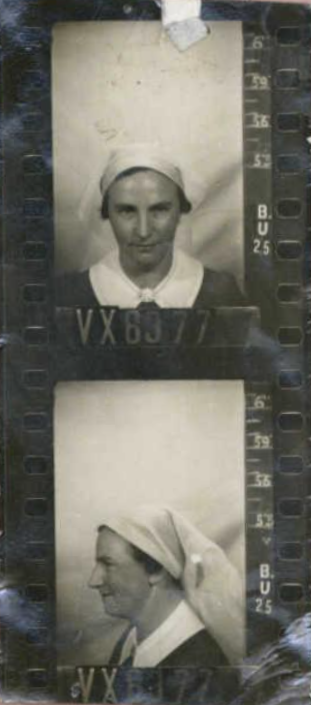
The 2/4th AGH was a medical unit of the 7th Division, 2nd AIF and was formed on 28 May at Puckapunyal Army Camp, 100 kilometres north of Melbourne. Dr. (Norman) Lennox Speirs, a well-known Melbourne gynaecological surgeon, had been appointed commanding officer of the unit at the rank of colonel and was now in the process of recruiting medical and administrative staff. Gwladys and 34 other Victorian nurses were chosen from among hundreds of applications considered by the matron in chief of the AANS, Grace Wilson, and the principal matron of Southern Command (Victoria), Gwladys Parker Field.
As matron, Gwladys would have needed time to arrange for her departure from Hamilton Hospital and did not arrive at Puckapunyal until either 22 July or 21 August (her military record is somewhat ambiguous). Regardless, she arrived and met the nurses under her charge.
THE 2/4TH AGH NURSES DISPERSE
In September 1940, while Italian forces were invading western Egypt from Cyrenaica (eastern Libya), 16 nurses of the 2/4th AGH were chosen for service abroad prior to the general embarkation of their unit. The 16 embarked for Egypt with convoy US5 in four groups. On 14 September a group under Sister Madge Brown – like Gwladys, an Alfred Hospital graduate – departed Sydney aboard the Slamat, while on 15 September contingents under Sisters Nell Bryant and Marjorie Hampton departed Melbourne aboard the Christiaan Huygens and Nieuw Holland respectively. One of the nurses in Sister Bryant’s contingent was Staff Nurse Elaine McPhail of Mont Albert, Melbourne, who will come to feature prominently in Gwladys’s story. When the convoy arrived in Fremantle, at least one other 2/4th AGH nurse, Staff Nurse Victoria Hobbs, boarded the Indrapoera, which had left Sydney with the Slamat.
The convoy departed Fremantle on 22 September and, sailing under various escort ships via Colombo and Aden, arrived at Port Tewfik, the port of Suez, on 12 October. The convoy then continued through the Suez Canal, calling at Port Said, and on 17 October reached Haifa in Mandatory Palestine. (Another source suggests that only the Slamat and Indrapoera continued to Haifa, which would mean that the nurses aboard the Christiaan Huygens and Nieuw Holland must have transhipped at Port Tewfik or even at Colombo.) The following day the 16 nurses disembarked and entrained for Gaza Ridge, Mandatory Palestine. Here, on 18 October, they were attached to the 2/2nd AGH.
The 2/2nd AGH had arrived at Gaza Ridge in May 1940 after sailing to Egypt on the Strathaird with units of the 6th Division, 2nd AIF. While a decision was made where to locate its permanent hospital, the unit set up an interim tented hospital close to that of the 2/1st AGH, which had arrived in Mandatory Palestine in February 1940 but had only opened its hospital in April. In the meantime, there was not very much for the nurses of the 2/2nd AGH to do, and they were detached to the 2/1st AGH and to various British hospitals, including the 5th British General Hospital (BGH) in Alexandria, Egypt and the 61st BGH in Nazareth, Mandatory Palestine.
As the end of the year approached, a permanent site was chosen for the 2/2nd AGH on the eastern side of Kantara, a town in Egypt straddling the Suez Canal between Ismailia and Port Said. A hospital was set up entirely under canvas and on 15 December the unit relocated. The 2/2nd AGH began to take patients on 29 December, and on 6 January 1941 the hospital received its first convoys of men wounded in the counteroffensive against Italian forces in western Egypt. From then on, the convoys arrived regularly.
The MAURETANIA
While their nursing colleagues were treating the convoys of patients at Gaza Ridge, the remaining nurses and other members of the 2/4th AGH were on their way to Egypt.
On 29 December 1940 Gwladys, 32 nurses, and five masseuses (physiotherapists) had arrived at Port Melbourne to join their male colleagues, who had entrained from Dysart, near Puckapunyal, on the Mauretania. The unit numbered 174 staff in all. On board they joined more than 2,500 troops of the 9th Division, 2nd AIF.
In the late afternoon, to the waves and cheers of crowds of people, the Mauretania moved slowly away from the wharf. Towards evening it anchored somewhere off Dromana, still in Port Phillip Bay, and got going again the following morning at around 7.30 am. The Mauretania then passed through the Heads and out into Bass Strait. At around 2.00 pm it arrived at its rendezvous point with the other ships of convoy US8 – the Queen Mary, the Dominion Monarch, the Aquitania and the Awatea. They had departed Sydney on 28 December under the escort of HMAS Canberra.
On 2 January 1941 the convoy arrived in Fremantle, and the following day the troops were granted shore leave. The ships departed on 4 January 1941, again to the cheers of the crowds of people who had gathered to watch them go. And as the people cheered, the ships’ bands played ‘Now Is the Hour,’ and soon the whole harbour filled with singing.
Ceylon was the convoy’s first foreign port of call. On 12 January the Mauretania (and possibly the Aquitania and the Awatea) dropped anchor at Colombo, while the larger ships, the Queen Mary and the Dominion Monarch, had to dock at Trincomalee. On 15 January the 2/4th AGH received orders to transship to a smaller troopship, the Nevasa – inferior in every respect – and the following day the Nevasa departed with a much larger convoy, 15 ships plus three escort ships, officially named US8/1.
By the end of January, the convoy had reached Port Tewfik. Some of the ships began to proceed along the Suez Canal, while others, including the Nevasa, remained at Suez. Soon word came that the canal had been mined, and no more ships were to go through. On the morning of 2 February, the Nevasa moved into the wharf at Port Tewfik, and Gwladys, her nurses and masseuses, and the male staff of the 2/4th AGH disembarked.
From Port Tewfik, Gwladys and her charges proceeded along the Suez Canal to Kantara, where they were attached to the 2/2nd AGH and reunited with their 16 colleagues. The 2/2nd AGH remained extremely busy treating casualties of the fighting in the Western Desert campaign, where the Allies were now pursuing the retreating Italian forces from western Egypt into Cyrenaica and would soon capture Benghazi.
TOBRUK
Meanwhile, the men of the 2/4th AGH had entrained from Port Tewfik to Cairo, then to Alexandria, and finally to Abd El Kader, 30 kilometres to the west of Alexandria in the district known as Amiriya, where they set up a hospital.
In late February Col. Lennox Speirs was told to move the 2/4th AGH to Barce, near Benghazi. The Italians had been routed and Benghazi taken. From Alexandria the unit embarked on the Knight of Malta, “an evil-smelling tub,” according to Col. Speirs, but a heavy Mediterranean storm drove the vessel aground near Bardia, 120 kilometres east of Tobruk. After rescuing their equipment, the men proceeded by degrees to Tobruk, arriving on 9 March. By mid-March they had reached Barce and were beginning to set up a hospital. However, on 22 March Col. Speirs was told that the unit should return to Tobruk as quickly as possible: Rommel had landed in North Africa with his Afrika Korps and would soon be pushing eastwards. The staff began to pack up the hospital once again and prepare for withdrawal, and patients began to be evacuated to Tobruk.
On 26 March the final move order was issued, and over the coming days the 2/4th AGH relocated to Tobruk, leaving a rear party in Barce. At the same time, the 2/2nd Casualty Clearing Station (CCS), which had arrived in Tobruk from Alexandria at the end of January, relocated to Barce to take over the 2/4th AGH’s hospital.
THE ARRIVAL OF THE NURSES
On 27 March, while the two Australian medical units were in the process of exchanging locations, the British hospital ship Dorsetshire arrived in Tobruk Harbour from Alexandria to collect sick and wounded patients. As the ship moved towards the wharves, Allied soldiers out on the rocks cheered and waved, for on board were Gwladys, her 48 nurses and five masseuses, and eight nurses of the 2/2nd CCS. The 2/2nd CCS nurses had been attached to the 2/2nd AGH at Kantara on 5 March after remaining in Alexandria when the male staff of their unit had proceeded to Tobruk at the end of January.
For whatever reason – bad weather, unpreparedness, lack of security – the 62 nurses (and masseuses) were left on board the Dorsetshire that night, even as sick and wounded patients began to be embarked. They were landed the following day, 28 March, and taken to an empty hotel named the Albergo, reportedly once occupied by Mussolini. The rooms were beautifully fitted out but small and needed cleaning. Once this was done, Sister Madge Brown, Gwladys’s second in charge, was put in charge of the nurses’ new home, and rosters were drawn up. Then, while the night-duty nurses stayed at the hotel, the day nurses proceeded to their new hospital, more than a kilometre away.
Upon arrival back in Tobruk, the men of the 2/4th AGH had begun to set up a surgical hospital in the former Italian barracks, which was composed of six long, rectangular buildings, each capable of accommodating 100 beds. This was dubbed the ‘town hospital.’ A tented medical section was set up with the aid of the 2/3rd Field Ambulance and some Italian prisoners of war at a beach site three kilometres away. This became known as the ‘beach hospital.’
When the day nurses arrived at the town hospital they set to work turning the long buildings of the barracks into functional wards. They cleaned away rubbish, cleaned the floors, and set up beds with grey blankets. At the end of the day, they marched back to the Albergo, and the night-duty nurses marched down to the hospital.
Casualties from the renewed fighting in the Western Desert began to arrive even before the hospital was officially open, and patient numbers increased as Rommel’s Afrika Korps advanced eastwards. To keep up with patient numbers, the nurses (who had by now been officially reattached to their respective units) opened further wards. Many of the 2/4th AGH orderlies had not yet arrived from Barce, so the nurses had a lot of extra work to do. They carried heavy loads of food from the kitchen to the wards and swept and swabbed the stone floors. As there was no laundry being done, they soon ran out of bed linen.
Many patients had machine-gun wounds due to Luftwaffe strafing along the coast road between Benghazi and Tobruk. They were brought to the hospital in whatever they were wearing, with their wounds bandaged in field dressings. Since good drinking water was scarce – Italian troops had salted the water supply while withdrawing – sometimes several filthy, battle-stained patients were washed with the same dirty water. The lack of pyjamas and bed linen only added to the patients’ discomfort. The nurses did at least have mountains of compressed dressings, thanks to the former Italian occupants of the barracks.
During the night, blackout was strictly enforced, with blankets nailed to the windows and doors to keep the lights from showing. The nurses worked all through the night admitting convoys with only shaded hurricane lamps to see by.
Before long the hospital was full. The nurses forgot about time off; they worked until they had to sleep and then started again. They ran out of beds, then mattresses, and soon patients were lying on the floors. An extract from Sister Nell Bryant’s diary entry of Saturday 5 April offers an insight into the nurses’ working conditions at that time:
On duty 6.30 pm to find the place v busy & as night went on it got worse 23rd Batt. mach-gunned & patients poured in, theatre going all night. Well patients gave up their beds to the sick ones & went on the floor. By morning all v tired & we had 608 patients War news little better … when I did the round I had to go to air raid shelter as some of the boys stayed there all night (quoted in Bassett, p. 120).
On 6 April, the day after the 2/2nd CCS and the rear party of the 2/4th AGH had evacuated Barce and returned to Tobruk, German forces were only 40 kilometres away. Luftwaffe bombers flew overhead, and air raid sirens sounded frequently. The bed situation in the hospital had become critical, and finally the unit’s quartermaster had to give the nurses the beds that he had been saving. They were straight from Australia and wrapped in miles of paper. The nurses removed just enough of it to allow the beds to be assembled. They were soon filled, and patients were put under them as well.
THE NURSES EVACUATE
At around 5.00 pm on 6 April, the 62 nurses were informed that they were to be evacuated. They left the hospital to return to the Albergo. The nurses’ experience that night and the following day, when they embarked on the Vita, was described years later by Victoria Hobbs (who, it will be recalled, had sailed with convoy US5 on the Indrapoera) in a talk she gave entitled ‘Nursing at Tobruk in the Second World War.’ Part of her talk was based on a letter sent in 1943 to the film director Charles Chauvel, who was making a film about the famous ‘Rats’ of Tobruk. The letter presented the testimony of some of the 2/4th AGH nurses as compiled into a narrative by Victoria and her 2/4th AGH colleague Anne Errington. According to Victoria:
After we left the hospital the C.C.S. girls [who were working in the two psychiatric wards] underwent a lot of mental trauma because their patients started to scream and run after them … We were not allowed to tell the patients we were going but they knew I’m sure. We would have preferred to have stayed all night and helped. We were marched down the hill and told that we must go. Barney and Charlie, our two orderlies … had been looking after us and they came down with us. Afterwards we said goodbye to them as they slung their packs on their shoulders and took off up the hill once again to the hospital.
The nurses arrived back at the Albergo in the evening and prepared to evacuate. That night, they slept in their uniforms, ready to leave at any moment. During the night there was a terrific sandstorm, which thwarted the Luftwaffe. In the morning, sand was piled up high inside the quadrangle of the Albergo, almost up to the top of the wall.
The nurses departed that afternoon. Victoria Hobbs continues the story:
We were told we would be taking our kit bags only. In these we placed our most prized possessions. [By] the time we had packed them, none of us could even lift them off the floor. [We] left the Albergo about five p.m. in ambulances to drive to the wharf. [There] were soldiers all about and a large transport full of Italian prisoners sailed just as we drew up. [We] embarked about six p.m. [from] the main jetty [on a] large ocean going naval launch. Our ship [the Vita], a British naval hospital ship with the usual white, green and red markings, was about two miles out, near the entrance to the Tobruk harbour just past the bulk of the sunken Italian battle cruiser the San Georgio. We were all attired in our usual outdoor uniform – grey suit, hat and great coats. We wore our great coats to embark and carried a small brown suitcase apiece. Our respirators, Italian water bottles and steel helmets were slung across our shoulders.
The ship we left on took four hundred odd casualties. They ferried them out in a flat boat in flat barges and the hospital ship’s crew had a cunning sling arrangement for hauling the stretcher cases on board. … We were really crowded and we were asked if we were willing to go on duty. Most of us didn’t bother to change. The first night we had to stay out in the harbour because we were still taking on casualties. … In the morning [of 8 April] we got up and were given something to eat in the mess. [After dark] we got out of the harbour and we came to a standstill because … a chain from a mine got wound round our propeller and we had a diver go down and get us free. However the old Vita got through the mine field and took us on our way to Palestine.
The nurses had left Tobruk under protest, with a deep feeling of injustice. All had said that they were willing to take their chances with the rest of the unit. Upon her return to Australia in August 1942, Madge Brown expressed the nurses’ dismay, as quoted in the Melbourne Argus on 21 August. “We were the most miserable girls you could have seen,” she said. “We wanted to stay in the front line, to nurse the hundreds of sick and wounded. However, authority thought otherwise; hospital orderlies were put in our places, and we sorrowfully packed our kits and marched down to the quay, which was even then a graveyard of ships.”
BACK TO PALESTINE AND EGYPT
Gwladys and the other 61 nurses arrived at Haifa on 10 April. That same day, the 2/4th AGH’s hospitals in Tobruk were bombed. At least four staff members died and two were seriously injured. Thirty-two patients were listed as killed or missing. It was a black day for the unit.
From Haifa, the nurses entrained for Gaza Ridge, where they were attached to the 2/1st AGH. On 16 April Gwladys was admitted to hospital with abscesses in her armpits. She was discharged on 18 April.
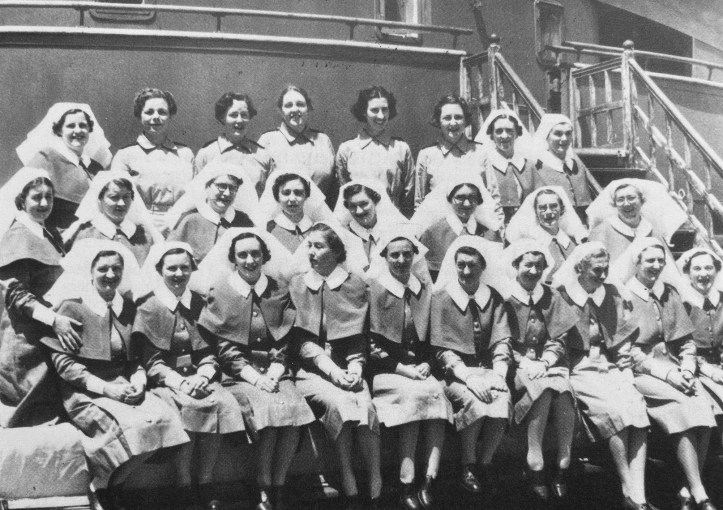
In May the nurses were dispersed in groups to other units, including the 2/2nd AGH at Kantara and the newly arrived 2/7th AGH at Rehovot in Mandatory Palestine. Gwladys returned to the 2/2nd AGH on 28 May and was appointed matron of the unit following the promotion of Matron Annie Sage to matron in chief, 2nd AIF (Middle East). Among others to return to the 2/2nd AGH with her that day were Nell Bryant and Elaine McPhail.
The 2/2nd AGH was as busy as ever. The hospital was in a target area, and there were frequent air raids; walking wounded, who were in a nervous condition as the result of previous bombings, sometimes wandered into the desert during a raid and the sister-in-charge of their ward would then have to go and collect them. The nurses spent a good deal of their time off duty at the YWCA recreation centre in Ismailia, which lay on the western side of the Suez Canal 30 kilometres south of Kantara, but they had no respite from air raids there. The YWCA building was on a corner, and the buildings on the other three corners had all been hit by bombs.
On 18 July Gwladys was admitted as a patient to the 2/2nd AGH with dysentery and spent the next nine days in hospital.
Around this time Gwladys began to hold weekly musical evenings for the entertainment of her nurses. Whether musicians and singers came to the hospital, or whether the nurses themselves played and sang – Gwladys herself was an accomplished pianist and singer – we do not know. Perhaps it was a combination of both.
THE FINAL NIGHT
Late on Sunday night 31 August 1941, Gwladys was returning in an army vehicle from Ismailia. With her were Elaine McPhail, Sister Dorice Burgess, from Subiaco, Western Australia, and three British officers. According to Staff Nurse Nan Whiteside (later Nan Schofield), the nurses had gone to Ismailia to “help to give a concert” – perhaps as part of Gwladys’s musical evenings; Nan recalled of Elaine and Dorice that “one sang beautifully.”
Travelling north along the west bank of the canal, the vehicle arrived at Kantara, and the driver had just crossed the bridge to the east bank, where the 2/2nd AGH was located, when an air raid siren sounded. The driver duly turned off the vehicle’s lights, and they crept along in the darkness. Suddenly from the opposite direction came another vehicle, and there was a terrific head-on collision. Gwladys and Elaine both sustained critical head injuries and were taken to the 1st British General Hospital (BGH) in Kantara. Dorice and two of the officers were badly injured and were also taken to the 1st BGH. The third officer, possibly the driver, was also critically injured and may have died instantly.
Gwladys and Elaine both died on 1 September. The following day they were buried at the British Military Cemetery, which was close to the 2/2nd AGH. As the funeral procession passed by the hospital, many of the wounded men – Gwladys’s and Elaine’s patients – left their beds and stood reverently in a spontaneous and genuine show of respect.
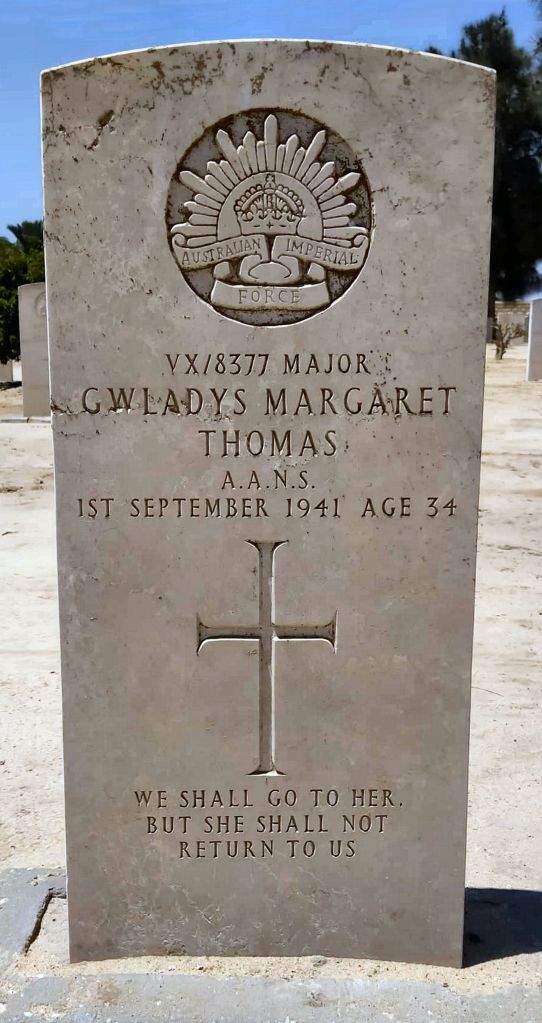
Meanwhile, Dorice, who had sustained multiple fractures of her pelvis, forearm and leg, remained at the 1st BGH until 5 September and was then moved to the 2/2nd AGH.
A court of inquiry held at Ismailia on 27 October found that “the collision was directly due to the bad visibility produced by an air raid blackout on a practically moonless night. Neither driver saw the other approaching car. No negligence.”
On 13 November Dorice was classified as permanently unfit for service by a medical board and on 21 November returned to Australia aboard the Dutch hospital ship Oranje, arriving in Perth on 6 December. She was admitted to the 110th Perth Military Hospital (also known as the Hollywood Hospital) and not discharged until April 1942. At one point she was warned that it would be a miracle if she ever walked again, but courage and determination pulled her through. By 1945 she was walking without difficulty and showing little sign of the ordeal through which she had passed.
IN MEMORIAM
On Sunday evening 7 September 1941, a week after the terrible accident, memorial services were held in Gwladys’s honour at Canterbury Methodist Church in Melbourne and at the Hamilton Methodist Church.
The service at the Canterbury Methodist Church, conducted by the Rev. E. H. O. Nye, was attended by representatives of the AANS, patriotic organisations, churches and hospitals, as well as personal friends of Gwladys’s. Florence and George Thomas were there, as was Mrs. Speirs, the wife of Col. Speirs.
Earlier in the day Florence Thomas had also attended a memorial service for Elaine McPhail held at the Holy Trinity Church in Kew.
Meanwhile, the service in Hamilton was attended by the president and members of Hamilton Hospital, where Gwladys was matron before the war, and by members of the medical and nursing staffs.
On 2 May 1949 a bronze plaque in memory of Gwladys was unveiled at the Alfred Hospital Nurses’ Home. Former matron in chief Grace Wilson performed the ceremony.
On Anzac Day 1955 Florence Thomas made her annual pilgrimage to the Edith Cavell memorial statue on St. Kilda Road in Melbourne. There she placed a wreath in remembrance of Gwladys, who gave her life in the service of Australia.
In memory of Gwladys.
SOURCES
- Ancestry Library Edition.
- Australian War Memorial, Keith Murdoch Sound Archive of Australia in the War of 1939–45, (VX8383) Dobson (née Bryant), Ellen May ‘Nell’ (Captain), transcript of oral history recording (1 Oct 1990), interviewer Harry Martin, AWMS00961.
- Bassett, J. (1992), Guns and Brooches: Australian Army Nursing from the Boer War to the Gulf War, Oxford University Press Australia.
- Benjidog (website), Benjidog Historical Research Resources: Ship Histories, Dominion Monarch.
- Committee of Management and Secretary of The Royal Women’s Hospital, ‘Speirs, Norman Lennox (1886–1960),’ in The Royal Women’s Hospital Biographical Compendium. (Transcription of item believed to have been written by Dr Colin Macdonald and published in ‘The Book of Remembrance,’ The Royal Women’s Hospital, Melbourne, c. 1960.)
- Department of Veterans’ Affairs, Anzac Portal, ‘Sister Hamilton served much of the war on night duty’ (2022).
- Goodman, R. (1983), A Hospital at War: The 2/4 Australian General Hospital 1940–1945, Boolarong Publications.
- Hobbs, V., ‘Nursing at Tobruk in the Second World War’ (transcription of an oral presentation that was donated to the Battye Library Oral History Program), State Library of Western Australia OH135.
- National Archives of Australia.
- Royal Naval Research Archive, ‘H.M.H.S. Vita.’
- State Library of Western Australia, The Western Australian Directory (Wise’s), 1913–14.
- Uboat.net (website), section detailing convoy US 5.
- University of NSW, Canberra, Australians at War Film Archive, Madge Brown, archive number 2595 (transcript of interview 10 October 2008).
- University of NSW, Canberra, Australians at War Film Archive, Margaret Mack, archive number 1062 (transcript of interview 8 Oct 2003).
- University of NSW, Canberra, Australians at War Film Archive, Anna Schofield (Nan), archive number 439 (transcript of interview 6 June 2003).
- Walker, A. S. (1962), Australia in the War of 1939–1945, Series 5 – Medical, Vol. II – Middle East and Far East, Part I, Chap. 5 – Preparations in the Middle East, 1940 (pp. 86–115), Australian War Memorial.
- Walker, A. S. (1962), Australia in the War of 1939–1945, Series 5 – Medical, Vol. II – Middle East and Far East, Part I, Chap. 7 – Bardia and Tobruk (pp. 124–156), Australian War Memorial.
- Walker, A. S. (1961), Australia in the War of 1939–1945, Series 5 – Medical, Vol. IV – Medical Services of the Royal Australian Navy and Royal Australian Air Force with a section on women in the Army Medical Services, Part III – Women in the Army Medical Services, Chap. 36 – The Australian Army Nursing Service (pp. 428–76), Australian War Memorial.
- Wikipedia, ‘SS Slamat,’ citing Arnold Hague, Ship Movements, ‘Slamat,’ Don Kindell, ConvoyWeb.
SOURCES: NEWSPAPERS AND GAZETTES
- The Age (Melbourne, 1 Jan 1870, p. 2), ‘Family Notices.’
- The Age (Melbourne, 7 Sept 1920, p. 7), ‘Ordnance Stores.’
- The Age (Melbourne, 23 Oct 1936, p. 17), ‘From Near and Far.’
- The Age (Melbourne, 6 Sept 1941, p. 7), Memorial Services for Army Matron
- The Age (Melbourne, 8 Sept 1941, p. 6), ‘Army Nurses Mourned.’
- The Age (Melbourne, 13 Nov 1944, p. 2), ‘Obituary.’
- The Argus (Melbourne, 30 Dec 1869, p. 4), ‘Family Notices.’
- The Argus (Melbourne, 15 Jul 1921, p. 9), ‘Army Ordnance.’
- The Argus (Melbourne, Fri 1 Dec 1933, p. 5), ‘Decision Reserved.’
- The Argus (Melbourne, 5 Sept 1941, p. 3) ‘Army Matron Killed in Middle East.’
- The Argus (Melbourne, 21 Aug 1942, p. 5), ‘Nurse Sorry to Have Left Tobruk.’
- The Argus (Melbourne, 13 Nov 1944, p. 5), ‘Mr George H. Thomas.’
- The Argus (Melbourne, 26 Apr 1955, p. 14), ‘“Patriotism without hatred”: Nurses Meet Again.’
- The Ballarat Star (Vic., 29 May 1912, p. 6), ‘Personal Items.’
- The Bendigo Independent (Vic., 20 Apr 1897, p. 2), ‘Family Notices.’
- Corryong Courier (Vic., 20 Nov 1941, p. 3), ‘A Modern Florence Nightingale: Matron Gwladys Thomas.’
- The Herald (Melbourne, 24 Oct 1936, p. 28), ‘Social Gossip.’
- The Herald (Melbourne, 6 Jun 1940, p. eight), ‘Victorian Nurses to Go Abroad with 2nd A.I.F.’
- The Herald (Melbourne, 15 Sept 1941, p. 9), ‘Parcels for Nurses Serving Oversea.’
- The Herald (Melbourne), 2 May 1949, ‘In Memory of Matron.’
- The Horsham Times (Vic., 9 Sept 1941, p. 2), ‘Former Hamilton Matron Killed.’
- Jamboree Daily (Frankston, Vic., Jan 1935, p. 7), ‘Camp Personalities.’
- Mirror (Perth, 27 Jan 1945, p. 4), ‘One of First Sisters to Go Overseas.’
- Mirror (Perth, 27 Jan 1945, p. 4), ‘Perth War Nurse Had to Learn to Walk Again.’
- South Australian Register (Adelaide, 28 Jul 1849, p. 2), ‘Shipping Intelligence.’
- Sunday Times (Perth, 5 May 1912, p. 1), ‘The Commonwealth Gazette.’
- Victoria Government Gazette (No. 151, 13 August 1936), Register of Nurses 1936.
- Victoria Government Gazette (No. 73, 20 April 1939), Register of Midwives 1939.
- The W.A. Record (Perth, 19 Jun 1915, p. 13), ‘Obituary.’
- The West Australian (Perth, 14 Jun 1912, p. 1), ‘Advertising.’
- The West Australian (Perth, 17 Feb 1913, p. 10), ‘Advertising.’
- The West Australian (Perth, 16 Feb 1942, p. 7), ‘Social News.’
- The West Australian (Perth, 16 Feb 1942, p. 7), ‘Social News.’
 australianwarnurses.org