AANS │ Lieutenant │ Second World War │ Malaya & Australia │ 2/13th Australian General Hospital & 115th Heidelberg Military Hospital
FAMILY BACKGROUND
Beryl Gethla Louise Forsyth, known as Gethla, was born on 28 June 1913 in Allendale, a small town near Creswick in the goldfields region of central Victoria.
Gethla’s mother was Louisa Ellen Jones (1871–1943), who was from Daylesford, not far from Creswick. Louisa was the eldest of around nine children born to Elizabeth Halliwell of Yorkshire, England and Owen Jones of Caernarvonshire, Wales. Elizabeth and Owen were married in 1867 in East Ballarat, just south of Creswick.
Gethla’s father was William Lawrence Forsyth (1868–1963), one of around nine children born to William Forsyth of Banffshire, Scotland and Margaret Mackenzie of Renfrewshire, Scotland. William and Margaret were married in 1866 at Mount Bolton, west of Creswick, and at the time of William’s birth were living in East Ballarat.
William worked for the National Bank of Australasia and in 1895 was sent to the Creswick branch. He met Louisa, and on 2 May 1899 they were married. In the same year William was sent to manage the Allendale branch, and he and Louisa settled there. On 22 August 1901 their first child, Gwladys (or Gladys) Lorne, was born. Two years later William Lawrence Bruce, known as Bruce, was born.
Around 1908 William became the manager at Smeaton, five kilometres north of Allendale. He must have commuted, since it appears that the family remained resident in Allendale – where, in 1913, Gethla was born.
GROWING UP
In 1915 William Forsyth was appointed manager of the National Bank’s Koroit branch, 200 kilometres away in southwestern Victoria, and on 14 May the family departed Allendale.
Like many children growing up in Australia during the Great War, Gethla sang at concerts held to raise money for the Red Cross, the Belgian Relief Fund, and other entities. For instance, in January 1917 three-and-a-half-year-old Gethla performed ‘Dear Little Jammy Face’ at a Red Cross concert held in Koroit. She sang the verses with Miss Rita Fleming but sang the chorus entirely by herself and received loud applause for her efforts.
By November 1917 Gethla had become a pupil at Koroit State School. That month she sang at the school’s annual concert, the proceeds of which were donated to the wounded soldiers at the Caulfield Military Hospital. Her brother, Bruce, also took part in the concert as one of a troupe of minstrels.
MELBOURNE
In 1919, following the amalgamation of the National Bank of Australasia with the Colonial Bank of Australasia, William Forsyth was appointed to the relieving staff of the amalgamated bank (which retained the National Bank name) and with his family relocated to Melbourne. The Forsyths left Koroit by train on 23 July. Prior to their departure, six-year-old Gethla was handed a cheque by Mr Fred O’Brien, the value of which represented the balance left over from a social evening held for her parents. According to a report in the Port Fairy Gazette on 28 July, Gethla remarked that “she would put the cheque away with her War Savings Certificates.”
In February 1921 William Forsyth was relieving at the Cobram branch of the National Bank, while the family – or at least the two elder children – appear to have remained in Melbourne. By March 1925 William was managing the Nhill branch of the bank in far-western Victoria and had relocated there with Louisa Forsyth and Gethla.
Sometime after this, Gethla returned to Melbourne to board at Methodist Ladies’ College. She remained a boarder until at least June 1929, when she spent the term vacation in Nhill.
In October 1929 Gethla’s sister, Gladys, was married to William Angus, a doctor, at St. Andrew’s Church in Ballarat. Gethla was one of the bridesmaids.
In 1930 or early 1931 William retired from the National Bank after a career spanning at least 35 years. He and Louisa returned to Melbourne and by September 1933 were living on St. Kilda Street in Elwood, an inner bayside suburb. Around 1935 they moved to 49 Cooloongatta Road in Camberwell in the inner east.
In November 1936 Gethla’s brother, Bruce, who had himself become a banker, married Jessie Thomas of Western Australia.
NURSING
By then Gethla had become a nurse. In March 1933, at the age of 19, she had gained a place in the Preliminary Training School of the Alfred Hospital in South Yarra, Melbourne. In March 1936 she sat and passed her final Royal Victorian Trainee examinations and later that year graduated from the Alfred.
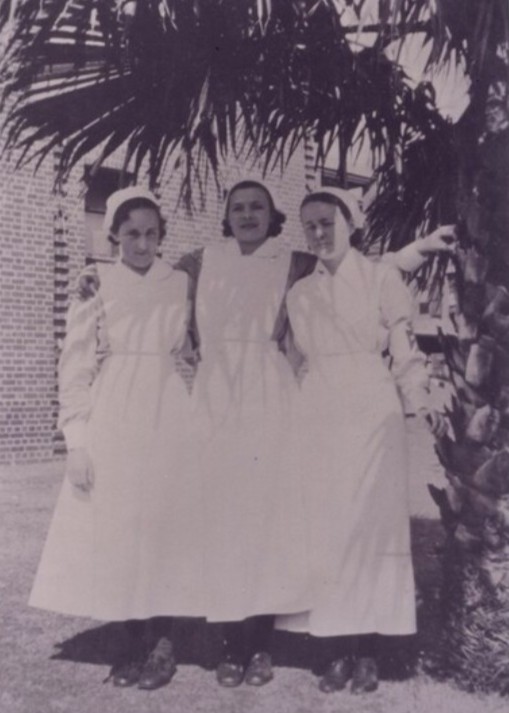
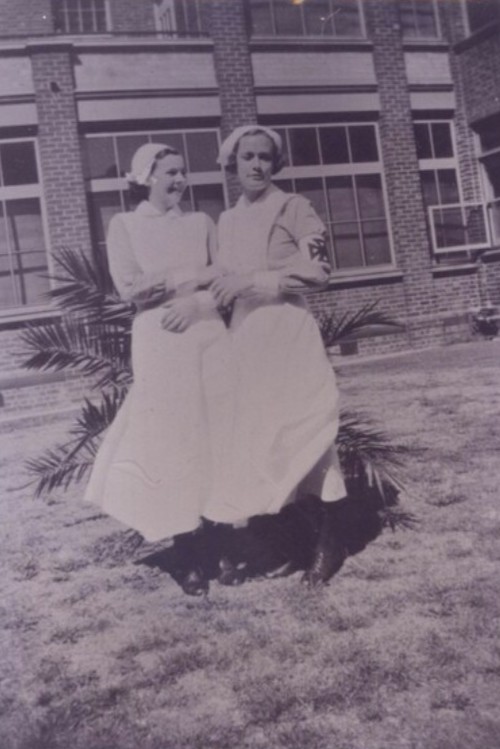
On 13 March 1937 the matron of the Alfred Hospital, former Great War nurse Grace Wilson (and matron-in-chief of the Australian Army Nursing Service at the time), wrote a letter of support for Gethla, who was resigning from the Alfred to go abroad. Matron Wilson felt sure that Gethla would do her best to uphold the honour of her training school. She noted that Gethla had spent the last six months as a staff nurse in one of the surgical wards.
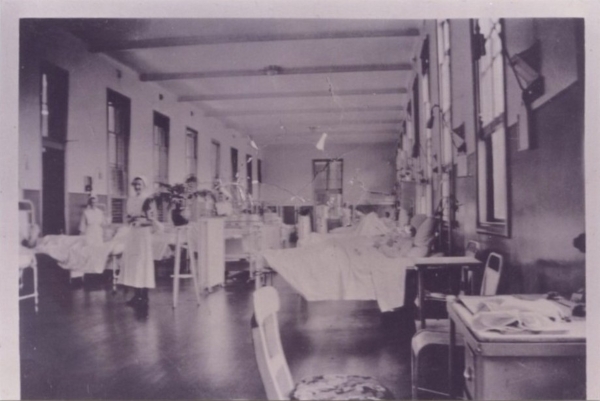
Upon her return from overseas (if indeed she did in fact go), Gethla took a position at the Freemasons’ Hospital in East Melbourne.
ENLISTMENT
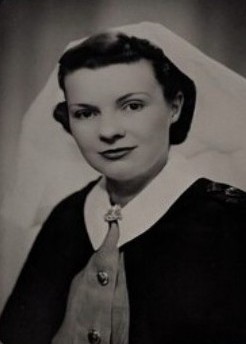
On 3 September 1939 Australia went to war for the second time in 25 years. Once again, women and men from across the country volunteered to serve. Gethla was no exception. She joined the Australian Army Nursing Service (AANS) on 10 October 1940 and on 30 April 1941 completed her Mobilization Attestation Form at the Australian Army Medical Corps (AAMC) recruitment depot on William Street in Melbourne.
Just under three months later Gethla was called up. On 17 July Grace Field, principal matron, Southern Command (Victoria, Tasmania and South Australia) telephoned her at the Freemason’s Hospital and said simply, “be ready in 24 hrs – or else.” The following morning Gethla visited South Command headquarters on Swanston Street in Melbourne’s city centre and received her orders: “Take a suitcase & be out at Heidelberg Hospital by 8pm.” Then her uniform was inspected and she completed more paperwork.
Gethla duly arrived at the 115th Australian General Hospital (AGH), also known as the Heidelberg Military Hospital, in Melbourne’s northern suburbs, and the following day, 18 July, began full-time duty with the Citizen Military Forces (CMF) at the rank of staff nurse. On 28 August Staff Nurses Bennos Atwood and Dorothy Sturgess arrived at Heidelberg.
On 14 November 1941 Gethla was seconded from the CMF to the Second Australian Imperial Force (2nd AIF). Bennos Atwood and Dorothy Sturgess were seconded three days later. The three nurses had been chosen for service in Malaya, although it is likely that they were not officially informed of their destination. They retained the rank of staff nurse and for the time being remained at Heidelberg.
In February 1941 the 22nd Brigade, 8th Division, 2nd AIF had embarked for Malaya to reinforce British and Indian garrison forces in response to growing concern about Japanese intentions in Southeast Asia. Accompanying the 27th Brigade were several units of the AAMC, including the 2/10th AGH and the 2/4th Casualty Clearing Station (CCS) – which between them had around 54 AANS nurses and masseuses (physiotherapists) on staff. As tensions grew across the year, another 8th Division brigade, the 27th, was deployed to Malaya in August, while in September a second AGH, the 2/13th, arrived in Singapore with around 53 nurses and masseuses on staff.
On 24 November Gethla was admitted to the 115th AGH as a patient and placed on the x list (allowing the unit to take someone else on strength in the meantime). She was meant to have begun a six-day period of pre-embarkation leave on 25 November but instead remained in hospital for the duration, returning to her unit from the x list on 1 December. She was then granted pre-embarkation leave from 2 to 7 December.
On the same day that Gethla returned to the hospital, the Japanese 25th Army, under Lieutenant General Tomoyuki Yamashita, began an invasion of Malaya. An amphibious landing in northern Malaya was followed shortly afterwards by the bombing of Singapore Island. Elsewhere, and near-simultaneously, Pearl Harbour, Guam, Midway, Wake Island and American installations in the Philippines were attacked, and Hong Kong was invaded. The Pacific War had begun.
THE AQUITANIA
The time for the nurses’ departure drew near, and on 5 January 1942 Gethla, Bennos and Dorothy travelled across Melbourne from Heidelberg to the Lady Dugan Nurses’ Hostel on Domain Road in South Yarra. Two days later they entrained for Sydney, where they joined three New South Wales counterparts – Staff Nurses Bonnie Gordon, Ida Morse and Mavis Mulvihill. On 10 January the six nurses, together with other AAMC reinforcements, embarked on the Aquitania, which was moored on Cockatoo Island in Sydney Harbour. On board they joined more than 3,400 8th Division reinforcements, including the bulk of the 2/4th Machine Gun Battalion.
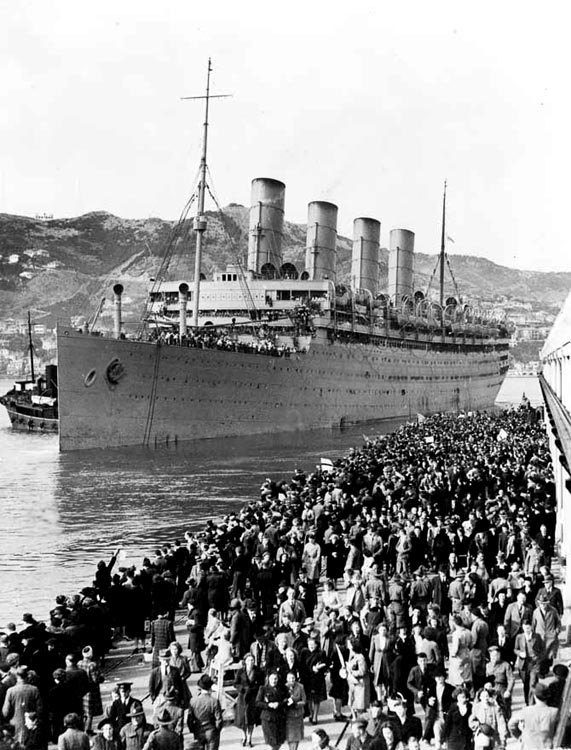
At 2.00 pm the Aquitania departed Sydney Harbour under the escort of HMAS Canberra and by 15 January had reached Fremantle. Too large to enter the inner harbour, the ship anchored in Gage Roads, as the outer harbour was known. Since the stay would be a brief one, the troops were not granted shore leave. However, when they found out that the ship’s crew had disembarked, the men were none too pleased, and as many as 1,300 of them broke ship and proceeded ashore. Most had returned by the time the Aquitania sailed again the following day at around 2.00 pm. By then around 150 Western Australian members of the 2/4th MGB had boarded the ship via a naval oil tanker.
Originally, the Aquitania had been scheduled to sail directly to Singapore, but the danger from Japanese aircraft had brought about a change of plans, and now from Fremantle the ship set out for the Netherlands East Indies. On 20 January it arrived in Ratai Bay, Sumatra, where the 8th Division reinforcements as well as other military personnel and civilians were transhipped to seven smaller vessels, six of which belonged to the Dutch KPM line. Gethla and her colleagues boarded the Van Swoll. Among those on board with them were members of the 2/4th MGB, RAAF personnel, and a handful of junior naval officers.
The six Dutch KPM ships sailed on to Singapore, guarded by destroyers and flying boats of the RAF and Royal Netherlands East Indies Army Air Force, while the Aquitania returned to Sydney.
SINGAPORE
On 24 January 1942 the small convoy sailed into Keppel Harbour, and the thousands of 8th Division reinforcements began to disembark. In due course the medical reinforcements disembarked as well, and Gethla, Bonnie Gordon, Mavis Mulvihill, four medical officers and around 29 other ranks were posted to the 2/13th AGH. Due to the proximity of Japanese troops, who had been advancing inexorably southwards since 8 December 1941, the 2/13th AGH was in the process of withdrawing from its base at the Tampoi Mental Hospital in the south of the Malay Peninsula and relocating to St. Patrick’s School in Katong on the south coast of Singapore Island. This is where the unit had been billeted prior to moving to Tampoi in late November 1941. Meanwhile, Bennos Atwood, Ida Morse, Dorothy Sturgess and presumably other AAMC reinforcements were sent to the 2/10th AGH, based since mid-January 1942 at Oldham Hall and Manor House on Singapore Island but originally established at the Malacca General Hospital on the Malay Peninsula.
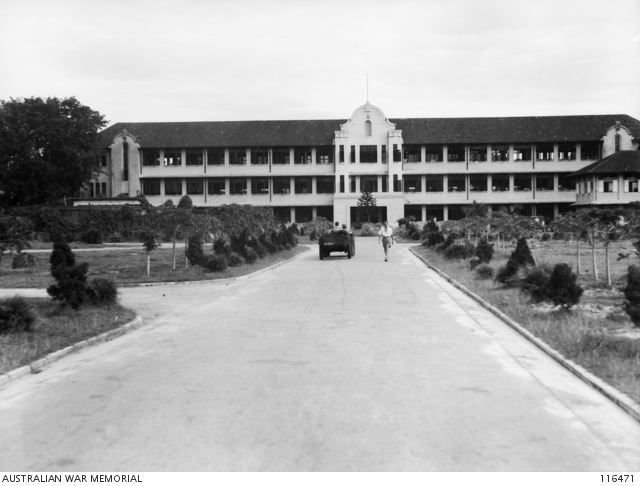
On 25 January Gethla, Bonnie and Mavis, together with a certain Major H. Eddy and the other 2/13th AGH reinforcements, arrived at St. Patrick’s School in time to help with the hospital’s relocation. This was completed by 11.00 pm that night and had taken only two days – even in the midst of bombing raids over Singapore. According to Gethla’s new 2/13th AGH colleague Sister Elizabeth Simons in her book, While History Passed (p. 4), during the relocation not one patient missed a dose of medication.
The nurses were billeted in a beautiful bungalow located several hundred metres from St. Patrick’s School. It had been evacuated by its European owners. The bungalow was not particularly restful, however. There was a landmine in the front garden, ack-ack guns were mounted three doors away, and shells whizzed overhead regularly. Every time the nurses left their quarters to go on duty, they were obliged to carry their gas masks and tin hats.
Soon after the unit’s return to St. Patrick’s School, the 2/13th AGH had around 760 patients, nearly all of them 8th Division soldiers. Many were dangerously ill with serious abdominal wounds, and Gethla and her colleagues worked frantically to save their lives. Though racked with pain, the men were polite and courteous to the hospital staff. Since 14 January 1942, when 8th Division troops had first engaged Japanese soldiers at Gemencheh Bridge, near Gemas on the Malay Peninsula, hundreds had come through the hospital.
THE JAPANESE CLOSE IN
On the morning of 31 January 1942 the last Commonwealth troops, pressed ever southwards by the Japanese, crossed the Causeway from the Malay Peninsula to Singapore Island. Soon after, British engineers blew it in two places in an attempt to slow the Japanese advance onto the island. The first explosion destroyed the lock’s lift-bridge on the northern side, while the second blew a 21-metre hole in the structure.
Meanwhile, the bombing of Singapore continued unabated. On the night of 31 January, at approximately 11.00 pm, an upper ward on the southeastern corner of St. Patrick’s School sustained considerable damage when a lone Japanese aircraft bombed it. In his unofficial history of the 2/13th AGH, Corporal Lex Arthurson (p. 21) records that the aircraft had flown
around us for about 30 minutes. The alarm had sounded at 2230 hours but all seemed quiet once more when, suddenly, a plane was heard approaching from the sea. The pilot dropped a stick of five bombs on the hospital. Luckily only one hit. The first two landed in the sea – one of these just opposite the Officer’s Mess – the third hit the top of one of the main buildings and the other two went off on the vacant land next door. The noise of the explosion was terrific and screams could be heard from the patients, particularly from those 113 men in the ward hit [Dr. Huxtable’s]. Damage, that became evident in the darkness, was seen to be the blowing out of the end of the building, burst water pipes, flooding occurring rapidly and the kitchen damaged. Fortunately there were no patients under the bombed portion of the ward but many received cuts and bruises. The butcher on night duty received one heck of a fright. Sisters quickly moved about the wards calming and reassuring the patients.
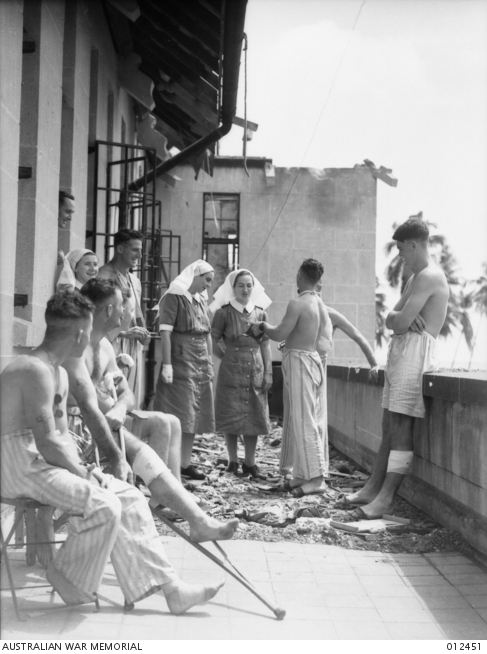
One of those sisters was Gethla. Though newly arrived, she quickly assessed the situation and comforted the most agitated man, who, having lost an eye in combat, was heavily bandaged around the head. As reported in The West Australian on 24 February 1942, Gethla’s colleagues later paid tribute to her. “She never batted an eyelid,” one of them said. “Her courage was an example to everyone.”
THE FINAL DAYS OF SINGAPORE
The forces of the Japanese 25th Army were now in complete control of the peninsula, and although the blowing of the Causeway held them at bay temporarily and provided something of a respite for the staff of the 2/13th AGH, St. Patrick’s School was anything but peaceful. As Elizabeth Simons wrote in While History Passed (p. 5),
Night and day the [Japanese] planes roared over to attack the harbour, ack ack guns stuttered half the time, sirens wailed and the traditional peace and quietness of a hospital were completely unknown.
Then on 3 February Japanese artillerymen began a ferocious bombardment of Singapore’s oil infrastructure. The resulting fires generated palls of thick black smoke, which hung over the city, creating an eerie twilight. Meanwhile, wealthy residents, mainly European and Eurasian women, children and men, had now fully realised the gravity of the situation and were seeking passage on any vessel that would take them away from Singapore.
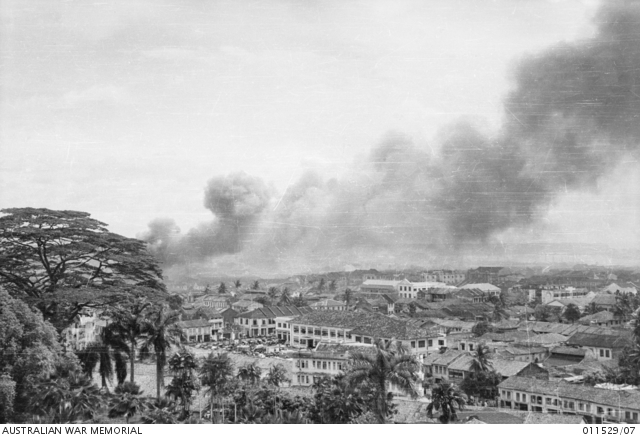
In the daylight hours of 8 February, Japanese forces concentrated their artillery on the northwestern defence sector of Singapore Island, destroying military headquarters and communications infrastructure. That night, waves of Japanese soldiers crossed Johor Strait and landed in small boats around the mouth of the Kranji River on the northern coast of the island. They were initially repelled by elements of the 2/20th Battalion and 2/4th Machine Gun Battalion, but the Japanese were too numerous. They eventually overwhelmed the Australians, who could not communicate effectively with their command headquarters due to the damage caused that day, and by the morning of 9 February had established a beachhead. Further to the west there was another landing.
Once again Australian casualties poured into St. Patrick’s, mainly gunshot and shrapnel cases. For the next 24 hours, the hospital’s surgeons and theatre nurses worked nonstop, carrying out 65 operations. Bombing and shelling were now almost continuous, and as the fighting grew closer, the hospital became so overcrowded that casualties lay closely packed on mattresses on floors, in the quartermaster’s store, in the little chapel, and outside on the lawns. Outbuildings and tents were used as wards. The theatre nurses continued to work long hours, and even the ward nurses worked 12-hour shifts. Some of the wounded soldiers begged the nurses to let them leave the hospital to continue fighting. As Gethla’s colleague Staff Nurse Frances Cullen recalled in an interview with The Australian Women’s Weekly published in March 1942, “Even the ones with limb injuries said they could be carried to a gun and could lie beside it to fire it.”
With Singapore’s fate now all but certain, a decision was made to evacuate the Australian nurses.
EVACUATION OF THE NURSES
Early on 25 December 1941 between 150 and 200 soldiers of the Imperial Japanese Army entered a 400-bed emergency military hospital established at St. Stephen’s College in the south of Hong Kong Island and proceeded to massacre as many as 100 patients and medical staff. Among the medical staff were two British nurses from the Bowen Road Military Hospital, six British Voluntary Aid Detachments and five Chinese St John’s Ambulance nurses. They were all wearing nurses’ uniforms and Red Cross armbands. The Chinese nurses and three of the British nurses and VADs were raped and then murdered, while the other four were raped but survived.
Reports of the horrific events soon reached Malaya and began to circulate widely; and as Japan’s march south continued, Colonel Alfred P. Derham, Assistant Director of Medical Services for the 8th Division, began to worry. Between 20 and 25 January 1942 he recommended officially to Major General Gordon Bennett that the Australian nurses should be evacuated from Singapore by the first possible hospital ship. He repeated this recommendation between 25 and 30 January. On each occasion his recommendation was rejected on the grounds that if carried out, it would have a bad effect on the civilian morale of Singapore. Colonel Derham appealed once again on 8 February, this time directly to Lieutenant General Arthur Percival, General Officer Commanding Malaya, but once again his appeal was refused.
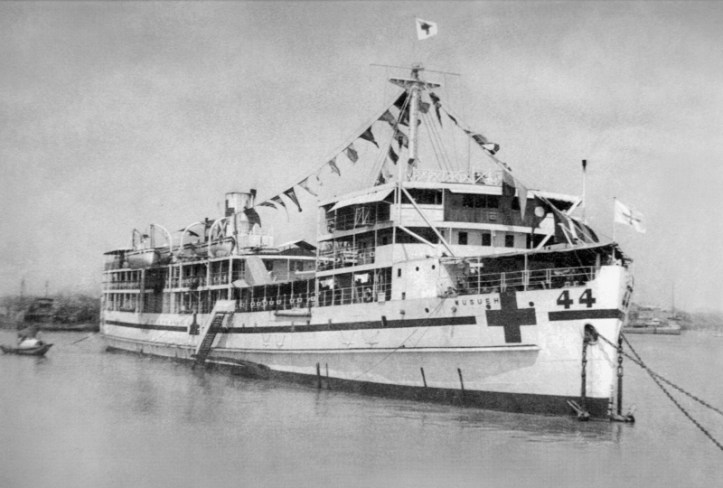
Before appealing to Percival, Colonel Derham had asked his deputy, Lieutenant Colonel J. G. Glyn White, to send as many nurses as he could with any 8th Division casualties leaving Singapore, on the pretext that they were on duty. This he agreed to do, and on the morning of Tuesday 10 February six nurses of the 2/10th AGH were chosen by Matron Dot Paschke to embark on the Wusueh with as many as 350 wounded men, including perhaps 150 8th Division troops, a few RAAF men, and scores of British and Indian troops. Major General Bennett then stated that the remaining nurses should be embarked as soon as practicable.
WHO WILL GO?
The sequence of events from hereon in is somewhat confused, but we will do our best to present a reasonably clear picture.
At lunchtime on Tuesday 10 February Matron Irene Drummond of the 2/13th AGH addressed her 56 nurses and masseuses, and four nurses of the 2/4th CCS, who had been detached to the 2/13th AGH, and told them that all but 12 were to be evacuated that day. However, by the time Colonel Douglas Pigdon, the commanding officer of the 2/13th AGH, spoke to the nurses at 4.30 pm, the order had changed, and all were now to remain until late morning the following day.
Meanwhile, at Oldham Hall, in the early afternoon of 10 February, following the departure of six of their colleagues, the 60 remaining nurses and masseuses of the 2/10th AGH and four other 2/4th CCS nurses “were all told to pack, and did so, very unhappily – we were to leave at 1700 hours,” wrote ‘Anonymous’ (p. 18). However,
At 1500 hours the order was countermanded: how delighted we were; surely the battle had turned and we would not now have to leave. But, during the night, those of us on night duty, listening to the never-ceasing sounds of machine guns, artillery and rifle fire could hear it gradually approaching.
On the morning of Wednesday 11 February the 2/13th AGH nurses assembled in the grounds of St. Patrick’s. They were addressed again by Matron Drummond and Colonel Pigdon, who called for volunteers to stay behind while the others were evacuated. “That was a bolt from the blue,” wrote Elizabeth Simons (p. 6).
It was common knowledge that no real ships were available, certainly not any suitable for hospital ships, and the suggestion that we pull out and abandon our patients sent up our blood pressure. When the call was made for volunteers from among the nurses to stay behind, we all volunteered. Lists had to be drawn up to designate those who should go and those who should stay.
When the nurses gathered again that afternoon Matron Drummond read from one of the lists the names of 30 nurses who were to leave shortly for the docks in a convoy of ambulances. Among the 30 were Gethla, Bonnie Gordon and Mavis Mulvihill, and all of the masseuses. They had no option of either staying with their patients or waiting until such time as all of the nurses could leave together and were told to pack their weekend suitcase and take their respirator, tin helmet and iron rations. They had to leave their trunks behind.
Naturally, none of the nurses wanted to leave their patients, who numbered around 1,000 at that time. “We all hated leaving the boys,” Frances Cullen told The Australian Women’s Weekly.
The night we left we were all in tears. Matron Drummond said to us, ‘Stop crying, girls, and try to look bright,’ ignoring the fact that the tears were streaming down her own face.
In her diary, as quoted in Bassett (p. 139), Staff Nurse Sara Baldwin-Wiseman wrote that
Matron [Drummond] kissed every sister goodbye with the tears running down her cheeks as we boarded the transports…. None of us wanted to leave, we all wanted to stay and look after our patients, but in the Army one has no choice.
With downcast hearts, the 30 nurses were driven in ambulances to the Adelphi Hotel, just opposite St. Andrew’s Cathedral in Singapore city, where they rendezvoused with 30 nurses from the 2/10th AGH.
At Oldham Hall, Matron Dot Paschke had also had to choose 30 nurses and masseuses to leave, as ‘Anonymous’ (p. 18) recalled:
At 1700 hours Matron called together those of us who were to leave immediately. Our A.D.M.S. and C.O. [respectively Colonel Derham and Lieutenant Colonel Edward Rowden White] came to say goodbye to us. It was not a happy scene. It was not easy to leave all those splendid boys just when they needed us, nor to leave the remainder of the girls, although we were assured that they would be following almost at once. With many hurried farewells, and the exchange of last messages to deliver, we climbed into the ambulances which carried us to the ‘Adelphi Hotel’ in Singapore, where we were joined by 30 sisters from our Sister A.G.H. [The 2/13th.] Most of the waiting time there we spent lying on the floor, as [Japanese] bombers were a little active, but a thoughtful management had supplied several copies of ‘Punch’ which were acceptable.
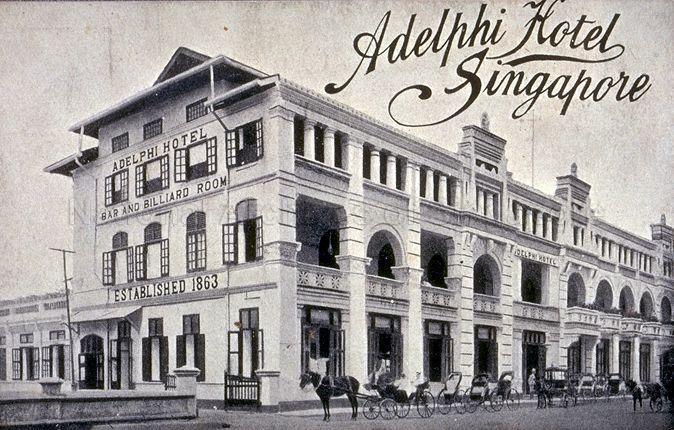
When Gethla’s 2/13th AGH colleague Staff Nurse Phyllis (Phyll) Pugh later wrote about the evacuation, she (seemingly mistakenly) recalled being taken to St. Andrew’s Cathedral, not the Adelphi Hotel. Once there, the nurses “waited quietly knowing we must do exactly as we were told. The bombing and artillery fire had intensified, and fires had broken out all over Singapore” (Pugh, p. 121).
THE EMPIRE STAR
Eventually the 60 nurses were driven in ambulances from the Adelphi Hotel to Keppel Harbour. All around them was destruction: the streets were full of rubble, and telegraph wires dangled disconsolately along the roads. “The situation we met when we arrived at the wharves was just like a nightmare,” stated one of the nurses (quoted in Shaw, p. 109). “Storage tanks were going up in flames all around us. The whole sky was illuminated and there were thick plumes of smoke.” The nurses waited in an air-raid shelter until the order came to board their ship, MV Empire Star.
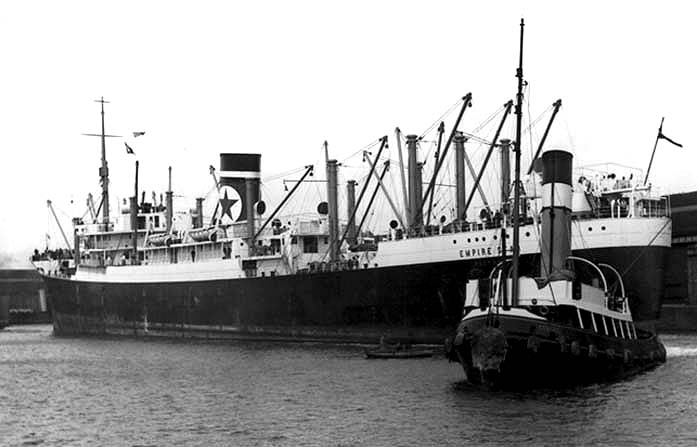
Captained by Selwyn N. Capon, the Empire Star was a British refrigerated cargo liner built in 1935 that originally carried frozen meat from Australia and New Zealand to England. It had become a troop carrier and had previously evacuated troops from Dunkirk, Greece and Crete. On 19 January 1942 the Empire Star had departed Bombay with two American troopships, USS Wakefield and USS West Point, and two British troopships, Duchess of Bedford and Empress of Japan, as convoy BM (Bombay Malaya) 11. The convoy, escorted by HMS Caledonia, HMS Glasgow, HMS Exeter and later Dragon, Durban, Thanet, Tenedos, Express and Electra, was carrying some 17,000 troops and reached Keppel Harbour, Singapore on 29 January.
EMBARKATION
While the nurses waited in the air-raid shelter, some soldiers broke open a crate of Christmas toys and threw teddy bears and other soft toys to them. Sister Kathleen McMillan of the 2/10th AGH picked up a toy rabbit in a bowtie and carried it back to Australia. While this was happening, or perhaps after the nurses had emerged from the shelter, a medical officer belonging to their escort party argued with a guard that they be permitted to board the Empire Star – as Sara Baldwin-Wiseman recalled in her diary (Bassett, p. 139):
Our medical officer advanced to the gangway and demanded from the guard that we be allowed to embark. The guard flatly refused to allow any of us on board. He said that the ship was already grossly overloaded. Thereafter followed a heated argument for some time. The captain eventually agreed to take us providing we went down into the hold of the ship, where the refrigerated meat used to be carried.
The nurses boarded the ship via the gangway and a rope ladder – which terrified some of them – with the assistance of two merchant seamen. On board were more than 2,160 passengers – perhaps as many as 2,400. They were mainly British RAF personnel, whom General Archibald Wavell, commander-in-chief of the short-lived ABDACOM (American-British-Dutch-Australian Command), was sending to Java to help defend the Netherlands East Indies (NEI). There were also around 140 8th Division troops on board, some or all of whom were accused of being deserters and of having ‘rushed’ the ship, as well as 80 British nurses, a number of civilian refugees, and some 35 children. The ship also carried a considerable amount of RAF equipment and stores.
Before entering the hold, ‘Anonymous’ (p. 18) beheld the devastated city:
Our last view of Singapore Harbour was vastly different from our first. The lovely sky was completely smoke-obscured, the incredible green of the sea hidden by a hideous film of oil, the sounds of battle from the shore and air were unpleasantly close – and, worst of all, a dead R.A.F. plane lay on the beach.
Phyll Pugh (p. 121) continues the story:
[We] were sent down into the hold where we saw English and Indian nurses. The English nurses were the Territorial Nurses and still wore the uniforms worn by Florence Nightingale nurses. The English and Indian girls were very nervous, having been through a very bad time recently.
The British nurses – who comprised not only Territorial Force Nursing Service nurses but also those of the Queen Alexandra’s Imperial Military Nursing Service and the Emergency Military Nursing Service, as well as Voluntary Aids – were recovering from their traumatic departure that morning from Alexandra Hospital, which lay around six kilometres west of St. Andrew’s Cathedral. After dodging machine-gun bullets and narrowly avoiding being captured by advancing Japanese troops, they had boarded ambulances and set out for Keppel Harbour. However, the ambulances had been fired upon en route and the nurses had had to seek shelter in a sewer with a group of Indian troops. Eventually things quietened down and they were able to proceed on their way.
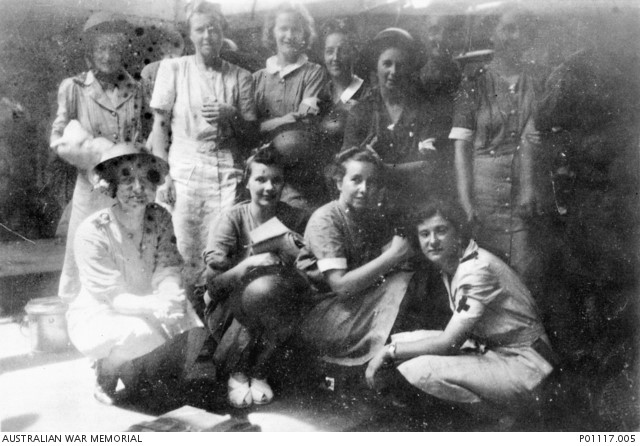
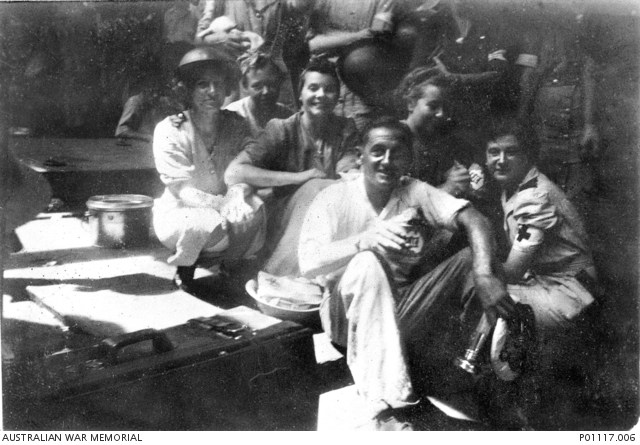
The hold was accessed via a perpendicular steel ladder. Some of the Australian nurses found it smelly and dirty, while others did not mind particularly it. “Our quarters in the meat hold were quite clean, but they had a peculiar musty smell,” Masseuse Thelma Gibson of the 2/10th AGH later told The Australian Women’s Weekly. The nurses slept on their holdalls and belongings, and each had a blanket. They drank dixies of tea, which the men lowered down to them on ropes, and ate their ‘iron rations’ – dry biscuits and tins of bully beef, which some of them had managed to bring on board. There was a limited supply of water available. Some of the men threw down cartons of cigarettes – and toys, presumably some of those that had earlier been freed from their crate on the wharf. Staff Nurse Maud Spehr of the 2/13th AGH caught a teddy bear that was thrown down and carried it home to Australia, later calling it Blitzer.
UNDER ATTACK
In the late evening of 11 February the Empire Star pulled away from the wharf and joined the Gorgon in the minefield beyond Keppel Harbour. Some of the nurses must have left the hold, for ‘Anonymous’ (p. 18) wrote that during the night they
watched the flashes from the artillery guns [and saw] the fires burning on the docks [which] seemed so immense that they must envelop the entire island.
At around 3.00 am on Thursday 12 February HMS Durban, HMS Jupiter, HMS Stronghold and HMS Kedah arrived at Keppel Harbour, collected troops, and at first light led the Empire Star and the Gorgon out into Durian Strait south of Singapore Island and set course for Batavia.
On the Empire Star, Captain Capon and his crew fully expected to be attacked from the air. The presence of Japanese aircraft was first reported at 8.50 am, as the convoy was about to clear Durian Strait. Just after 9.00 am the alarms were sounded, and six Japanese dive bombers descended from the sky. The guns of the convoy burst into action. One plane crashed into the sea and disappeared under the water. Another was hit and broke off from the squadron with smoke pouring from its tail.
Wave after wave of Japanese planes flew over the convoy, dropping bombs and strafing decks. Some of the ships were even attacked by kamikaze pilots. The Empire Star sustained three direct hits – one striking a lifeboat and the side of the ship, another the officers’ mess – while an incendiary bomb set the crew’s quarters alight; those on board fought the flames with buckets and hoses and managed to extinguish the fire. Following the bombing runs, the Japanese planes returned to strafe the decks.
Most of the Australian nurses were in the hold during the attacks, and some of the men made noble attempts to distract them. As ‘Anonymous’ (p.18) recalled,
Several R.A.F. lads gallantly came down to entertain us. We held an impromptu concert, while a scout above deck would call ‘heads down’ as each wave of planes came towards us. Twice there were victorious shouts from above as our toy guns brought down raiders. Despite three direct hits, the magnificent work of the Captain and Merchant Marine crew kept us afloat … Following the attack we had work to do, several of the lads manning the guns had been killed, and many wounded, and two [or three] temporary hospitals were arranged for the care of the latter.
The Australian nurses had come aboard equipped with dressings, morphia, hypodermics and sulphanilamide and, together with a number of English doctors and the English and Indian nurses, were soon treating the wounded at emergency dressing stations in the hold. The 2/10th AGH nurses staffed one, the 2/13th AGH nurses another, and the English and Indian nurses a third.
Two at least of the AANS nurses were on deck when the attacks began – Staff Nurses Margaret Anderson and Vera Torney of the 2/13th AGH, who had arrived in Malaya on 20 November 1941. Their instinctive actions as bullets flew around them later earned them the highest honours. In an interview with The Australian Women’s Weekly published in March 1942, Margaret Anderson described what happened:
While we were talking to some of our men on deck, the alert sounded and we went into the messroom for shelter. Bombs were dropped and a fire broke out. There was a badly wounded Australian boy who had been manning one of the guns. The place was chockful of smoke, so Tourney [sic] and I carried him out to the open deck and the two of us crouched over him. Then another wounded gunner was brought along and we tried to cover them both. Bullets were flying everywhere and we will never understand how we managed to avoid one ourselves. Later we got our patients back into the messroom, and a wonderful Irish doctor in the R.A.F. gave Tourney some morphia and a syringe and we used them as much as we could. Both our patients died, and I will never forget that mine managed to smile at me, and even give me a friendly wink. When we had the burials at sea it was the most pathetic and heartbreaking scene, and when we sang ‘Abide with Me’ we were all just too heartbroken for words.
On the Empire Star alone, 12 men lost their lives and dozens were injured during the attacks, in which as many as 70 or even 90 Japanese aircraft had been involved. Intermittent bombing runs continued for the next four hours, but these were high-level attacks from 2,000–3,000 metres carried out by heavy bombers. Dozens of bombs were dropped, some of which missed the Empire Star by mere metres. The final attack, carried out by a formation of nine aircraft, came at around 1.00pm. It was perhaps this attack that Phyll Pugh (p. 121) referred to in her story of the evacuation:
A last effort resulted in the Japanese dropping two one-thousand-pound bombs, one on each side of the ship. The Empire Star literally was lifted out of the water and when it righted itself, we heard only one of the two engines working. I stood beside my friend, Margaret [Selwood], when this happened. Looking at her I noticed a trickle of blood from her ear which had had its drum ruptured.
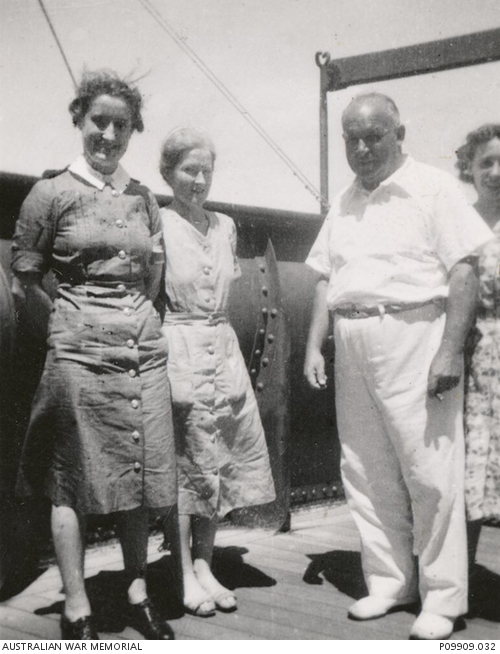
All the while Captain Capon had been taking evasive action. Thanks to Captain George Wright of the Singapore Pilot Service, who had remained on the Empire Star after it had cleared the harbour, and the Third Officer, Mr. James Peter Smith, Capon was being kept advised at all times of the manoeuvres of the attacking aircraft and their angle of attack, and was able to weave through the water or execute sudden reverses. By dint of his skill, and through sheer good luck, none of the high-level bombs struck the Empire Star and no casualties resulted from these attacks.
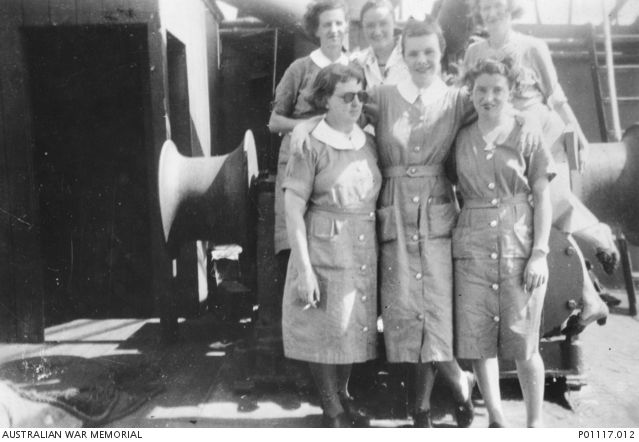
Remarkably, the ship was not attacked at all on the following day, Friday 13 February. It was afterwards learned that the Japanese pilots had instead turned their attention to a convoy of oil tankers. Meanwhile, in the hold, the Australian nurses had been playing cards but could not concentrate particularly well. They also spent time working four-hour shifts at the dressing stations – there were, after all, many wounded men to attend to.
BATAVIA
The convoy arrived at Priok Tanjung, the port of Batavia, later on Friday but those on board the Empire Star did not disembark until Saturday 14 February. Shortly beforehand, Captain Capon had held a Thanksgiving Service, and all of those who could attend did so. Everyone understood what a miraculous escape they had had.
After the passengers disembarked, Captain Capon arranged for emergency repairs to be carried out on the ship. While the British RAF personnel were set to remain in Java, most of the civilian passengers ended up transferring to other ships. According to Maud Spehr, one particular civilian woman had 12 trunks on the wharf and was calling out for her 13th. A number of the nurses were disgusted at this and contrasted the woman’s obvious privilege with the experience of the alleged 8th Division deserters, who had by now been arrested and marched out to a camp.
Before long the Australian nurses were transferred to the Dutch ship Phrontis, which was bound for India via Ceylon. Here they spent the night in a clean, comfortable hold on straw mattresses. They were given fresh sandwiches, tea and cold water and treated with every consideration and kindness. Given their ordeal during the voyage from Singapore, it is unsurprising that the nurses, upon their return home, told a reporter for The West Australian that Batavia was “the most wonderful place on earth, a haven of peace after the everlasting noise of the blitz.”
Later on Saturday, or perhaps on Sunday, some of the nurses, including Staff Nurse Bettie Garrood of the 2/13th AGH, visited another ship, the Edendale. In a letter to her mother begun on Saturday (quoted in Arthurson, p. 114), Bettie describing meeting a certain Captain Gardner:
[He] was looking for his sister-in-law and tumbled over us. So we asked him if he would send cables, one to you and another to Mrs. Bentley [mother of Staff Nurse Nellie Bentley] – which he has since told us he did satisfactorily. He has been absolutely marvellous to us – located us again this afternoon and took us over to his ship [the Edendale], gave us tea, but what we enjoyed more than anything else was the use of his bathroom.
Some of the Australian nurses thought that they were going to return to Australia on the Phrontis. Others thought that they would first go to Ceylon to help at the 2/12th AGH, which was based at Welisara outside Colombo. However, the captain of the Dutch ship told the nurses that they had to return to the Empire Star. They refused, believing that they would be stuck in Batavia for some time while the ship was repaired. Only after they were assured that the Empire Star was in fact soon to depart, having been sufficiently patched up, did they return to the ship.
While the others were settling back into the dreaded meat hold, some of the senior nurses, including Sister Mary McMahon of the 2/10th AGH, went into Batavia, around 12 kilometres south of the port, to buy supplies of food with what little money the nurses had. They hired a motor vehicle and were taken to a large hotel, where they got out. Finding that the driver would not accept Malayan dollars, they went into the hotel to try to change it for Netherlands Indies guilders, but the Dutch clerk became agitated and told them that there was an air raid alert on and to take cover. They finally managed to change some money and went back to the driver, but he had disappeared. They bought what was available, mainly tinned food, and returned to the ship. As there was not enough, a meeting was held on the deck of the Empire Star, and the decision was made to have one meal a day at 11.00 am.
THE JOURNEY HOME
The Empire Star sailed from Tanjung Priok on Monday 16 February. Soon after departure, the nurses noticed a ship on the horizon, fast approaching the port. It was HMT Orcades carrying 7th Division troops to Java to reinforce the island against the Japanese. As the Orcades passed, the men on board waved frantically and called out “coo-ee.” When the Orcades departed Batavia again on 21 February, bound for Australia via Colombo, there were six AANS nurses aboard – the nurses who had been evacuated from Singapore on the Wusueh. They had arrived at Tanjung Priok on 15 February and were taken to the Princess Juliana School, a Catholic girls’ school located at Weltevreden, around 10 kilometres south of Tanjung Priok.
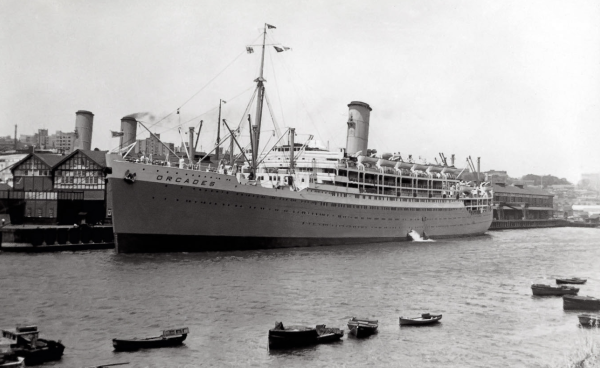
There were now far fewer passengers aboard the Empire Star, and the nurses were able to leave the hold and sleep in the fresh air. Many of them slept on the bridge. When at last they saw the Southern Cross, they knew that they were nearing Australia.
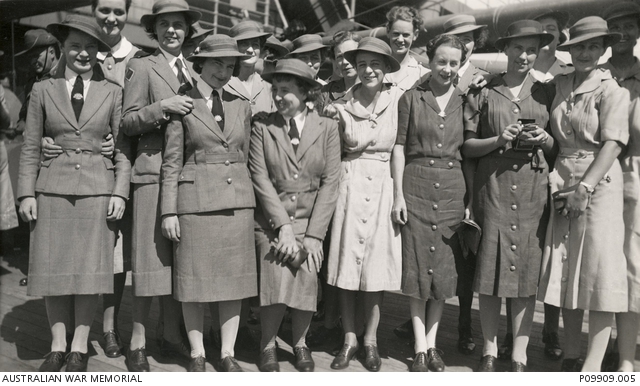
The Empire Star arrived at Fremantle on Monday 23 February. The 60 nurses were home. The ship anchored in Gage Roads and remained there until army headquarters was notified of the nurses’ arrival. Eventually some officers came aboard and took the nurses’ paybooks to ensure that they were in fact AANS nurses. Headquarters had decided that they would be taken on strength of the Returnees’ Depot in Claremont, just north of Fremantle, and detached to the 118th AGH in Northam, 90 kilometres northeast of Perth.
“ARRIVED SAFELY, HOME SOON”
“Sadness mixed with the joy of being home again,” wrote ‘Anonymous.’ “Our first question on landing was ‘Are the other girls home yet?’”
The six 2/10th AGH nurses who had left Singapore on the Wusueh and had then boarded the Orcades in Batavia eventually reached Port Adelaide on 14 March 1942. However, the ship on which the remaining 65 nurses had sailed, the SS Vyner Brooke, had been attacked and sunk by Japanese aircraft as it was nearing Bangka Strait, halfway between Singapore and Batavia. Twelve of the nurses were lost at sea, while the remaining 53 had washed ashore at various points along a stretch of coast on nearby Bangka Island, in the vicinity of the town of Muntok. Twenty-two of them had arrived close together in two lifeboats. On Monday 16 February they were shot by Japanese soldiers, who had occupied the island two days earlier as part of the invasion of the Netherlands East Indies. One of the nurses, Staff Nurse Vivian Bullwinkel of the 2/13th AGH, survived the massacre and after two weeks joined the remaining 31 nurses in captivity.
Gethla and her 59 comrades finally disembarked and, before being transported to Northam, were taken to lunch at the 110th AGH in the Perth suburb of Hollywood. Either before or after arriving at the 110th AGH, they were interviewed by reporters, and the first reports of their safe return to Australia appeared the following day, Tuesday 24 February. The West Australian reported that all of the nurses looked remarkably fit, despite their terrifying experiences, and showed little outward sign of the ordeal that they had experienced. Many had only the uniform that they were wearing at the time. Most arrived wearing tin hats, which one nurse described as “the best friends we’ve got.” Others had collected a miscellaneous assortment of luggage. Some had very little.
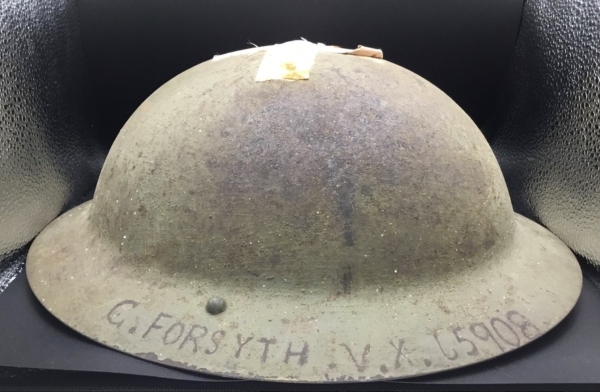
Sometime after lunch at the 110th AGH, the nurses were taken to Northam, where they were provided with new uniforms and kit. That night, as reported in the Melbourne Argus on 26 February, Gethla was able to send a message to her parents in Camberwell: “Arrived safely, home soon.”
While the nurses were at Northam some army lads came to see them. They told them the worrying news that the Vyner Brooke had not arrived in Batavia. Other men told the nurses to ignore the men’s story.
Some of the nurses spoke to reporters again, and over the coming weeks stories continued to appear in the newspapers. On 7 March the West Australian quoted one of the nurses remarking that “we still have a sneaking desire to take cover when a motor backfires.”
BACK IN MELBOURNE
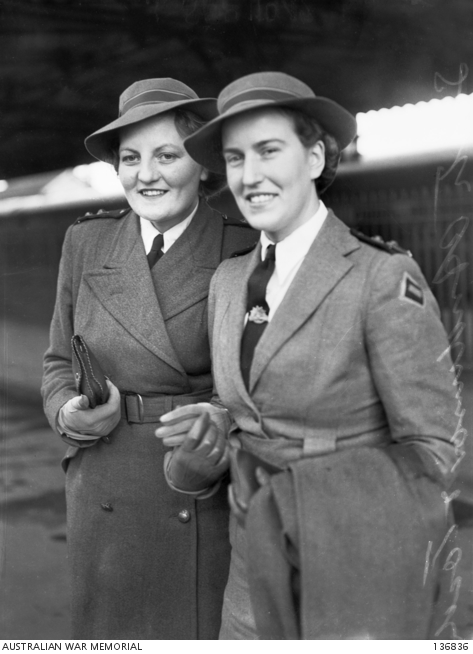
After two weeks at Northam, the 60 nurses were separated into two groups, as those from the eastern states prepared to return home. On 8 March 1942, Gethla and 49 other nurses from Victoria, New South Wales, Queensland and Tasmania entrained for Melbourne and arrived at Spencer Street Station on 12 March. Waiting for them were family and friends, all happy to welcome home their daughters, sisters, friends – and perhaps fiancées. As the women stepped from the train, they looked trim and spotless in their neat uniforms – the nurses in grey and the masseuses in navy blue – and were still carrying their tin helmets and gas masks. They were met by Principal Matron Field of Southern Command, who had telephoned Gethla so many months earlier. That afternoon the Victorian and perhaps Tasmanian nurses were received by Lady Dugan, wife of the governor of Victoria, at Government House, while the New South Wales and Queensland nurses entrained for their home states, arriving on 14 March. Meanwhile, on 12 March six South Australian nurses and two masseuses had arrived back in Adelaide.
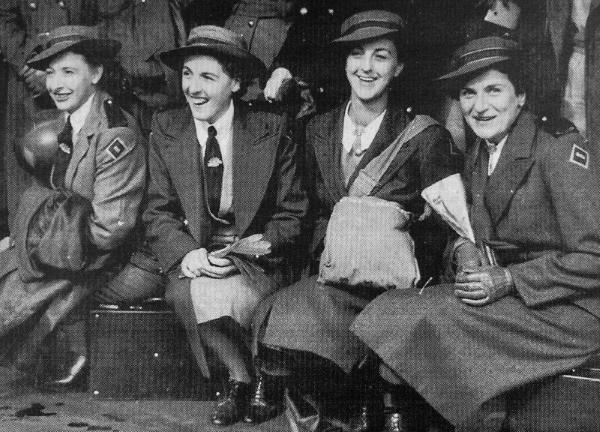
On 13 March, the day after arriving back in Melbourne, Gethla and the other Victorian nurses went on leave until 26 March. The following day she and Sister Marjorie Crick of the 2/10th AGH were interviewed by a reporter. As printed on 15 March in the Sydney Sun (and elsewhere), Gethla recounted an amusing story of what happened to the night nurses’ supper when St. Patrick’s School was bombed on 31 January 1942:
We had just set it all out, and the next thing, it had disappeared, except for the butter, which was upside down on the balcony, where we used to eat by the light of the moon.
On 27 March Gethla returned from leave and was posted to her old hospital, the 115th AGH in Heidelberg. The other Victorian nurses likewise returned from leave and were sent to Heidelberg. The staff nurses among them, including Gethla, now held the rank of sister group 2: around 7 February 1942 the rank of staff nurse had been abolished, with effect from 1 December 1941.
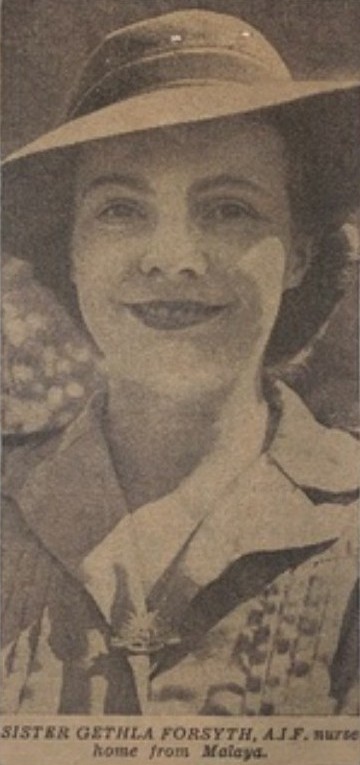
On 9 May, while still at the 115th AGH, Gethla was admitted to her own hospital with pharyngitis and bronchitis. She was transferred to the Lady Dugan Nurses’ Hostel on 14 May and rested there until 21 May, at which point she returned to duty at Heidelberg. On 17 July, one year after she had first arrived at the 115th AGH, Gethla was promoted to the rank of sister group 1.
£100,000,000 AUSTERITY CAMPAIGN
On 3 September 1942, the third anniversary of Australia’s entry into the Second World War, Prime Minister Curtain launched a combined loan campaign and austerity drive that aimed to raise £100,000,000 through small loans from householders, whose reduced spending would enable them to lend money to the Commonwealth. A similar patriotic loan scheme called the Liberty Loan was launched earlier in the year and had aimed to raise £35,000,000. The Austerity Loan campaign was officially opened on 3 November.
On 16 September Gethla was attached to AANS Headquarters and assigned to work on publicity for the loan campaign. That day, along with other returned service personnel, she spoke to young women textile workers about her experiences in Malaya. However, the following day Gethla was admitted to the Lady Dugan Nurses’ Hostel again to rest and it is not clear when she was discharged. She returned to Heidelberg on 8 October.
On 18 December Gethla was admitted once again to the Lady Dugan Nurses’ Hostel for rest. She was discharged on 20 December and the following day entrained for Sydney.
DUNTROON AND BACK TO HEIDELBERG
We do not know where Gethla was posted upon her arrival in Sydney, but on 23 March 1943 she was attached to the hospital at the Royal Military College in Duntroon. On that same day all AANS nurses became commissioned officers. Gethla was now a lieutenant.
Sadly, on 28 September that year Gethla’s mother, Louisa Forsyth, died at her home on Cooloongatta Road in Camberwell. One hopes that Gethla was given warning enough to return home in time.
After nearly 12 months at Duntroon, on 12 March 1944 Gethla returned to the 115th AGH – more commonly known by then as the Heidelberg Military Hospital – and was allotted regimental duties. She became unwell again and on 14 June was admitted to Heidelberg as a patient. She was not discharged until 10 July.
On 18 September 1944 Gethla was detached to Headquarters, Victorian Lines of Communication Area on St. Kilda Road and remained there until 9 October, when she was detached to the 2nd Australian Outpatients’ Depot on Victoria Street.
Gethla worked at the Outpatients Depot until 30 January 1946. By then the Pacific War had been over for five months. It had ended with the utter defeat of Japan and the devastation of Hiroshima and Nagasaki. Twenty-four of the 32 captive nurses of the 2/13th AGH, the 2/10th AGH and the 2/4th CCS, with whom Gethla had so briefly served, survived to return home in October 1945.
On 31 January 1946 Gethla went to the Leave and Transit Depot, based at Camp Pell in Royal Park, presumably as part of her demobilisation. The following day she was discharged from the army and on 2 February was transferred to the AANS Reserve of Officers.
LIFE AFTER WARTIME
Whether Gethla returned to civilian nursing after her discharge is unknown. Regardless, she carried on with her life. Soon after leaving the army she was a bridesmaid at the wedding of her friend Nina Rebottaro. In January 1951 she attended the Warrnambool summer steeplechase with her sister, Gladys.
On 2 July 1952 Gethla attended a gala ‘Scarlet and Grey’ dinner held at The Royale Ballroom to celebrate the 50th anniversary of the formation of the Royal Australian Army Nursing Corps (as the AANS had by then become known). Among the 560 guests were nine AANS nurses who had served early on in the Great War – Jane Bell, Emma Cuthbert, Ida O’Dwyer RRC, Clara Ross, Hilda Samsing, Jessie McHardy White MBE RRC, M. Glover, P. Kirby and P. Sutherland. One guest, E. Lloyd, had served with the British Army in South Africa during the Second Boer War.
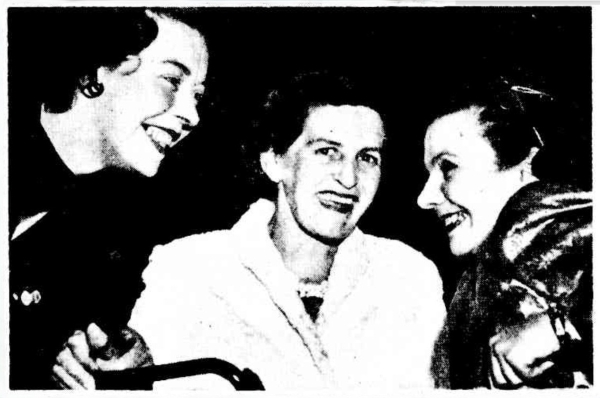
Other guests included the matron-in-chief of the RAANC, Annie Sage RRC, and the former matron-in-chief, Grace Wilson, who had provided the reference for Gethla; the principal matron of Southern Command, Lydia Shaw; the matron-in-chief of the RAAF Nursing Service, J. McRae, and the former matron-in-chief, Margaret Lang; the former matron-in-chief of the RAN Nursing Service, I. Laidlaw; and the president of the Returned Nurses’ Club, J. G. Fussell.
Gethla’s former 2/13th AGH colleague and George Cross recipient Margaret Anderson was also present, as was Betty Jeffrey of the 2/10th AGH, who had survived the Vyner Brooke sinking and subsequent captivity.
On 23 April 1954 Gethla attended the annual Anzac reunion of the Returned Army Nurses’ Club, held at the Nurses’ Memorial Centre on St. Kilda Road. Among the nurses present were her former 2/13th AGH colleagues Annie Muldoon and Vivian Bullwinkel.
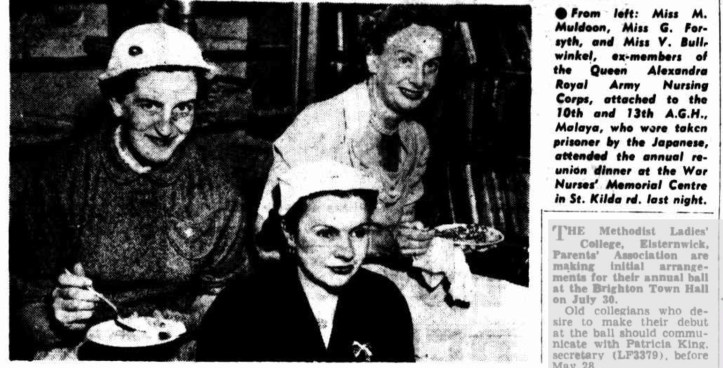
In 1955 Gethla married William Reay Napier in Warrnambool, Victoria. William was a furrier and had previously been married to Kathleen Scott McLeod of Melbourne. He had served in the war in a non-combat capacity in Australia and New Guinea, reaching the rank of captain.
William died in 1961. Two years later Gethla lost her father. He had reached the ripe old age of 94 or 95.
DEATH
In December 1964 Gethla flew to Adelaide to spend Christmas with her brother and his family. During her holiday she drove back to Victoria to visit her sister, Gladys, and her doctor husband, William, in western Victoria. As Gethla was approaching Warrnambool, the car she was driving skidded on some loose material and crashed into a light pole, crushing her chest. She was taken to hospital in a serious condition, and Gladys rushed to see her. By midnight Gethla’s condition had improved a little, and Gladys returned home. At 5.00 am the next morning William, who had helped with Gethla’s treatment, received an urgent phone call – Gethla’s crushed aorta had ruptured. She lived just three minutes longer.
In memory of Gethla Forsyth Napier.
SOURCES
2/4th Machine Gun Battalion (website), ‘The ‘Aquitania’ Incident.’
Alfred Hospital Nurses League – Nursing History Collection, ‘Diary of Gethla Forsyth July 1941–February 1942 [only single page available online],’ Victorian Collections 202601.019.
Alfred Hospital Nurses League – Nursing History Collection, ‘Gethla Forsyth (Napier): Extracts from a letter from Mrs Angus (sister) to Ewan Watts 31.1.1965,’ Victorian Collections 202601.031.
Alfred Hospital Nurses League – Nursing History Collection, ‘Reference letter for Gethla Forsyth from Grace Wilson,’ Victorian Collections 202601.030.
Ancestry.
Anonymous, ‘Malaya,’ in Wellesley-Smith, A. and Shaw, E. L., eds. (1944), Lest We Forget, Australian Army Nursing Service.
Arthurson, L., ‘The Story of the 13th Australian General Hospital, 8th Division AIF, Malaya,’ as presented by Peter Winstanley (2009).
Bassett, J. (1992), Guns and Brooches: Australian Army Nursing from the Gulf War to the Boer War, Oxford University Press.
Blue Star Line (website), ‘Blue Star’s M.V. “Empire Star” 2.’
Britain at War (website), ‘Chapter 5: The Road to Singapore.’
Cromptons of the East Riding (website), ‘Geoffrey Crompton: His War, Part 2: Escape to Batavia and Ceylon: the Voyage of the Blue Star’s MV Empire Star.’
FEPOW Community (website), ‘Sailing to War.’
Harrison, A. (ed., 1944), Grey and Scarlet: Letters from the War Areas by Army Sisters on Active Service, Hodder & Stoughton Ltd.
Jeffrey, B. (1954), White Coolies, Angus & Robertson Publishers.
National Archives of Australia.
Pugh, P. ‘Reminiscences of S/N Phyl Pugh (Mrs. Campbell),’ in Arthurson, L., ‘The Story of the 13th Australian General Hospital, 8th Division AIF, Malaya’ (edited by Peter Winstanley, 2009).
River Boat Forum, ‘Yangtse Kiang River Steamers.’
Roebuck, T. (1990), ‘Escape from Singapore,’ published on The British Empire (website), originally published in The Overseas Pensioner, nos. 60, 61 and 62 (Oct 1990–Oct 1991).
Shaw, I. W. (2010), On Radji Beach, Pan Macmillan Australia.
Simons, J. E. (1956), While History Passed, William Heinemann Ltd.
SS Maritime (website by R. Goossens), ‘Aquitania.’
Uboat (website), ‘HMS Durban (D 99).’
UNSW Canberra, Australians at War Film Archive, Loris Church (née Seebohm), interviewed 21 Nov 2003, archive no. 1258.
Walker, A. S. (1962), Australia in the War of 1939–1945, Series 5 – Medical, Vol. II – Middle East and Far East, Part II, Chap. 27 – Other Prison Camps in the Far East (pp. 645–63), Australian War Memorial.
Wigmore, L. (1957), Australia in the War of 1939–1945,Series 1 – Army, Vol. IV – The Japanese Thrust, Part 1 – The Road to War, Chap. 4 – To Malaya (pp. 46–61), Australian War Memorial.
Wikipedia, ‘MV Empire Star (1935).’
SOURCES: NEWSPAPERS
The Advertiser (Adelaide, 25 Aug 1942, p. 1), ‘£100,000,000 War Loan.’
The Age (Melbourne, 12 Mar 1925, p. 12), ‘Riverina News.’
The Age (Melbourne, 11 Mar 1942, p. 2), ‘Heroic Nurses of Singapore.’
The Age (Melbourne, 13 Mar 1942, p. 3), ‘Women’s Section.’
The Age (Melbourne, 3 Jul 1952, p. 5), ‘Governor among Guests at Army Nurses’ Dinner.’
The Argus (Melbourne, 28 May 1931, p. 3), ‘The National Bank.’
The Argus (Melbourne, 16 Sept 1933, p. 18), ‘Social Notes.’
The Argus (Melbourne, 11 Jan 1936, p. 19), ‘Engagements.’
The Argus (Melbourne, 2 Apr 1936, p. 4), ‘Nurses’ Examinations.’
The Argus (Melbourne, 17 Feb 1942, p. 3), ‘Evacuee Ships Bombed.’
The Argus (Melbourne, 26 Feb 1942, p. 5), ‘Nurse’s Eight Eventful Weeks.’
The Argus (Melbourne, 30 Sept 1943, p. 2), ‘Family Notices.’
The Australian Women’s Weekly (21 Feb 1942, p. 7), ‘A.I.F. Nurses Inspired Besieged Singapore.’
The Australian Women’s Weekly (28 Mar 1942, p. 7), ‘Home Again – A.I.F. Nurses from Malaya.’
The Ballarat Star (Vic., 31 Aug 1901, p. 2), ‘Family Notices.’
The Ballarat Star (Vic., 7 May 1915, p. 6), ‘Smeaton.’
Creswick Advertiser (Vic., 29 Jan 1915, p. 3), ‘Allendale Police Court.’
Daily Telegraph (Sydney, 13 Mar 1942, p. 5), ‘Army Nurses Survive Bombs.’
Koroit Sentinel and Tower Hill Advocate (Vic., 27 Jan 1917, p. 2), ‘Personal.’
Koroit Sentinel and Tower Hill Advocate (Vic., 1 Dec 1917, p. 2), ‘State School Concert.’
The Pastoral Times (South Deniliquin, NSW, 17 Mar 1942, p. 1), ‘Nurse’s Thrilling Story.’
Port Fairy Gazette (Vic., 28 Jul 1919, p. 2), ‘Koroit.’
Port Fairy Gazette (Vic., 3 Feb 1921, p. 2), ‘Koroit News.’
The Sun (Sydney, 15 Mar 1942, p. 4), ‘Still, They Smiled in Singapore.’
The Sun News-Pictorial (Melbourne, 9 Mar 1942, p. 4), ‘62 Australian Nurses Back from Singapore.’
The Sun News-Pictorial (Melbourne, 13 Mar 1942, p. 8), ‘Army Nurses Back from Singapore.’
The Sun News-Pictorial (Melbourne, 2 May 1942, p. 12), ‘Epic Courage of A.I.F. Nurses.’
The Sun News-Pictorial (Melbourne, 17 Sept 1942, p. 3), ‘No Title.’
The Swan Express (Midland Junction, WA, 15 Feb 1945, p. 5), ‘We Sailed for Singapore.’
Table Talk (Melbourne, 7 Aug 1919, p. 29), ‘Social.’
Table Talk (Melbourne, 12 Dec 1929, p. 84), ‘Family Notices.’
The West Australian (Perth, 24 Feb 1942, p. 6), ‘Nurses Return.’
The West Australian (Perth, 7 Mar 1942, p. 6), ‘Nurses Return.’
 australianwarnurses.org