AANS │ Sister │ Second World War │ Malaya │ 2/10th Australian General Hospital
Early Life
Florence Aubin Salmon was born on 20 October 1915 in Sydney. She was the daughter of Florence Alexandria Aubin (1894–1979) and John Henry Salmon (1889–1955), of 51 Gowrie Avenue in the outer southwestern suburb of Punchbowl.
Florence and John were married were married in 1912. They had five children, Leonard John Henry, born in 1913; Florence; Garnet Cyril Noel, born in 1919; Joyce Victoria, born in 1921; and Dorothy Lillian, born in 1925.
We do not know where Florence and her siblings attended school, but as Punchbowl Public School was just a 20-minute walk from their home on Gowrie Avenue, it is possible they went there.
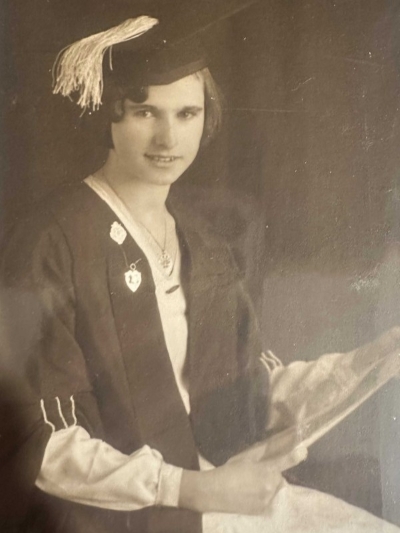
As she was growing up, Florence demonstrated an aptitude for music, in particular the piano, and sat for several examinations. For instance, in December 1927 she achieved a pass in her London College of Music piano examination (primary level) and in early June 1929 achieved a credit pass in her Australian Music Examinations Board Grade IV music theory examination. Then in December 1929 Florence achieved a pass in her Royal Academy of Music and Royal College of Music piano examination (elementary division).
Nursing
After finishing school, Florence decided to become a nurse and in 1934 began training at the Waverley War Memorial Hospital in eastern Sydney. The private hospital, owned by the Methodist Church of New South Wales, was dedicated to men and women of the eastern suburbs of Sydney who died in service during World War One. During her training Florence, who was known as ‘Sam’ among her fellow trainees, developed a reputation as a bright and breezy young woman, She was cheerful and, with a mischievous sense of humour, was given to calling her friends flippant and inappropriate nicknames. She was also untiring in the care of her patients.
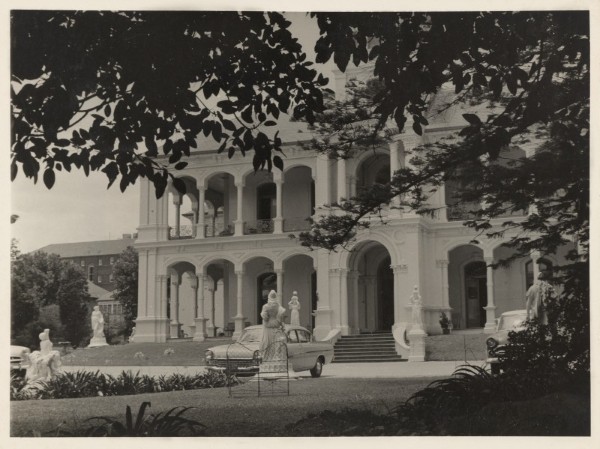
Training alongside Florence was a nurse by the name of Winifred May Davis, or Winnie for short, who was known as as ‘Dave’ among the other trainees. Winnie was quiet, kind and dedicated to her profession.
In mid-1938 Florence and Winnie passed their Nurses’ Registration Board examinations and gained their certificates. In November that year they were each presented with a graduate brooch at the hospital’s annual Armistice Day Awards ceremony. Two and a half years later they would be together again in the same medical unit in Malaya.
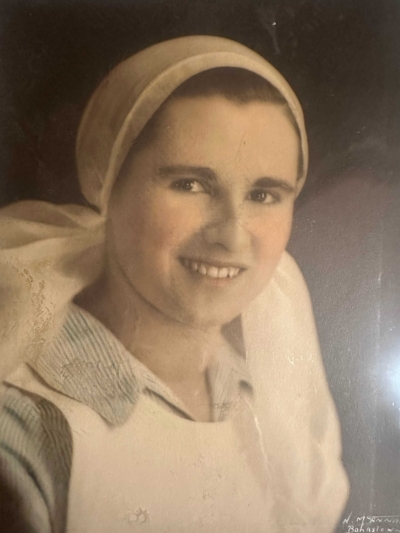
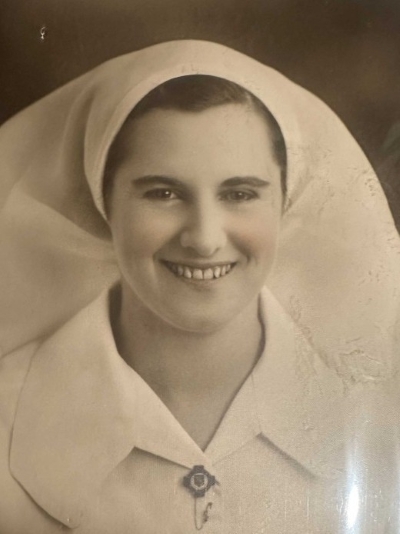
Not content to stop at general nursing, on 30 January 1940 Florence gained her registration in midwifery after completing the requisite training at Royal North Shore Hospital, Sydney.
Enlistment
In 1940, after war had broken out in Europe, Florence applied to join the Australian Army Nursing Service (AANS) and was accepted. Her younger brother, Garnet, had already joined the Australian Military Forces (AMF) and in 1941 served with the Second Australian Imperial Force (2nd AIF) in the Middle East. Florence’s elder brother, Leonard, enlisted on 24 March 1941. He was killed on 14 May 1943 when the Centaur sank off the Queensland coast near Brisbane after being torpedoed by a Japanese submarine. Florence’s uncle Walter J. Salmon also served in the Second World War, as a petty officer on HMAS Perth. He was killed on 1 March 1942 when the Perth was sunk by Japanese ships in the Battle of the Sunda Strait.
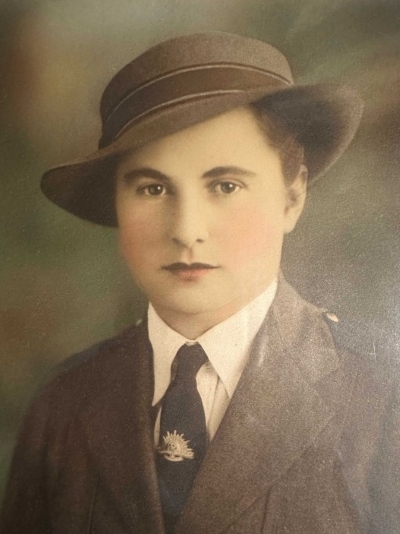
Florence eventually received her call up and on 8 January 1941 was appointed to the Second Australian Imperial Force (2nd AIF) at the rank of Staff Nurse and attached to the Emergency Unit. She was now under consideration for an overseas posting. In the meantime, she was detached to the dressing station at Bathurst Army Camp, where, among other nurses, she met Jean Stewart of Brisbane, who was also anticipating an overseas posting.
Meanwhile, by the end of 1940 Australian authorities had recognised the threat that Japan posed to Southeast Asia and the southwest Pacific. In view of this, and following discussions with British authorities, the Australian War Cabinet decided to send Australian personnel to strategic points in the region, chief among which was British Malaya. On 4 February 1941 the 22nd Brigade, 8th Division – code named ‘Elbow Force’ and numbering around 5,850 personnel – departed for Malaya on the Queen Mary. Accompanying Elbow Force were two medical units with AANS nurses on staff, the 2/10th Australian General Hospital (AGH) and the 2/4th Casualty Clearing Station (CCS).
Winnie May Davis had been attached to the 2/10th AGH, but unfortunately both Florence and Jean missed out. They would have to wait a while longer for a deployment abroad. On 20 February their respective appointments to the 2nd AIF were terminated, and the following day each was appointed to the Citizen Military Forces (CMF) for domestic service with the AANS. Throughout the administrative changes they had remained at Bathurst.
Soon an opportunity arose for Jean. On 25 April she was reappointed to the 2nd AIF and attached to the 2/10th AGH as a reinforcement. She left Bathurst for Sydney on 17 May and two days later departed for Malaya on the Zealandia. Meanwhile, on 8 May Florence herself had been reappointed to the 2nd AIF. She was attached to the 2/10th AGH as a reinforcement staff nurse but was still at Bathurst two-and-a-half months later.
The Johan Van Oldenbarnevelt
Finally, on 26 July, after a period of pre-embarkation leave, Florence and two other 2/10th AGH staff nurse reinforcements, Mary Russell and Jean Russell (no relation), who had been posted to the camp dressing station at Greta. On 29 July Florence and Jean travelled to Finger Wharf, Woolloomooloo, and departed Sydney on the troopship Johan Van Oldenbarnevelt. The Johan Van Oldenbarnevelt was carrying the 2/30th Battalion of the 27th Brigade, 8th Division to Malaya and sailed as part of Convoy US11B.
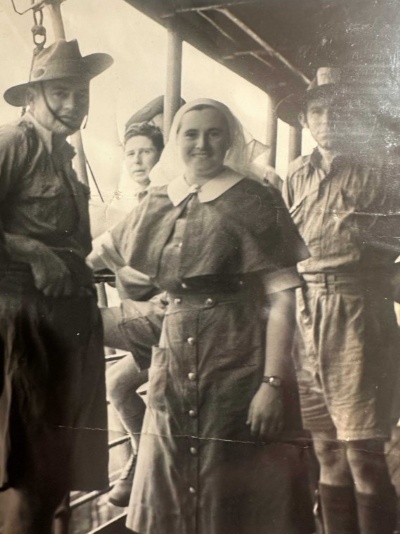
Some days out of Sydney, Florence’s ship joined the Marnix Van St. Aldegonde, which had left Melbourne on 30 July and was carrying the 2/26th and the 2/29th battalions of the 27th Brigade. The Marnix was also carrying 2/10th AGH reinforcement staff nurses Beth Cuthbertson, Clarice Halligan and Ada Syer. The two ships joined the Sibajak in Fremantle, and the convoy proceeded to Singapore.
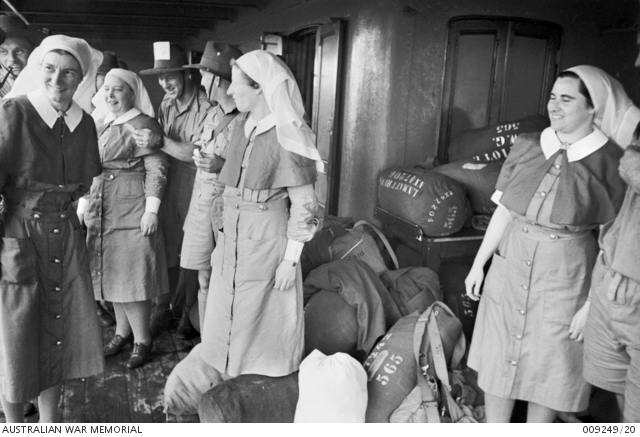
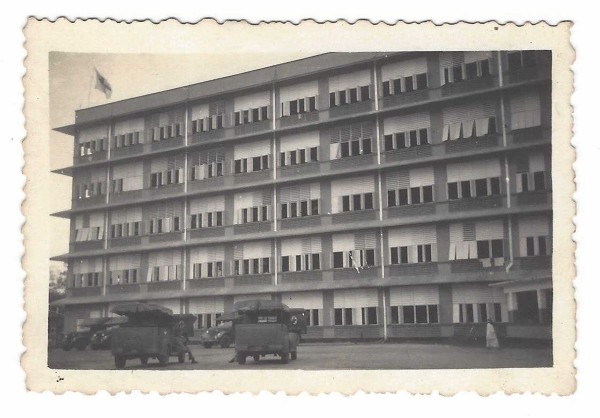
On the morning of 15 August, the ships arrived at Keppel Harbour on Singapore Island. Florence, Jean, Mary disembarked from the Johan Van Oldenbarnevelt, and Beth, Clarice and Ada from the Marnix Van St. Aldegonde, and on 17 August entrained for Malacca, where the 2/10th AGH had established its hospital in a wing of the Malacca General Hospital. The nurses’ quarters in the accommodation block of the hospital were simple but comfortable, despite the heat and humidity. The nurses enjoyed the services of amahs (maids) and cooks and, thanks to the Red Cross, were furnished with such amenities as sewing machines, gramophones and records.
Malacca
With several thousand Australian troops to care for, Florence and her 2/10th AGH colleagues were kept busy treating tropical infections and diseases, and training and recreational injuries. They also assisted at routine operations.
Nevertheless, there was plenty of time for leisure. The nurses played tennis and golf and swam at the exclusive Malacca Swimming Club. They enjoyed the hospitality of wealthy residents, who entertained them at dances and sampan picnics. They were made honorary members of European clubs and shopped in local bazaars. When on leave, the nurses spent their time in Singapore, Kuala Lumpur and Fraser’s Hill, a cool retreat in the highlands north of Kuala Lumpur.
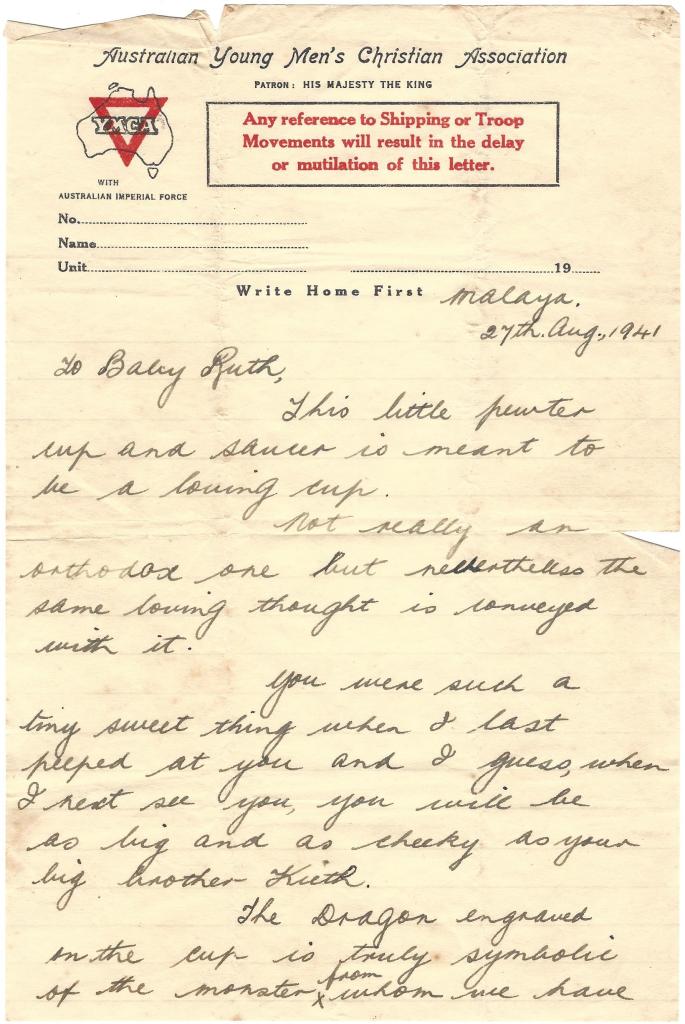
Casting a shadow over the relatively relaxed life the nurses enjoyed was the threat of Japanese invasion, which had grown as the year progressed. When Florence wrote a letter to her baby niece on 27 August, she alluded to the danger Japan posed:
To Baby Ruth,
This little pewter cup and saucer is meant to be a loving cup.
Not really an orthodox one but nevertheless the same loving thought is conveyed with it.
You were such a tiny sweet thing when I last peeped at you and I guess, when I next see you, you will be as big and as cheeky as your big brother Keith.
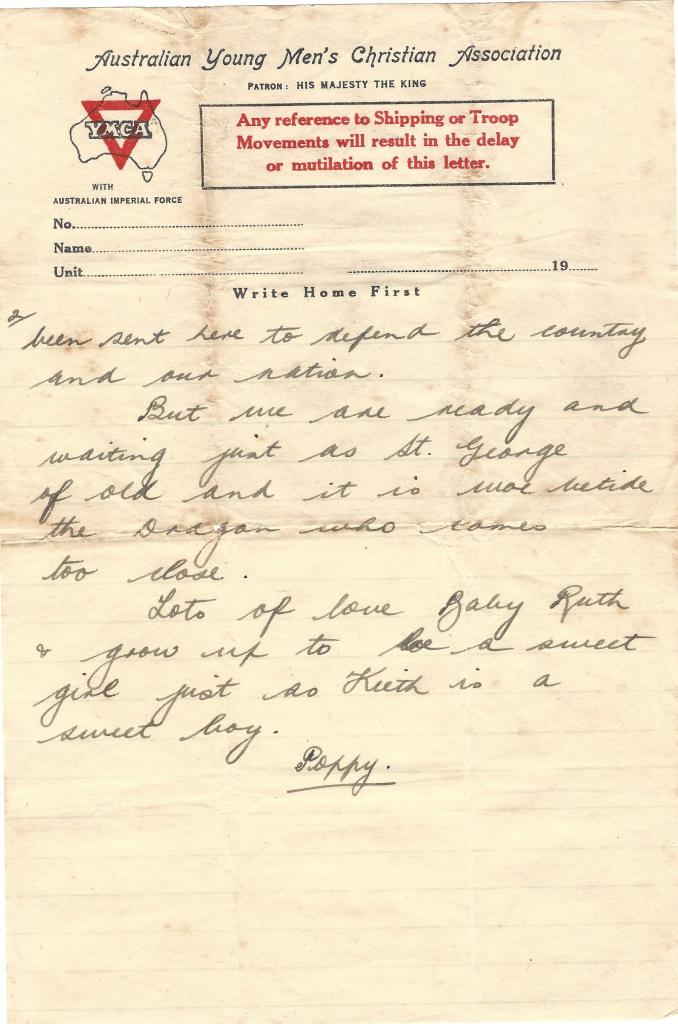
The Dragon engraved on the cup is truly symbolic of the monster from whom we have been sent here to defend the country and our nation.
But we are ready and waiting just as St. George of old and it is woe betide the Dragon who comes too close.
Lots of love Baby Ruth & grow up to be a sweet girl just as Keith is a sweet boy.
Poppy.
Japanese Invasion
Just over three months later, the “Dragon” attacked. Just after midnight on 8 December, Japanese forces under Lieutenant General Tomoyuki Yamashita commenced an amphibious invasion of northern Malaya. Four hours later Singapore was attacked from the air. In the following weeks Japanese infantry, backed by vastly superior air and naval power, pushed south with alarming speed as British and Indian troops retreated before them.
By the end of December, it had become clear that the 2/10th AGH was vulnerable in Malacca and would have to evacuate south. Colonel Alfred Derham, the commanding officer of the Australian medical units in Malaya, decided to move the hospital to Singapore Island but would need time to organise a suitable site. In the meanwhile, the unit’s personnel and patients were moved to other units. Between 29 December and 5 January 1942 many of Florence’s colleagues were detached to the 2/13th AGH, which had arrived in Malaya in September and was based at the Tampoi Mental Hospital in the south of the Malay Peninsula.
Others, including Florence, were sent to the 2/4th CCS, then based at the Mengkibol rubber plantation near Kluang, halfway between Malacca and Tampoi. While Florence was there, Australian soldiers fought for the first time in Malaya and the unit began to receive convoys of surgical cases. On the night of 15 January, for instance, 165 casualties were admitted, 35 operations carried out and 73 cases evacuated to the 2/13th AGH.
When Florence returned to the 2/10th AGH on 17 January, the unit had completed its move to the island and was now based at Oldham Hall, a Methodist school at Bukit Timah, with a surgical section at Manor House, a nearby boarding house. On 25 January the 2/13th AGH relocated to Singapore, followed a few days later by the 2/4th CCS. The Japanese were driving all before them.
In the early hours of 31 January, the last British, Indian and Australian troops crossed the Causeway that spanned Johor Strait between the Malay Peninsula and Singapore Island. Then it was blown up. When Japanese forces reached the northern shore of the strait soon after, they began a ferocious artillery bombardment of the island.
When Japanese soldiers crossed Johor Strait on the night of 8 February the end was nigh. By the morning, they had established a beachhead on the northwestern corner of Singapore Island, despite strong opposition from Australian troops. The heavy fighting produced many casualties, and at Oldham Hall the wards became so overcrowded that men were lying on mattresses on the floor while others waited outside. The nurses marvelled at their calmness and patience. Operating theatre staff worked around the clock, treating severe head, thoracic and abdominal injuries. There was little respite for Florence when she was off duty, as the constant pounding of bombs and shells meant that sleep was hard to come by.
Evacuation of the Australian Nurses
With Singapore’s fate all but certain, a decision was made to evacuate the nurses. Already in January, following reports of Japanese atrocities in Hong Kong, Colonel Derham had asked Major General H. Gordon Bennett, commanding officer of the 8th Division in Malaya, to evacuate the AANS nurses. Bennett had refused, citing the damaging effect on morale. Colonel Derham then instructed his deputy Lieutenant Colonel Glyn White to send as many nurses as he could with Australian casualties leaving Singapore.
The nurses’ pleas to be allowed to stay with their patients were ignored, and on 10 February, six of Florence’s 2/10th AGH colleagues embarked with 300 wounded Australian soldiers on the makeshift hospital ship Wusueh. The following day a further 60 AANS nurses, 30 from each AGH, left on the Empire Star.
Sixty-five AANS nurses remained in Singapore, among them Florence. On Thursday 12 February they too were ordered to leave. Late in the afternoon they were driven by ambulance to St. Andrew’s Cathedral, where they were joined by the remaining nurses of the 2/13th AGH and the 2/4th CCS. From the cathedral the ambulances proceeded towards Keppel Harbour until they could go no further, at which point the nurses got out and walked the remaining few hundred metres to the devastated waterfront.
The Vyner Brooke
At the wharves Florence and her 64 comrades were ferried through a congested mass of shipping of all types to the Vyner Brooke, a small coastal steamer that was formerly the private yacht of Charles Vyner Brooke, the ‘White Rajah of Sarawak’. As darkness fell, the ship, which had once accommodated 44 first-class passengers, slipped out of Keppel Harbour with as many as 250 women, children and men on board. Behind it, the Singapore waterfront burned, and thick black smoke rose into the sky.
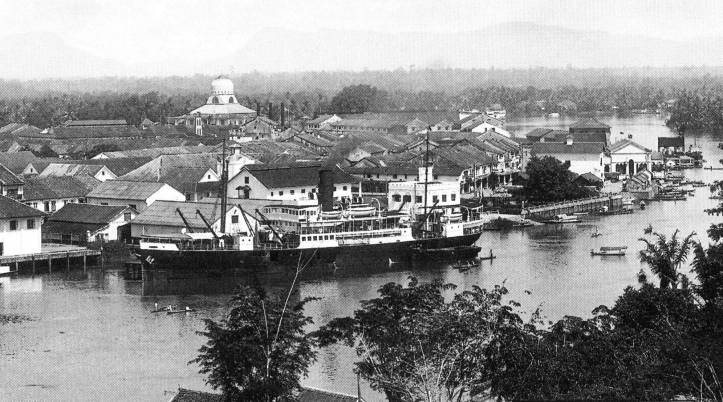
That night the Vyner Brooke made little progress and spent much of Friday hiding among the hundreds of small islands that line the passage between Singapore and Batavia. By the morning of Saturday 14 February, Captain Borton was approaching the entrance to Bangka Strait. To the right lay Sumatra; to the left, Bangka Island.
In the early afternoon the Vyner Brooke was located by a Japanese spotter plane, and soon dive-bombers appeared on the horizon. Captain Borton engaged evasive manoeuvres, but to no avail, and the ship received three direct hits. One struck the forward deck, killing a gun crew. Another entered the ship’s funnel and exploded in the engine room. A third tore a hole in the side of the ship. With a dreadful noise of smashing glass and timber, the Vyner Brooke shuddered and came to a standstill. It was lying 15 kilometres from Bangka Island.
The nurses hurried about the deck, helping women and children, the elderly, the wounded, and their own injured colleagues into the three viable lifeboats, which were then lowered into the sea. After a final search of the ship, it was the nurses’ turn to evacuate. They removed their shoes and their tin helmets and entered the water any way they could. Some jumped from the railing on the portside, others practically stepped into the water on the listing starboard side, others slid down ropes or climbed down ladders.
Bangka Island
Twelve of her colleagues had been killed in the attack or were subsequently lost at sea, but Florence, who had been badly injured, somehow made it ashore. She may have been in one of the two lifeboats to reach Bangka Island, or she may have been on one of the rafts deployed by the crew as the Vyner Brooke was sinking. She may even have floated in clinging to a piece of wreckage. One way or another she found herself in the company of a large group of AANS nurses, soldiers, sailors and civilians gathered around a bonfire. The group grew in number during Saturday night and Sunday as it was joined by survivors of other ships sunk in Bangka Strait by Japanese forces, which were at that very moment invading Sumatra.
On Monday 16 February the group decided to surrender en masse to Japanese authorities, and a deputation left for the nearest large town, Muntok, to negotiate this. A short while later all the civilian women and children of the group followed behind – save one, Mrs. Betteridge, a British woman whose husband lay among the injured on the beach.
Around mid-morning the deputation returned with a number of Japanese soldiers. The soldiers separated the survivors into three groups and proceeded to shoot or bayonet them in cold blood. All 22 nurses were shot, and 21 died, including Florence. Miraculously, Vivian Bullwinkel of the 2/13th AGH survived. She hid in the jungle for ten days before joining her remaining 31 colleagues in captivity.
It was not until the interned nurses, now 24, were finally rescued in September 1945 that word of their fallen comrades’ fate reached Australia. Reporters sought interviews with the parents who had lost their daughters. On 23 September 1945 the Sydney Daily Telegraph published an interview with Florence’s mother, in which she stated that the last letter she had received from Florence was written on 8 February 1942. The letter was positive in tone and Florence had seemed unconcerned about the Japanese, although she had noted that they were closing in on them. Mrs. Salmon told the reporter that Sammy (as Florence was evidently known in the family) had always been a very happy girl and lived for her nursing. She said that the last three years of suspense had been simply dreadful, but now that she knew Florence’s fate, she could not hate anyone.
In Memoriam
On Sunday 28 October 1945, a memorial service was held in the grounds of the Waverley War Memorial Hospital in honour of Florence and Winnie May Davis, who had died in captivity. Four hundred mourners were in attendance.
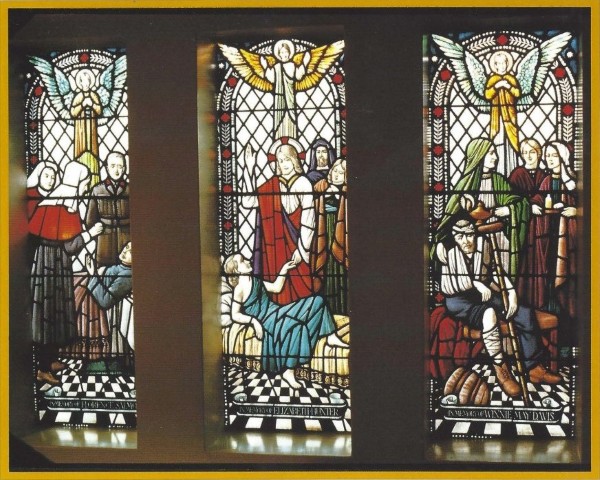
Some years later, stained-glass windows were installed in the Jeanie Morgan Wing of the hospital in memory of Florence and Winnie. Their names are also inscribed on the Roll of Honour in the Nurses’ Chapel at Westminster Abbey in London.
Later still, a small park in Punchbowl was named Salmon Reserve in honour of the service and sacrifice of Florence and her brother Leonard.
We remember them both.
SOURCES
- 2/30th Battalion A.I.F. Association, ‘Convoy US11B.’
- 2/30th Battalion A.I.F. Association, ‘Johan van Oldenbarnevelt (HMT FF).’
- 2/30th Battalion A.I.F. Association, ‘Marnix Van St. Aldegonde (HMT EE).’
- Arthurson, L., ‘The Story of the 13th Australian General Hospital, 8th Division AIF, Malaya,’ as presented by Peter Winstanley on his website Prisoners of War of the Japanese 1942–1945.
- Crouch, J. (1989), One Life is Ours: The Story of Ada Joyce Bridge, Nightingale Committee, St Luke’s Hospital.
- Fletcher, A. (2011), ‘Sisters Behind the Wire: Reappraising Australian Military Nursing and Internment in the Pacific during World War II,’ Medical History (Jul 2011, Vol. 55, No. 3, pp. 419–424).
- Goossens, R., ‘HMT Johan van Oldenbarnevelt,’ SS Maritime.
- Green, B. (1990), ‘To Minister: The Story of War Memorial Hospital Waverley 1918–1988,’ War Memorial Hospital.
- Hamilton, T. (1957), Soldier Surgeon in Malaya, Angus & Robertson.
- Museums of History New South Wales, ‘Nurses index 1926–1954.’
- Personal correspondence with a great-nephew of Florence Salmon.
- University of NSW, Canberra, Australians at War Film Archive, Pat Darling (née Gunther) interviewed on 2 May 2003, audio and transcript.
- Walker, A. S. (1953), Second World War Official Histories, Australia in the War of 1939–1945, Series 5 – Medical, Vol. II – Middle East and Far East, Part II, Ch. 23 – Malayan Campaign (pp. 492–522), Australian War Memorial.
- Walker, A. S. (1961), Second World War Official Histories, Australia in the War of 1939–1945, Series 5 – Medical, Vol. IV – Medical Services of the Royal Australian Navy and Royal Australian Air Force with a Section on Women in the Army Medical Services, Part III – Women in the Army Medical Services, Ch. 36 – The Australian Army Nursing Service (pp. 428–76), Australian War Memorial.
- Wigmore, L. (1957), Second World War Official Histories, Australia in the War of 1939–1945, Series 1 – Army, Vol. IV – The Japanese Thrust, Part I – The Road to War, Ch. 4 – To Malaya (pp. 44–61), Australian War Memorial.
SOURCES: NEWSPAPERS AND GAZETTES
- The Daily Telegraph (23 Sep 1945, p. 5), ‘Memorial for murdered nurses – Club to honour dead heroines of Singapore’.
- Government Gazette of the State of New South Wales (29 Aug 1939, p.4281), ‘Register of Nurses as at 31st December, 1938’.
- The Methodist (9 Jul 1938, p. 9), ‘Personal and General’.
- The Methodist (26 Nov 1938, p. 1), ‘Armistice Day at the War Memorial Hospital’.
- The Sun (Sydney, 5 Jun 1929, p. 19), ‘Theory Of Music’.
- The Sun (Sydney, 27 Jun 1929, p. 15), ‘Music Examinations’.
- The Sydney Morning Herald (23 Dec 1927, p. eight), ‘London College of Music’.
- The Sydney Morning Herald (5 Dec 1929, p. 10), ‘Local Exhibitions and Prizes for N.S.W’.
- The Sydney Morning Herald (24 Jun 1938, p. 6), ‘Examinations for Nurses’.
- The Sydney Morning Herald (29 Oct 1945, p. 5), ‘Memorial Service for Nurses’.
 australianwarnurses.org