AANS │ Lieutenant │ Second World War │ 2/3 Australian Hospital Ship Centaur
FAMILY BACKGROUND
Edna Alice Shaw was born on 12 January 1908 in the Sydney suburb of Enmore. She was the daughter of Alice Maude Gilchrist (1871–1940) and John Lachlan Shaw (1878–1949), who was a builder and contractor.
Alice and John were married on 9 October 1901 at Glebe Presbyterian Church in Sydney. They had three children, John Alexander Lachlan, born in 1902, Lachlan McLean (‘Lal’), born in 1904, and Edna.
NURSING
Little is known of Edna’s early life. She gained her Intermediate Certificate at high school and as an adult decided to become a nurse. In 1933, when the family was living at 104 Lincoln Street in Campsie, she was accepted as a trainee at Newcastle Hospital. She trained for the next four years, living at the nurses’ quarters, and passed her final Nurses’ Registration Board examination in May 1937. After receiving her certificate of completion of training, on 11 November she gained her registration in general nursing. Edna then trained in midwifery at the Royal North Shore Hospital in Sydney and became registered on 7 September 1939. She was now a sought-after double-certificated nurse.
WAR
By now Europe was at war. In Australia, thousands of men were drafted into the Citizen Military Forces (CMF) for home service or volunteered for the Second Australian Imperial Force (2nd AIF) for service abroad.
Both of Edna’s brothers served. John joined the 2nd AIF, served in Malaya, became a prisoner-of-war of the Japanese, and came home in 1945. Lachlan joined the Militia, was seconded to the 2nd AIF, and served in northern Australia.
Thousands of women volunteered too. Nurses joined the Australian Army Nursing Service (AANS), the Royal Australian Air Force Nursing Service, and later the Royal Australian Navy Nursing Service (RANNS). Other women joined the Women’s Australian Auxiliary Air Force, the Women’s Royal Australian Naval Service, the Australian Women’s Army Service, and the Australian Army Medical Women’s Service.
In 1940 Edna applied to join the AANS. She had her medical on 24 September and on 24 October was assigned the rank of staff nurse. Then she waited to be called up for service.
ENLISTMENT
Edna did not wait for very long. On 17 January 1941 she was called into Victoria Barracks in Sydney, where she attested for service with the 2nd AIF. She was now eligible for service abroad with the AANS. The following day she was posted to the camp dressing station at Greta Army Camp, around 50 kilometres northwest of Newcastle.
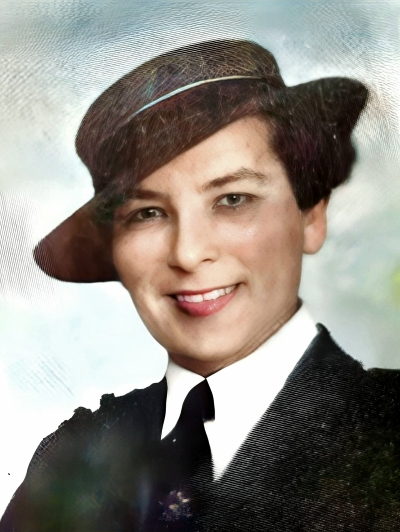
In the meantime, Edna had secured leave from Newcastle Hospital for the duration of her war service. In mid-February her colleagues at the hospital organised a farewell evening for her at the home of Mr. and Mrs. D. L. McDonald, where she was presented with an unbreakable China set. Edna expressed her appreciation of the gift and said that it would be a source of inspiration to her in the trials that lay ahead.
However, Edna’s appointment to the 2nd AIF was terminated on 20 February and the following day she attested for home service. She remained posted to the camp dressing station at Greta.
119TH AUSTRALIAN GENERAL HOSPITAL, BAGOT
Six weeks later, on 7 April 1941, Edna was attached to the 119th Australian General Hospital (AGH), based at Bagot, six kilometres north of central Darwin.
The 119th AGH had been raised in December 1940 when army authorities took over Bagot Compound, an Aboriginal settlement whose people were sent across Darwin Harbour to Delissaville. Elements of the 2/5th AGH previously been based at the former Kahlin Compound in central Darwin, together with administrative staff from the 7th Military District (Northern Territory), set up canvas tents at Bagot Compound and utilised existing huts. In March 1941 the unit was officially designated the 119th AGH.
On 22 April a large cohort of newly recruited 119th AGH staff, including around 40 AANS nurses and 100 orderlies, arrived in Darwin on the Katoomba. They had departed Sydney on 12 April and Edna was among them. They had been tasked with expanding the ramshackle hospital at Bagot to 1,200 beds. However, due to ongoing industrial action at Darwin Harbour, their equipment was not unloaded for another five weeks.
In the meantime, the existing buildings at Bagot were not extensive enough to house the 40 nurses, and until tents could be provided, Edna and the others lived at the Quarantine Station some miles away. On top of that, a great deal of work was required to make Bagot habitable. The septic system was faulty, the drains were inadequate, and laundry facilities were primitive. The heat and the insects provided a further challenge.
Edna and the others tolerated these conditions until December 1941, when the medical section of the 119th AGH was relocated to a new but only partially completed 600-bed hospital at Berrimah, 12 kilometres east of Bagot. The surgical and x-ray sections remained at Bagot.
THE PACIFIC WAR BEGINS
On 8 December 1941 Japanese forces launched an invasion of Malaya. Singapore fell on 15 February 1942, and four days later, on the morning of 19 February, Japanese planes bombed Darwin. When the alert was sounded, patients at Berrimah who were able to walk made their way to the long grass or to the few slit trenches that had been dug. Low-flying planes machine-gunned four of the wards, and one patient too ill to be moved far was killed while sheltering under a bed. One of Edna’s colleagues showed great courage in protecting another patient with her body.
Ships in the harbour suffered severely. The hospital ship Manunda received a direct hit, and 12 of its staff were killed, including AANS nurse Margaret De Mestre. Altogether, 252 Allied service personnel and civilians were killed that day.
On 18 April Edna completed her service with the 119th AGH and returned south. She now held the rank of sister, having been promoted on 17 January, the anniversary of her enlistment. She was granted leave until 14 May and then posted to the 102nd AGH, based in Tamworth, New South Wales. On 4 September she attested once again for service with the 2nd AIF and remained at Tamworth while awaiting a posting abroad.
No. 1 AHS CENTAUR
Edna’s opportunity came in March 1943 when she and 11 other AANS nurses were attached to the staff of a newly commissioned hospital ship, the Centaur. The Centaur had been built in Scotland in 1924 and arrived in Australia later that year to ply a route between Fremantle and Singapore. At the beginning of 1943 it was loaned to the Australian government for use as a hospital ship. It was refitted and recommissioned as 2/3 Australian Hospital Ship Centaur.
On 21 March the Centaur departed Sydney for Brisbane on the second leg of a trial voyage, having left Melbourne nine days earlier. On board were Edna and her 11 new AANS colleagues – Margaret Adams, Cynthia Haultain, Eva King, Mary McFarlane, Myrle Moston, Alice O’Donnell, Eileen Rutherford, Nell Savage, Jenny Walker, Joyce Wyllie and Matron Annie Jewell.
After arriving in Brisbane, the Centaur continued to Townsville, where Australian casualties from the fighting in New Guinea were embarked and brought back to Brisbane.
The Centaur then embarked on the most challenging leg of its trial voyage. It sailed to Port Moresby to embark Australian and American casualties, along with several wounded Japanese prisoners of war, and returned to Brisbane, arriving on 18 April. This marked the end of the Centaur’s trial voyage and demonstrated its effectiveness as a hospital ship.
THE FINAL VOYAGE
On the morning of 12 May the Centaur departed Sydney on its first post-trial voyage. It was transporting 193 members of the 2/12th Field Ambulance to Port Moresby and would return with Australian casualties. Once again Edna, her 11 AANS colleagues, and the other medical staff were on board.
On the evening of 13 May the nurses celebrated Matron Annie Jewell’s birthday with a cake that they had bought in Sydney. They finished at around 10.00 pm and retired to their cabins.
That night the weather was clear and visibility excellent. The Centaur was travelling unescorted and was fully illuminated and marked with the Red Cross. At 4.10 am, while most of those on board were asleep, a Japanese torpedo slammed into the ship’s hull. The Centaur exploded in a huge ball of fire and sank within three minutes.
Edna was among 11 nurses who died that day. Only Nell Savage survived. In total, 268 of the 332 people on board lost their lives, including 178 members of the 2/12th Field Ambulance.
Only four days earlier, Edna’s colleagues at Newcastle Hospital had received a letter from her. She had told them how excited she was to have been posted to the Centaur. The hospital’s acting matron, Sister H. Porter, recalled how popular and competent Edna had been. “She was a splendid type,” she told the Newcastle Morning Herald and Miners’ Advocate. “She lived here with us all through her training. We were all very fond of her.”
REMEMBRANCE
Every 14 May for years afterwards, Edna’s brother John and his family inserted a memorial notice in the Sydney Morning Herald. It read simply:
SHAW – In loving memory of Sister Edna Shaw, who lost her life on hospital ship Centaur, May 14 1943. Inserted by John, Nell and boys.
In memory of Edna.
SOURCES
- Ancestry.
- Australian Government, Find & Connect (website), ‘Kahlin Compound.’
- Collections WA, (website) ‘World War 2, Australia Northern Territory Adelaide River, 119 Australian General Hospital, 1942.’
- Kettle, E. (1986), ‘The First Darwin Hospital,’ PastMasters (website).
- Milligan, C. and Foley, J. (1993), Australian Hospital Ship Centaur: The Myth of Immunity, Nairana Publications.
- Monument Australia (website), ‘119 Australian General Hospital.’
- Museums of History NSW, Nurses Index 1926–1954.
- National Archives of Australia.
- Walker, A. S. (1961), Australia in the War of 1939–1945, Series 5 – Medical, Vol. IV – Medical Services of the Royal Australian Navy and Royal Australian Air Force with a section on women in the Army Medical Services, Part III – Women in the Army Medical Services, Chap. 36 – The Australian Army Nursing Service (pp. 428–476), Australian War Memorial.
SOURCES: NEWSPAPERS AND GAZETTES
- The Age (Melbourne, 3 Jun 1943, p. 3), ‘Tribute to Nurses.’
- The Australasian (Melbourne, 29 May 1943, p. 18), ‘Spotlight on Society: Nurse’s Bravery in Hospital Ship.’
- The Australian Women’s Weekly (29 May 1943, p. 9), ‘Men of Centaur Mourn Loss of Gallant Nurses.’
- Government Gazette of the State of New South Wales (Sydney, 4 Apr 1930 [Issue No.39], p. 1491), ‘In Bankruptcy.’
- Newcastle Morning Herald and Miners’ Advocate (20 May 1943, p. 2), ‘Newcastle Nurse Was on the Centaur.’
- The Newcastle Sun (19 Feb 1941, p. 4), ‘Gift to Sister E. Shaw.’
- The Sydney Mail and New South Wales Advertiser (2 Nov 1901, p. 1149), ‘Family Notices.’
 australianwarnurses.org