RAANC │ Lieutenant │ Korean War │ British Commonwealth General Hospital & British Commonwealth Communications Zone Medical Unit
FAMILY BACKGROUND
Betty Irene Crocker was born on 3 June 1925 at Waikerie Hospital in Waikerie, a town in the Riverland region of South Australia. She was the eldest child of Marjorie Flockhart Hall (1904–1990) and Arthur Ernest Crocker (1899–1975).
Marjorie Hall was born in New Mile End, Adelaide. A twin, she was the equal-youngest with her sister Irene of 13 children born to Selina Ann Gregory (1862–1929) and James Hall (b. 1856), both of whom were born in South Australia. Sometime after James’s death in 1911 at Mount Barker, Selina appears to have moved to Waikerie, presumably with the younger children.
Arthur Crocker was born in Milton Combe, a village near Plymouth, in Devon, England. His mother was Selena Steer (1877–1961) and his father John Crocker (b. c. 1874). In 1911 John Crocker was killed in a carriage accident, three weeks before the family was due to sail to South Australia, where John had planned to practise as an architect. Selena carried on regardless, and on 27 April 1912 she and the three boys – Arthur and his brothers, William and Reginald – departed Liverpool on the White Star liner Belgic and arrived at Port Adelaide in mid-June.
Clearly a determined and enterprising woman, Selena established a marine chandlery at Port Adelaide. Later in 1912 she married Henry Garland, a widower with seven children, in Hindmarsh, an inner suburb of Adelaide, and by 1917 they were living in nearby Prospect. Selena and Henry had one child.
On 23 July 1917 Arthur enlisted in the Australian Imperial Force (AIF) in Waikerie. In July 1918 he embarked from Sydney on HMAT Borda as a private with the Australian Army Medical Corps (AAMC). Arriving in London in September, he was posted to an AAMC depot at Parkhouse, Wiltshire, before being attached to No. 3 Australian Auxiliary Hospital at Dartford in December. He was promoted to lance corporal in June 1919 and remained in England until October that year. At one point he served in France with a field ambulance unit. On 1 November 1919 he embarked for Australia on the Nestor as a member of the nursing staff, arriving in December, and was discharged at Keswick army camp in Adelaide in January 1920.
After the war Arthur resided for some time at Kingston, a small town on the River Murray in the Riverland region of South Australia. In May 1921 he reported for duty on his 44-acre selection at Moorook, six kilometres south of Kingston in the Moorook Irrigation Area. Arthur had been allocated the land under the soldier settlement scheme, under which Great War veterans were eligible for grants of Crown land. In early 1922 Arthur’s allotment was formally promulgated in the Government Gazette.
Eventually Arthur’s and Marjorie’s paths crossed, and on 12 July 1924 they were married in the Waikerie Methodist Church. They lived at Moorook and in June 1925 Betty was born.
By then it had become clear that some of the land within the Moorook Irrigation Area, including Arthur’s block, was poor. He and the others affected were offered land elsewhere, and in October 1925 the Crockers moved to Barmera, around 16 kilometres east of Moorook. Unfortunately, Arthur lost his war medals in the Murray during the move. They were in a case that fell off the boat.
On 4 November 1927 Marjorie gave birth to a second daughter, Jean, at Barmera Hospital.
In late 1929 or early 1930 the Crockers moved from Barmera to Glossop, a small town seven kilometres east of Barmera, where Arthur had acquired 60 acres of land. To begin with he practised dry-land farming and then concentrated on growing citrus trees. He also kept a few cows.
Each year at fruit picking time, a team of eight pickers would arrive at the Crockers’ farm, mainly from Port Adelaide. They were accommodated on the farm and cooked for themselves. At pruning time another gang arrived, most of whom were Greek or Italian migrants who had come to Australia after the First World War.
On 16 February 1932 Marjorie gave birth to a son at the Lady Weigall Hospital in Barmera.
GROWING UP
Betty appears to have had a very happy childhood. She loved living on the farm and she loved her school. From the age of four and a half, she attended the tiny Glossop School, which had a single teacher, whom she loved, and only eight children. On her very first day she was driven and thereafter walked each day for an hour and a half through the scrubland. On the way she observed nature – the parrots in their nesting hollows, the quandongs as they ripened – and this made her walk even longer.
Betty loved to read. The only Christmas presents she ever had, were books. She loved the Anne of Green Gables stories in particular. The Crockers also had the very first radio in the area – a large box with a tiny little valve and a little dial.
In March 1934 Sir Alexander Hore-Ruthven, the governor of South Australia, and Lady Hore-Ruthven visited Berri during their farewell tour of the Riverland and Mallee regions. Around a thousand people gathered at the Soldiers’ Memorial Park to say goodbye, including more than 200 Girl Guides, Boy Scouts and Brownies. When the formalities and speechmaking were over, three of the Brownies – Betty, Moira Buzacott and Heather White – marched up and presented Lady Hore-Ruthven with a flower-bedecked basket of fruit.
The Glossop School went no higher than Grade 4, and thereafter Betty attended Berri Higher Primary School. Clearly an excellent pupil, at the end of 1937 she scored 623 marks in her Qualifying Certificate examination– the highest in her class. That year she also played in the school marching band. On 8 December 1937 she marched through Berri with the band then took part in a swimming competition.
As a matter of fact, both Crocker girls were high achievers. In December 1939 Jean Crocker, also attending Berri Higher Primary School, gained the highest marks of any girl in the Riverland region.
ADELAIDE
In 1938, when Betty was 12 and a half, she went to Adelaide to continue her secondary education at Adelaide High School.
Betty lived with her paternal grandmother, Selena Garland. She adored her grandmother and loved staying with her. Selena had a love of literature and music. She took Betty to ‘Walk me through the orchestra’ concerts conducted by Sir Bernard Hines, conductor of the Adelaide Symphony Orchestra, and to lunchtime concerts at Elder Hall on North Terrace. She decided that Betty herself should learn to play the piano – and Betty’s uncle, either William or Reginald, a great organist, undertook to teach her. She was still playing decades later. Betty also learned to embroider and crochet while staying with her grandmother.
As Adelaide was a long way from the Riverland, Betty used to go home only once a year, for the long Christmas holidays. She was taken to Adelaide railway station and put onto a train to Morgan on the River Murray, from where she caught a bus home.
Betty remained at Adelaide High School until the completion of her matriculation year. She had maintained a high academic standard and had chosen subjects that would allow her to study medicine at university, including Latin. Arthur Crocker had been enjoying good years on the land, and it appeared as though there would be no question of having the money to pay for her medical degree. Betty matriculated with sufficiently high marks to gain entry to university but then learned that in fact her father’s fortunes had waned, and he would no longer be able to pay for her studies. Nor were scholarships available for women to study medicine in those days.
NURSING
Betty took up nursing instead. It was 1941, she was 16 years old, and Australian troops were fighting in North Africa, the Mediterranean and the Middle East. Formerly, women wanting to train as nurses applied directly to whichever hospital they chose, but the wartime administration of the workforce by the Manpower Directorate removed choice, and Betty ended up at Broken Hill Hospital in New South Wales (which fell under South Australian Manpower, as it was considerably closer to Adelaide than to Sydney).
At first it was a shock for Betty to live and work in Broken Hill, at that time the biggest mining centre in Australia. Having spent four formative years in the decorous world of her grandmother’s Adelaide, she found the frontier character of Broken Hill very different. She did not drink. She did not smoke. She did not swear. She was shocked at the way conversations were carried on, particularly among the miners. She lived in a single room in the nurses’ home and was only allowed to go out one night per week and had to be back by 10.00 pm. Nor was she allowed to invite anyone to the home. She was paid 5 shillings per week, but everything else was provided – uniform, textbooks, food and accommodation.
After three months of theoretical basics, Betty went onto the wards for the first time. Under the instruction of tutor sisters, she worked early morning shifts (5.30 am to 2.30 pm), late afternoon shifts (2.30 pm to 11.30 pm), and a two-month night shift. She had one day off per week, part of which was spent going to lectures.
During her first year, Betty trained with patients who were almost ready to go home. The second year was spent with patients who were no longer acute but were not yet close to discharge. The trainees were rotated through different wards – the children’s ward, the male medical ward, the male surgical ward, the female surgical ward, the female medical ward, and the infectious ward.
In her third and final year Betty was introduced to casualty, and accident and emergency. She regarded this as the most difficult part of nursing: treating patients who were acutely ill or seriously injured – whose recovery, in the absence of later medical innovations (like the heart monitor), was largely dependent on the skill of the nurses.
Betty’s training was now complete. During her fourth year, known as a staffing year, she learned to be a charge nurse. She was back in casualty, and accident and emergency, which sometimes involved accompanying a local GP on flying doctor flights out of Broken Hill. Many of the patients collected were victims of mining accidents, and Betty gained valuable experience in major accident surgery, as well as in the transportation of seriously injured patients.
Following the completion of her staffing year, Betty moved to Sydney to train in midwifery at the Crown Street Women’s Hospital, the largest midwifery hospital in Australia. She then returned to Adelaide and trained for six months in Infant and Child Welfare at Torrens House, before training in infectious diseases at Northfield Infectious Diseases Hospital in the northern suburbs of Adelaide (known as Northfield Wards of the Royal Adelaide Hospital from 1948). Infectious nursing was an area that was more interesting for Betty than midwifery and infant welfare.
When Betty finished her training in early 1949, she had four certificates under her belt and was just about as qualified as any nurse could be.
As luck would have it, in May 1949 South Australia experienced an outbreak of polio, and Betty was appointed sister in charge of the two polio wards at Northfield. By 31 December 1949, the peak of the epidemic, there had been 555 admissions to Northfield classed as ‘definite.’ The number of new cases slowly declined over winter 1950, then rose again over summer and into 1951. Cases then tailed off once again as winter approached.
Betty began to wonder what she might do next. With fewer cases coming in, her polio wards at Northfield were about to be closed, and while she could work elsewhere in the hospital, she thought a change might be good. By then the Korean War had been raging for more than a year, and on her morning-tea break one day she happened to see a small advertisement in the Adelaide Advertiser from the Defence Department calling for trained nurses with accident and emergency and theatre qualifications to join K Force – Korea Force, Australia’s contribution to United Nations Command. Betty decided to join.
UNITED NATIONS COMMAND, KOREA
Following Japan’s defeat at the end of the Second World War, the Soviet Union took control of the Korean Peninsula north of the 38th Parallel, while the United States assumed control of the south. In August 1948 the Republic of Korea (South Korea) was established, and by mid-1949 most American forces had departed. In September 1948, the Democratic People’s Republic of Korea (North Korea) was established. By the end of 1948 most Soviet troops had been withdrawn, leaving behind military advisors and equipment for the newly formed Korean People’s Army (KPA).
Deep antagonism persisted between the North and the South, and on 25 June 1950 the KPA launched a massive offensive across the 38th Parallel. Driving the South Korean army before it, the KPA surged down the peninsula and on 28 June captured the South Korean capital, Seoul.
On 27 June, the day before Seoul fell to the North, the United Nations Security Council (without the Soviet Union, which was boycotting the UN at the time) declared that North Korean actions constituted a breach of the peace and recommended that UN members provide military aid to South Korea to repel the attack. Ten days later, on 7 July, the Security Council authorised the United States to establish and lead a unified command comprising military forces from UN member states and operating under the UN flag. United Nations Command came into being.
Aside from South Korea itself and the United States, 15 member states contributed military forces: Australia, Belgium, Canada, Colombia, Ethiopia, France, Greece, Luxembourg, the Netherlands, New Zealand, the Philippines, South Africa, Thailand, Turkey and the United Kingdom. Four member states – Denmark, India, Norway and Sweden – plus Italy contributed medical units.
In early July HMAS Shoalhaven, HMAS Bataan, and 77 Squadron, RAAF were deployed to Korea from Japan, with the 3rd Battalion, Royal Australian Regiment (RAR) following in late September. These units had been part of Australia’s contribution to the British Commonwealth Occupation Force.
BRITISH COMMONWEALTH OCCUPATION FORCE, JAPAN
The British Commonwealth Occupation Force, or BCOF, was the junior partner of the United States in the post-war occupation of Japan. With personnel drawn from Britain, India, New Zealand and Australia, and under Australian leadership, the BCOF was initially responsible for Hiroshima and Yamaguchi prefectures and was headquartered in Kure, a port city in Hiroshima prefecture, and later on Eta Jima, a large island across the harbour from Kure. In February 1946 the BCOF’s area of responsibility expanded to include Shimane, Tottori and Okayama prefectures and the entire island of Shikoku. It also assumed certain responsibilities in Tokyo.
Within its zone, the BCOF was required to maintain military control and supervise the dismantling of Japan’s military-industrial complex. In 1947 British and Indian forces were withdrawn, and in late 1948, by which time the BCOF had largely become an Australian undertaking, even Australian forces began to be drawn down. By mid-1949 the BCOF was responsible only for Hiroshima prefecture and Iwakuni district of Yamaguchi prefecture, both on the Seto Inland Sea. The United States had taken control of the other prefectures.
On 31 March 1950 the decision was made to withdraw the remaining Australian personnel within six months. However, with the outbreak of the Korean War, this decision was rescinded – and instead, as we have seen, the remaining units were committed to combat in Korea.
BRITISH COMMONWEALTH OCCUPATION FORCE GENERAL HOSPITAL
Australia contributed not only combat personnel but also medical personnel to the BCOF. The 130th Australian General Hospital (AGH) arrived in Japan on 10 March 1946 and established itself in the former Japanese Naval Academy buildings on Eta Jima. Some of the hospital’s personnel had flown from Australia, while others had been transferred from the Indonesian island of Morotai, a key Allied base in the latter stages of the war. Among those posted from Australia were 34 nurses of the Australian Army Nursing Service (AANS) and 54 members of the Australian Army Medical Women’s Service (AAMWS), all under the charge of Matron H. E. M. McMahon. Three RAAF Nursing Service nurses followed soon after.
In early 1948, the 130th AGH took over a wing of the former Japanese Naval Hospital in Kure from the 92nd Indian General Hospital (IGH). The 92nd IGH had been in occupation of the seven-story building, set on a steep hill above Kure Harbour, since early 1946 and had left for India by the end of 1947. The hospital became known as the Kure Wing of the 130th AGH. By the end of 1948 the 130th AGH had relocated entirely to Kure, with the Americans taking over the hospital in Eta Jima. At the same time, BCOF headquarters returned to Kure.
On 16 February 1949 the 130th AGH was merged into or otherwise became known as the British Commonwealth Occupation Force General Hospital (BCOFGH). On that day the commanding officer of the 130th AGH, Major (Temporary Colonel) C. W. Nye, was appointed commanding officer of the BCOFGH. In May 1949 Major (Temporary Lieutenant Colonel) Lucy Edwards was appointed matron of the hospital. Just over a year later, the BCOFGH began to serve as a base hospital for Commonwealth casualties of the fighting in Korea.
Around November 1950, five months after the fighting began, the hospital’s Australian staff were joined by British staff of No. 29 General Hospital, including nursing officers of the Queen Alexandra’s Royal Army Nursing Corps (QARANC), while in June 1951 a Royal Canadian Army Medical Corps (RCAMC) unit was attached to the BCOFGH. It consisted of medical officers, nursing sisters and other ranks. Thus, the BCOFGH became the first combined medical unit in UN Command, although each of the three national contingents maintained its own wards and administered its own staff. The QARANC nursing officers had their own matron, while the nursing sisters of the RCAMC were led by a senior sister. Lieutenant Colonel Edwards was senior matron. However, the patients were not segregated by nationality; the Canadian ward, for instance, could have Australian, British and New Zealand patients on it.
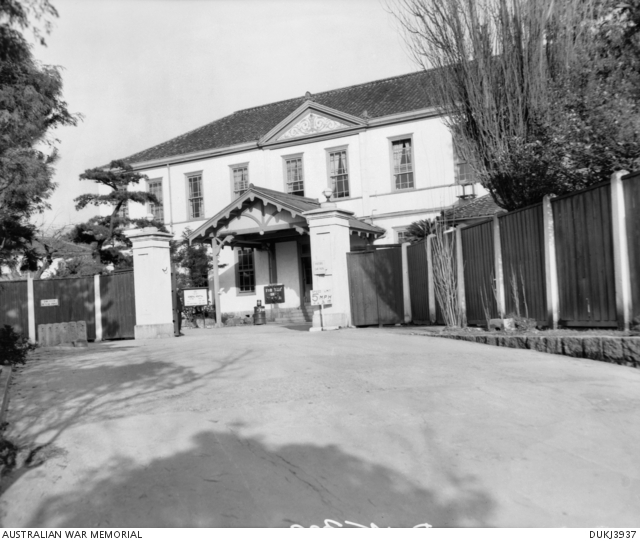
Following the signing of the Treaty of Peace on 8 September 1951 in San Francisco, which reestablished peaceful relations between Japan and the Allied powers, the BCOFGH became known as the British Commonwealth General Hospital (BCGH). It was to the BCGH that Betty would in due course be posted.
WOODSIDE ARMY CAMP
At around the same time as the RCAMC unit was arriving at Kure, Betty was acting on her decision to join K Force. She went to the recruitment centre in Adelaide and applied to join the Royal Australian Army Nursing Corps (RAANC). (The AANS was designated ‘Royal’ in November 1948 and became an independent corps in February 1951.) Her application was approved and on 30 July 1951 Betty was appointed a lieutenant on a four-year commission. She became the first nurse from South Australia to be recruited from civilian duty to the RAANC following its change of status.
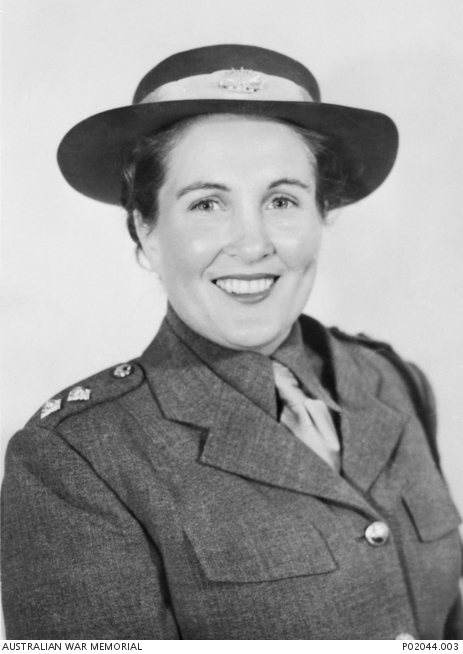
In the meantime, Betty had been posted to the 4th Camp Hospital at Woodside Army Camp in the Adelaide Hills and tasked with setting up a 20-bed hospital within three weeks. Although Woodside was practically empty when she arrived, hundreds of new National Service trainees were due to arrive in early August. The National Service Scheme had been established by the Australian Government earlier that year in response to the Korean War and more generally to Cold War tensions.
With the help of Sergeant Queripel of the newly formed Women’s Royal Australian Army Corps (WRAAC), Betty began by compiling a list of things that were required for the hospital, which ran to 10 full pages, and gave it to Colonel Matthews, the officer in charge of Woodside. She and Sergeant Queripel then began to prepare the Nissen hut that was to house the hospital. They cleaned the floors, wiped the walls and cleaned and painted 20 iron beds that were stacked up in a corner, covered in spider webs. Soon, three trucks arrived with the equipment and other items that Betty had listed. Within three weeks everything was ready, down to the correct placement of bedpans.
On 6 August 1951, more than 800 18-year-old National Service trainees arrived at Woodside, where they would stay for the next three months. Three days later, Betty’s hospital admitted its first patients.
From 10 to 22 December 1951, Betty and three 4th Camp Hospital colleagues – Lieutenants Patricia Klingberg, Maxine Lakin and Marie McCaskill, who had also joined K Force as RAANC nursing officers – undertook an officer training course held at the new School of Army Health, which was based at Summerleigh Lodge in Healesville, 50 kilometres east of Melbourne. They were among 25 RAANC nursing officers and other ranks selected for overseas service to attend the course. Some, like Betty and her South Australian colleagues, were going to Japan, while others were going to Malaya – where they would support Commonwealth forces involved in the so-called Malayan Emergency.
The women studied military discipline, administration, law, protocol and etiquette; parade ground drill and marching; nursing procedures such as suturing, intravenous transfusions, and anaesthetic techniques; assessment and classification of casualties; and the transportation of wounded.
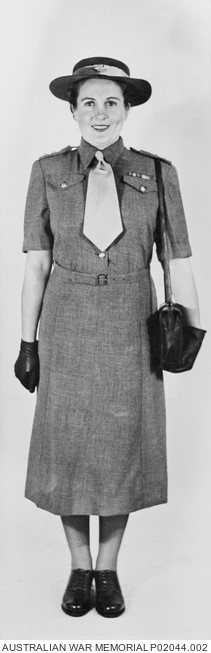
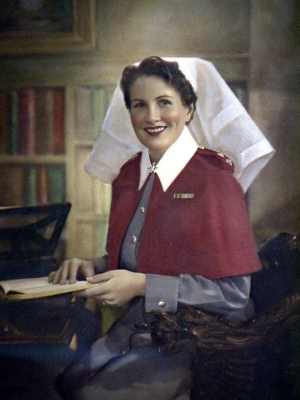
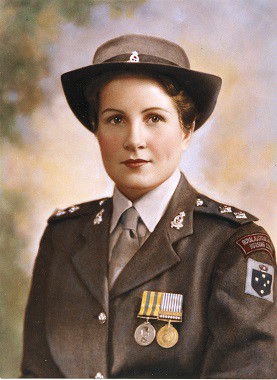
During the 12-day course time Betty was asked to travel into Melbourne to model her RAANC uniforms for instructional photographs. Colonel Ethel Bowe, matron-in-chief of the RAANC, gave Betty her Second World War medals to wear in some of the photographs – making it look as though Betty herself had served in that war. After three hours Betty returned to Healesville.
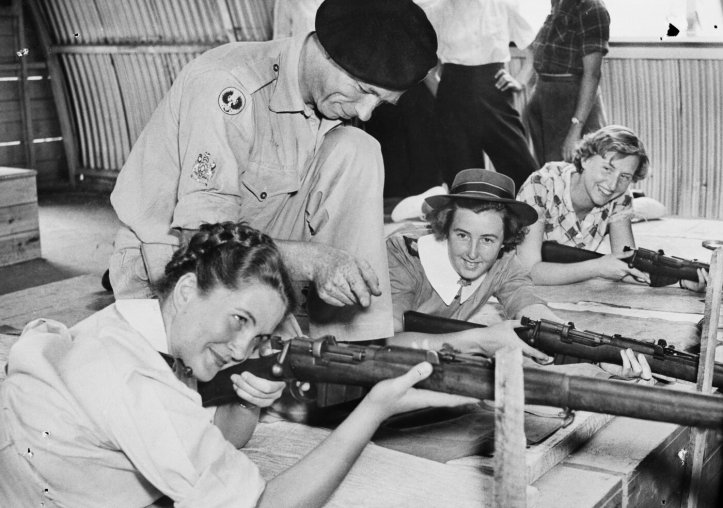
In January 1952, back at Woodside, Betty and Maxine Lakin, together with a number of WRAACS, undertook weapons training, in pistol and rifle. When Betty questioned why they needed weapons training, she was told that since the North Koreans did not recognise the Geneva Convention, and since there were known to be North Korean (and Chinese) infiltrators in medical units, the nurses might be required to protect their patients. It would appear that the Australian military authorities already had in mind at some point to deploy Betty and other RAANC nursing officers to Korea itself.
TO JAPAN
The time arrived for Betty’s deployment to Japan, and by 13 March 1952 she had left Woodside for Melbourne, the first step on her journey. Fifty-one years later, during an interview conducted in 2003, Betty recalled that when her father saw her off at Adelaide railway station, he said, “If the bullet has got your name on it, you’ll get it whatever you do. Just do your duty.” In Melbourne she met Colonel Bowe once again, who told her that during the journey Betty would be in charge of four RAANC other ranks, three of whom were Privates Shirley Y. McEwen, Shirley R. McLeod and Colleen C. O’Connor.
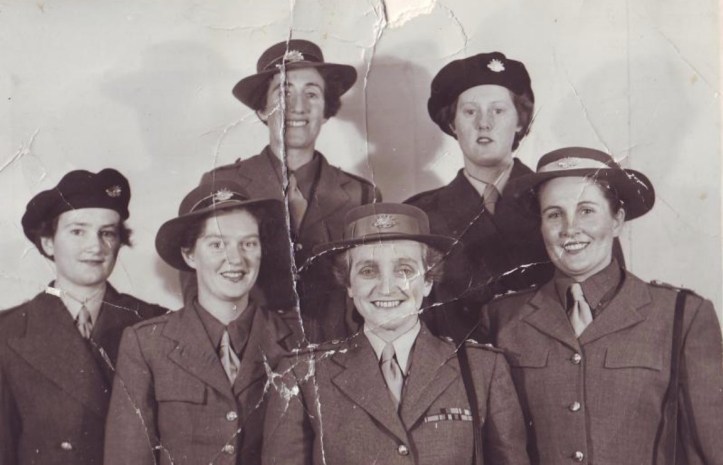
In due course Betty and the four RAANC other ranks, together with other K Force personnel, entrained for Sydney. After spending some days at leisure, at 4.40 pm on 28 March they reported to the Transport Officer at Mascot Airport. They were given their tickets (but did not require passports) and boarded a Qantas Skymaster for Darwin. Although it was a regular civilian flight, the only people on the plane were soldiers joining regiments in Korea and Japanese wool buyers. The Skymaster departed Mascot at 6.00 pm on a very hot evening and travelled all night to Darwin. Betty and the others deplaned, ate breakfast in a hangar, then reboarded and flew to Manila in the Philippines, arriving at 5.00 pm.
The K Force personnel were escorted to a hotel on Manila Bay. Betty’s RAANC charges were placed in a room together, but as the hotel’s staff had assumed that Betty, as a lieutenant, was male, she was offered accommodation with the other male officers. When she pointed out the mistake, she was offered the bridal suite – the only room available. The next day, 30 March, Betty, the four RAANC other ranks, and the other K Force personnel flew to the RAAF airbase at Iwakuni in southern Japan. Betty was struck by how cold Japan was. From a southern hemisphere summer, they had flown to a late northern hemisphere winter. Luckily, she had her greatcoat. In Iwakuni they boarded a launch, chugged across the Inland Sea to Kure, and soon arrived at the BCGH. They were part of the first contingent of RAANC staff attached to K Force to arrive at the hospital.
IN JAPAN
Betty and her colleagues had arrived during the final days of the BCOF. The Treaty of Peace signed on 8 September 1951 was due to come into force on 28 April 1952, at which point the Allied occupation would officially end and full Japanese sovereignty would be restored. Many of the Australian, British and Canadian nursing officers at the BCGH were attached to the BCOF and were now due to go home, so were very happy to see Betty and the others.
Betty was allocated a room with a single bed and a wardrobe in the nurses’ quarters opposite the BCGH and went on duty. She was assigned to a mixed surgical team comprising a Scottish surgeon, a French-Canadian anaesthetist, an English assistant surgeon and Indian orderlies.
Initially it was challenging to work within a multilingual surgical team. To begin with, each member named the instruments differently. Then Betty struggled with the French-Canadian anaesthetist’s minimal command of English and had trouble with the very broad Scottish dialect of the surgeon. However, after working together for a couple of weeks, and given the repetitive nature of the reconstructive surgery they were carrying out, they did not actually have to talk to each other very much. Betty got to know exactly what the surgeon wanted, and he came to trust that she knew what to give him.
Betty’s patients were Commonwealth combat casualties or victims of accidents who had been transported to the BCGH from Korea along an established chain of evacuation (which will be described in some detail later). After truce talks were initiated in mid-1951, the front had stabilised around the 38th Parallel, and medical evacuation had become a more predictable affair. Casualties arrived with their wounds cleaned and dressed but not sutured. This technique, known as delayed primary closure, had been employed for some decades and was now standard practice.
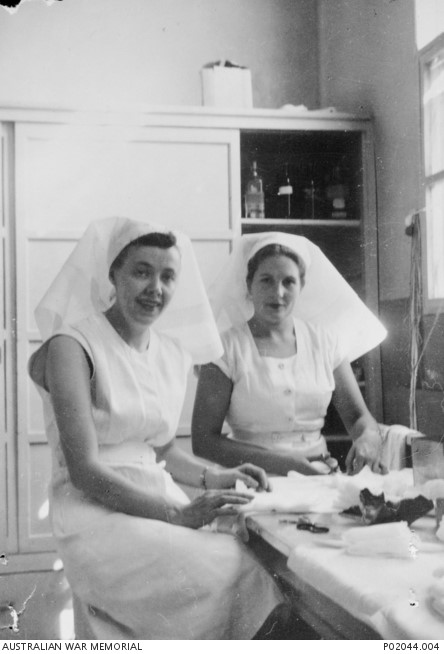
The casualties arrived at the hospital in a convoy of ambulances at around 6.00 pm each day. They were seen by the duty surgeon, who assessed them without disturbing their wounds or injuries. Those who were in pain or showed signs of fever or elevated pulse were admitted to the duty surgeon’s ward, while the rest were distributed to other surgical wards. Urgent cases were taken directly to the operating theatre for inspection, while the others rested overnight. Betty explained in her 2003 interview what happened to these patients once they reached the operating theatre:
The next morning, they would all come one after the other to the theatre. They [had been] marked down on the theatre list [as] delayed primary surgery. It wasn’t until the plaster was removed, just before they were anaesthetised to go into the theatre, did you know what you were going to do. So we just had one standard big tray of instruments. We might use a few of them, but on the other hand you mightn’t use a whole lot. With the case of amputation, amputations in the field area in Korea were as low down as possible to stop the man bleeding to death. The bleeders [blood vessels] all sutured up and they had this huge plaster on. Then the delayed primary surgery was done properly. …
The other thing we had were terrific burns. … The Australian troops unfortunately were not equipped properly for fighting in the snow. … The weather was so terribly cold and they didn’t have proper equipment to warm themselves up, they used to dig a hole in the snow and get themselves in that, particularly at night, and they also devised all sorts of strange heating devices, which unfortunately had a habit of blowing up when they put them down in holes with them. …
The other sort of burns [were caused by] phosphorous bombs. Phosphorous, when it hits the skin, eats it all away. Not only burns it, but it eats it away. So there was quite a number of those and they weren’t nice.
Betty’s surgical team was one of four working simultaneously in the operating theatre at the BCGH. Betty was the only Australian; the nurses in the other teams were British and Canadian. When the cases came in each afternoon, the teams were told how many to expect the following morning; and no matter how many there were, they had to get them all done, as Betty recalled in her interview:
No matter what. You just kept going. There was no discrimination between rank of the wounded. They came in order of priority and because we were not able to decide at that stage before they came down to the theatre and still had their plasters on how extensive their wound was, but we did try to do those less severely wounded first [so] that the maximum number were done in the shortest possible time of those who were less wounded. Then we gradually, as it went on, the more serious cases came in. [You] don’t feel tired. Not until it’s all finished. Then you feel tired.
As the casualties’ wounds had been staunched and plastered in Korea, the bulk of the surgery performed was wound closure by delayed primary suture. If gas gangrene had set in, the wound was opened immediately and infected tissue excised before being treated again with penicillin. Skin grafting was also sometimes carried out, and the facilities at Kure allowed specialised work to be done on specific types of injury. Chest injuries and ophthalmic injuries could be dealt with for instance, but neurological cases were sent to an American specialist hospital in Tokyo. If patients recovered well, they were sent to the nearby convalescent depot before returning to Korea. Otherwise, they were evacuated to their home country – Australia, Britain, Canada, New Zealand or South Africa.
The BCGH also treated medical cases, for instance the illnesses and accidental injuries of troops stationed in Japan.
Some of the RAANC nursing officers were posted to a small holding unit in Tokyo. Betty’s colleague Lieutenant Peg Nicholson was one of them. After some time at the BCGH, she spent six months in Tokyo before being posted to Korea.
LEISURE TIME
Betty soon Betty struck up a friendship with QARANC nursing officer Lieutenant Jilly Hall. One night in May the two nurses had dinner aboard HMS Unicorn, an aircraft carrier. They were guests of Betty’s friend, who was one of the ship’s officers, and another officer. After dinner they were escorted down to an enormous hangar that doubled as the ship’s cinema and, sitting with the ship’s company, watched an old Bing Crosby film.
In June Betty and Jilly were invited to take part in the Dramatic Society’s next production, The Tinsel Duchess. It is not known how often they managed to rehearse, but they at least attended the dress rehearsal, held in September at the society’s Green Room Club. Neither remembered her lines. Four nights later the play was performed in front of an appreciative audience, and the two friends appear to have acquitted themselves well.
On occasion Betty would attend functions held at various Commonwealth officers’ messes. Invitations were sent to the British matron of the BCGH, Lieutenant Colonel Phyllis Widger OBE RRC (whose deputy from May 1952 was the Australian matron, Major Dulcie Thompson), requesting the presence of up to six nurses, two Australian, two Canadian and two British. After Lieutenant Colonel Widger decided who should attend based on availability on the night, the nurses were told to be ready at a certain time and were collected by staff car.
The British functions in particular were quite magnificent – very formal, with silverware on the dinner table, crisp service and excellent food. The nurses were not permitted to attend in their outdoor uniform and did not have mess uniform, so Japanese women working for the BCGH made appropriate dress items for them.
Sometimes Betty and her colleagues were invited to spend weekend leave in the beautiful homes of the British and Canadian consuls in Kobe, a 300-kilometres train journey east of Kure. Betty always enjoyed going. The nurses might be taken to a concert or even a ball and needed to dress appropriately. Sometimes at dinner they heard things that were not to be repeated.
Betty also attended Scottish dancing organised by the Black Watch (also known as the Royal Highland Regiment) – the only Australian nurse to do so. Since the dancing was usually held on Sunday nights, and convoys did not come in on Sundays, Betty was free to go. Occasionally the Black Watch men had mess dress on, and some had spurs, which took a little getting used to.
BRITISH COMMONWEALTH COMMUNICATIONS ZONE MEDICAL UNIT, SEOUL
In November 1952 Betty was informed by the Australian matron, Major Dulcie Thompson, that she was to be posted to the recently opened British Commonwealth Communications Zone Medical Unit (BCCZMU) in Seoul, Korea. She was fitted for fleece-lined boots and a parka and on 3 January 1953 flew from Iwakuni airbase to the RAAF airbase at Kimpo, just west of Seoul. She was accompanied by Lieutenant Colonel Widger, who was going on a tour of inspection. Jilly Hall was meant to have gone too, but in mid-December had been told that, due to a suspected spinal condition, she could not. (In the end it was partial Spondylolisthesis, remediable through intensive physiotherapy.) From Kimpo, Betty and Matron drove into the devasted capital of South Korea.
During 30 months of war, Seoul had changed hands four times and was severely damaged, with thousands of buildings, houses and factories destroyed. Hundreds of thousands of people had fled the city, and thousands of those who remained were starving. Some were reduced to living in crates.
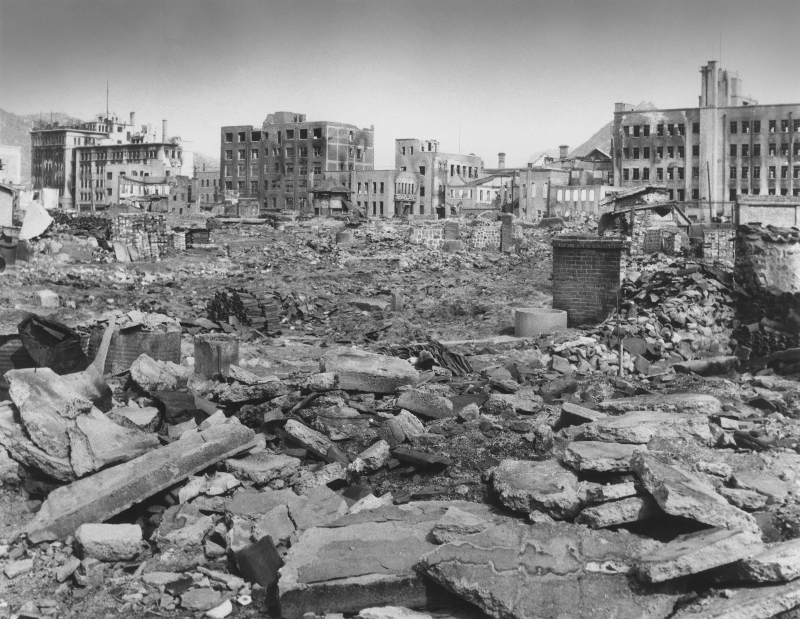
The BCCZMU had opened in September 1952 as an evacuation hospital for Commonwealth casualties. It was housed in a bombed-out three-storey technical school on the outskirts of Seoul. Facilities were extremely basic. There was no running water – it had to be carried in by bucket. Heating and electricity were erratic. When the latter failed, the staff used hurricane lamps. The hospital was short of equipment and supplies. For example, there was nowhere for patients to put their few possessions until Lieutenant Peg Nicholson found some wooden boxes. She and other nurses cleaned and stained them and placed them upright by the beds. At certain times pillowcases, sheets and blankets were lacking.
The hospital was staffed by two nurses each from the RAANC, the QARANC and the RCAMC; Australian, British and Canadian medical officers; and a range of auxiliary personnel. In addition, two RAAFNS nursing sisters on two-month rotations from Iwakuni staffed a holding ward for patients ready for evacuation to Japan. This had been established in October 1952 by Sister Cathie Daniels, who had been joined in December 1952 by Sister Natalie Oldham.
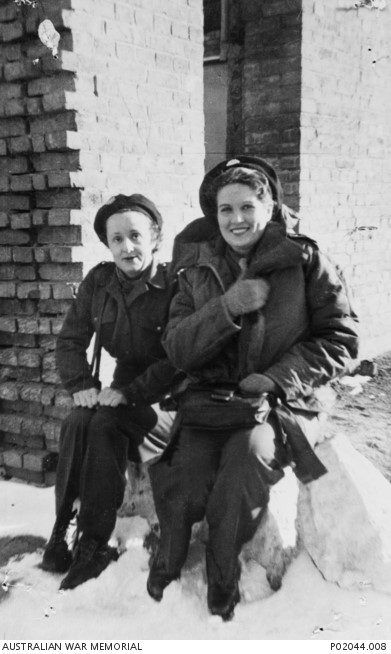
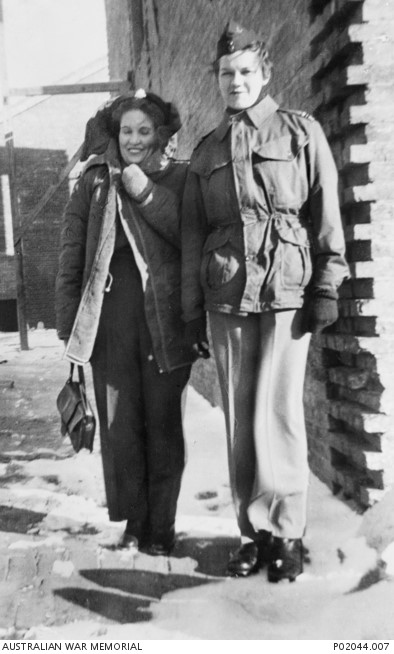
The nurses were quartered in what appears to have been an adjoining building. They occupied individual cubicles a large room above the officers’ mess that was only accessible via an external fire escape. Like the hospital building, this building too had no running water; it was brought up in cans to the nurses’ quarters, where it could be heated at a large stove in the middle of the room. At night each nurse slept on the floor of her cubicle in a sleeping bag. It was sometimes so cold that the zipper on her sleeping bag was liable to freeze tight if she did not grease it before going to sleep. The nurses kept their uniforms on during the night, firstly because of the cold, and secondly due to the possibility of air raids.
FROM THE BATTLEFIELD TO THE BCCZMU
Betty and her colleagues treated Commonwealth soldiers who had been wounded in combat or accidently injured and who arrived at the BCCZMU from the battlefield via as many as five intermediate stages.
After being wounded or injured, Commonwealth soldiers were carried by stretcher bearers to a Company Aid Post, where very basic first aid was given – maybe a tourniquet, bandages and sedatives. They were then carried or sometimes driven by jeep to a Regimental Aid Post (RAP). RAPs were located as close to the front as possible but needed to be accessible by ambulance. Given the mountainous terrain of Korea, this might mean the base of a hill some distance from the front. At the RAP, patients were stabilised: their blood vessels were tied off to control haemorrhaging, fractured limbs were immobilised with splints, and morphia and penicillin were administered for pain and infection control.
When RAP staff had finished with them, patients were handed over to the care of a Field Ambulance unit –often the 60th Indian Field Ambulance – and transported to a Casualty Collecting Post (CCP), the farthest forward Field Ambulance post. Staff there checked the procedures that had been carried out at the RAP and provided penicillin if it had not already been given. Patients were then transferred to an Advanced Dressing Station (ADS) further behind the lines, where, if necessary, they received further first aid from Field Ambulance staff and were documented and sorted.
From the ADS patients were transferred to a forward surgical unit, either a Field Dressing Station (FDS) or a Mobile Surgical Army Hospital (MASH). These were located 20 or more kilometres behind the front and were the closest units to the front with transfusion and surgical teams; in this respect, they resembled the Casualty Clearing Stations of the First and Second World Wars. Staff administered fluids and blood transfusions if necessary and splinted fractures if still required. After ensuring that bleeding had stopped, they excised wounds, coated them with penicillin-sulphonamide, and capped them with plaster of Paris – but did not suture them. If immediate amputation was required, this was carried out as low down the limb as possible. Again, blood vessels were tied off, and the amputated limb was capped but not sutured.
Sometimes patients were flown by helicopter from the RAP or CCP directly to a MASH, but only in serious cases involving head, chest and abdominal wounds, multiple fractures, and life-threatening loss of blood. Even then, evacuation was available only if an ambulance could not reach the RAP or if a rough ambulance ride would aggravate injuries.
From the FDS or the MASH patients were transferred by ambulance – or strapped to a jeep and on one occasion a tank – to the BCCZMU. Occasionally, Betty or one of the other nurses would travel with Field Ambulance staff to an FDS, a MASH or even a RAP to collect patients themselves.
FROM THE BCCZMU TO JAPAN
As an evacuation hospital, the BCCZMU had no facilities for surgery. As we have seen, final surgery was only carried out at the BCGH in Kure. In the interim, Betty and the other staff maintained the patients, administering liquids, morphia and penicillin as required, being careful not to disturb bandaged or capped wounds. The hospital also treated prevalent diseases such as typhus, diphtheria, dysentery, malaria, influenza heat exhaustion and.
When patients were ready for evacuation, ideally within 48 hours of arrival at the BCCZMU but generally longer, they were handed over to the RAAFNS nursing sisters in the holding ward, who organised an evacuation flight and looked after the patients in the meantime. When all was ready, the RAAFNS nursing sisters loaded the patients into ambulances and accompanied them to Kimpo airbase. In January 1951 the RAAF had begun evacuation flights in Dakota aircraft from Kimpo to Iwakuni, and this had become the norm from July 1951.
(Prior to the opening of the BCCZMU in September 1952, Commonwealth casualties were brought to Kimpo from an American evacuation hospital in Seoul, possibly the 121st, or directly from one of the forward surgical units.)
At Kimpo the RAAFNS nurses from the BCCZMU handed the patients over to RAAFNS colleagues or sometimes British or Canadian nurses, who loaded the patients aboard the Dakota in groups of around 40, three-quarters of whom were stretcher patients, the others walking wounded. The Dakota flew east across the Sea of Japan, negotiating high mountains, and landed at Iwakuni. The patients were carried over or walked to the RAAF airbase hospital, where they were sponged, changed into pyjamas, and given lunch.
The patients were then transferred to the care of RAANC, British or Canadian nurses, who travelled with them by ambulance to Iwakuni train station. With the help of British orderlies, the nurses loaded the patients into an ambulance train, which was in fact the regular afternoon Tokyo to Kure train with one or two specially fitted carriages coupled to the back.
For four hours the patients were bumped along a circuitous route that hugged the coast, with the Inland Sea on one side and mountains on the other. The train arrived at Kure station in the late afternoon, and the patients were met by Field Ambulance staff. Finally, they were taken to the BCGH – arriving, as we have seen, at around 6.00 pm.
RETURN TO AUSTRALIA
In March 1953, during her final days of duty in Korea, and with 12 months remaining on her contract, Betty was unlucky enough to come down with a painful disease similar to dengue fever that caused her joints to swell. Her condition became serious enough to warrant evacuation to Australia. Alongside 25 sick and wounded soldiers and accompanied by her colleague, Lieutenant Anne Kelleher, Betty, on a stretcher, was flown by Dakota from Kimpo to Iwakuni, then transported by ambulance train to Kure and driven to the BCGH – as so many of her patients had been. On 24 March she was taken aboard the SS New Australia and, with 600 troops of 1st Battalion, RAR, who had reached the end of their deployment after serving for 14 months in Korea, departed for Australia. The New Australia arrived in Brisbane on 9 April, Sydney on 8 April, and Melbourne on 10 April.
From Melbourne, still accompanied by Lieut Kelleher, Betty flew aboard a commercial Qantas flight to Adelaide, her stretcher straddling several seats at the front of the plane. At Parafield Airport she was collected by ambulance and taken to the Daws Road Repatriation Hospital.
Betty remained at the repat hospital for two months, then spent a month at home with her parents. When she became fit enough to return to service, around November 1953, she was posted to the 3rd Camp Hospital at Puckapunyal Army Camp in Victoria as sister in charge of the theatre – an appointment she liked very much.
WILLIAM CARR LAWRENCE
On the afternoon of 2 September 1954 Betty answered the phone to a relatively young and inexperienced Regimental Medical Officer (RMO) at Puckapunyal, who told her that he was bringing six badly injured National Service trainees from the RAP to the camp hospital. Betty kitted up and prepared the casualty section, and soon the RMO arrived with six young men, each around 19 years old, who had been injured following the explosion of a live mortar shell in their tent. Some days prior, several trainees had gone out on an unsupervised fatigue to get sand and had dug up a 37 mm shell. One of the trainees had surreptitiously brought the shell back to his tent and had kept it there for several days. The explosion occurred when he attempted to drop it through a crack in the wooden flooring of the tent – a game known as “eyedrops.”
Betty and the RMO stabilised the casualties, who were then taken by ambulance to the Repatriation General Hospital in Heidelberg, where one of them subsequently died.
While Betty was still working on the injured men with the inexperienced RMO, he had suggested suturing up the severe scalp laceration that one of them had suffered. Betty, drawing upon her extensive experience of surgical nursing in Japan, cautioned against it, tactfully pointing out that grey matter was exposed. In so doing, she may have saved the RMO’s professional career – not to mention the young man’s life.
The RMO’s name was William Carr Lawrence, known as Bill. He was a junior resident medical officer from the Alfred Hospital in Melbourne who had joined the Royal Australian Army Medical Corps Reserve upon graduation and was on a monthlong placement at Puckapunyal caring for National Service trainees. During the Second World War Bill had served in New Guinea and Borneo as a sapper with the Royal Engineers but had actually been accepted into medicine at the University of Melbourne in 1941, prior to serving. He eventually began his medical course in 1947.
Sometime after treating the injured men, Bill and Betty both happened to be in the officers’ mess. Bill invited Betty to the pictures. They got along famously and in 1955, at the conclusion of Bill’s locum year at the Alfred, were married in St Peter’s Cathedral in Adelaide.
RED CLIFFS
After his and Betty’s marriage, Bill completed a three-month locum in Geelong. He and Betty then moved to the town of Red Cliffs in northwestern Victoria’s Sunraysia region, 20 kilometres south of Mildura. The town was founded by soldier settlers after the First World War and continued to attract returned service personnel.
To begin with, Bill worked as an associate to an old, experienced GP, but before long established his own practice, with Betty as nurse practitioner and practice manager. Betty’s training in general nursing, obstetrics, infant welfare and infectious diseases; her applied experience in casualty and theatre nursing in Australia, Japan and Korea; and her upbringing in a riverine fruit-growing region very similar to the Sunraysia served the practice extremely well. Moreover, as the daughter of a soldier settler herself, Betty was familiar with the challenges faced by many of the residents.
Remarkably, during the early years at Red Cliffs, Bill practised dentistry as well as coping with the more usual problems of illness, accidents and childhood infections. Apart from his general practice, over the years Bill also served professionally and in an executive capacity at the Red Cliffs Hospital, the Red Cliffs Community Hospital, the Mildura Base Hospital and the Mildura Private Hospital, and also devoted much of his time to Rotary.
Betty and Bill had three children, David, Katrina and Elizabeth. While she looked after them, Betty worked on a part-time basis in the practice, but once they were all at boarding school – there was no secondary school in the area – she once again worked full time.
According to Betty, she and Bill did not have very much of a life beyond the medical practice, but they did manage one month off every year for a holiday, some of which time was nevertheless spent attending medical and/or nursing conferences. It was always difficult to find a locum for that month away, so their patients learned to adjust, tolerating their illnesses for the month.
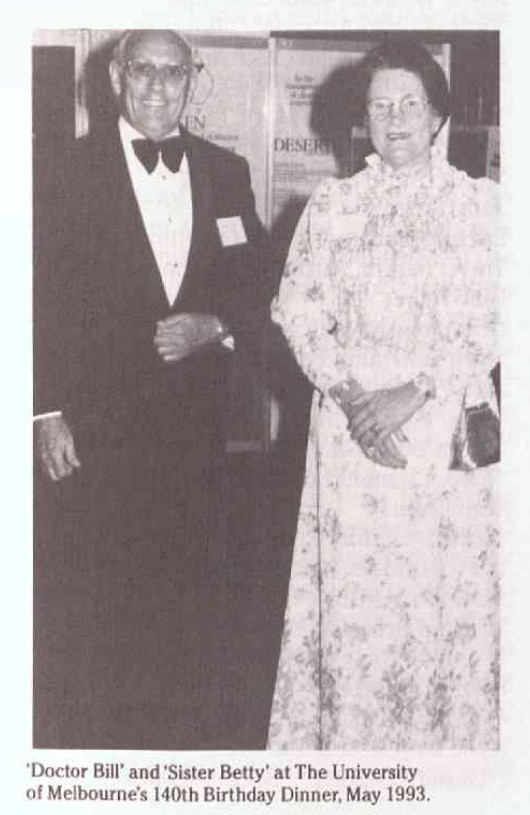
‘Sister Betty’ and ‘Doctor Bill,’ as they became affectionately known, served the Sunraysia community for 41 years. During this time they delivered and cared for 752 babies. Betty and Bill watched them grow up and they became like an extended family.
By mid-1992 Betty and Bill were keen to retire and put the practice on the market. However, despite advertising in Australia, the United Kingdom and New Zealand, they simply could not find someone to take it on. It was still unsold at the time of Bill’s death.
Bill died on 6 November 1996 of multiple myeloma, a blood cancer beginning in the bone marrow. It was strongly suspected to have been caused by his contact with chemical defoliants during his war service in Borneo.
Following Bill’s death, Betty retired. Her more than 40 years of service to the community of Red Cliffs was recognised on 26 January 1999, when she was awarded the Medal of the Order of Australia. She was now Betty Lawrence OAM.
RETIREMENT
Sometime after her Australia Day honour, Betty went to live in West Beach, Adelaide – where, despite her advancing years, she remained extremely active. She became a member of the Korean Veterans’ Association and president of the Returned Sisters sub-branch of the Returned and Services League. She participated in Legacy functions, was secretary of a Probus club, and was involved with the War Widows’ Society. At home she enjoyed embroidery, music and her garden.
Betty died on 18 December 2015 at the age of 90 and was buried at Centennial Park Cemetery.
SOURCES
- Attwood, H. and Brentnall, L. ‘Obituaries – William Carr Lawrence MB BS 1953, MRACGP, 1925–1996,’ Chiron, Journal of the University of Melbourne Medical Society (Vol. 3, No. 5, May 1997, pp. 54–55).
- Australian War Memorial, ‘British Commonwealth Occupation Force 1945–52,’ AWM114.
- Australian War Memorial, Dulcie Vera Thompson interviewed by Jan Bassett, 16 Jul 1987, S01811.
- Australian War Memorial, ‘Korean War, 1950–53.’
- Australian War Memorial, Margaret Elston Webster (Peg Nicholson) interviewed by Jan Bassett, 3 Nov 1986, S01820.
- Australian War Memorial, ‘Written records – British Commonwealth Occupation Force (BCOF – Japan) and British Commonwealth Forces, Korea (BCFK).’
- BirtwistleWiki, ‘130th Australian General Hospital.’
- Dahl, M. (2009), ‘Air Evacuation in War: The Role of RAAF Nurses Undertaking Air Evacuation of Casualties Between 1943–1953,’ thesis submitted for the degree of Doctor of Philosophy, Institute of Health and Biomedical Innovation, Queensland University of Technology.
- Fairlie Wood, H. (1966), Strange Battleground: The Operations in Korea and Their Effects on the Defence Policy of Canada, The Minister of National Defence.
- Fleming, R. (2010), ‘Forgotten Women of the Forgotten War: Australian Nurses in the Korean War, 1950–1956,’ thesis submitted for the degree of Doctor of Philosophy, University of New England.
- Harrison, M. (2023). ‘Casualty Evacuation in Korea, 1950–53: The British Experience,’ Uisahak [Korean Journal of Medical History], Vol. 32, No. 2, Aug 2023, pp. 503–552.
- Imperial War Museum, ‘A short history of the Korean War.’
- Korean War Online, ‘Korea Remembered: Chapter 35 – Blue Capes’ by Patricia Oliver.
- Lawrence, B., ‘A Good Life, A Country Practice,’ Chiron, Journal of the University of Melbourne Medical Society (Vol. 3, No. 2, Apr 1994, pp. 59–61).
- Lawrence, B., ‘The Mildura Experience,’ Chiron, Journal of the University of Melbourne Medical Society (Vol. 2, No. 2, Apr 1989, pp. 61–63).
- McNair, E. J. (2007), A British Army Nurse in the Korean War,’ Tempus Publishing.
- Rice, G. H. (2009), A Sketch of Military Medicine in Canada 1867–2009, GEHR Publishing.
- Royal Navy Research Archive, ‘RAAF Station Iwakuni.’
- State Library of South Australia, J. D. Somerville Oral History Collection, ‘Interview with Betty Lawrence née Crocker [transcript]’ (conducted 22 May 2002 by Rob Linn), OH 644/7.
- United Nations Command, ‘Australia.’
- United Nations Command, ‘History of the Korean War.’
- UNSW Canberra, Australians at War Film Archive, Betty Lawrence née Crocker, interviewed 27 Nov 2003, archive no. 1190.
- UNSW Canberra, Australians at War Film Archive, Gordon Johns, interviewed 5 Jul 2004, archive no. 2176.
- UNSW Canberra, Australians at War Film Archive, Nellie Espie (Nell), interviewed 26 March 2004, archive no. 1780.
- Wellcome Collection, ‘29 (British) General Hospital, Kure, Japan, 1951–1961,’ RAMC/736/1/3.
- Western Australian Military Digital Library, ‘British Commonwealth Occupation Force (BCOF).’
- Wikipedia, ‘Medical support in the Korean War.’
- Wikipedia, ‘United Nations Command.’
SOURCES: NEWSPAPERS AND GAZETTES
- The Advertiser (Adelaide, 26 Apr 1920, p. 6), ‘Family Notices.’
- The Advertiser (Adelaide, 14 Aug 1950, p. 1), ‘Australians Go to War Again.’
- The Advertiser (Adelaide, 24 Jan 1952, p. 3), ‘Sergeant-Major Couldn’t Stop Smiles.’
- The Advertiser (Adelaide, 1 Feb 1952, p. 3), ‘S.A. Nurses Volunteer as Parachutists.’
- The Advertiser (Adelaide, 11 Apr 1953, p. 3), ‘S.A. Sister Back from Korea.’
- The Age (Melbourne, Jan 1952, p. 3), ‘Many Honored by the King.’
- The Argus (Melbourne, 6 Sept 1954, p. 4), ‘Mr Francis Sits Pat.’
- The Age (Melbourne, 15 Sept 1954, p. 5), ‘Committee to Investigate Camp Blast.’
- The Argus (Melbourne, 15 Sept 1954, p. 5), ‘“Eyedrops” with Shell Blast Victims’ Families to Be Compensated.’
- Chronicle (Adelaide, 9 Aug 1951, p. 4), ‘National Service Trainees in Camp at Woodside.’
- Commonwealth of Australia Gazette (14 Jul 1949, No. 52, p. 1984), ‘Australian Military Forces.’
- Commonwealth of Australia Gazette (22 Nov 1951, No. 86, p. 2954), ‘Australian Military Forces.’
- Commonwealth of Australia Gazette (26 Jan 1999, No. S16, p. 13), ‘Australia Day 1999 Honours.’
- The Herald (Melbourne, 6 Jul 1949, p. 17), ‘Japanese Hospitals “Centuries Behind.”’
- The Herald (Melbourne, 3 Sept 1954, p. 7), ‘Army Probe: How Did Trainees Get Shell?’
- The Mail (Adelaide, 17 Nov 1951, p. 12), ‘They’ll Learn in Luxury.’
- Murray Pioneer and Australian River Record (Renmark, SA, 20 May 1921, p. 3), ‘Kingston.’
- Murray Pioneer and Australian River Record (Renmark, SA, 7 Apr 1922, p. 6), ‘Soldier Settlement.’
- Murray Pioneer and Australian River Record (Renmark, SA, 4 Jul 1925, p. 7), ‘Sensational Developments at Moorook.’
- Murray Pioneer and Australian River Record (Renmark, SA, 30 Oct 1925, p. 9), ‘Kingston-On-Murray.’
- Murray Pioneer and Australian River Record (Renmark, SA, 9 Dec 1937, p. 9), ‘Berri Swimming Season Opens.’
- Murray Pioneer and Australian River Record (Renmark, SA, 6 Jan 1938, p. 8), ‘Hundred Per Cent Passes at Berri.’
- Murray Pioneer and Australian River Record (Renmark, SA, Dec 1939, p. 9), ‘School Break-ups and Q.C Results.’
- News (Adelaide, 11 Dec 1940, p. 9), ‘New High School Ready in 18 Months, Says Minister.’
- News (Adelaide, 31 Dec 1949, p. 1), ‘2 Polio Suspects.’
- News (Adelaide, 13 Jul 1950, p. 1), ‘Relaxation on Polio: Official.’
- News (Adelaide, 8 Aug 1951, p. 15), ‘Women’s News.’
- News (Adelaide, 12 Mar 1952, p. 15), ‘Many Aust. Women Wed in Japan.’
- News (Adelaide, 13 Mar 1952, p. 9), ‘Roll Call at Woodside.’
- The Register (Adelaide, 10 Jun 1925, p. 8), ‘Family Notices.’
- The Register (Adelaide, 12 Nov 1927, p. 8), ‘Family Notices.’
- The Sun News-Pictorial (Melbourne, 8 Sept 1951, p. 20), ‘U.N. action “breath of life” to S.-E. Asia.’
- Sunraysia Daily (Mildura, Vic., 2 Dec 1953, p. 4), ‘Town and Country.’
- Sunraysia Daily (Mildura, Vic., 10 May 1956, p. 7), ‘Infant welfare centre meeting.’
- The Sydney Morning Herald (6 Mar 1952, p. 11), ‘More Nurses for Japan with B.C.O.F.’
- The West Australian (Perth, 28 Jan 1952, p. 2), ‘British Military Bases on Japanese Mainland.’
 australianwarnurses.org