Lark Force
In the early hours of Friday 23 January 1942, a Japanese invasion force known as the ‘South Seas Force’ landed at Rabaul on the island of New Britain, part of the Australian Territory of New Guinea. The South Seas Force numbered more than 5,300 troops and, with air and naval support, quickly overwhelmed the small Australian garrison of around 1,400 troops, known as ‘Lark Force.’ Hundreds of Australian personnel were taken prisoner that day. Among them were six Australian Army nurses.
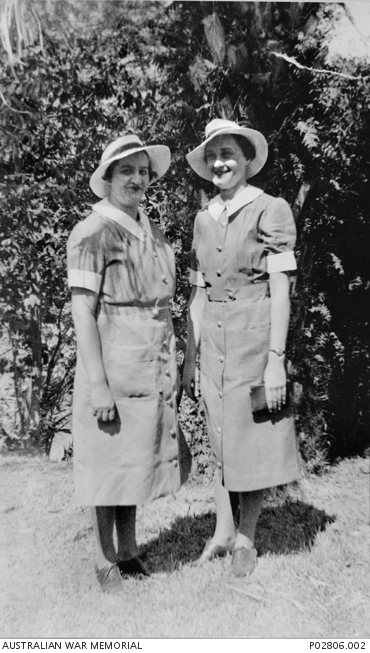
The nucleus of Lark Force, the 700-strong 2/22nd Battalion, together with various other detachments and companies, had arrived in Rabaul nine months earlier, on 26 April 1941, aboard the troopship Zealandia. Travelling with Lark Force was a detachment of the 2/10th Field Ambulance, which included six Australian Army Nursing Service (AANS) nurses: Staff Nurses Jean Anderson, Eileen Callaghan, Mavis Cullen, Daisy ‘Tootie’ Keast and Lorna Whyte, and Sister Kathleen (Kay) Parker. All were from New South Wales except for Eileen Callaghan, who was from South Australia.
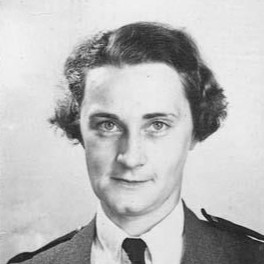
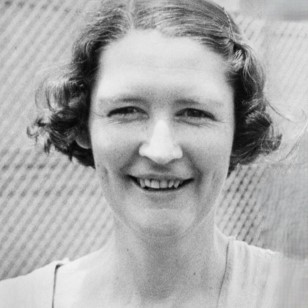
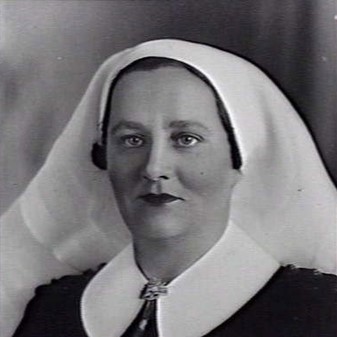
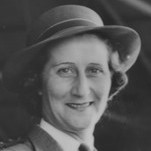

All six nurses had been attached to Lark Force on 18 April 1941, the day they embarked on the Zealandia. Under the charge of Sister Parker, the nurses were based at the garrison’s camp hospital in Rabaul, where they treated the soldiers’ various tropical maladies and accidental injuries.
Australian anxiety over Japanese intentions had grown steadily over 1941, and when Japan launched near-simultaneous invasions across the southwest Pacific on 7 December, the Australian government ordered the evacuation of all Australian women and children from the Australian Territory of New Guinea – missionaries and nurses exempted. On 12 December, with a Japanese invasion likely, the decision was taken in Australia not to reinforce the garrison. The men would have to look after themselves.
Japan Invades
Sure enough, on 4 January Japanese aircraft began sporadically to bomb Rabaul, launched from a naval flotilla steadily approaching New Britain. Japanese invasion was imminent. The flotilla anchored offshore, and on 20 January a far more intensive bombing campaign began, which resulted in many severe injuries.
“All of a sudden,” recalled Lorna Whyte in a 2011 interview with the Aucklander, “they were on top of us. The Australians were taken by surprise.” Wounded soldiers were brought into the camp hospital for treatment, with many requiring amputations. “It was traumatic, we didn’t have time to think, and it was all automatic.”
On 22 January, the eve of the invasion, the six AANS nurses were evacuated along the coast with their patients. Together with seven civilian nurses from the Rabaul Government Hospital (also known as Namanula Hospital), they travelled 30 kilometres southeast amid fierce shelling to the Vunapope Sacred Heart Catholic Mission in Kokopo. During the night they heard the sounds of battle as Japanese amphibious troops began to land and at daylight on 23 January counted 49 Japanese boats in the harbour.
The mission was no safe haven. “Japanese soldiers came in with guns and bayonets,” Lorna Whyte stated, “flipped the boys out of their beds and pushed us around. While they had their machine guns trained on us the bishop told them the place was actually a German mission. They swallowed it and let us go.”
Prisoners
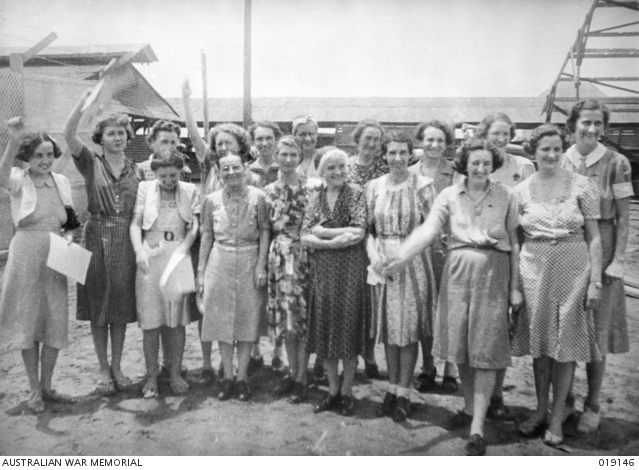
The 13 Australian nurses, together with four Methodist missionary nurses and a civilian woman by the name of Mrs. Kathleen Bignell – a Red Cross worker who had remained on her plantation on the outskirts of Rabaul – were confined to one of the buildings of the Catholic mission. Interned as well were the missionaries themselves, men and women, and mostly European, together with several Australian nuns and two Australian priests.
In their first days of captivity, the AANS nurses lived in constant fear of sexual assault. During the night, Japanese soldiers used to enter the room they all shared, poke them with their bayonets, and then stand there staring at them. The nurses carried phials of morphia and planned to use them if things became too dire. As Mavis Cullen explained, “[if] we felt we couldn’t cope … we each had a tube of morphine in our uniform pocket … It was just something to hang on to if things got too bad” (Nelson, p. 77). However, they were not molested, and gradually regained confidence.
The nurses also suffered episodes of violence. Tootie Keast was assaulted because she hadn’t bowed correctly. “I got the most fearful whack, and I was knocked down and got a few kicks because I didn’t bow deep enough,” she recalled later (Nelson, p. 77). Perversely, the Japanese soldiers even tried to urinate on the nurses.
The 18 women were held in the mission building for a month, then on 25 February were moved to a convent within the mission grounds, where they spent the next four-and-a-half months. During this time, “there was no contact from the outside world,” recalled Lorna Whyte, “no newspapers, books or letters. Our families thought we were dead.”
In early July, after five-and-a-half months interned at the mission, a Japanese military official told the Australian women that they were going to a “land of full and plenty.” There would be no mosquitoes and the women would be well looked after. “We thought we were going … to Australia,” Lorna said, “but we were taken with 70 Australian officers in the hold of a ship to Japan.”
YOKOHAMA
On 6 July, the 18 women, together with most of the officers of Lark Force, were taken by launch to the Naruto Maru and sailed for Japan.
Following eight days at sea, the ship arrived safely in Yokohama Harbour on 14 July. The women were taken to the two-storey Bund Hotel, located on the Yokohama waterfront. Most of the officers were sent to Zentsuji prisoner-of-war camp on the southern Japanese island of Shikoku.
At the Bund Hotel the Australian women were joined by 63-year-old American Mrs. Etta Jones, an English teacher who had been captured on Attu, one of the Aleutian Islands. The women were given clean rooms and good meals, but gradually the amount of food declined.
After a few weeks at the Bund Hotel, the 19 women were moved to the Yokohama Yacht Club, where they were interned upstairs in a two-storey building fronting Yokohama Yacht Harbour. They were kept separated from a group of interned foreign residents, who were held for a time in the lower part of the building.
At the Yacht Club the women were required to make envelopes. “We made millions [of them],” said Tootie Keast, “but we found that we could eat the glue” (Nelson, p. 80). When this was discovered, the women were compelled to make little bags for holding religious talismans instead. Japanese authorities claimed that such labour allowed internees to earn money to buy daily necessities, but in reality, it was nothing more than forced labour.
The women were rarely allowed down from the upper storey of the Yacht Club. As Tootie recalled, “except if we were on duty downstairs, we never put foot on ground for nine months; we were kept upstairs.” Such duties that did take them outside might include sweeping the streets and carting coal. Once a month the women were taken outside and made to bow in the direction of the Emperor’s palace. “That was a real outing,” Tootie explained, “because that happened every month” (Nelson, p. 81).
As time passed, the women struggled to secure adequate nutrition. “In the first year the food was awful but sufficient,” said Lorna Whyte, “in the second year it got worse. In the end it was non-existent.” As we have seen, the women were forced to supplement their meagre rations with glue. “We were doing fewer and fewer envelopes and eating more and more glue,” Lorna explained. “They said we were wasting it. They didn’t realise we were eating it.”
The women told the cook, Fuji San, that they needed more food to eat. “He’d say: ‘More? Better you die’,” recalled Lorna. She remembered watching him cutting up a cabbage for the guards. “He’d cut it in half and throw the core in the rubbish. We’d grab it and put it under our arms. He’d notice straight away and say: ‘Where gone? You take?’ In the end he threw them out the window and we’d retrieve them at night.” This perhaps explains the women’s reported use of a bamboo pole and wire to hook edible vegetable refuse from the water. They did at least have plenty of water and were given soap, toiletries and toilet paper.
Fuji San redeemed himself to some extent when he lent the women a small heater. “But one of the guards came in and saw it and threw it into the sea,” stated Lorna. “Fuji San was furious. Then we were made to stand in a line for two hours while the guard went up and down slapping our faces and waving his sword around” (Nelson, p. 81). The fact that the 19 women had a woman head jailer, known as ‘Mama San,’ did not protect them from such casual brutality.
The soldiers who guarded the women were later replaced by two policemen withdrawn from the army because they had tuberculosis. “They used to cough all the time,” Lorna said. “We’d take trays into the room, bow and put them down. When we collected them later, if there was any food left, we’d eat it. Three girls ended up with TB.”
In her interview Lorna described the policemen as “utter lunatics.” “We called them Cougher and Basher.” The women were hit across the back and punched but were not sexually assaulted. “We weren’t their type,” she stated. “They never broke our spirit. We always had hope and knew we’d get out one day.”
Totsuka
In July 1944 the 19 women were transferred to Totsuka, at the time a quiet agricultural village around 20 kilometres to the west of the Yokohama Yacht Club. They were interned in a former infectious diseases hospital set in extensive grounds on a hill.
At Totsuka the women were permitted to take walks in the grounds and even had a view of Mount Fuji. They had the services of a woman who took care of their everyday life whom they called ‘Obasan’, a generic term meaning ‘older woman’. She lived in a house in the grounds. An interpreter named Mr. Yoshida lived in the hospital with them, and a police guard kept an eye on them.
Life in Totsuka was difficult. There was no running water, so the women pumped water from wells. They had to dig stumps from the ground and chop them up for firewood. Although they were permitted to grow vegetables and were sometimes offered potatoes and other vegetables by neighbouring farmers, food became scarcer as winter set in, and the women were constantly hungry. They took to stealing vegetables, which were often eaten raw, and at one point found a dog which they intended to eat, but couldn’t once it had had pups (Nelson, p. 81). “We were losing weight,” recalled Mavis Cullen, “and we were hungry and it was cold. And we were all sick. I escaped malaria, but we all had dysentery, beriberi and tapeworm” (Nelson, p. 81). Eileen Callaghan in particular became very ill and was bedridden.
During these most trying of circumstances, the women learned to live by their wits. When they knitted jumpers for neighbouring women’s children, for instance, they told the women that each jumper would take six balls of wool when they knew it would take only four.
All the while, the Japanese Government had kept the existence of the Australian nurses secret, rejecting all inquiries from the Australian Government and the International Committee of the Red Cross (ICRC), even though the Army Ministry had accepted an ICRC proposal to open a POW Information Bureau, which it duly did on 27 December 1941. The women were not permitted to write home, nor did they ever receive any letters. They were kept entirely incommunicado.
The Tide Turns
By March 1945 the tide of war was turning against Japan. On the night of 9–10 March, Tokyo was subjected to the single most destructive bombing raid in history. Great swathes of central Tokyo were destroyed, and 100,000 people died. The women could see the devastation unfold from their hill in Totsuka. “We sat on the windowsills and watched,” recalled Lorna Whyte. “The sound of sirens went on for half an hour before more than 1,000 bombers flew across in waves. It was like daylight, there was so much light in the sky. It was one of the worst things anyone could see.”
On 16 June, two months before the end of the war, Japanese authorities finally admitted that they were holding the Australian nurses, Mrs. Bignell and Mrs. Jones at Totsuka. They forwarded a list of 19 names to the ICRC. Up until then, their whereabouts unknown, the women had not received any visits by ICRC delegates or aid money, although through some means or other they had received an ICRC package at Christmastime 1942. They had also been excluded from the correspondence privileges accorded to POWs and civilian internees.
The Australian government officially advised the Australian women’s families of their daughters’ whereabouts on 13 August, and at around the same time, the women were visited by Margherita Straehler of the ICRC.
Ms. Straehler’s report of 23 August 1945 was scathing. “All efforts to find out why this group of nurses was treated in this distressing way and why their status was never settled have been in vain,” she wrote. “No clear instructions seem to have been given by competent authorities to the Kanagawa Prefectural Police. There was no responsible Camp Commander, members of the Police staff taking it in turns to control the camp. Miss [Kathleen] Parker reported several incidents of the nurses, herself included, having been hit by policemen, and in general they were treated with contempt when not with harshness. Insistent and repeated requests to be allowed to contact the Red Cross were all refused. The tragic situation of these nurses, who should have been accorded special protection, but who, during over three years of captivity were completely isolated and denied all assistance to which they were entitled, is one which demands an explanation.”
Emperor Hirohito formally announced the surrender of the Empire of Japan on 15 August. The women overheard the Emperor’s surrender speech on the radio but were not certain that hostilities were over, and for the time being were still prisoners. However, events now moved rapidly, and for the better. On 24 August, a drum of goods earmarked for the women and sent by the American Red Cross was parachuted from an American plane. Several more were dropped over the following days, one even falling through the ceiling of Nakawada Primary School. The contents, which included tea, cocoa, butter and cigarettes, were collected and delivered to the women. “We added half a spoon of sugar and half a spoon of powdered milk to our bowl of rice,” recalled Lorna Whyte. “It made such a difference; it was like heaven.”
Rescue
On 30 August, two of the Australian nurses saw an American staff car on the highway near the camp, followed by other American vehicles. They waved frantically but were not seen. Later that afternoon they had greater luck. Although the Americans did not stop, the nurses understood they had been spotted and assumed that someone would soon turn up. The following day Kay Parker and several of the other nurses were back on the highway, when Major Meaney of the 11th Airborne Division and his driver drove past in a Jeep. The nurses shouted and waved their arms and ran after the Jeep, and eventually it stopped. They prevailed on Major Meaney to come back to their camp and within a short time had secured medical assistance for Eileen Callaghan.
On 1 September, an American bus came to collect the women to take them to Atsugi Airfield – all except Eileen, who was transported instead to the American Hospital Ship Marigold. After three-and-a-half long years, they were free. Mrs. Jones was put on an airplane and continued her journey home. The Australian nurses stayed the night at Atsugi.
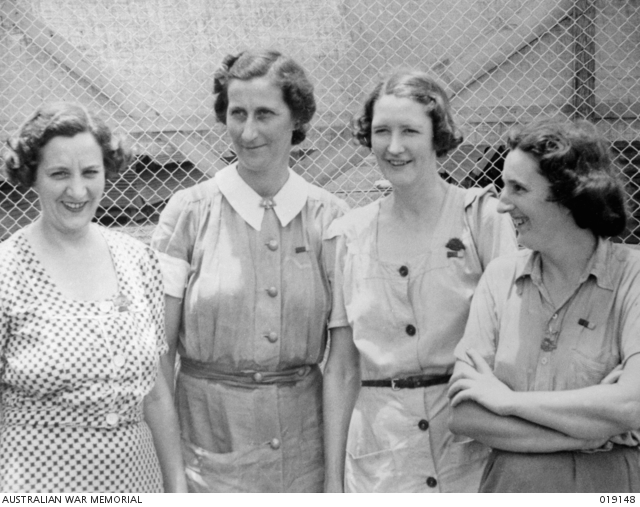
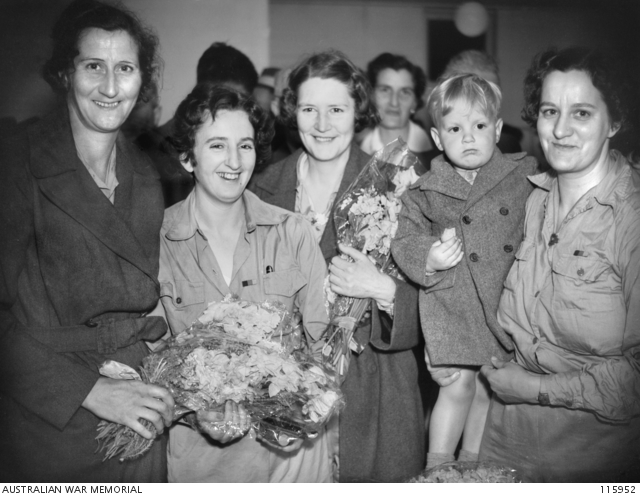
The following day, 2 September, saw the signing of the Japanese Instrument of Surrender aboard the USS Missouri in Tokyo Bay. The war was officially over. That same day, 18 marvellously happy women were flown in a C-54 Skymaster from Atsugi Airfield to Okinawa, which the United States had controlled since June that year. The next day they were flown to Manila, save for Jean Anderson, who had suddenly come down with malaria. Nine days after that, on 12 September, the Australian nurses boarded a B-24 and flew to Darwin. They were home.
Postscript
Never fully recovering after her ordeal, Eileen Callaghan passed away at the Springbank Repatriation Hospital in Adelaide on 21 March 1954. Towards the end, she had sent a cheerful letter to Alice Bowman, one of the civilian nurse internees, saying that she was glad she would die in Australia.
The Rabaul Nurses
- Lieutenant (Marjory) Jean Morris-Yates (née Anderson) ARRC (1914–1994)
- Lieutenant Eileen Mary Callaghan (1913–1954)
- Lieutenant Mavis Claudia Cation (née Cullen) (1909–2003)
- Lieutenant Daisy Cardin (‘Tootie’) McPherson (née Keast) (1911–1989)
- Captain Kathleen Isabel Alice (Kay) Sly (née Parker) ARRC (1906–1979)
- Lieutenant Lorna Margaret Johnston (née Whyte) (1915–2013)
SOURCES
- Australian War Memorial, ‘Fall of Rabaul.’
- Bowman, A. (1996), Not Now, Tomorrow, Daisy Press.
- Center for Research, Allied POWS under the Japanese (website by Roger Mansell), ‘Kanagawa Civilian Internment Camps.’
- Komiya, M. (translated by Ibuki, Y. with assistance by Wals, A. P.), ‘WWII Australian Nurses who were Interned in Yokohama,’ 2006 Canberra Seminar of POW Research Network Japan, Montevideo Maru (website).
- Montevideo Maru (website by Rod Miller), ‘The Rabaul Nurses Camps 1942-1945.’
- Nelson, H. (1985), Prisoners of War: Australians under Nippon, ABC Enterprises.
- Papua New Guinea Association of Australia, ‘Tribute to Lorna (Whyte) Johnston: Andre Heuber.’ Originally printed in The Aucklander, 1 December 2011.
- Rabaul Nurses Prisoners of World War II (website), ‘Personal Narrative of an Australian Civilian Nurse.’
SOURCES: NEWSPAPERS
- The Argus (Melbourne, 13 Sep 1945, p. 1), ‘Nurses Kept Poison in Their Hands.’
- The Herald (Melbourne, 13 Sep 1945, p. 1), ‘Dramatic Pictures from Japan.’
- The Sun (Sydney, 4 Sep 1945, p. 2), ‘A.I.F. Nurse Taken in Rabaul Now Safe.’
- Yass Tribune-Courier (11 Oct 1945, p. 2), ‘Captain Kay Parker Chased a Yank.’
 australianwarnurses.org