AANS │ Sister Group 1 │ Second World War │ Malaya │ 2/10th Australian General Hospital
EARLY LIFE
Ellen Louisa Keats, known as Nell (and sometimes Nellie), was born on 1 July 1915 in North Unley, Adelaide. She was the daughter of Ann Grace Donald (1885–1965) and Clarence Carrington Keats (1887–1963).
Ann was born in Adelaide and studied English Language and Literature, Modern European History, and Psychology at the University of Adelaide before working for the Education Department as a pupil teacher and then as a school assistant. Clarence was born in Wallaroo on South Australia’s Yorke Peninsula and moved to Adelaide to attend Unley School. He worked as a clerk.
Ann and Clarence were married on 17 May 1913 at St. John’s Church in Adelaide. Nine months later, on 23 February 1914, their first child, Donald, was born prematurely in Glenelg. Sadly, he lived for only six days. The following year, baby Nell was born at Gunyah Nursing Home in North Unley. Two years later Ann gave birth to twin boys, Gilbert Thomas (Bert) and Donald Carrington (Don), who were also born at Gunyah Nursing Home. In 1922 Nancy Grace (Nance) was born in Norwood.
Nell and her siblings grew up at 21 Dulwich Avenue in Dulwich, an inner suburb adjacent to Adelaide’s east parklands. It is unclear where Nell went to primary school, but it may have been Rose Park School, just north of Dulwich, where her sister was a pupil in the 1930s. We do know something of Nell’s extra-school activities, however. In 1925 she was a student of Miss Myra Collins, a performing arts teacher, and in December of that year participated in a concert at the Memorial Hall in Rose Park. Nell also studied the piano (or pianoforte) under Miss B. E. Kesting and at the end of 1926 passed her London Royal Academy of Music examination in the primary division.
Upon completing primary school Nell (and later her sister) attended St. Peter’s Collegiate Girls’ School in North Adelaide, while Don (and presumably Bert) attended Unley High School. At the end of 1931 Nell attained her Intermediate Certificate, finishing equal 21st in Mathematics II (under 16) in the state.
Nell was also a very handy tennis player. Between 1932 and 1940 she won a number of singles and doubles finals playing in various associations, including the Uniting Church Association’s Girls’ Junior Championship Singles in April 1932.
NURSING
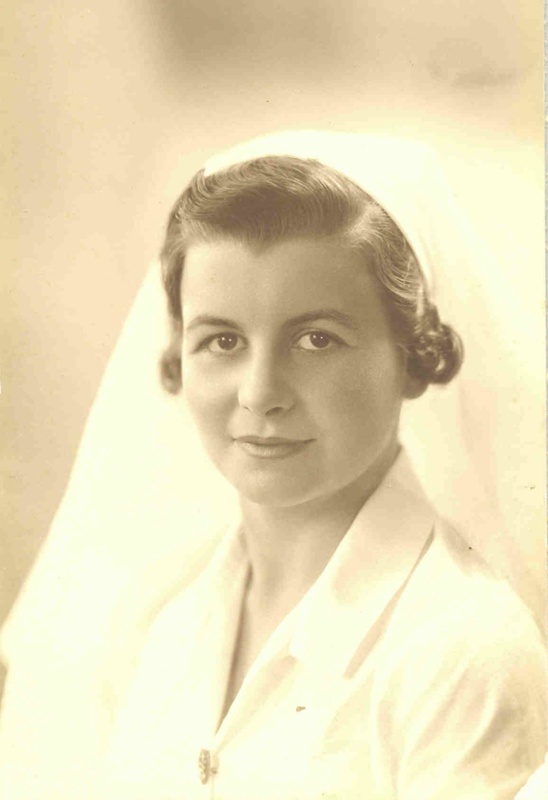
After finishing school, Nell undertook practical lessons in invalid cookery at Adelaide’s School of Mines and Industries and passed her examination in September 1932. This led to a career in nursing, and in 1933 Nell began as a probationer at Parkwynd Private Hospital on Wakefield Street in Adelaide before completing her training at Adelaide Hospital.
At Adelaide Hospital Nell met a nurse by the name of Elizabeth Merle Pyman, who was known as Betty. Betty had previously been at Hawker Memorial Hospital in the Flinders Ranges and started at Adelaide Hospital the same day as Nell. Since they were unable to board at the hospital itself, Nell and Betty shared a room at nearby Austral House. Betty would often go home with Nell to Dulwich and ended up going out with Nell’s brother Don.
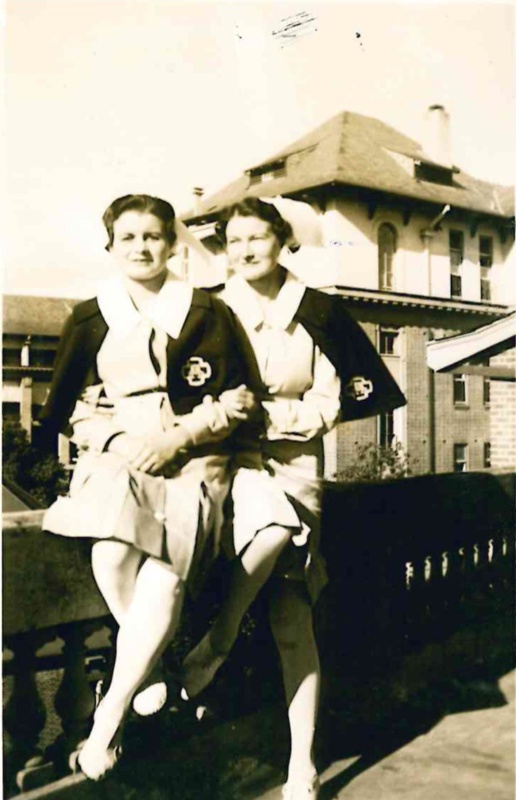
Nell was an excellent trainee and in mid-1937 passed her Nurses’ Board of South Australia final examination. After gaining her registration on 6 October of that year, she was appointed to the position of staff nurse at Adelaide Hospital and later worked as a theatre nurse in Theatre Two, which took ear, nose and throat cases. Betty also passed her final examination and worked as a theatre nurse in Theatre One.
ENLISTMENT
In 1940, with war raging in Europe and Australian women and men volunteering for duty, Nell applied to join the Australian Army Nursing Service (AANS). On 18 December, at the age of 25, she filled out her attestation form and had her medical. She received her call up and on 3 February 1941 formally enlisted in the Second Australian Imperial Force (2nd AIF) for service abroad. Betty had also joined the AANS and enlisted in the 2nd AIF on the same day as Nell. Pending deployment overseas, they were both attached to the hospital at Wayville Army Camp in Adelaide.
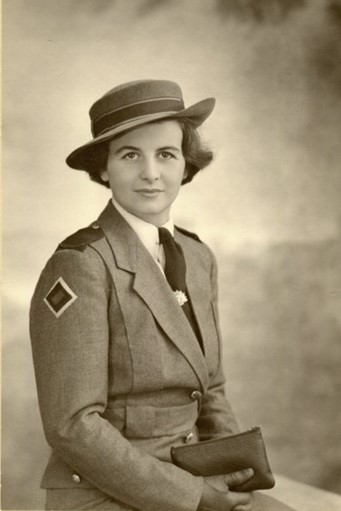
Nell was not the only one of her siblings to enlist. Her brother Bert enlisted in the RAAF and went missing in Egypt in November 1942, while Don enlisted in the 2nd AIF in August 1941, serving mainly in Australia.
Sometime after their enlistment, Nell and Betty were earmarked for service in Malaya as reinforcement staff nurses attached to the 2/10th Australian General Hospital (AGH). Together with the 2/4th Casualty Clearing Station (CCS), the 2/9th Field Ambulance, and other, smaller, medical units, the 2/10th AGH had arrived in Malaya in February aboard the Queen Mary with the 22nd Infantry Brigade of the 8th Division, 2nd AIF.
Originally raised for service in the Middle East, the 22nd Brigade was diverted to Malaya by the Australian government in recognition of the growing threat of Japanese expansion in Southeast Asia and the southwest Pacific. At the request of Britain, the brigade supported British and Indian troops in garrison duties.
Towards the end of April, Nell and Betty were advised to prepare for embarkation overseas, and each was granted pre-embarkation leave – Nell from 21 to 26 April and Betty a few days earlier. They did not know that they had been chosen for service in Malaya and assumed that they would be going to the Middle East.
On 19 May the two friends set off together on a troop train from Adelaide Railway Station for Melbourne, from where they would embark. It was nighttime and the Keats family had come to see them off. When the train pulled away, Nell began to cry. She cried all the way to Murray Bridge. Betty organised a bridge tournament with a couple of officers, one of whom she knew, and that helped to distract Nell.
HMAT ZEALANDIA
Nell and Betty arrived in Melbourne the next day. They had two free days before they were due to board their ship and were invited to Government House for tea. They had chocolate cake and a conducted tour. On 22 May they boarded HMAT Zealandia at Port Melbourne with fellow 2/10th AGH reinforcement staff nurses Mary Holden, Betty Jeffrey and Beryl Woodbridge. When the Zealandia departed the following day for Singapore, Nell and Betty still thought that they were going to Egypt.
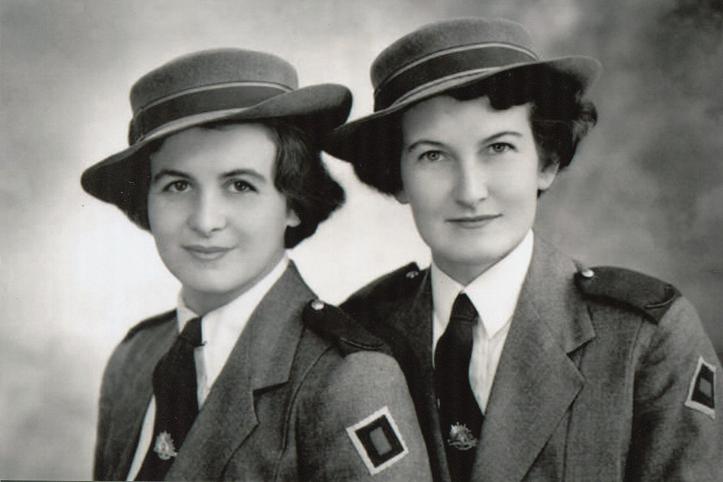
The Zealandia had set out from Sydney on 19 May carrying around 1,200 reinforcements for the 22nd Brigade. On board also were 2/10th AGH reinforcements Sister Jean Stewart and Staff Nurses Mary Clarke and Jenny Greer.
The nurses endured a rough crossing of the Bight. Many decades later, when Betty Pyman was interviewed for the University of NSW’s Australians at War Film Archive series, she recalled an amusing episode concerning Betty Jeffrey. Soon after the Zealandia had departed Melbourne, Betty Jeffrey was “most terribly seasick because it was very rough coming round the Great Australian Bight. And when we got to Perth, we were allowed off the boat … and she bought this pot plant which she called ‘Agatha’ and when we took off again … she used to smell this and she said, ‘As long as I can smell the dirt, I won’t be seasick.’”
ARRIVAL IN SINGAPORE
The Zealandia arrived in Singapore in the late afternoon of 9 June. While waiting to disembark, the Australian soldiers threw ‘hot pennies’ to the locals crowding the wharf – just as their comrades on the Queen Mary had done four months earlier.
Nell, Betty and their new colleagues disembarked and were taken to the railway station dressed in their safari jackets, woollen jackets and woollen skirts, shoes, kid gloves, felt hats, shirts, collar and tie. Unsurprisingly, according to Betty, they “nearly died of the heat.” Before the train departed, they were given fruit and a small piece of paper on which to write a short note to their families at home, advising them of their safe arrival. Soon the train crossed Johor Strait from Singapore Island to the Malay Peninsula and at around 3.00 am arrived at the railhead town of Tampin. The nurses transferred to trucks and were driven to Malacca, where the 2/10th AGH was based.
That day, 10 June, the new arrivals were officially attached to the 2/10th AGH. When they went on duty the following day, they discarded their collars and ties and wore their linen uniforms.
MALACCA
The 2/10th AGH had been allocated several wings of the Colonial Service Hospital, a modern, five-storey building located just outside the old colonial centre of Malacca and set on a slight rise in verdant grounds studded with bougainvillea, frangipani and hibiscus. The nurses were quartered on the fourth floor of one of the wings and enjoyed spectacular views across the lush countryside. They lived very comfortably, despite the heat and humidity. They enjoyed the services of amahs (domestic workers), who washed and ironed their clothes, made their beds and generally cleaned up after them. Other local staff cooked for them.
Because they were spared the time-consuming drudgery of domestic chores, the nurses had more time for other, more enjoyable activities. As Betty noted in her interview, “We didn’t have to do that ourselves and you’d just, if you were not going out, we’d get a taxi and there was a swimming pool [the Malacca Swimming Club]. We’d go down and spend the day at the swimming pool or we’d go shopping or you’d just stay home and write letters. We had a tennis court. We used to play tennis and we’d go to the pictures.”
Nell and Betty found Malacca utterly fascinating and spent time exploring the historic centre. They admired the old Portuguese and Dutch buildings. They visited the ruins of St. Paul’s Church, where the Spanish Catholic missionary St. Francis Xavier was temporarily buried in 1553 before being transported to Goa in India. They used to visit, as Betty recalled, “a lovely square with a lovely little Anglican church [most likely Christ Church] and when Nell and I used to go, it was sort of open, all the birds used to fly in and out during the service. And they always had the Chinese shops.”
The two friends got to know the headmaster of a local school. “Nell and I really had a good time there,” Betty remembered, “because we became friendly with the headmaster, who was Chinese, of the school [possibly Mr. Ho Seng Ong of the Malacca Anglo-Chinese School], and if we wanted to go shopping – the hospital was a fair way out of the town of Malacca – we only had to ring up and he would send his driver and his car and we could go shopping. And he organised for us to go to a Chinese funeral, which was really funny. They had a band playing and everyone eating out at the funeral.”
There were opportunities for socialising with (male) officers. “And then of course you always, well you didn’t always, but in the end, you always had a friend, a male friend, and I always stuck to the same one,” Betty recalled. “You never asked if they were single or married, but they had a picture theatre and a dance hall in this little town [the Capitol Cabaret], and we used to go dancing when we’d got out. There was a swimming pool [again the Malacca Swimming Club]. You couldn’t swim in the sea, but they had a swimming pool and the British, who were very uppity, they allowed us, they had these clubs and they allowed us, as officers, to join, not the other ranks.”
While on duty, Nell, Betty and their 2/10th AGH colleagues had a busy time of it. Between April and December of 1941 the hospital treated an average of 400 cases a month – mainly tropical infections, diseases such as malaria, training injuries – sometimes gunshot wounds – and injuries caused by motor accidents. As Betty pointed out, “the boys used to get on the beer over there [and have accidents] on the roads, because the roads weren’t very good.” The nurses also assisted during routine operations such as appendectomies.
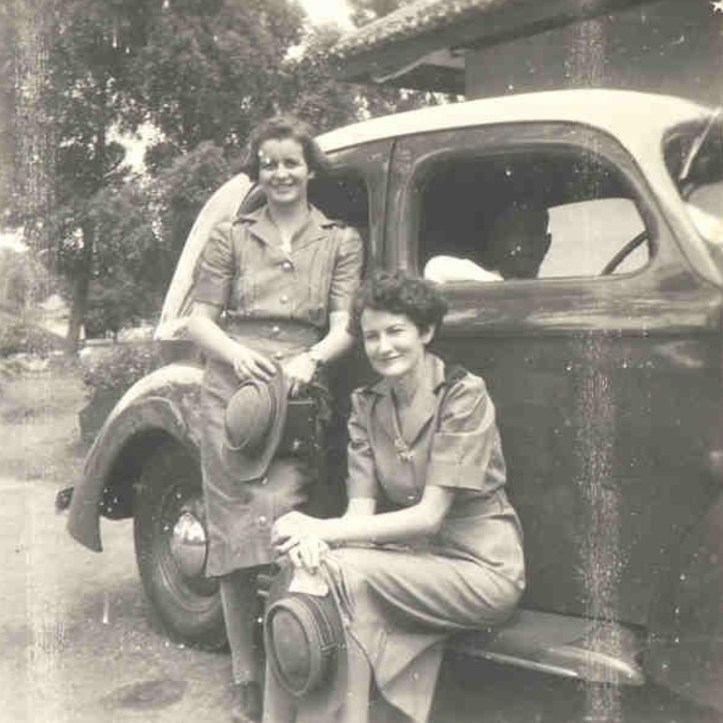
Matron Dot Paschke made sure that Nell and Betty were able to spend at least some periods of leave together. They were granted five days’ leave from 19 to 23 August and four days from 1 to 4 September. During one of these periods they travelled to Fraser’s Hill, a British hill station lying in the cool highlands north of Kuala Lumpur. The quaint town, reached via a narrow, winding road, was characterised by picturesque ‘Old English’ bungalows with red roofs, grey stone walls and white windows, and gardens of roses, carnations and begonias. A typical day might entail a walk in the hills in the morning, tennis or golf in the afternoon, and dinner and a visit to a club in the evening.
THE WAR CLOUDS GATHER
Meanwhile, following intelligence reports pointing to the vulnerability of Singapore to Japanese attack from the north – the island had hitherto been regarded as an impregnable fortress – a second 8th Division brigade, the 27th, around 2,000 strong, had arrived in Malaya on 15 August on the troopships Johan Van Oldenbarnevelt and Marnix Van St. Aldegonde. Accompanying the brigade were five further reinforcement staff nurses for the 2/10th AGH – Beth Cuthbertson, Clarice Halligan, Jean Russell, Florence Salmon and Ada ‘Mickey’ Syer.
A month later, on 15 September, a second AGH, the 2/13th, arrived aboard Australian Hospital Ship Wanganella. The unit had been raised in Melbourne in August at the request of Col. Alfred P. Derham, Assistant Director of Medical Services (ADMS), 8th Division, and had a staff of around 250, including 49 AANS nurses. It was based at a Catholic boys’ school, St. Patrick’s, situated in Katong on the south coast of Singapore Island, pending the readiness of its permanent site, a psychiatric hospital in Tampoi on the peninsula. On the day of the 2/13th AGH’s arrival in Singapore, 10 of the unit’s nurses were detached to the 2/10th AGH to learn tropical nursing from their more experienced peers. They arrived in Malacca the following day. One of the detached nurses was Staff Nurse Vivian Bullwinkel – like Nell and Betty, a South Australian.
Nell was granted more leave from 26 to 28 September, without Betty this time, and again from 8 to 9 November.
JAPAN INVADES
All the while Japanese troops had been massing in French Indochina, and all the signs pointed to war. On 1 December the codeword ‘Seaview’ was issued, advancing all Commonwealth forces in Malaya to the second degree of readiness. All leave was cancelled, and units had to be ready to move at a few hours’ notice to their war stations. This was followed on the evening of Saturday 6 December by the codeword ‘Raffles.’ War with Japan was imminent.
Nell and Betty were meant to be going out dancing that Saturday night. They had got dressed up and were waiting and waiting, but their escorts did not arrive. Betty recalled in her interview that they were “getting very hostile about this. And then about ten o’clock somehow or other they got through, someone got through, and said there was a red alert, and they wouldn’t be there and then of course that was when they bombed Honolulu and Singapore, later that night. From then on, of course, things absolutely changed.”
It was not in fact that night that Japan set off the war in the Pacific but the following night – or rather in the very early hours of Monday 8 December, when an assault force of some 5,000 troops of the Imperial Japanese Army landed at Kota Bharu on the Malay Peninsula’s northern coast. At around the same time, Japanese troops landed at Pattani and Singora (Songkhla) in Thailand. At 4.00 am Japanese bombers attacked Singapore Island, killing many people. Elsewhere, Pearl Harbour, Guam, Midway, Wake Island and American installations in the Philippines were attacked, and Hong Kong invaded. Japan declared war on the United States, Great Britain, Australia, Canada, New Zealand and South Africa.
Over the coming days, the Japanese troops broke out of their beachhead at Kota Bharu and began to advance southwards on the eastern side of the peninsula. Meanwhile, two other Japanese columns crossed from Thailand into Malaya and moved south along the peninsula’s western side. Further south, the British naval ships Prince of Wales and Repulse were sunk off the east coast of the peninsula, with tremendous loss of life.
“FROM THE BEGINNING WE KNEW DEFEAT WAS UNAVOIDABLE”
Not for a minute did Nell and her colleagues think that the Japanese could possibly reach as far south as Malacca. Betty recalled that “everyone said, ‘The Japanese haven’t got this, and they haven’t got that, they haven’t got the other thing,’ so we were absolutely staggered when we had to get out.” It was also believed that Japanese soldiers were fundamentally inferior. Nell’s and Betty’s 2/10th AGH colleague Staff Nurse Jessie Blanch later wrote that “we were told by our spies that they all wore glasses and couldn’t see at night … they weren’t supposed to be able to do anything.” In fact, Jessie continued, “as soon as they began to fight, we found they were better equipped. Everything we expected them to do they did the opposite … From the beginning we knew defeat was unavoidable” (quoted in McCullagh, p. 111).
Although outnumbered by the British and Indian troops stationed in northern Malaya, the Japanese soldiers were combat-ready and moved rapidly, often by bicycle. They were backed by mechanized units and substantial sea and air power and forced the severely outgunned British and Indians to retreat before them.
By the end of December, it had become clear that the 2/10th AGH would have to be evacuated from the Colonial Service Hospital. Kuala Lumpur had been bombed, and Malacca was now in the direct path of the Japanese advance. Col. Derham decided to move the hospital to Singapore Island but would need time to organise a suitable site. In the meantime, Nell, Betty and 18 of their nursing colleagues were detached to the 2/13th AGH, which had finally moved into the psychiatric hospital at Tampoi, while the remaining nurses were detached to the 2/4th CCS, which had established its hospital at the Mengkibol rubber plantation near Kluang. Of the patients of the 2/10th AGH, those that were not very sick were sent back to their units, while the others were moved by ambulance convoy to the 2/13th AGH at Tampoi.
RELOCATION TO SINGAPORE
By 15 January 1942 the 2/10th AGH had completed its relocation to Singapore Island. The hospital’s medical section was set up in Oldham Hall, a Methodist boarding school on Bukit Timah Road, while the surgical section was set up shortly after in Manor House, a boarding house on nearby Chancery Lane.
Meanwhile, Australian soldiers had engaged Japanese forces for the first time. Shortly after 4.00 pm on 14 January, B Company of the 2/30th Battalion ambushed bicycle-mounted Japanese troops at Gemencheh Bridge, 40 kilometres north of Malacca. The following day the main force of the 2/30th Battalion, together with elements of the 2/4th Anti-Tank Regiment, made further contact with Japanese forces outside Gemas, 20 kilometres east of Gemencheh Bridge, in a battle that lasted two days. Although the Australians scored a tactical victory, they did little to slow the Japanese advance and sustained many casualties. At around 6.00 pm on 15 January the casualties began to arrive at the 2/4th CCS at Mengkibol, and by the following morning 73 of the lighter cases had been evacuated to the 2/13th AGH.
Nell and Betty returned to the 2/10th AGH on 25 January, the day that the 2/13th AGH completed its own relocation to Singapore Island, returning to St. Patrick’s School. Nell was assigned to Manor House, and Betty to Oldham Hall, but they lived together with other nurses in a nearby bungalow, as Betty described in her interview. “We lived in houses round about,” she said. “The British people had already left, and these houses were just standing there and we had our camp stretchers and because Nell and I were friends, she worked in one hospital and I worked in the other. We were separated but the matron [Dot Paschke] allowed us to be together, and she used to send a staff car every morning to pick up Nell and take her to her hospital which was further away from where we were. And you know by this time there were air raids. You could set the clock by them. They would come over and we had tin hats, which we used to have and the hospital that I was in had been a boys’ school, two storey, not made for a hospital and we had theatre going there too. Two theatre tables went all the time.”
On 28 January the 2/4th CCS followed the two AGHs across Johor Strait to Singapore Island, moving into the Bukit Panjang English School. Three days later, after the last Commonwealth troops – British, Indian, Australian, Malay – had crossed over, the causeway linking the peninsula and the island was blown in two places. Soon after, the Imperial Japanese Army reached the northern shore of the strait and on 2 February began a ferocious artillery bombardment of the island. The final battle was about to begin.
On 3 February, a year after her enlistment in the 2nd AIF, Nell was promoted to the rank of sister. Even if she had been aware of her promotion, under the circumstances it was hardly cause for celebration. The following day, as if the staff of the 2/10th AGH needed reminding of the proximity of the Japanese, several shells fell a short distance from Oldham Hall. Three days after that, three staff members were killed and several injured by stray ordnance. To make matters worse, the large British guns to the south of the hospital were returning fire, so artillery was travelling over the hospital in both directions.
THE FINAL DAYS
In the daylight hours of 8 February 1942, Japanese forces began an intensive artillery and aerial bombardment of the western defence sector of Singapore Island, destroying military headquarters and communications infrastructure. At around 8.30 pm that night, the first wave of Japanese soldiers in amphibious craft began to cross Johor Strait to the west of the causeway. They came under withering fire from Australian 2/20th Battalion and 2/4th Machine Gun Battalion defenders, but the Australians were hopelessly outnumbered and could not communicate effectively with base. The Japanese continued to cross all night and by the morning of 9 February had established a beachhead on the northwestern corner of Singapore Island.
Tuesday 9 February was a black day. Some 700 casualties poured into the 2/10th AGH, and Oldham Hall and Manor House became so overcrowded that men were lying on mattresses on the floor while others waited outside. Even though the unit had requisitioned further bungalows, it was impossible to cope with the numbers, and many were sent on to the 2/13th AGH at St. Patrick’s School, to the British Military Hospital, and to the Indian General Hospital (situated in Tyersall Park, now part of the Singapore Botanic Gardens). The 2/10th AGH theatre staff – among them perhaps Nell and Betty – now worked around the clock, treating severe head, thoracic and abdominal injuries. There was little respite for staff when off duty, as the constant pounding of bombs and shells meant that sleep was hard to come by.
With Singapore’s fate all but certain, a decision was made to evacuate all the AANS nurses. Already in January, following reports of Japanese atrocities in Hong Kong, Col. Derham had put the question to Maj. Gen. H. Gordon Bennett, commander of the 8th Division. He had refused, citing the damaging effect on morale. Col. Derham then instructed Lt. Col. Glyn White to send as many nurses as he could with Australian casualties leaving Singapore.
The nurses did not want to leave their patients. It was a betrayal of their nursing ethos, and they protested strongly. Ultimately, they had no choice, and on 10 February six of Nell’s colleagues from the 2/10th AGH embarked for Batavia with several hundred 8th Division casualties on a makeshift hospital ship, the Wusueh. The next day a further 60 AANS nurses, 30 from each of the AGHs, boarded the Empire Star with more than 2,000 evacuees, mainly British army and naval personnel, and set out for Batavia. Betty was among them, with Nell’s luggage, having anticipated that she would join her. Nell never did.
When the Empire Star arrived in Fremantle on 23 February, Betty asked a certain man to call her uncle, whom the man knew. Betty’s uncle then called his sister – Betty’s mother – and told her that Betty and Nell were home. Tragically, Betty’s mother then called Mrs. Keats and told her not to worry any more, that Nell and Betty were home. Eventually Betty had to inform Ann Keats otherwise.
THE VYNER BROOKE
Now 65 AANS nurses remained in Singapore. On Thursday 12 February they too had to go. Late in the afternoon, Nell and the remaining 2/10th AGH nurses and four of their peers from the 2/4th CCS were driven in ambulances through the side streets of Singapore city to St. Andrew’s Cathedral. Here they were joined by the 27 remaining 2/13th AGH nurses and the other four 2/4th CCS nurses. After a roll call they all continued by ambulance to Keppel Harbour.
The ambulances drove through the ruined city towards the wharves. When rubble blocked the vehicles’ further progress, the nurses got out and walked. Fires burned along the waterfront, and the offshore oil installations were ablaze. At the wharves there was chaos, as hundreds of people attempted to board any vessel that would take them.
Eventually a tug took Nell and her 64 comrades out to a small coastal steamer, the Vyner Brooke. As darkness fell, the ship slid out of Keppel Harbour and after some delay began its journey to Batavia. There were as many as 200 people on board, mainly women and children. Behind them, thick black smoke billowed high into the night sky.
During the night, Captain Borton guided the Vyner Brooke slowly and carefully through the many islands that lay between Singapore and Batavia, and at first light on Friday 13 February he sought to hide the vessel among them – the better to evade Japanese planes. That morning the nurses were addressed by Matron Paschke, who set out a plan of action in the event of an attack. The nurses were to attend to the passengers, help them into the lifeboats, search for stragglers, and only then save themselves. Since there were not enough places in the Vyner Brooke’s six lifeboats for everybody, those nurses who could swim were to take their chances in the water. They did at least have their lifebelts, and rafts would be deployed too.
Saturday 14 February dawned bright and clear. After another night of slow progress through the islands, the Vyner Brooke lay hidden at anchor once again. The ship was now nearing the entrance to Bangka Strait, with Sumatra to the right and Bangka Island to the left. Suddenly, at around 2.00 pm, the Vyner Brooke’s spotter picked out a plane. It circled the ship and flew off again. Capt. Borton, guessing that Japanese dive-bombers would soon arrive, sounded the ship’s siren. The nurses, wearing their lifebelts, put on their tin helmets and lay on the lower deck. The ship began to zig-zag through open water towards a large landmass on the horizon – Bangka Island. Soon, bombers appeared, flying in formation and closing fast.
The planes, grouped in two formations of three, flew towards the Vyner Brooke, and as they approached, they released their bombs and strafed the ship. The Vyner Brooke weaved, and the bombs missed their target, but the three portside lifeboats were holed. The planes regrouped, flew in again, and this time the pilots scored three direct hits. When the first bomb exploded amidships, the ship lifted and rocked with a vast roar. The next went down the funnel and exploded in the engine room. As passengers swarmed up to the open air, a third bomb dealt the ship a final blow. With a dreadful noise of smashing glass and timber, it shuddered and came to a standstill, around 15 kilometres from Bangka Island.
The nurses carried out their action plan. They helped the women and children, the oldest people, the wounded, and their own injured colleagues into the three starboard lifeboats. The first two got away safely, but as the third lifeboat was being lowered, it juddered and swayed and crashed awkwardly into the water as the Vyner Brooke listed ever more alarmingly. Several of its passengers jumped out and swam, for fear that the ship might fall onto them.
After a final search, the nurses abandoned the doomed ship. They removed their shoes and their tin helmets and entered the water any way they could. Some jumped from the portside railing, now high up in the air, while others practically stepped into the water on the starboard side. Some slid down ropes or climbed down ladders.
Once in the water, some of the nurses clambered into the lifeboats where there was room or caught hold of the ropes that trailed behind them. Other nurses climbed onto rafts or grabbed hold of passing wreckage. Still others simply floated in their lifebelts. Meanwhile, the Vyner Brooke settled lower and lower in the water and then slipped out of sight. It had taken less than half an hour to sink.
Twelve of Nell’s fellow nurses died in the attack or were subsequently lost at sea. The remaining 53 nurses were eventually carried by the tide to Bangka Island, where they were washed ashore at various places along a wide stretch of coastline.
BANGKA ISLAND
Nell had managed to find a place in the third lifeboat with civilian women and four other nurses – Staff Nurse Lorna Fairweather of the 2/13th AGH, Staff Nurse Peggy Farmaner of the 2/4th CCS, and Sisters Clarice Halligan and Jean Stewart of the 2/10th AGH. Sometime after midnight the boat came ashore on a beach on which a bonfire had been lit, and Nell and the other occupants found the passengers of the first two lifeboats, who had arrived sometime earlier. Among them were Matron Irene Drummond of the 2/13th AGH, Vivian Bullwinkel, and other nurses. As night turned to day, more survivors joined them.
On Sunday small groups of those on the beach walked into the hinterland to find help. When they returned, they told the others that during the night Bangka Island had come under Japanese occupation. With no other option, Lt. Sedgeman, the first officer of the Vyner Brooke, proposed surrendering to the Japanese but agreed to wait until Monday morning before deciding. During the night another lifeboat and several life rafts came ashore carrying British soldiers and sailors. There were now perhaps 100 people on the beach, many of whom were injured.
Early on Monday morning the group agreed to surrender, and a deputation led by Lt. Sedgeman left for Muntok, the nearest big town, to negotiate this. A short while later Matron Drummond suggested that the civilian women and children should follow behind.
Around mid-morning the deputation returned with a squad of Japanese soldiers. The soldiers separated the survivors into three groups: the officers and NCOs, the servicemen and male civilians, and the Australian nurses and the one remaining civilian woman, Mrs Betteridge, a British woman whose husband lay among the injured on the beach. They took the two groups of men around a nearby headland and shot and bayoneted them. Three managed to escape death, of whom two survived the war.
The soldiers returned to the nurses and civilian woman and ordered them to walk towards the sea. Those who were injured were helped to stand up. When the women were waist-high in water the soldiers opened fire. Nell and 20 other nurses died, together with Mrs. Betteridge. Vivian Bullwinkel survived and joined her 31 remaining colleagues in captivity. During their three-and-a-half-year imprisonment, eight of the nurses died.
Right to the very end, Ann and Clarence Keats were hoping against hope that Nell was among the captive nurses, and it was only after the 24 surviving nurses were rescued in September 1945 that they learned of their daughter’s sad fate.
In memory of Nell.
SOURCES
- Ancestry.
- Arthurson, L., ‘The Story of the 13th Australian General Hospital, 8th Division AIF, Malaya,’ as reproduced by Peter Winstanley on the website Prisoners of War of the Japanese 1942–1945.
- Australian War Crimes Board of Inquiry, Sister V. Bullwinkel, 29 Oct 1945.
- Australian War Memorial, ‘Wallet 1 of 1 – Letters from Sister Dorothy Gwendoline Howard Elmes, 1941–1942,’ Accession Number AWM2020.22.162.
- Australian War Memorial, ‘Fall of Singapore – papers of Charles Laurie Price, part 2,’ AWM2019.22.165.
- Gill, G. H., Second World War Official Histories, ‘Australia in the War of 1939–1945: Series 2 – Navy,’ ‘Volume I – Royal Australian Navy, 1939–1942 (1st edition, 1957),’ ‘Chapter 12 – Australia Station 1941,’ (pp. 410–63), Australian War Memorial.
- Hamilton, T. (1957), Soldier Surgeon in Malaya, Angus & Robertson.
- Health Museum of South Australia.
- Jeffrey, B. (1954), White Coolies, Angus & Robertson Publishers.
- Long, G. (ed.), Second World War Official Histories, ‘Australia in the War of 1939–1945: Series 1 – Army,’ Wigmore, L., ‘Vol. IV – The Japanese Thrust (1st edition, 1957),’ ‘Pt. I The Road to War,’ ‘Ch. 4 – To Malaya (pp. 44–61),’ Australian War Memorial.
- McCullagh, C. (ed., 2010), Willingly into the Fray: One Hundred Years of Australian Army Nursing, Big Sky Publishing.
- National Archives of Australia.
- Shaw, I. W. (2010), On Radji Beach, Pan Macmillan Australia.
- Simons, J. E. (1954), While History Passed, William Heinemann Ltd.
- University of NSW, Canberra, Australians at War Film Archive, ‘Elizabeth Bradwell (Betty Pyman) – Transcript of interview, 19 January 2004.’
- Wikipedia, ‘Fall of Singapore.’
SOURCES: NEWSPAPERS
- The Advertiser (Adelaide, 10 Dec 1925, p. 19), ‘A Students’ Recital.’
- The Advertiser (Adelaide, 19 Feb 1927, p. 11), School Examinations.’
- The Advertiser (Adelaide, 1 Jan 1932, p. 4), ‘Orroroo Tennis Tournament.’
- The Advertiser (Adelaide, 28 Jan 1932, p. 7), ‘St. Peter’s Boy Tops Honors in Intermediate Exam.’
- The Advertiser (Adelaide, 27 Apr 1932, p. 13), ‘Tennis.’
- Burra Record (SA, 7 Oct 1941, p. 1), ‘Letters from Soldiers.’
- The Mail (Adelaide, SA, 25 May 1940, p. 18), ‘Joy Plays Well to Beat Quist.’
- News (Adelaide, 18 Aug 1937, p. 12), Nurses’ Board Examinations.’
 australianwarnurses.org